Classification of Matter
Periodic Table & Atoms
Water Properties
Acids & Bases
Conservation of Mass
100
What is an element?
A pure substance made of only one type of atom.
100
Which element has the symbol “O”?
Oxygen
100
What is cohesion?
Water sticking to itself.
100
What number is neutral on the pH scale?
7
100
What law states that matter cannot be created or destroyed?
Law of Conservation of Mass.
200
What type of mixture is evenly mixed throughout?
Homogeneous mixture.
200
How many hydrogen atoms are in H₂O?
2
200
What is adhesion?
Water sticking to other surfaces.
200
Is vinegar an acid or a base? (It has a low pH)
Acid
200
Reactants mass = 15 g. What must the products’ mass be?
15 g
300
Is trail mix a homogeneous or heterogeneous mixture? Explain.
Heterogeneous — you can see the different parts.
300
In a chemical reaction, what do we call the substances you start with?
Reactants
300
What property allows insects to walk on water?
Surface tension.
300
A substance has a pH of 12. What does that tell you?
It’s a strong base.
300
In a chemical equation, why must the number of atoms be equal on both sides?
Because atoms are conserved.
400
What is the difference between a compound and a mixture?
Compounds are chemically combined; mixtures are physically combined.
400
How many oxygen atoms are in C₆H₁₂O₆?
6
400
Droplets forming on a penny is caused by what two properties?
Cohesion and surface tension.
400
Why is water used as the reference point on the pH scale?
Water is neutral, with a pH of 7.
400
Explain how atoms change during a reaction.
They rearrange into new combinations but are not destroyed.
500
Classify each as element, compound, homogeneous mixture, or heterogeneous mixture:
Air, carbon dioxide, gold, pizza.
Air–homogeneous mixture, CO₂–compound, gold–element, pizza–heterogeneous mixture.
500
Why must chemical equations be balanced?
Because atoms are not created or destroyed — they only rearrange.
500
Explain how water moves up plant stems (capillary action).
Adhesion makes water stick to the stem; cohesion pulls more water upward.
500
Substance A has a pH of 9, substance B has a pH of 7.5, substance C has a pH of 2. Which substance is the acid?
Substance C
500
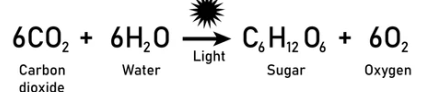 Use photosynthesis to explain conservation of mass
The atoms in CO₂ and H₂O rearrange to form glucose and oxygen; the total number of atoms stays the same.