Element Basics and Physical/Chemical Changes
Classification of Matter
Atomic Structure
The Periodic Table
Density and Number Handling
The Mole
Miscellaneous
100
Is the following a physical or chemical change:
Boiling Water
Physical change: it is a change of state (liquid -> gas)
100
Does the following represent a solid, liquid, or gas?
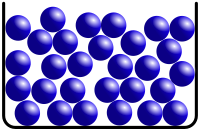
Liquid: does not have an ordered structure but are close together
100
The number of protons in an atom of zirconium
40 protons (atomic number, on the periodic table)
100
Name the following from the periodic table:
Group 1:
Group 2:
Group 17:
Group 18:
Groups 3-12:
Groups 1,2 & 13-18:
Name the following from the periodic table:
Group 1: alkali metals
Group 2: alkaline earth metals
Group 17: halogens
Group 18: noble gases
Groups 3-12: transition elements
Groups 1,2 & 13-18: representative (main group) elements
100
The 2nd most dense solid
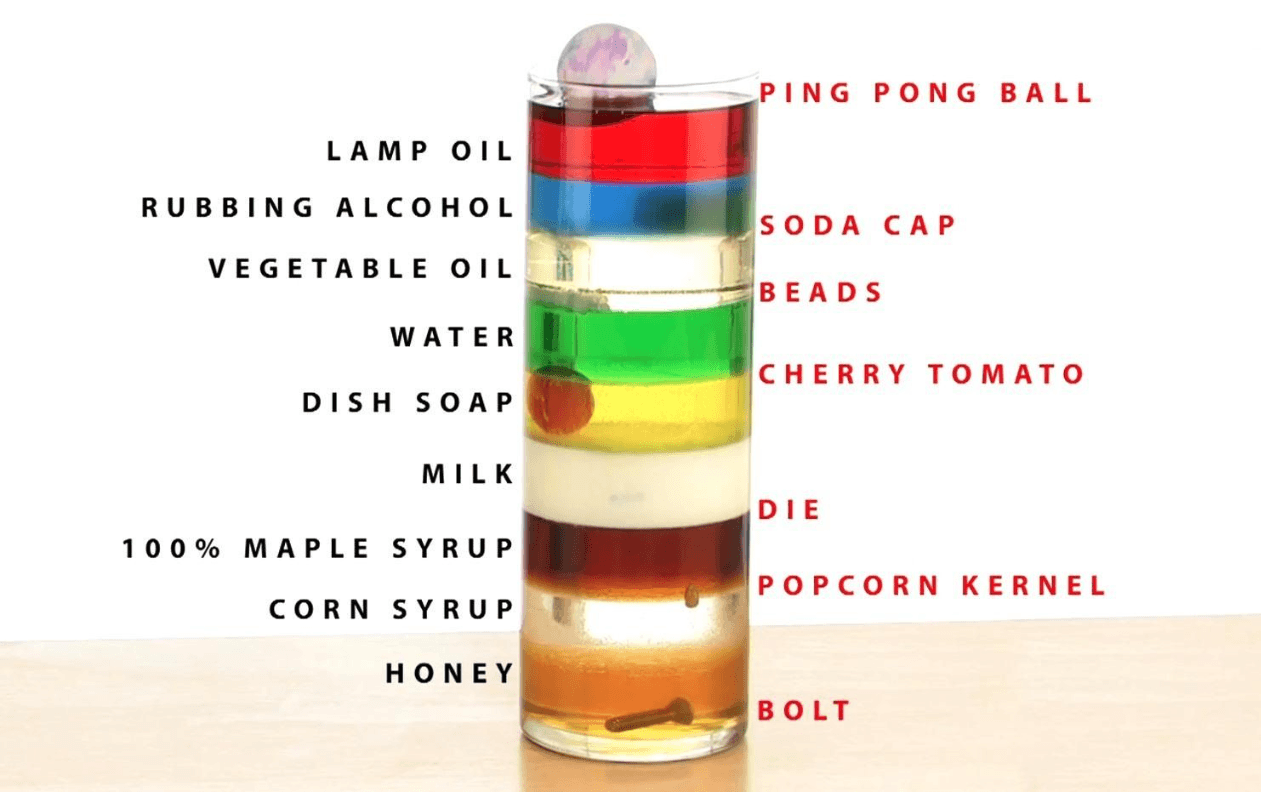
Popcorn Kernel
100
True or False: A mole of Nimbus 2000s would fit in the classroom.

False
100
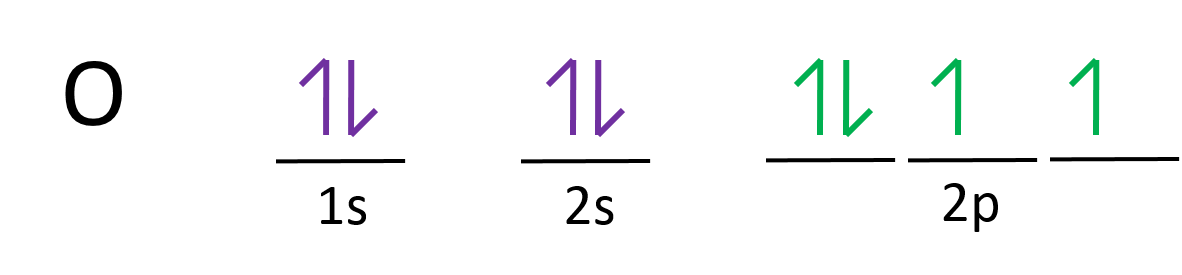
Draw the orbital diagram for oxygen
___ ___ ___ ___ ___
1s 2s 2p
200
List the 7 diatomic elements as well as the subscripts for sulfur and phosphorus
Br2 I2 N2 Cl2 H2 O2 F2
P4 S8
200
Does the following represent atoms or a molecules?
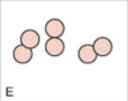
Molecules: there is more than one atom bonded together
200
The number of neutrons in arsenic-75
42 (number of neutrons is equal to the mass number minus protons, since the mass number is 75 and the atomic number from the periodic table is 33, 75-33=42)
200
Provide the period, group, and block for the following electron configuration:
[Kr]5s24d8
(Element is Pd)
period: 5
group: 10
block: d
200
Determine the volume of the liquid in the graduated cylinder.
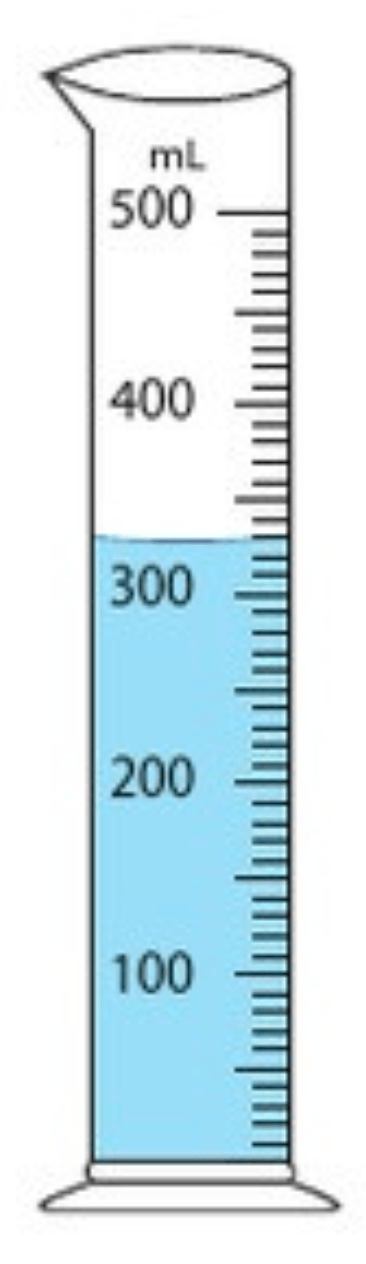
328 mL
(327 - 330. would be acceptable)
200
Determine the molar mass of sodium (Na).
22.99 g/mol
200
Rank the colors of visible light from highest energy light to lowest energy.
Violet, Indigo, Blue, Green, Yellow, Orange, Red
300
Name the parts of the chemical equation below:

1. Reactants (element symbols)
2. Yield
3. Product (chemical formula)
4. Coefficient
5. Subscript
300
Is the following an element, compound, mixture of elements, mixture of compounds, or mixture of elements and compounds?
O2 + N2 + Ar
Mixture of elements: the + sign indicates a mixture, and each component is an element since they only have one capital letter
300
The number of electrons in P3-
18 (electrons are equal to protons minus charge, since the atomic number is 15 and the charge is 3- then 15-(-3)=18)
300
Which has a larger atomic radius: Ti or Y
Y: atomic radius increases down a group and decreases across a period, we also know that helium has the smallest radius so the further an element is to He the larger it will be
300
Round 1864.2 km to 2 significant figures
1900 km
300
Determine the molar mass of (NH4)2CO3
96.11 g/mol
300
Se2- would have an electron configuration that looks like which neutral element?
Kr: the negative 2 charge means that 2 electrons were added to the atom, Se has an atomic number of 34 so when neutral it contains 34 electrons. Once the two extra electrons are added it will look like element 36. (Remember ions tend to look like noble gases because they have stable electron configurations).
400
Is the following a chemical or physical change:
Cr(s) + O2(g) -> CrO2(s)
Chemical: two elements bond together to form a new substance
400
Is the following an element, compound, mixture of elements, mixture of compounds, or mixture of elements and compounds?
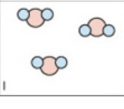
Compound: the same molecule with more than one type of atom repeats in the container
400
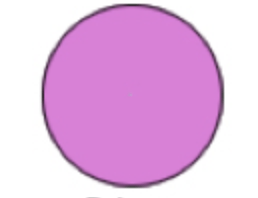
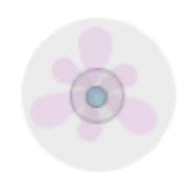
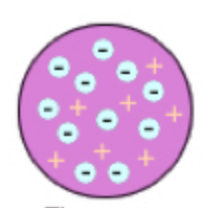
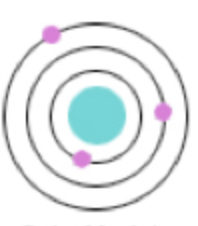
Put the following atomic models in order from oldest to most recent:
1.
2.
3.
4.
5.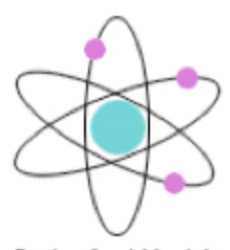
1 (Dalton), 3 (Plum Pudding), 5 (Rutherford), 4 (Bohr), 2 (Quantum)
400
Which is more reactive: Cl or Se
Cl: both are nonmetals so we are comparing to how close the element is to fluorine (F), the most reactive nonmetal. Cl is closer to F than Se making it more reactive
Side note: *Remember a noble gas will always be the least reactive*
400
6.201 in. + 7.40 in. + 12.0 in. =
25.6 in
400
Calculate the number of moles in 19.5 g of glucose (molar mass = 180.16 g/mol).
(1 mol = X g and 1 mol = 6.02x10²³ particles)
0.108 mol glucose
400
How many valence electrons does an atom of As have and what energy level are they located in?
As has 5 valence electrons (in group 15 or 5A) they are in the 4th energy level (period 4)
500
Is the following a physical or chemical change:

Chemical change: new bonds have been formed (change of how the colored circles touch)
500
Is the following an element, compound, mixture of elements, mixture of compounds, or mixture of elements and compounds?
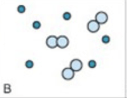
Mixture of elements: the light blue molecules are elements because they are only made up of one type of atom, the dark blue atoms are also elements, these two have then been mixed together
500
Naturally occurring strontium consists of four isotopes, Sr-84, Sr-86, Sr-87 and Sr-88. If the average atomic mass of strontium is 87.82 amu what is the most abundant isotope.
Sr-88, this is because the average atomic mass is closest to the most abundant isotope since average atomic mass is a weighted average
500
Which is more reactive: Ni or Zr
Zr: both are metals so we are comparing how close they are to francium (Fr). Since Zr is closer to francium it will be more reactive than Ni
500
A block of copper metal has a mass of 1896 g. The dimensions of the block are 8.40 cm x 5.45 cm x 4.6 cm. What is the density of copper?
9.0 g/cm3
500
Calculate the mass of 2.09x10²² particles of Fe3(PO4)2 (molar mass = 357.41 g/mol).
(1 mol = X g and 1 mol = 6.02x10²³ particles)
12.4 g Fe3(PO4)2
500
Which of the following has a higher frequency: X-rays or Radio Waves

X-rays: higher energy means higher frequency and also smaller wavelength