Properties of Matter
Elements, Compounds, & Mixtures
Atomic Structure
Atomic Structure 2
Isotopes
100
Matter is anything that has ____________ and takes up ____________.
Matter is anything that has mass and takes up space.
100
What is a mixture?
A physical blend of two or more components.
100
Which subatomic particles make up an atom & what their charges?
proton (+)
neutron (0)
electron (-)
100
What is the atomic number?
The number of protons
100
What are isotopes?
Atoms with the same number of protons and different number of neutrons.
200
True or False.
Breaking a glass cup is an example of a physical change.
True
The composition of the cup did not change. It is still glass after it broke.
200
Label images A-D as either element or compound.

A: compound
B: element
C: compound
D: element
200
Which subatomic particles are located in the nucleus?
protons and neutrons

200
What is the atomic number of No?
102
200
True or false.
Isotopes of the same element have the same number of electrons.
False.
Isotopes of the same element have the same number of protons.
300
What is the difference between a chemical change and a physical change?
A chemical change will change the composition (what it is made of) of matter but a physical change will not.
300
What is the difference between a homogenous mixture and a heterogenous mixture?
Homogenous mixture: mixture that appears uniform (the same) throughout
Heterogenous mixture: mixture where you can see every substance within the mixture

300
What makes up the mass number of an atom?
Mass number = protons + neutrons
300
What is the chemical symbol of mercury?
Hg
300
What is the difference between Fe-57 and Fe-54 isotopes?
Fe-57 has three more neutrons than Fe-54
400
What is the difference between extensive and intensive properties?
Extensive: depends on the amount of matter (mass, surface area, volume, etc)
Intensive: depends on the type of matter (flammability, boiling point, density)
400
Air is an example of which of the following
a. compound
b. element
c. homogenous mixture
d. heterogenous mixture
c. homogenous mixture
400
Which number represents the atomic number? 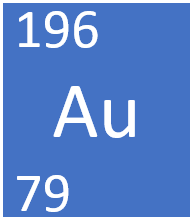
79
400
How many neutrons does the isotope carbon-14 have?
8 neutrons
# neutrons = mass number - atomic number
= 14 (from hyphen notation) - 6 (from periodic table)
= 8
400
Are isotopes always stable?
No only a few are stable.
They will undergo radioactive decay in order to become stable .
500
What is the law of conservation of mass?
Matter cannot be created nor destroyed.
The mass of the reactants = the mass of the products
500
Image (3) consists of ______________.
Image (3): Mixture of elements
500
How would write this in hyphen notation?
Au-196
or
Gold-196
500
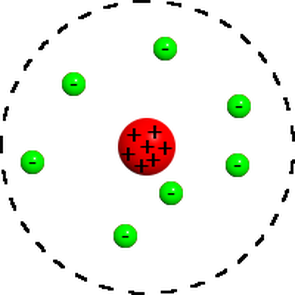
What is the difference between the plum pudding model and the nuclear model of an atom?
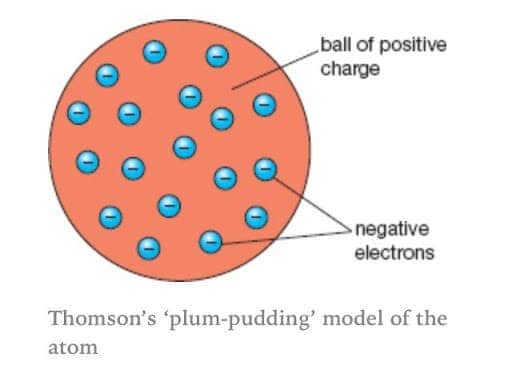
rutherford nuclear model has a positive center (nucleus)
500
What is the difference between mass number and atomic mass?
mass number: the number of protons and neutrons in the nucleus for an individual atom/isotope
atomic number: is the average mass numbers of all known isotopes of an element