汉字
Chinese Characters
Chinese Characters
This character means “big.” When you add one stroke on top, it becomes the character meaning “heaven” or “sky.”
大 → 天
This one-character word can mean "to open", "to turn on" or "to drive."
开
This chengyu literally means “ten have eight nine,” meaning something is almost certain.
十有八九
This celestial object is often used in Chinese poetry to represent homesickness.
月亮 - The moon
This three-character slang refers to a work schedule of 9 a.m. to 9 p.m., six days a week, often used to describe intense tech industry jobs.
996
This Chinese character means two, but it is not 二.
两
This two-character word literally means “electric brain” and refers to a computer.
(Bonus 200 points: This word literally means “electric shadow” and refers to a movie.)
电脑
电影
This idiom literally means “seven up, eight down,” and it describes the feeling of being very nervous, uneasy, or anxious.
七上八下
The ancient saying “一日为师,终身为父” (“One day as a teacher, a father for life”) reflects the traditional relationship between whom and whom?
A. 父母和子女 - Parents and children
B. 老师和学生 - Teachers and students
C. 老师和父母 - Teachers and parents
D. 自己和家人 - Oneself and one’s family
B
This two-character slang is literally "cattle and horses ," used to describe peoplewho feel overworked or exploited at their jobs, especially in big corporates.
牛马
This measure word is used for books.
(Bonus 300 points: This measure word is used for horses.)
(Bonus 300 points: This measure word is used for chairs.)
(Bonus 300 points: This measure word is used for roads and streets.)
一本书
一匹马
一把椅子
一条路、一条街
This two-character word means "train" and it's literally "fire car."
(Bonus 300 points: This two-character word means "rocket" and it's literally "fire arrow.")
火车
火箭
This idiom literally means “a frog at the bottom of a well,” describing someone with a very limited perspective.
井底之蛙
In filmmaking, the commonly used phrase 杀青 (shā qīng, lit. "kill green") refers to?
A.The shooting process has wrapped.
B.The crew utilizes a green screen and CGI.
C.Hiring stunts to replace lead actors.
D.To shoot the film at an exterior location.
A
This two-character slang is literally "so fragrant," used when someone criticizes something but ends up loving it later.
(Bonus 100 points: if you know the origin of this word)
This character means both "sun" and "day."
日
This word literally means “bear cat” and refers to a panda.
(Bonus 400 points: This word literally means “horse tiger” and usually means being clumsy, sloppy, careless.)
熊猫
马虎
The idiom “杯弓蛇影”(lit. cup bow snake shadow)means:
A. Becoming afraid because of an imagined danger
B. Fighting bravely despite having limited resources
C. Discovering a hidden treasure by accident
D. Possessing a rich, vivid imagination
(Bonus 400 points: This idiom literally means “draw a snake and add legs,” meaning to do something unnecessary.)
A
画蛇添足
Which of the following is NOT a first-person pronoun for an emperor to address himself?
A 孤 (gu1)
B 朕(zhen4)
C 鄙(bi3)人
D 寡(gua3)人
C
This two-character slang phrase literally means “to catch or touch fish,” but young people use it to describe pretending to work while actually relaxing or browsing the internet.
摸鱼
In Chinese, each chemical element on the periodic table is represented by a single character. Which of the following radicals does NOT appear in any element name?
A. 钅 (金)
B. 石
C. 亻
D. 气
E. 氵
C. 亻
This four-character word literally means “people mountain people sea,” meaning a place is extremely crowded.
人山人海
The idiom "叶公好龙” (lit. Lord Ye loves dragons) describes:
A.Someone who collects rare and valuable objects
B. Someone who studies mythical creatures and indulges themself in fantasy
C. Someone who accurately predicts the future
D. Someone who loves a certain thing superficially, but not sincerely
(Bonus 500 points: This idiom means to “point at a deer and call it a horse,” describing deliberately misrepresenting reality.)
D
指鹿为马
“美”字最初的含义是/The original, etymological meaning of the character "美" is:
A、羊大即为美 - It's composed of sheep (羊) and big (大), a big sheep is considered beautiful.
B、戴着头饰站立的人 - A person standing while wearing a headdress
C、土地里生长的花朵 - Flowers growing in the soil
D、远方茂盛的森林 - A lush forest in the distance
B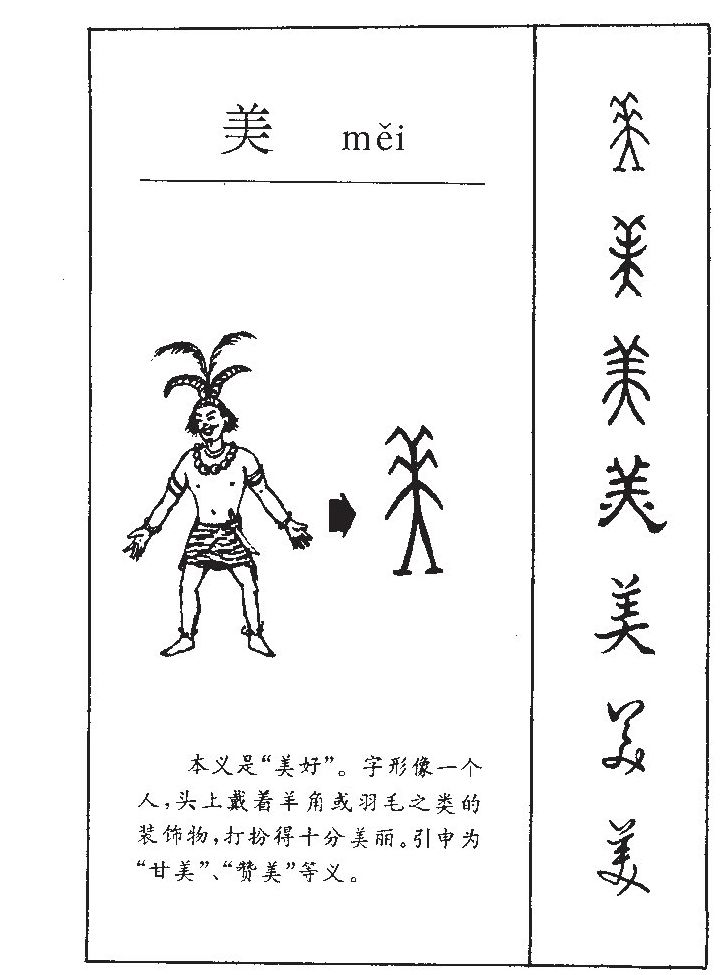
This two-character slang phrase literally means “to draw a cake/bread.” It refers to making big promises about future rewards that may never happen.
画饼