Congress
The Other Branches
The Other Branches Too
Congress 2
Potpourri
Randomness that you oughtta know!
100
What happens after census date is collected?
1. Congress reapportions - meaning they assign the # of districts (representatives) each state gets based on the population of their state
2. one apportionment happen, states will redistrict --> redistricting may lead to gerrymandering
100
President Theodore Roosevelt took his case directly to the American people to gain public support for his progressive reform initiatives by appearing in a movie newsreel. This type of presidential communication is an example of which of the following?
bully pulpit
bully pulpit can also be the use of social media or the television (ahem, like the State of the Union Address)
100
Suppose the state of California has elected an incumbent representative to the House of Representatives who has suggested that he knows what is best for the citizens of California in his district and will use his experience and knowledge to achieve his goals. This representative is playing the
trustee!!!
100
How does the process of a bill becoming a law differ if it is introduced in the House compared to if it is introduced in the Senate?
If a bill is introduced in the House, it must be presented to the Rules committee before it can move to the floor for consideration.
Debate in the House Chamber is VERY strict.
100
Most of the federal budget is spent on what?
Mandatory Spending that includes:
Entitlement programs such as: Social Security, Medicare and Medicaid, food stamps, student loans and grants
Net interest (because we have SO. MUCH. DEBT.)
Then, whatever is leftover is called DISCRETIONARY SPENDING
100
Suppose a member of Congress is part of a committee that ensures funds are being spent efficiently by the federal bureaucracy and elected officials are acting in accordance with the law. This member of Congress is participating in
You have three choices as Congress has three major functions:
1. Legislate
2. Budget ("Power of the Purse")
3. Oversight
Oversight! Here's a picture to help you remember!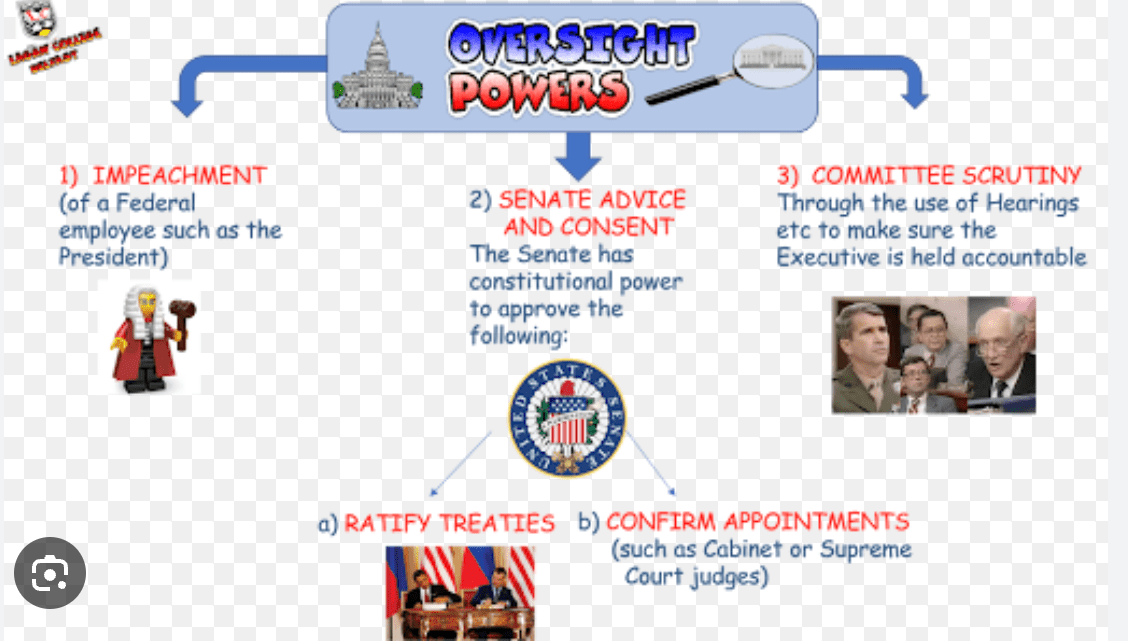
200
This said that malapportionment is NOT allowed; when redistricting, districts must be evenly populated.
Baker v. Carr
**Baker v. Carr ALSO established that redistricting IS SUBJECT to JUDICIAL REVIEW by the Supreme Court (make sure your remember this, WINK WINK)
Violates 14th Amendment, Equal Protection Clause
200
Partisan polarization manifests itself during the end of a president’s term in the form of
lame duck period
(end of the term where the president is no longer running for re-election OR has lost an election OR has already fulfilled their two terms)....so it is hard for them to pass any type of legislations
200
Suppose you are part of the president’s cabinet and advise him on setting the priorities for national spending. You are a member of the
(Hint: You're the office that helps the President with the federal budget process...)
Office and Management and Budget (OMB)
200
Which of the following is the correct comparison of the role Congress and the bureaucracy play in the policymaking system?
Congress passes legislation, but remember, their laws are usually very VAGUE + BROAD.
Federal bureaucracy creates regulations to IMPLEMENT policy (they makes the laws ACTIONABLE)
200
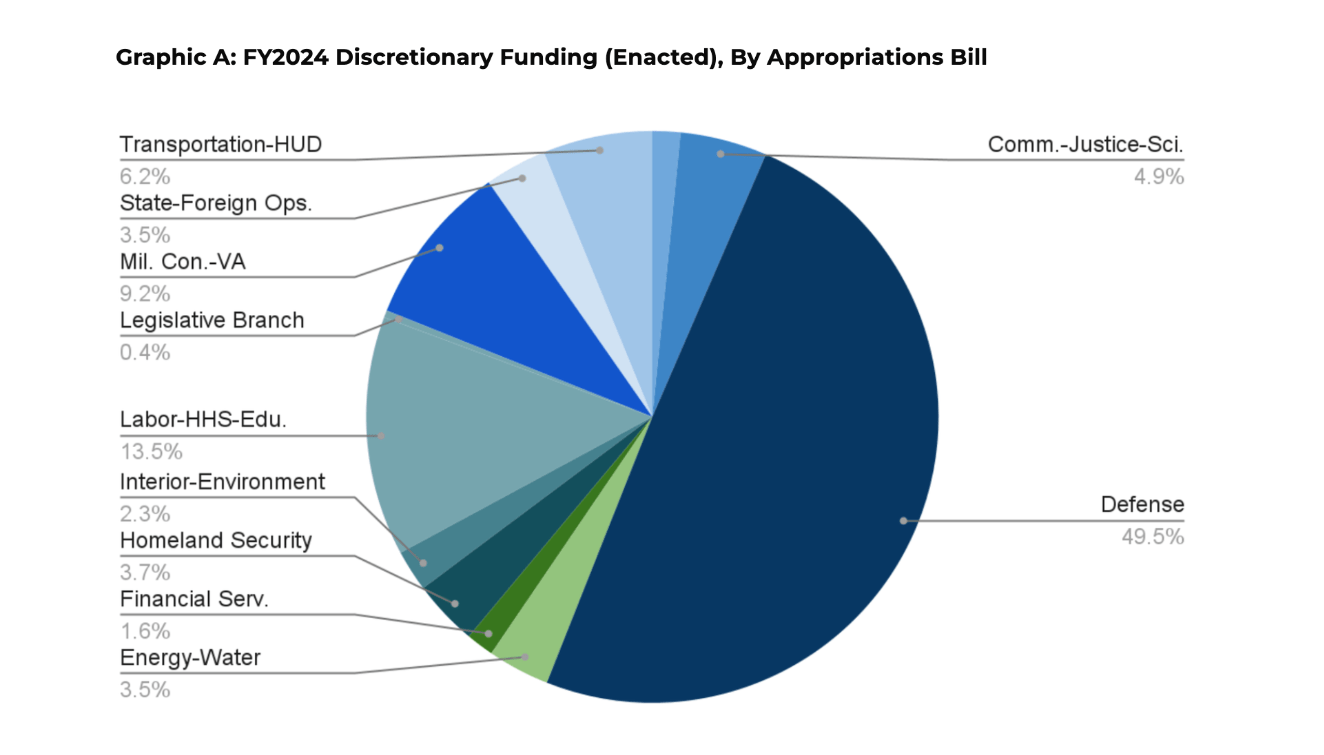 What is most of our discretionary budget spent on?
DEFENSE! (Military)
and the rest of the federal bureaucracy (departments/agencies/commissions), Congress will have to prioritize....
Every year though, the budget for discretionary spending gets smaller and smaller BECAUSE mandatory spending goes UP (due to aging population)
200
Suppose a senator has proposed a budget measure that would direct money to his district for the purpose of improving parks. This would be an example of
pork barrel
300
This said that there is not racial gerrymandering; there is no creation of minority-majority districts.
Shaw v. Reno
**Violates 14th Amendment, Equal Protection Clause
300
Congressional members play "three" distinct roles in Congress. What are they? Name and DEFINE.
Delegate: they act accordingly to what their constituents want
Trustee: they ask their constituents to trust their knowledge and expertise
Politico: use their own knowledge part of the time and at other times follows cues from their constituents
300
A justice who agrees with the majority decision, but has different legal reason for why they reached their decision would write a
concurring opinion
300
How does debate differ in the House v. the Senate?
House is very strict, it must go through the Rules Committee that calendars, determines the length of the debate and whether it is a closed or open rule (do we remember closed or open? LOOK IT UP if you don't!)
Senate has UNLIMITED debate...so you can filibuster, you can only end a filibuster with CLOTURE (2/3rds, or 60 senators...which is VERY hard when we have an evenly divided Senate, which we have currently)
300
Why did the Framers make the legislation process so difficult? and the term lengths different?
1. To make the legislation process deliberately slow
2. To not succumb to the temporary whims of the masses
300
Which of the following are ways that the power of the judicial branch can be limited
I. Senate confirmation of judicial nominees
II. Reduce judicial salaries
III. Change the number of justices
IV. Write clarifying legislation
I, III, and IV (explanation to follow)
I. Senate Confirmation (advice and consent)
III. Change the # of Justices (we don't HAVE to have 9)
IV. Congress can write legislation that would render SCOTUS decisions weak or ineffective
400
What are the incumbency advantages?
name recognition, track record/experience, extensive donor network ($$)
*please do not get this confused with the question "why is the the incumbency advantage greater in the House than in the Senate?"...that is an entirely different question
400
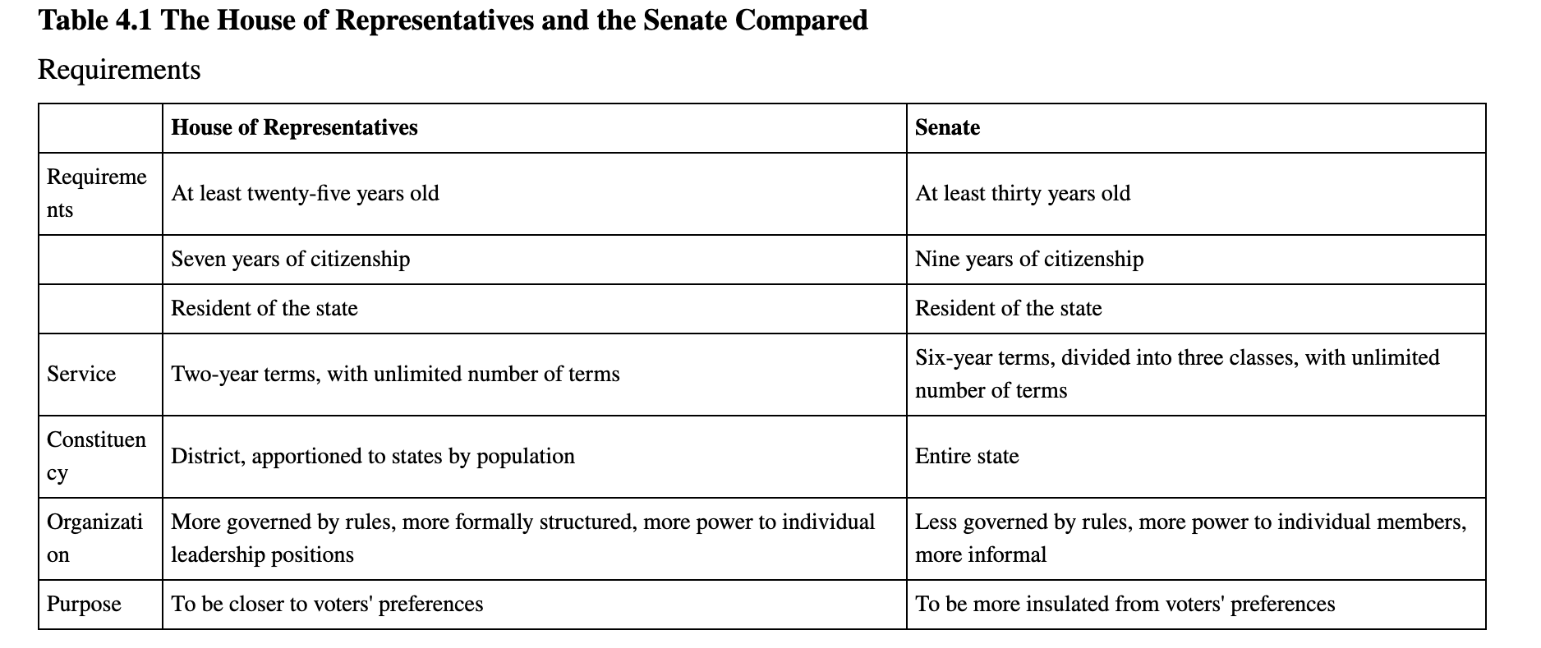
Just know the comparisons between the House and the Senate.
400
Those in favor of judicial activism believe that justices
should overturn legislation when necessary.
They should CREATE, BOLD new legislation
Judicial restraint means they follow Constitution and defer to the other two branches
400
What are the requirements to be a senator?
For someone to be considered a candidate for the United States Senate, he or she must
I) be at least 30 years old.
II) have at least nine years of citizenship.
III) residency in the state a senator represents at time of election.
400
Defense spending is considered
DISCRETIONARY SPENDING!
So many of you still get this wrong...ONLY the following are considered mandatory spending -- net interest (interest accrued on national debt) + entitlement programs (such as Social Security, Medicare, food stamps, student loans -- essentially things that you must meet the requirements for.)
400
Suppose that Congress has recently passed a net neutrality bill. Under the new legislation, internet service providers are classified as common carrier services, like telephone companies, and thus are subject to regulation by the Federal Communication Commission (FCC). If internet service providers believe the law’s regulations are being unreasonably interpreted by the FCC, how would they most effectively challenge the law?
You sue the FCC in federal court!
Whenever you don't agree with something that the government does, you are allowed to sue! That's how you challenge ANY LAW!
500
OK OK, so NOW tell me why the incumbency advantage is greater in the House than in the Senate.
1. frequent elections (their terms are only two years so the minute they are elected, they are already running for re-election)
2. they represent smaller districts vs. Senators who represent the ENTIRE state
BUT you already knew that right???
500
What are the different levels of courts in the US and what types of jurisdiction do they practice?
1. trial courts (district courts) -- original jurisdiction; they hear the case for the FIRST TIME, decide innocence of guilty
2. court of appeals (appellate jurisdiction) - they review the case from the lower courts; they are bound by precedent
3. Supreme Court - court of last resort meaning they only practice appellate jurisdiction; they only review cases related to the Constitution
BONUS: if SCOTUS review -- they can issue 3 types of opinions: MAJORITY, DISSENTING, OR CONCURRING
500
In Federalist No. 78, Hamilton calls the judiciary the “least dangerous” branch. He said this because the judicial branch
was not given the power to enforce their decisions.
500
What are the steps for a bill to become a law?
1. Must be introduced in either chamber (unless is a bill related to taxes/revenue, then it must be introduced int the House)
2. Chamber leadership assigns it to committee, committee chairpersons assign it subcommittees
3. Subcommittees participate in a markup session (they do research, call in experts, get testimonials re: bill).
4. Report out to larger committee --> committee votes on whether they should move it debate. IF they choose to not move it to the floor, the bill dies. (Remember, committee is the "graveyard" for bills).
5. If in the House, it must go through the Rules Committee first (calendar, length, closed/open rule). Senate has unlimited debate.
6. After debate, voting takes place. If bill passes, then it goes to the other chamber and goes through same process. IF the bill doesn't pass debate, it dies.
7. If both chambers pass the bill, then it goes to the CONFERENCE COMMITTEE to iron out/reconcile the differences. If they cannot come up with an identical version, then the bill dies.
8. If they do come up with a reconciled version, then its sent to the President to either sign into law or to VETO.
9. Bill is not dead after a veto though, Congress can still override a presidential veto (but they can't do anything about a pocket veto.)
Phewwwwww....that was a lot!!!
500
Why is it important for a president to choose a nominee for a federal judge position who is aligned with the president’s own values with regards to upholding the Constitution?
The president’s appointment is usually for a life term and gives the president a chance to have a lasting impact on the American judicial system.
500
Compare and contrast iron triangle v. issue network.
Iron Triangle: Is made up of a Congressional committee, an interest group, and a bureaucratic agency
Issue Network: Coalesce around a particular issue and are temporary