Circulatory System
Respiratory System
Circulatory System
Respiratory System
Circulatory System
Digestive System
Digestive System
Digestive System
Misc
100
Where does oxygen poor blood travel to after leaving the heart
lungs
100
Capillaries are very wide, true or false.
False
100
What takes deoxygenated blood from the heart to the lungs?
Pulmonary artery
100
List at least 4 structures of the respiratory system.
1. Nasal cavity
2. Trachea
3. pharynx
4. larynx
5. Bronchi
6. Alveoli
7. Lungs
100
What are the four chambers of the heart?
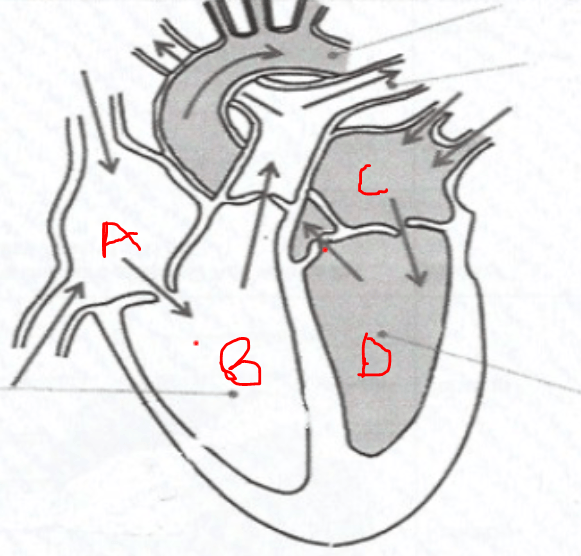
A. right atrium
B. right ventricle
C. left atrium
D. left ventricle
100
Where does the first step of the digestive system take place?
Mouth
100
Name 4 functions of the digestive system
Ingestion,
Digestion of Food
Absorption of nutrients & water
Excretion of waste
100
What is the name for a chemical that speeds up a chemical reaction in the body. An example of this is amylase.
Enzyme
100
As blood moves from right atrium to the right ventricle at the SAME time blood moves from the left atrium to the left ventricle.
True or False
True
200
What is the purpose of valves? Where are valves found?
Valves prevent the back-flow of blood
in the heart
200
Describe the function of the respiratory system.
The system responsible for the exchange of gases between the external environment and the blood.
200
Describe the function of white blood cells.
To fight off foreign invaders and pathogens.
200
Describe exhalation. Using the words
1. Diaphragm
2. lung capacity
3. relax
The diaphragm relaxes (moves up) and inter-coastal muscles relax (come in), lung capacity decreases and air moves out of the lungs.
200
What are the two veins that dump blood into the right atrium?
Superior and inferior Vena Cava
200
Name the MAIN digestive system organs in the correct order (Hint: 5 organs)
Mouth, esophagus, stomach, small intestine, large intestine
200
What are the accessory organs to the gastrointestinal system?
Teeth, tongue, salivary glands, liver & pancreas
200
What is in saliva that begins the breakdown of carbohydrates?
Amylase
200
What is the Lub Dub sound you hear when listening to a heart?
Lub :
Tricuspid and Mitral Valve snap shut
1st heart sound / s1,
Pulmonary and Aortic Valve open
Dub :
Pulmonary and Aortic Valve snap shut
2nd heart sound / S2
Tricuspid and Mitral Valveopen
300
Describe the function of platelets and red blood cells.
Platelets - responsible for forming blood clots to stop your body from bleeding out.
Red Blood Cells - carry oxygen around the body.
300
Describe inhalation. Use the words
1. contracts
2. lung capacity
3. diaphragm
The diaphragm contracts (moves down) and inter-coastal muscles relax (go out), lung capacity increases and air moves into the lungs.
300
What is the function of a thrombocyte?
help form blood clots to slow or stop bleeding and to help wounds heal.
300
What are alveoli and what is their function?
Alveoli are tiny sacs at the end of the bronchioles where gas exchange occurs. It allows oxygen and carbon dioxide to move between the lungs and the bloodstream.
300
What are the names of the three arteries that break off of the aortic arch?
Braceocephalic , left common carotid , left subclavian
300
What is the function of the small intestines?
Absorbs all the nutrients and sends it through to the rest of the body.
300
Apart from the mouth, where else does mechanical digestion occur?
Stomach
300
What enzyme is in the stomach that digests protein?
Pepsin
300
What type of muscle makes up the digestive system?
smooth muscle
400
Describe the function of the heart.
It is responsible for pumping blood around the body, supplying oxygen and nutrients and removing carbon dioxide and waste.
400
What are the names of # 1, 5 and 8
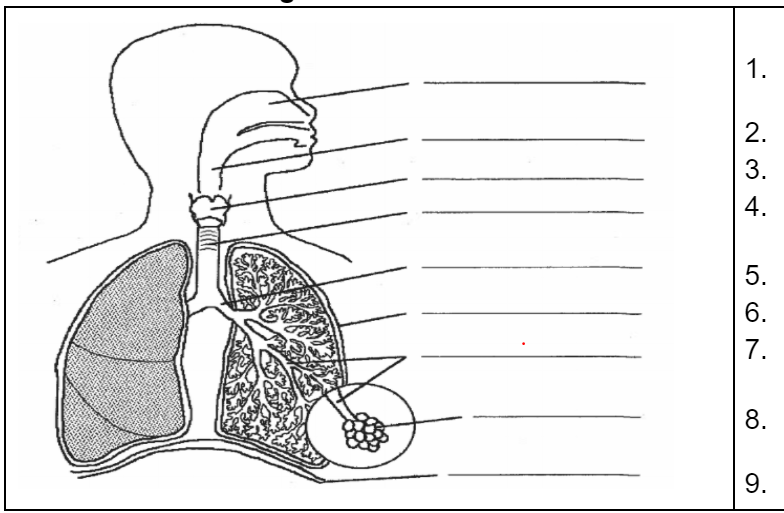
#1 nasal cavity (nose)
# 5 bronchi #8 alveoli
400
List 2 differences between veins and capillaries.
1. Veins carry deoxygenated blood
2. Capillaries facilitate gas exchange
3. Veins have valves - capillaries do not
4. Capillaries are one cell thick
400
What is the name of #4?
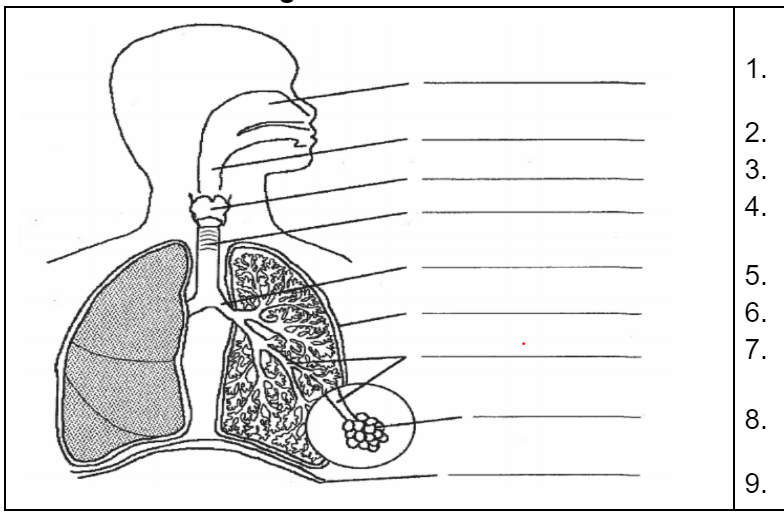
trachea (windpipe)
400
How do the heart and lungs work together to maintain homeostasis?
move oxygen and nutrients throughout body, removes wastes such as carbon dioxide
Heart- pumps blood, carries O2 and Co2
Respiratory System - exchanges needed gases for waste in lungs,
400
What is the main function of the large intestines?
Absorbs water and compacts the waste
400
What is the squeezing wave like movement of the food in the GI tract called?
Peristalsis
400
What are the two functions of food?
Provide energy and building materials
400
What type of lining does the digestive system have that protects it from gastric juices?
Pancreas
500
List the function of the arteries.
Carry oxygenated blood away from the heart.
500
What are the names of # 2, 3, and 9?
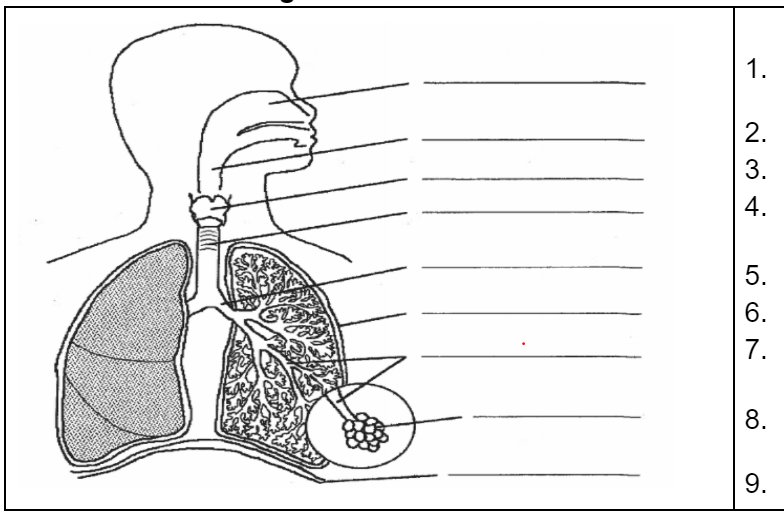
#2 pharynx, #3 larynx, # 9 diaphragm
500
List 3 functions of the Circulatory System.
1. Deliver oxygen and nutrients around the body.
2. Removes wastes from cells.
3. Fight disease and pathogens.
4. Regulate body temperature.
5. Transport hormones around the body.
500
Label all nine parts correctly!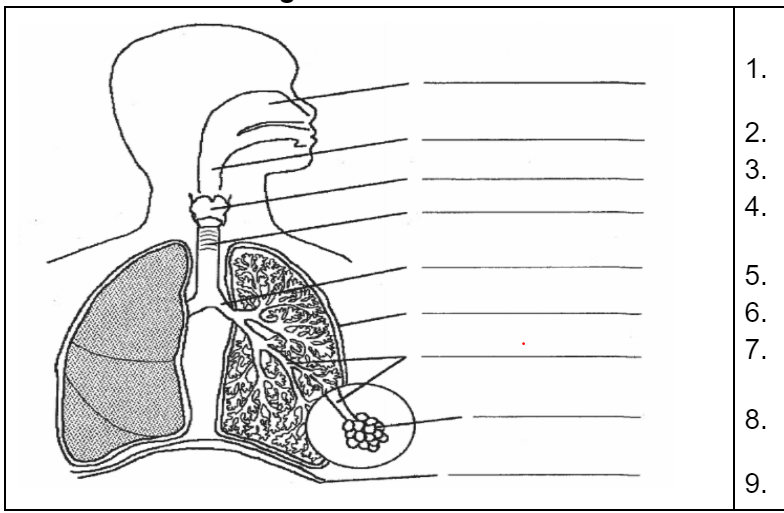
1. nasal cavity, 2 pharynx, 3. larynx
4. trachea, 5. bronchi, 6. lungs, 7. bronchioles
8. alveoli 9. diaphragm
500
What are the names of E, F, and G?
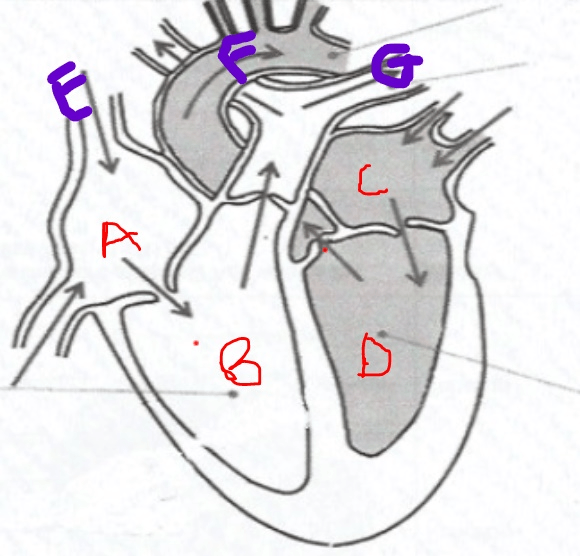
E= vein (superior vena cava)
F = aorta G= pulmonary artery pulmonary
500
What is the difference between mechanical and chemical digestion?
Mechanical : Breaking down of materials by breaking, tearing, crushing and mashing
Chemical: The breaking down of food into smaller pieces by chemicals like saliva or enzymes
500
What are the structures made up of epithelial cells in the small intestine that absorb nutrients
Villi
500
What are the functions of the following organs; liver , pancreas, gallbladder?
liver: filters the blood and breaks down poisonous substances ; produces bile that helps digest fats and carry away waste ; Storage of Vitamins and minerals ; Protein Synthesis; Metabolism and Detoxification
gallbladder : bile storage from the liver. Released into the first section of the small intestine called the duodenum; bile helps body break down and absorb fats from food.
Pancreas: Makes pancreatic juices or pancreatic enzymes which empty into firs section of small intestine called the duodenum; Lipase , Protease, and Amylase; Produces hormones that regulate blood sugar levels and appetite;
500
What type of lining does the digestive system have that protects it from gastric juices?
Mucous