Continental Drift
Earth's Layers
Plate Boundaries
Convection Currents
Random
Rock Dating
100
What did Alfred Wegener call the supercontinent where he thought all of the continents were once connected about 250 million years ago?
Pangaea
100
This is thinnest and least dense layer of the Earth. It is solid and the layer that we live on.
crust / lithosphere
100
What happens at a convergent Boundary when 2 continental plates are involved?
plates move towards each other. mountains form
100
What effect do convection currents in the mantle have on the crust above them?
Plate tectonics/ movement of the plates
100
Label the layers of Earth. 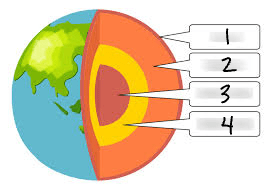
1. crust
2. mantle
3. inner core
4. outer core
100
How long does it take for one half life to pass for Isotope X?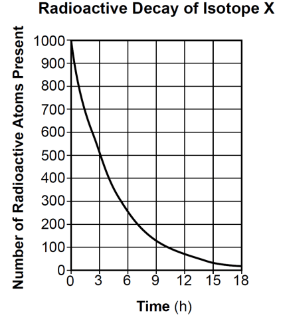
3 hours
200
Who originally developed the theory called "continental drift"?
Alfred Wegener
200
This is the hottest and densest layer of Earth. It is a solid.
inner core
200
How do plates move at a divergent boundary?
Plates move away from each other
200
True or False: Convection currents in the mantle occur relatively quick.
False-- they occur very slowly!
200
Which boundary results in volcanoes and ocean trenches?
subduction
200
If an isotope has a half-life of 5 years, how long is 5 half-lives?
25 years
300
What were the 2 pieces of evidence that Alfred Wegener used to develop his theory of continental drift.
coastlines of Africa and South America line up like puzzle pieces
fossils of land animals found in Africa and South America match up
300
What are the two layers of Earth that are liquid?
mantle/ asthenosphere and outer core
300
How do the plates move at a transform boundary and what landforms occur?
Plates are sliding past each other; no landforms but earthquakes occur.
300
Convection currents occur in the Earth's mantle. Where does the heat come from to power this cycle?
the core
300
List 3 places convection currents occur.
the Earth's mantle, a pot of boiling water, the ocean, the air, a convection oven, etc.
300
What is a half life?
the time it takes for the radioactivity of an isotope to decrease by half
400
Who mapped the seafloor in the 1950s and 60s, finding mid-ocean ridges in the middle of every ocean?
Marie Tharpe
400
What are the two types of crust on Earth and how are they different?
oceanic and continental; oceanic is thinner but more dense and continental is thicker but less dense.
400
What happens at a subduction zone and what kinds of landforms occur here?
oceanic crust bends and sinks beneath continental crust (form of convergent Boundary). this causes volcanoes to form due to pressure from the oceanic plates sinking, deep ocean trenches, and island formation.
400
Provide 2 differences between the asthenosphere and lithosphere.
the lithosphere is the Land that we LIve on. It is solid and part of the crust. It is splite into pieces called plates.
The asthenosphere is a semi-solid/ liquid, and it is part of the mantle. It is where convection currents occur and it is made of magma.
400
At a plate boundary where sea-floor spreading is occuring, where would you find the youngest rocks-- closer or further from the boundary line?
closer because magma has more recently come up and cooled in this area.
400
What is the difference between relative and absolute dating?
Relative Dating puts geologic events in order from oldest to youngest.
Absolute dating gives an exact age range for fossils / rocks. It uses isotopes, like Carbon-12 and Carbon-14.
500
The Appalachian mountains in the United States used to be connected to ....
the Scottish Highlands in Europe and the Atlas mountains in Africa
500
How do scientists study the Earth's layers since they cannot travel into the Earth?
They use seismic waves from earthquakes.
500
What is the Ring of Fire? What areas does it affect?
It is a 25,000 mile long boundary around the Pacific Plate where 90% of the world's volcanoes and 75% of its earthquakes happen. This affects areas like California, Alaska, South America, Japan, etc.
500
Explain what happens to liquid rock involved in a convection current and where the highest versus lowest densities are. 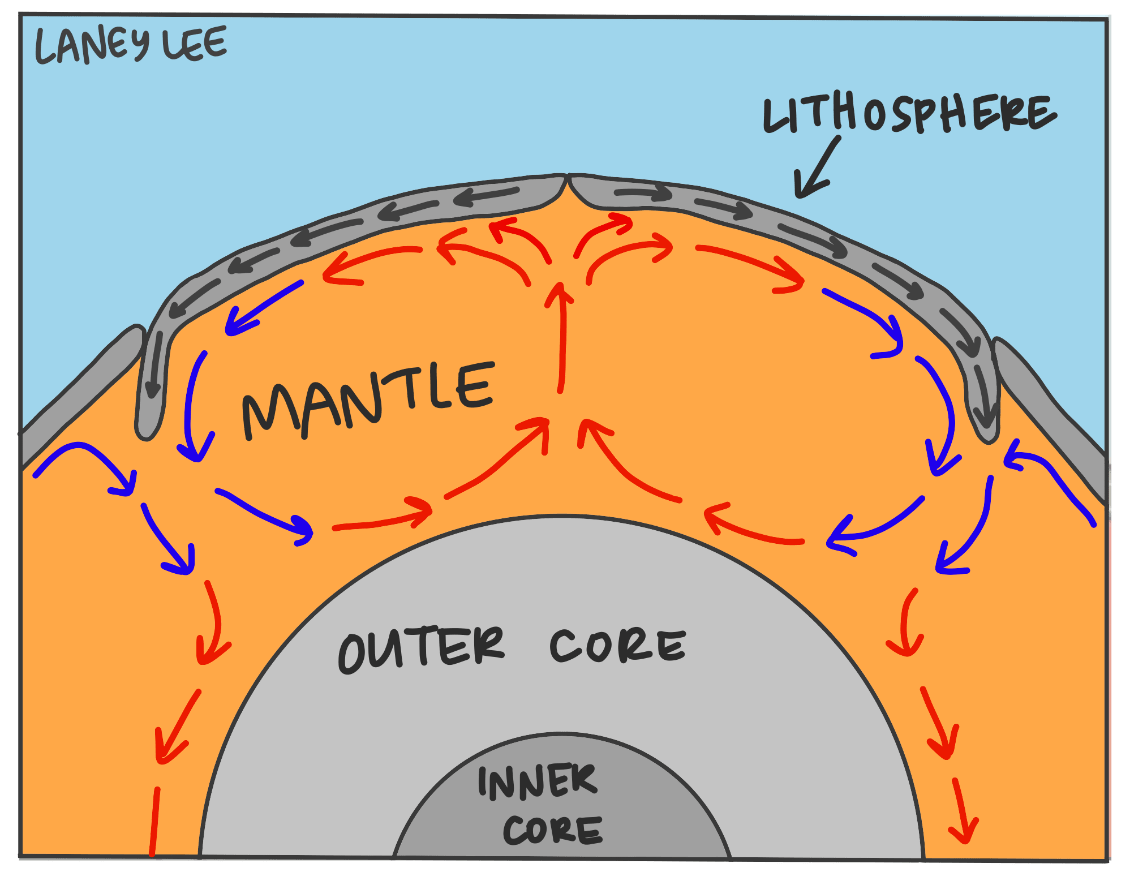
In the mantle, heat from the core moves into the mantle and causes the magma to "boil." Rock near the bottom of the mantle heats, becomes less dense, and moves up towards the crust (because heat always rises). However, the rock eventually starts to cool, grows denser, and moves back down towards the core.
500
What kind of boundary causes sea-floor spreading? Explain how this adds new ocean floor.
Divergent boundary-- magma comes up from the split between plates and quickly cools/ hardens in the deep-sea conditions. This adds more and more igneous rock over time, with the youngest rock near the boundary line.
500
Carbon-12 and Carbon-14 are isotopes of carbon. They have the same number of _______ but different numbers of ________.
protons, neutrons