Airway
Cardiology
Trauma
Pediatrics
Geriatrics
Obstetrics and Neonatal
Endocrine
Medications
Scenarios and Assessment
Policy and Procedure
Other
100
Which of the following flow rates is appropriate when using a nasal cannula?
a)1-6
b)2-10
c)4-8
d)4-6
a)1-6
100
What two heart rythms are considered shockable rythms?
a. Sinus tachycardia and asystole
b. Ventricular fibrilation and sinus tachycardia
c. Asystole and pulseless ventricular tachycardia
d. Ventricular fibrillation and pulseless ventricular tachycardia
d. Ventricular fibrillation and pulseless ventricular tachycardia
100
How often should a paramedic conduct on going exam for a trauma patients?
a. Every 5 minutes for all patients
b. Every 10 minutes for all patients
c. Every 5 minutes for unstable patient and 10 minutes for stable patients
d. Every 5 minutes for unstable patient and 15 minutes for stable patients
d. Every 5 minutes for unstable patient and 15 minutes for stable patients
100
In the pediatric patient, which of the following sites provides the most accurate temperature measurement?
a. Oral
b. Axilla
c. Rectal
d. Tympanic
c. Rectal
100
7. If an elderly patient is complaining of chest pain with a hypotensive pressure and is
wearing nitro patch:
a. remove the patch.
b. keep patch on and give fluids.
c. use a sublingual nitroglycerin spray.
d. call medical control for direction.
a. remove the patch.
100
A patient is gravida 6 para 5 (G6 P5) what does this mean?
a. She has had five pregnancies and delivered six children.
b. She has had six pregnancies and delivered 5 children.
c. She has had at least two miscarriages.
d. She has delivered twins.
b. She has had six pregnancies and delivered 5 children.
100
SUPRISE! its an oxygen tank question.
A patient is running 10LPM on an NRB. Your D Tank has 1100 PSI with a 200 safety residual. How long do currently have?
a. 11 minutes
b. 14 minutes
c. 16 minutes
d. 10 minutes
b. 14 minutes
100
Regular use of NSAIDs or alcohol may result in:
a. unintentional overdose
b. constipation
c. being hypotensive
d. bleeding from ulcers
d. bleeding from ulcers
100
What does the letter A stand for in the SAMPLE mnemonic?
a)autism
b)allergies
c)age
d)altered mental status
b) Allergies
100
What can a paramedic be charged with if they terminate care without the patients consent?
A. Abandonment
B. Breach of duty
C. Non malfeasance
D. Gross negligence
A. Abandonment
100
Which of the following descriptions best defines status epilepticus:
a)A tonic-clonic seizure lasting any period
b) an absence seizure lasting longer than 30 minutes
c)a simple partial seizure followed by a complex seizure without regaining consciousness
d)a series of two or more generalized seizures without an intervening period of consciousness
d)a series of two or more generalized seizures without an intervening period of consciousness
200
Which of the following patients requires a non-re breather mask
a)a trauma patient in cardiac arrest
b)a COPD patient in respiratory distress
c)a Diabetic patient with a BGL of 3.6mmol
d)an Obstetrical patient with contractions less than 2 minutes apart
b)a COPD patient in respiratory distress
200
The paramedic observes ST elevation of more than 1mm in leads 2 and 3. this indicated which of the following types of myocardial infarction?
a. Septal
b. Lateral
c. Inferior
d. Anterior
c. Inferior
200
At an MCI which of the following should be established first?
a)triage
b)logistics
c)staging area
d)incident command
d)incident command
200
Patient is a 3 year old female who has been feeling unwell for 24 hours with a barking cough, she has no PMHx and is not on any medication. The patient is alert and crying, HR 140, RR 26, BP 90/68, SPO2 94%, Temp of 38, warm and flushed. Which area of the body should a paramedic start their assessment:
a)the feet
b)the head
c)the arms
d)the stomach
a)the feet
200
Suprise! oxygen tanks time.
You are in the ambulance flowing an NRB at 4lpm, your M tank has 1900PSI with a 200 residual safety. Unfortunately your partner has put the ambulance in a ditch during a snowstorm and you are stuck for hours until help can come. How many minutes of air does your tank have before you run out?
a.) 11 hours 3 minutes
b.) 23 hours 59 minutes
c.) 12 hours 16 minutes
d.) 6 hours 7 minutes
a.) 11 hours 3 minutes
200
The paramedic has just delivered a baby and in the initial assessment note that the infant is breathing, but appears cyanosis, with a brachial pulse of 70. What is the paramedics next action?
a. Initiate CPR
b. Provide tactile stimulation
c. Positive pressure ventilatory assistance
d. Provide supplemental oxygen via blow by method
b. Provide tactile stimulation
200
Where is insulin produced within the body?
a. In the liver
b. In the spleen
c. In the kidneys
d. In the pancreas
d. In the pancreas
200
Suprise! oxygen calculation question. Your patient is running a nasal at 4LPM, unfortunately Austin didnt change out your tank after the last call, your D tank has 500psi with a 200psi safety residual. How long will the patients oxygen last?
a.)4 minutes
b.)9 minutes
c.)10 minutes
d.)12 minutes
d.)12 minutes
200
A paramedic is attending a patient who is experiencing non traumatic back pain. As the paramedic is going through SAMPLE with the patient, what question should be asked when the M is reached?
A. Do you have any mild pain ?
B. Are you on any medications?
C. Do you have a medical alert bracelet ?
D. Are you having a medical emergency ?
B. Are you on any medications?
200
Which of the following people has final jurisdiction over whether a ten year old patient should be transported if she has non life threatening injuries?
a. Caller
b. Police
c. Parents
d. Paramedic
c. Parents
200
It is a cold snowy winter day and paramedics are transporting a critically injured female from a motor vehicle accident to the nearest trauma Centre. The paramedic attending to the patient in the back of the ambulance says to the driver, "you had better get us there soon; her condition is deteriorating" when of the following statements best explains what the driver should do?
a. Continue at current speed but activate lights and sirens
b. Pull over and ask the attending paramedic to drive the rest of the way
c. Increase speed as patients condition is worsening and move to centre of highway
d. Operate the ambulance in a safe manner and adhere to local traffic laws and road conditions
d. Operate the ambulance in a safe manner and adhere to local traffic laws and road conditions
300
What is the correct way to measure an OPA for a patient?
a)Measure from the Earlobe to nostril
b)Measure from the Mandibular joint to nostril
c)Measure from the earlobe to the tip of the chin
d)Measure from the angle of the jaw of the corner of the lips
d)Measure from the angle of the jaw of the corner of the lips
300
All of the following help the paramedic differentiate between cardiac related chest pain and a respiratory problem except:
a. Placing the patient on an SPO2 monitor to determine oxygen saturation
b. putting the patient on a cardiac monitor
c. determining if the patients pain radiates anywhere
d. asking what makes the chest pain better or worse
a. Placing the patient on an SPO2 monitor to determine oxygen saturation
300
Paramedics have responded to an MVC. While approaching the vehicle they note a large circular crack in the windshield. Upon reaching the vehicle they find a middle aged female patient unrestrained on the floor of the vehicle with a significant pool of blood around her head. The patients pulse is rapid and thready, her capillary refill is slow, and she does not respond to verbal stimuli. Which of the following treatments is the highest priority for this patient?
a) Hyperventilate the patient to increase circulating CO2 levels
b)Repeat vitals every 5 minutes to monitor for pulmonary edema
c) Initiate two large bore catheters of saline for medication ports
d)Administer high flow 02 to encourage oxygen uptake by the hemoglobin
d)Administer high flow 02 to encourage oxygen uptake by the hemoglobin
300
An EMS crew is having lunch at a restaurant when a six month old child starts choking. Upon assessment, the paramedics find that the child is conscious and has an airway obstruction that is not visible. Which of the following actions should the paramedics take?
a. Start cpr
b. Perform 5 back blows
c. Perform 5 abdominal thrust
d. Do a finger sweep to remove the object
b. Perform 5 back blows
300
Generally speaking, why are geriatrics reluctant to report abuse and seek help?
a. Fear of financial troubles
b. Fear of continued abuse
c. Fear of being institutionalized
d. Fear of being alone
c. Fear of being institutionalized
300
What is the targeted pre-ductal SPO2 level 5 minutes after birth?
A. 60% to 65%
B. 70% to 75%
C. 80% to 85%
D. 90% to 95%
C. 80% to 85%
300
Paramedics respond to a call for an altered LOC and find the following patient:
44 year old male w/ C/c altered level of consciousness PMHx diabetes, alcoholism. Takes insulin. Vital signs HR 104, RR 12, BP 134/68, SpO2 90% on room air
Physical findings: pale, cool, clammy skin, patients eyes are open
Other information: patient was found by his family at his home
The paramedic continues to treat the patients condition but after 10 minutes the patient remains confused with only slight improvement to his speech. The patients BGL has improved to 3.5 and transport to the nearest hospital is more than 15 minutes. Give these circumstances, which of the following treatments is most appropriate ?
a. Administer oxygen and 180mg of ASA
b. administer oxygen with rapid transport
c. Administer oxygen and call medical control for direction
d. Administer oxygen and a tube of glucogel (oral glucose paste)
d. Administer oxygen and a tube of glucogel (oral glucose paste)
300
Paramedics are treating a female asthmatic patient with audible wheezing. The paramedics are certified to administer salbutamol to the patient either by nebulizer or MDI. The patient has her own expired Ventolin inhaler and thinks she should take her own. How should the paramedics proceed?
a. Consult with online medical control for advice
b. Allow the patient to take their own inhaler to prevent upsetting them
c. Advise the patient that you would like to administer your medication to them as per your protocol
d. Administer oxygen while moving the patient to the stretcher and then re-evaluate the need for any medication
c. Advise the patient that you would like to administer your medication to them as per your protocol
300
An unconscious patient is lying in bed. The paramedic has eliminated the possibility of cervical spine injury and notes that the patient has noisy, snoring respirations. Which of the following actions should the paramedic perform next?
A. Auscultate chest
B. Assess carotid pulse
C. Reposition the patients head
D. Position patient lateral
C. Reposition the patients head
300
The paramedic is called to a residence of a 55 year old male with end stage prostate cancer. The patient is having trouble breathing. The paramedic ask the patients wife if the patient has an advance directive or a DNR in place. The wife recalls that her husband signed something once but says that they both want the paramedic to provide help now. How should the paramedic respond?
a. Prepare the patient for transport to local hospital and let nurses and doctors deal with the situation.
b. Assess the patient, and if he needs oxygen, administer 10LPM via NRB, and prepare to transport
c. Explain to the wife that since the patient has a signed a document, nothing can be done for him, and then offer to transport the patient to hospital
d. Assess the patient, explain to the wife that since her husband is near the end, difficultly breathing is expected, and then leave the patient at home.
b. Assess the patient, and if he needs oxygen, administer 10LPM via NRB, and prepare to transport
300
Which of the following diagnoses are most likely for a non responsive patient with dilated pupils ?
a. A hypoxic patient
b. An intoxicated patient
c. A patient with syncopal episode
d. A patient who has overdosed on an opioid
a. A hypoxic patient
400
Which of the following patients requires suctioning?
a. A 67 year old patient with CHF who is sitting upright and has crackles in the bases of his lungs
b. A 4 year old patient who is leaning forward who appears to be in distress and is drooling excessively
c. A 23 year old patient who is unconscious in a supine position from alcohol intoxication and has vomited
d. A 42 year old patient diagnosed with pneumonia who is sitting in a recliner coughing up discoloured phlegm
c. A 23 year old patient who is unconscious in a supine position from alcohol intoxication and has vomited
400
The paramedic has a patient that is confused and disorientated. The paramedic notes the patients blood pH level is 7.31. Which one of the following describes the state of the patients blood?
a. Acidotic
b. Alkalotic
c. Hypocarbic
d. Within normal range
a. Acidotic
400
Paramedics respond to the scene of an MVC with 4 patients. The collision is 40 minutes to the nearest hospital. Which of the following patients is top priority to use air medical transportation to get to the hospital
a)29y/o F bilateral wrist fractures and neck pain
b)27y/o M abdominal pain and a fractured clavicle
c)35 y/o F fractured radius and ulna all vital signs stable
d)32 y/o M pelvic fracture systolic BP 70mmgh
d)32 y/o M pelvic fracture systolic BP 70mmgh
400
Febrile seizures typically occur in children in which of the following age ranges
a. 1 month to 1 year of age
b. 1 month to 5 years of age
c. 6 months to 2 years of age
d. 6 months to 5 years of age
d. 6 months to 5 years of age
400
Some side effects of Warfarin are:
a. Angina, fatigue, headache
b. Ecchymosis, epistaxis, abdominal pain
c. GI bleeds, tachypnea, dizziness
d. Hypertension, delirium, vomiting
b. Ecchymosis, epistaxis, abdominal pain
400
A patient with painless bleeding in the third trimester of pregnancy is most likely
experiencing:
a. placenta previa.
b. preeclampsia.
c. uterine rupture.
d. abruptio placentae.
a. placenta previa.
400
Which of the following conditions is likely to cause a patient to be thirsty
a. Insulin shock
b. Hypoglycemia
c. Hyperglycemia
d. Abdominal pain
c. Hyperglycemia
400
Paramedics arrive on scene to a patient complaining of SOB. The patient was at a picnic when he started suddenly having difficulty breathing. O/A it is established the patient is allergic to bees and has been stung by a bee. O/E the patient has RR 32 and AMU. Wheezing audible in all 4 quadrants. What is the most appropriate medication to give at this time?
a)Salbutamol
b)Adrenergic agonist
c)Nitroglycerine
d)Diphenhydramine
b)Adrenergic agonist
400
Paramedics arrive on scene for a 15 year old male who is dressed in several layers of clothing, is very dirty with matted hair, and emits a pungent odour of vomits and alcohol. The patient is responsive, verbally abusive to bystanders, and has no obvious mechanism of injury. Which of the following approaches is the most appropriate ?
A. Introduce themselves and ask if the patient would like assistance
B. Call the police and return to the station as no treatment is required
C. Speak assertively to get the patients attention and tell him to calm down
D. Assist the patient to the ambulance and transport him to the nearest shelter
A. Introduce themselves and ask if the patient would like assistance
400
Regular exercise, adequate sleep, and a nutritional diet are elements that contribute to a good mental and physical health. Which of the following practices is another contributor to a good mental health and physical health?
A. Attending regular counselling sessions
B. Consuming alcoholic beverages in moderation
C. Engaging in leisure activities unrelated to work
D. Having regular contact with siblings and parents
C. Engaging in leisure activities unrelated to work
400
Which of the following nerves controls pupil size
a)optic
b)facial
c)trigeminal
d)Occulomotor
a)optic
500
Paramedics arrive on scene with the fire department for an unresponsive patient. While the paramedic is doing the assessment, which of the following delegation of tasks is most appropriate ?
a) Airway management and ventilation- pcp partner
Retrieve portable stretcher - fire personnel
Collection of medication - fire personnel
Collection of patient identity and medical history - Emr
b) Airway management and ventilation- emr
Retrieve portable stretcher - pcp partner
Collection of medication - fire personnel
Collection of patient identity and medical history - Fire personnel
c) Airway management and ventilation- fire personnel
Retrieve portable stretcher - pcp partner
Collection of medication - emr
Collection of patient identity and medical history - fire personnel
d) Airway management and ventilation- fire personnel
Retrieve portable stretcher - emr
Collection of medication - fire personnel
Collection of patient identity and medical history - Pcp partner
a) Airway management and ventilation- pcp partner
Retrieve portable stretcher - fire personnel
Collection of medication - fire personnel
Collection of patient identity and medical history - Emr
500
Which of the following rhythms is most immediately harmful to the patient?
a. 
b. 
c. 
d. 
b. 
500
The paramedic has control of an arterial bleed to the distal portion of the left arm with direct pressure. The patient has lost about 500ml of blood. Which of the following positions would be the most appropriate for the patient?
a) supine with the injured arm placed on the chest
b) semi-fowlers with the injured arm held on their abdomen
c)Recovery position with the injured arm placed at the patients side
d)Recovery position an their left side with the injured arm placed downward
a) supine with the injured arm placed on the chest
500
The paramedic arrives on scene to an eight mouth old patient with febrile seizures. What is the most appropriate treatment?
A. Remove excess clothing
B. Put the patient in an ice bath
C. Insert and OPA and begin ventilations
D. Turn on air conditioning in ambulance
A. Remove excess clothing
500
Which is the correct treatment plan for a femoral fracture in elderly patients?
a. IV, ECG, keep warm, splint using a traction splint, immobilize C-Spine
b. IV, ECG, keep warm, splint on well padded backboard, immobilize C-Spine
c. ECG, keep warm, splint using a traction splint, immobilize C-Spine, IV
d. Keep warm, splint on well padded backboard, immobilize C-Spine, IV, ECG
c. ECG, keep warm, splint using a traction splint, immobilize C-Spine, IV
500
A 42-year-old primipara in the third trimester complains of headache, dizziness, and
nausea. Vital signs are: HR 110, BP 161/100. RR 22, SPO2 97% Her hands and feet are remarkably swollen and you note intermittent facial twitching.
She says her doctor was worried about protein in her urine.
What position should you transport this patient?
a. Trendelenburg
b. Semi-fowlers
c. Supine
d. Left lateral recumbent
d. Left lateral recumbent
500
A lack of renal gluconeogenesis would predispose a patient to which of the following conditions?
A. Hypoglycemia
B. Hyperglycemia
C. Diabetic ketoacidosis
D. Hyperglycemia hyperosmolar nonketotic coma
A. Hypoglycemia
500
SUPRISE! oxygen tank question. A patient is using a nebulizer at 8lpm, you have a D tank with 1100 PSI and require a 500PSI safety residual. How many minutes can you run the nebulizer before replacing the tank?
a.14
b.13
c.12
d.11
c.12
500
Suprise! oxygen tank calculation question. Your patient is bariatric and requires CPAP at 15lpm, you have a full D tank at 2000psi and only require a 300 safety residual. How long could the CPAP last?
a. 12 minutes
b. 18 minutes
c. 15 minutes
d. 9 minutes
b. 18 minutes
500
At the hospital the paramedic begins to complain to her partner about the patient saying that if most patients would just take better care of themselves and take their medications, they wouldn't waste the paramedics time. Which of the following responses to the paramedic would be most appropriate ?
A. You could say the same about all of our patients, but it's what keeps us in business
B. Stop complaining about these patients, this is our job and you should be used to it
C. I don't think the patients are doing this on purpose, you should try to be more understanding
D. You're right I get tired of these calls all the time, these patients don't seem to car don't themselves
C. I don't think the patients are doing this on purpose, you should try to be more understanding
500
Which of the following is a healthy patient likely to complain of when carbon monoxide levels hit 20%:
a)Headache, nausea, vomiting
b)Dry lips tachypnea, lethargy
c)confusion, lethargy, polyuria
d)Polydipsia, lethargy, headache
a)Headache, nausea, vomiting
600
A BLS crew is transporting a patient to the ER when the patient stops breathing. One paramedic begins to ventilate the patient with a BVM and the other calls in for online medical direction. The doctor recommends intubation of the patient. How should the paramedic respond?
A. I can intubate but I will have to call my supervisor first
B. I am not able to intubate it is out of my scope of practice
C. I can intubate this patient if you walk me through the process
D. I am not able to intubate it is against our polices and procedures
B. I am not able to intubate it is out of my scope of practice
600
Which of the following rhythms is most immediately harmful to the patient?
a.
b. 
c. 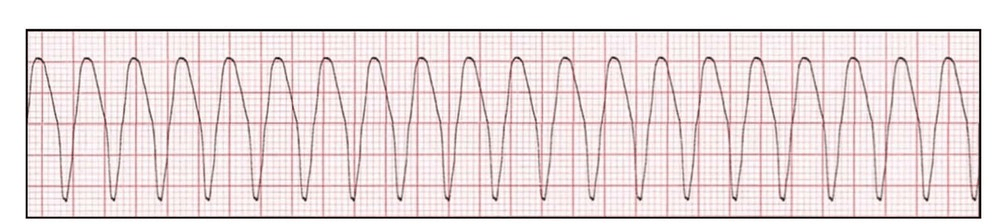
d. 
a. 
600
A paramedic is assessing a multi-system trauma patient involving chest and abdominal injuries and fractures to the left clavicle and the lower extremities. The paramedic determines that rapid transportation to hospital is required due to suspected hypovolemic shock. Which of the following methods is most appropriate for transporting this patient?
A. Log roll the patient to a back board, complete full spinal immobilization and the transport
B. Extremity lift the patient to the stretcher, maintaining neutral alignment and then transport.
C. Utilize a traction splint to immobilized he lower extremity fractures, then log roll the patient to a back board, complete full spinal immobilization and then transport
D. Sling the left arm and immobilize the lower extremities together with broad bandage, then log roll the patient to a backboard, complete spinal immobilization and the transport.
A. Log roll the patient to a back board, complete full spinal immobilization and the transport
600
When should you examine the genitalia of a young child?
a. Evidence of bleeding
b. Never
c. Only with the caretaker present
d. When abuse has been reported
a.) Evidence of bleeding
600
If a patient's hearing aid is not working:
a. resort to a different way of communication.
b. read the manual for further instructions.
c. make sure the hearing aid is turned on.
d. speak with a family member.
c. make sure the hearing aid is turned on.
600
A 30-year-old woman develops dyspnea and severe chest pain 24 hours after delivery of her
third child. She is hypotensive and in acute distress. Based on her history, you suspect which of
the following?
a. Pulmonary embolism
b. Pneumonia
c. Eclampsia
d. Myocardial infarction
a. Pulmonary embolism
600
You are caring for a patient with a temperature of 39.2 *C who is on continuous
peritoneal dialysis. What is a common cause of fever for patients undergoing this
treatment?
a. Pneumonia
b. Infected fistula
c. Dehydration
d. Peritonitis
d. Peritonitis
600
Which of the following medications is most indicated for a patient currently experiencing status anaphylaxis:
a)Dimenhydrinate
b)Salbutomol
c)Diphenhydramine
d)Adrenergic agonist
d)Adrenergic agonist
600
28. The correct order to physically examine the cervical spine is:
I. Assess JVD for distention
II. If trauma suspected, protect C-spine
III. Palpate the neck for abnormalities, ensure trachea is midline
IV. Assess the lymph nodes
a. I, II, IV, III
b. I, IV, II, III
c. II, III, IV, I
d. II, I, III, IV
c. II, III, IV, I
600
For which of the following distances is a fix wing aircraft best utilized for patient transport?
A. A distance of less than 50km
B. A distance of 50 to 99km
C. A distance over 100 to 149km
D. A distance over 150km
D. A distance over 150km
600
Which of the following techniques may need to be adapted when providing care to an obese patient?
A. ECG lead placement, auscultation, and oxygen administration
B. Blood pressure cuff size, auscultation, and ECG interpretation
C. ECG lead placement, blood pressure cuff size, and auscultation
D. Blood pressure cuff size, oxygen administration, ECG interpretation
C. ECG lead placement, blood pressure cuff size, and auscultation