Earths core
Minerals
Rocks
Rock cycle
Tectonic plates
100
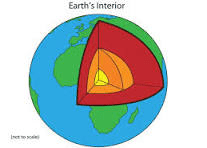
In the image, the yellow coloration represents this.
What is the inner core?
100
A geologist rubs minerals on a white tile to observe the color of the powder left behind. This is the name of the test he performed.
What is a streak test?
100
These are the basic building blocks that make up rocks.
What is a mineral?
100
This process involves the movement of weathered rock and soil by wind, water, ice, or gravity.
What is erosion?
100
At this type of plate boundary, two tectonic plates slide past each other without creating or destroying crust.
What is a transform boundary?
200
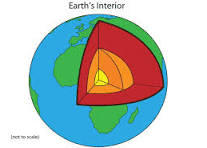
In the image, the orange coloration represents this.
What is outer core?
200
This term refers to a solid, inorganic substance of natural occurrence.
What is a mineral?
200
This process, driven by energy from Earth’s interior, is responsible for the continuous changes in the rock cycle.
What are convection currents?
200
This process occurs when a solid rock is heated until it becomes molten magma.
what is melting?
200
At this type of plate boundary, tectonic plates move away from each other, allowing magma to rise and form new crust.
What is a divergent boundary?
300
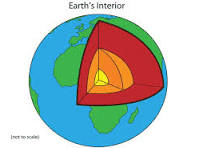
In the image, the top layer represents this.
What is the crust?
300
This property of a mineral describes how light reflects off its surface, making it appear shiny or dull.
What is luster?
300
These two conditions deep within Earth can transform existing rocks into metamorphic rocks.
What are extreme heat and pressure?
300
Rivers, glaciers, and wind all contribute to this process, in which sediments accumulate in a new location.
What is deposition?
300
At this type of plate boundary, tectonic plates move toward each other, often causing mountains, volcanoes, or subduction zones.
What is a convergent boundary?
400
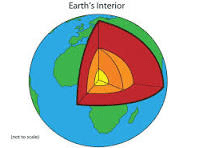
In the image, the red coloration represents this.
What is the mantel?
400
This mineral property measures a mineral’s resistance to being scratched.
What is hardness?
400
This type of rock forms from the compaction and cementation of sediments, often containing layers and fossils.
What is a sedimentary rock?
400
This term describes the eruption of magma, gases, and ash from Earth’s interior to the surface.
What is volcanic activity?
400
At this location, one tectonic plate is forced beneath another, often leading to earthquakes and volcanic activity.
What is a subduction zone?
500
The diagram below represents a cross section of a portion of Earth's interior. The arrows in the diagram represent a heat-transfer process that moves tectonic plates across Earth's surface.
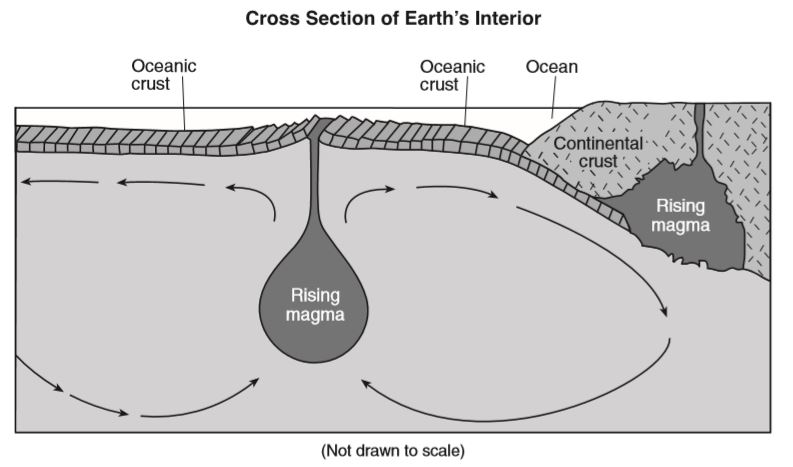
Convection currents in this layer of Earth are believed to drive the movement of tectonic plates.
What is the mantle?
500
True or False: A mineral is a solid, inorganic substance that occurs naturally.
What is true?
500
This type of rock forms when molten rock cools and solidifies, either beneath Earth’s surface or after a volcanic eruption.
What is an igneous rock?
500
This large-scale motion of Earth’s lithospheric plates is responsible for earthquakes, mountain building, and volcanic activity.
What is the movement of Earth’s tectonic plates?
500
These two forces deep within Earth can transform existing rocks into metamorphic rocks.
What is heat and pressure?