Decelerations
Performing a CTG
CTG interpretation
CTG Management
Baseline Rate/Variability
100
What type of decelerations usually occur due to cord compression?
Variable Decelerations
100
What is the standard paper speed when performing a CTG in Trinidad and Tobago?
1cm/min
100
28 years, para 1+0, 39 weeks, no medical problems, 2 cm dilated, membranes intact. How would you describe this CTG?
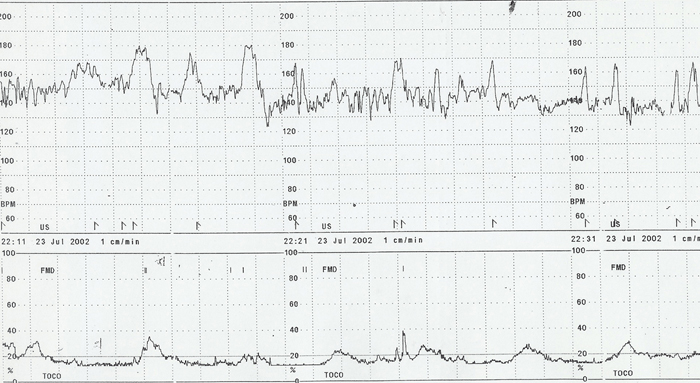
DR - low risk
C - 1 every 3-4 minutes
BR - 140 bpm
A - presents (>10)
VA - Normal
D - none
Overall - normal
100
28 years, para 1, 39 weeks, no medical problems, 2cm dilated, membranes intact. How would you manage?
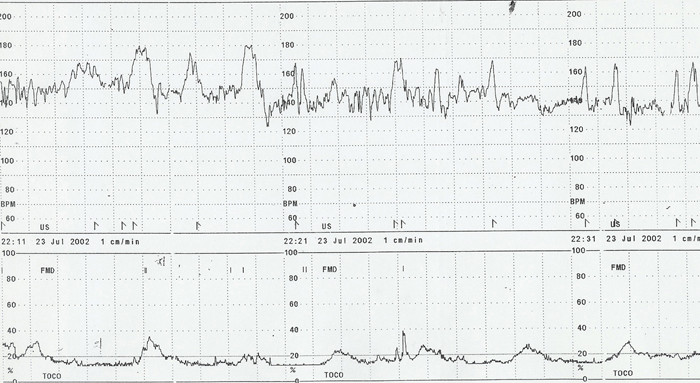
Reassure/Stop CTG
Allow to ambulate
Pain relief
Support in labour
Ensure hydration
Routine monitoring
100
Which of the following is FALSE regarding baseline rate?
A. It decreases with gestational age
B. It is the average FHR in a 10 minute period
C. Normal range is 110-160 bpm
D. It is a sign of a functioning autonomic nervous system
D
200
What type of decelerations are shown in this image?
Late decelerations
200
Where is the tocograph transducer usually placed when performing a CTG?
Fundus
200
A 35-year-old is being induced for type 1 diabetes at 38 weeks. This is the post Prostin CTG. She is 2cm dilated with intact membranes. How would you describe this CTG?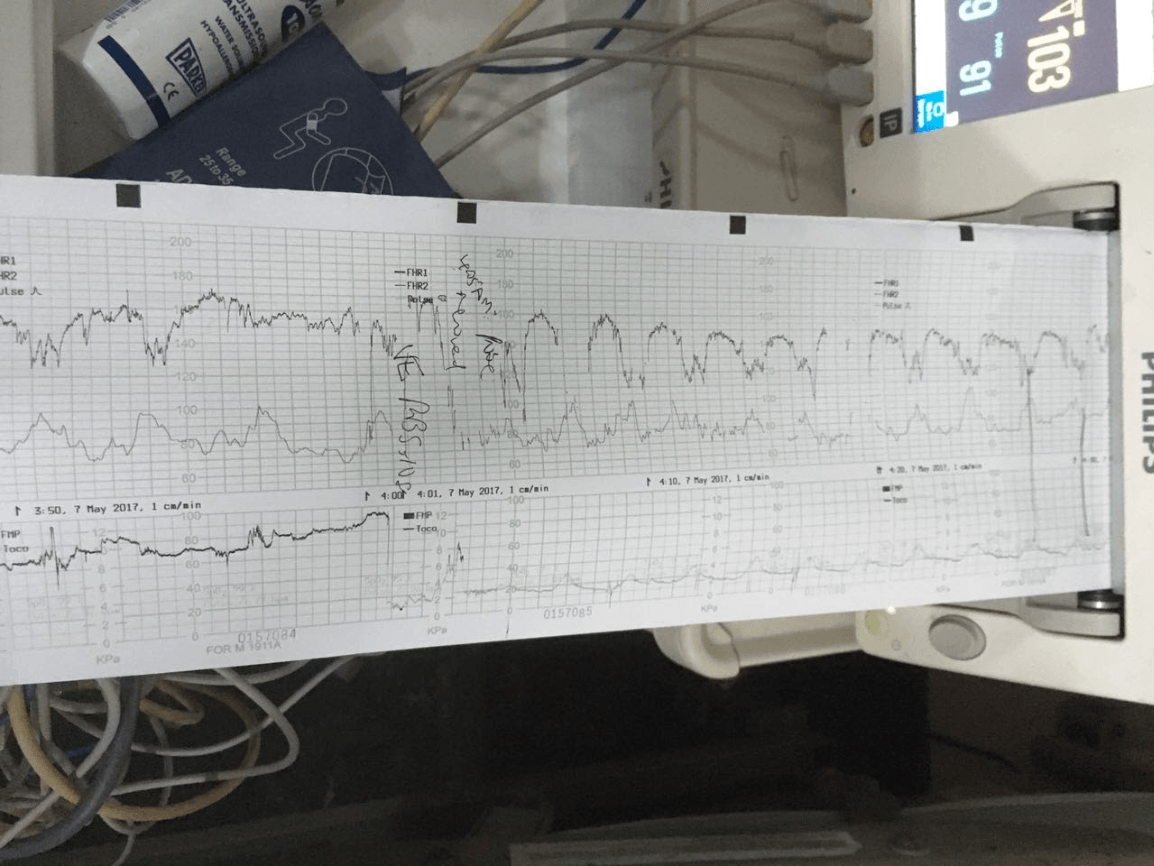
DR - High risk
C - Regular contractions every 2 mins
BR - 150 bpm
A - none
VA - reduced
D - Variable decelerations (with concerning features, > 50% of contractions)
O - Pathological
200
35 yrs, type 1 DM, Para 1 at 2cm dilated and intact membranes. How would you manage?
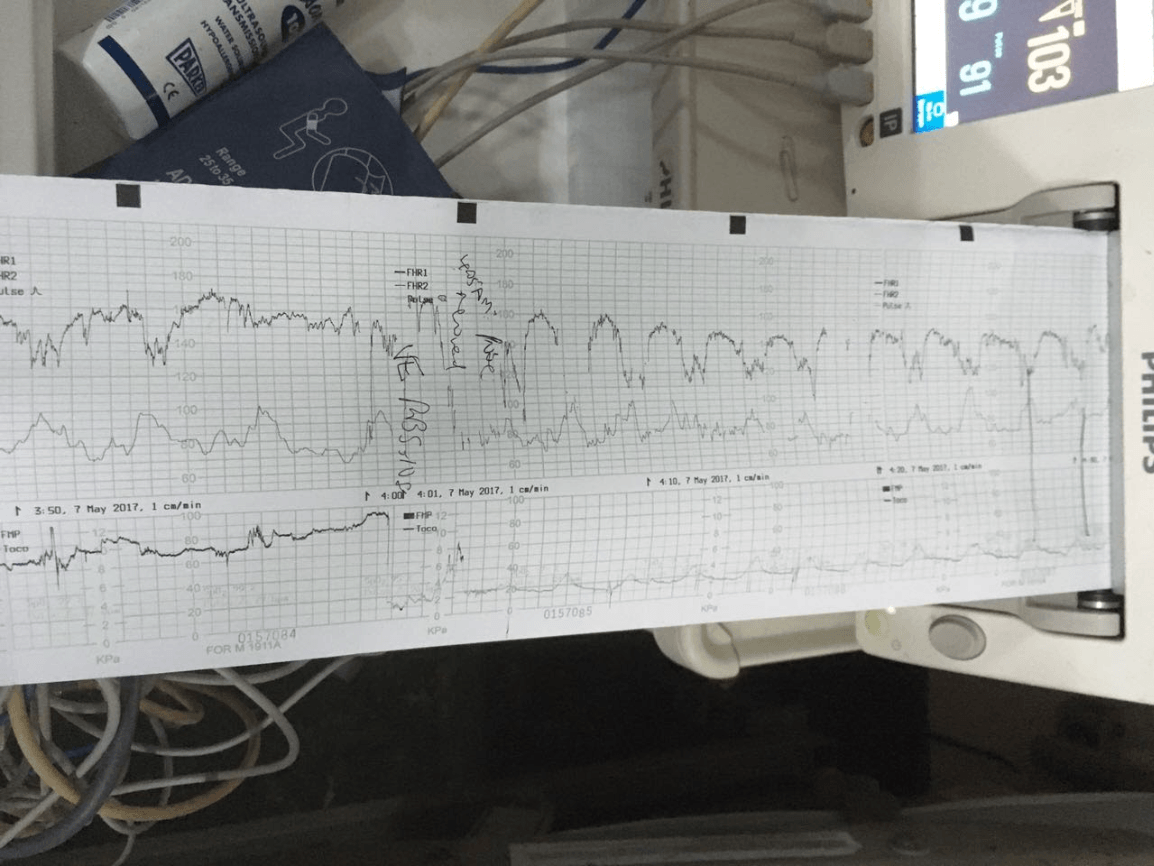
Conservative measures
IVA, CBC, GXM
Keep NPO
Book for LSCS
200
How would you describe the variability in this trace
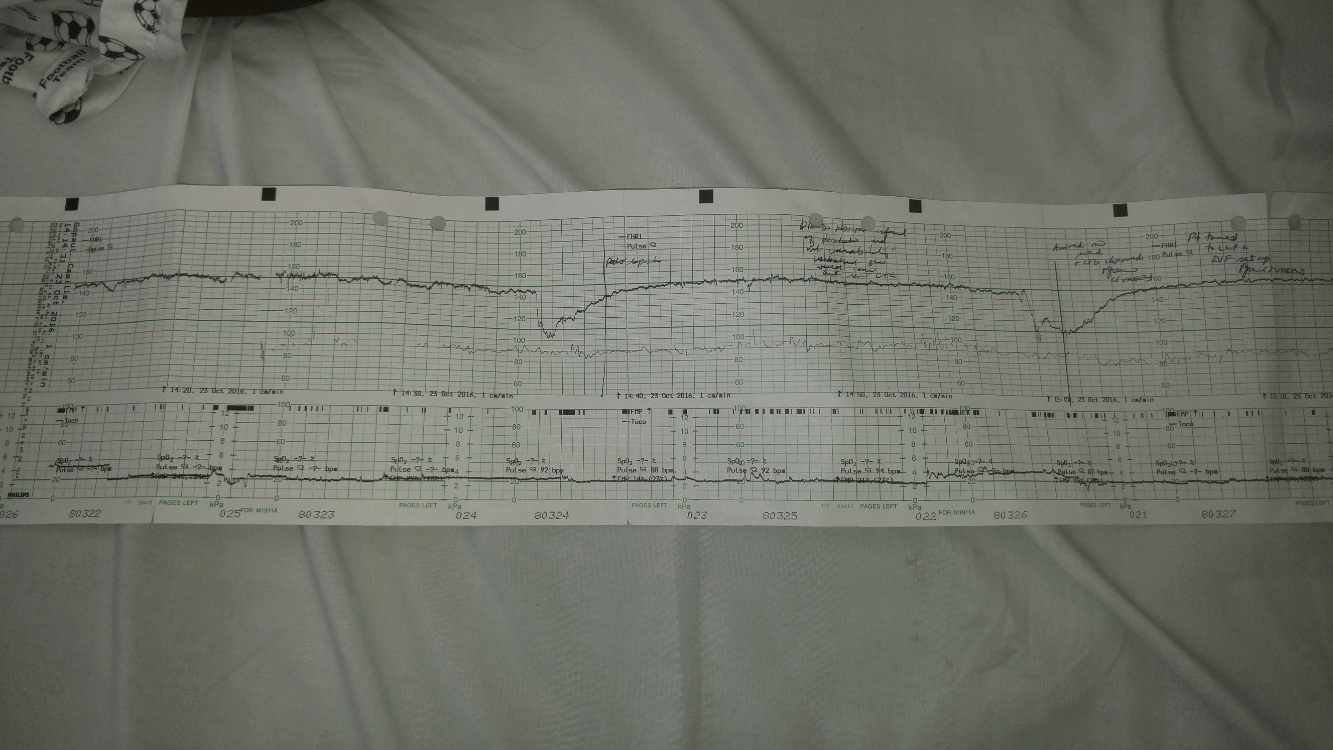
Reduced
300
What is depicted by the arrow?
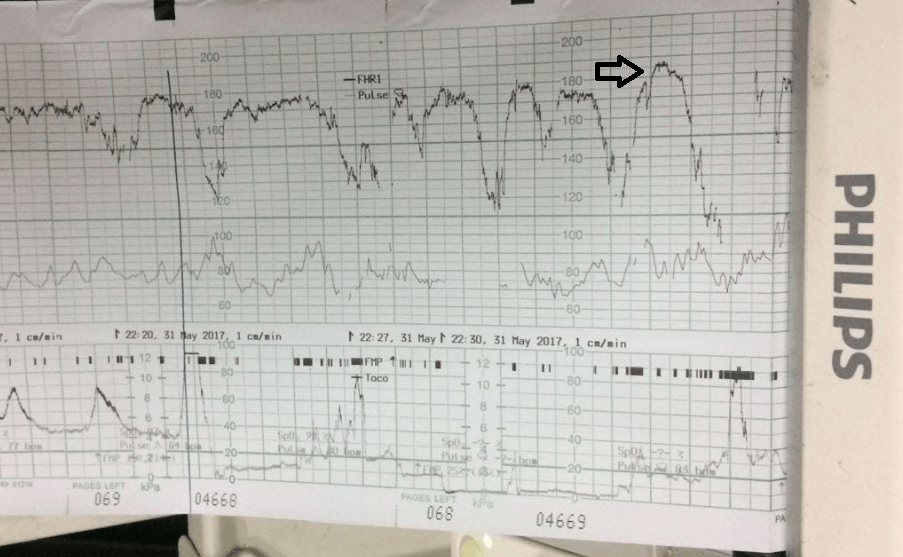
Overshoot/ Failure to return to baseline
300
What is the usual duration of an uncomplicated antenatal CTG (NST)?
20 mins
300
37 yrs, primi, preeclampsia, 32 weeks, not in labour
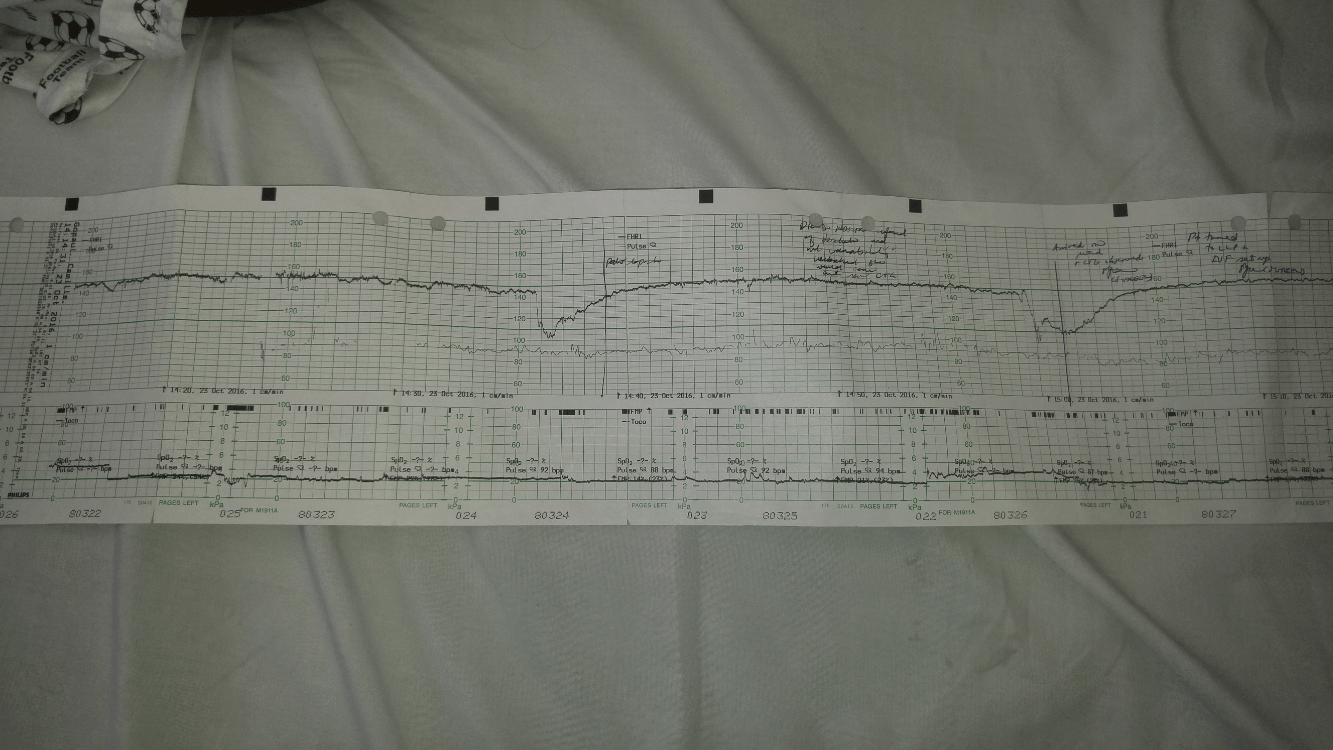
DR - high risk
C - none
BR - 150 bpm
A - none
VA - reduced
D - unprovoked
O - Suspicious (Chronic hypoxia)
300
37 yrs, Primi, 32 weeks, Preeclampsia, not in labour
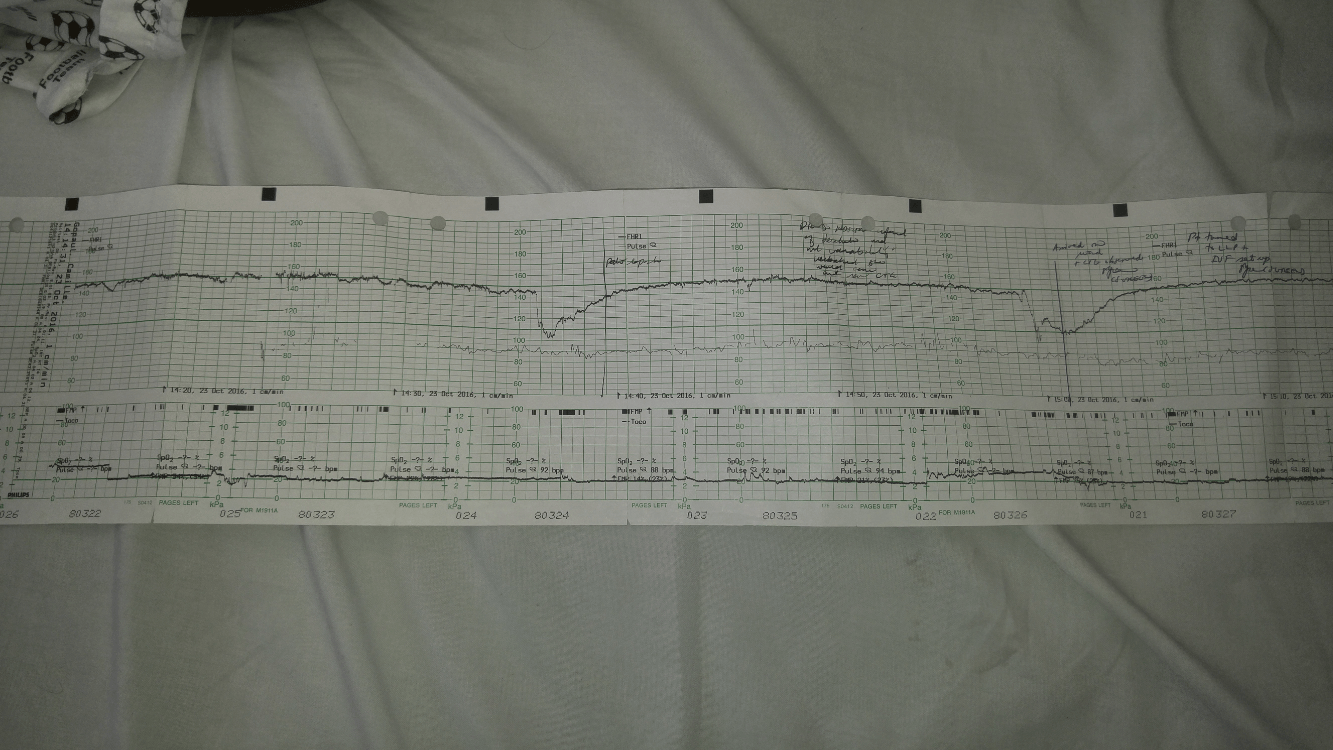
NPO
Continue CTG
Doppler studies
PET blood investigations, GXM
Dexamethasone
Prepare for LSCS
300
List 4 causes for fetal tachycardia
Fever/Chorioamnionitis
Anaemia
Thyrotoxicosis
Fetal hypoxia
Beta agonists
Anxiety
Dehydration
400
List 4 concerning features of variable decelerations.
Loss of shouldering
Failure to return to baseline
Decreased variability within a deceleration
Lasting more than 60s
Biphasic (W) pattern
400
Give 2 recommended maternal positions to be adopted when performing a CTG?
Lateral recumbent
Upright
Half sitting
400
30 years, para 2, fully dilated, no medical problems
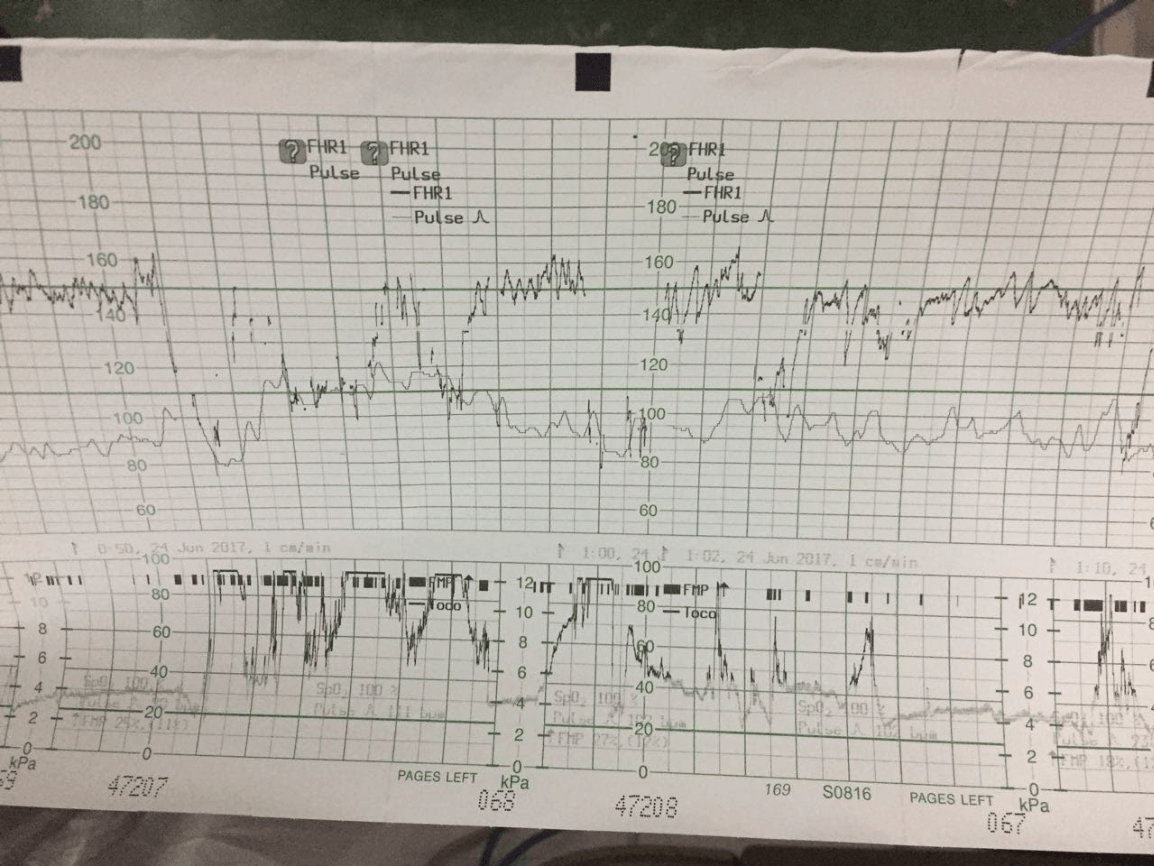
DR - Low risk
C - regular contractions every 2 mins
BR - 150 bpm
A - None obvious
VA - normal
D - Variable (>50%, shouldering present)
O - Suspicious
400
30 yrs, Para 2, no medical problems, fully dilated, clear liquor
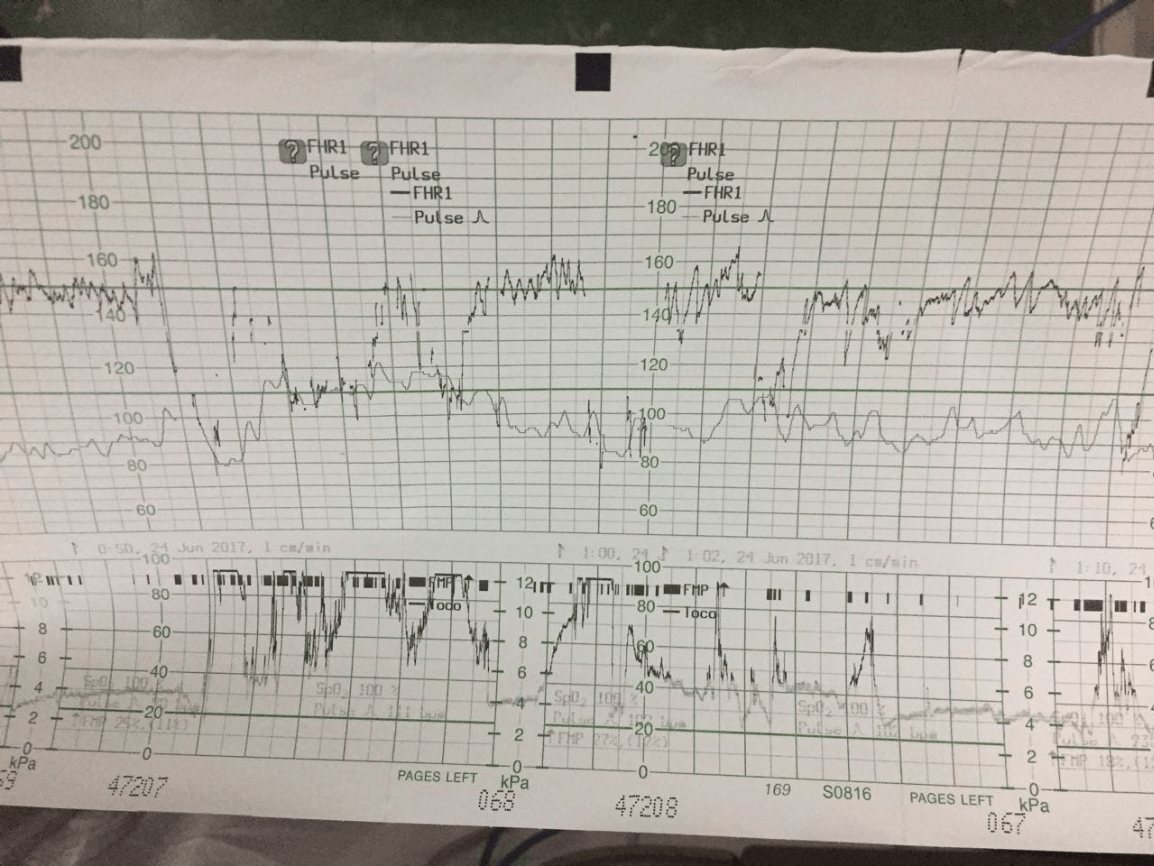
NPO
IVA, CBC, GXM
Prepare for OVD
400
What duration/range is used as the cut-off to consider reduced variability as non-reassuring?
30 - 50 mins