Structure basics
Structure types
Form and Function
Style History
Style Elements
100
Any building is built on its ___.
frame system
100
Domes are made of ___.
arches
100
Designs need to adapt to the ___.
areas they will be built in
100
The main historical architectural styles covered today were from ___.
Europe
100
Renaissance architecture uses a lot of ___.
domes
200
Truss members are ideally either in ___.
Tension, compression, or neither
200
Tensile systems are effective for reducing ___
weight
200
Denser urban areas often include ___.
Mixed use buildings.
200
Deconstructivism originated in ___.
France
200
Common features of Gothic Revival buildings are ___ (only on example needed).
examples: flying buttresses, ribbed vaults, pointed edges
300
___ are strong because they can not ___.
triangles, deform
300
Arches are used to ___
disperse weight.
300
Large department stores located in low population suburbs can be referred to as ___.
Big-Box Stores
300
The architectural style covered today that remained popular for the longest was ___.
Renaissance
300
A preferred material for Brutalism is ___.
concrete
400
Three common materials for trusses are ___.
wood, reinforced concrete, steel
400
___ are a type of ___.
Domes are a type of shell.
400
A common design optimization is between ___.
scale and setup cost
400
The Baroque style originated in ___.
Rome, Italy
400
Baroque art often prioritized ___.
contrast lighting
500
Which members in the truss are experiencing no tension or compression?
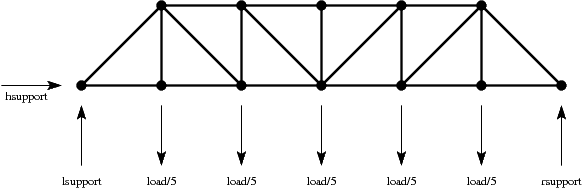
The middle straight one.
500
___ supported by both tension and compression systems while ___ only supported by tension and compression systems
Hybrid systems, tensegrity structures
500
An example of a building modification for a cold climate would be ___ (hint: relates to materials used).
Insulating material like bricks.
500
List a specific building that is an example of neoclassical architecture (hint: it was on the slides).
The United States Capital Building
500
___ architecture has the opposite stance of ___ architecture when it comes to following symmetry
Neoclassical, Deconstructivism