The construction crew
The highway
Leading vs Lagging strand
Relay the sequence
Critical thinking
300
What is the nickname we gave to Helicase because of its job opening the DNA ladder?
The zipper
300
What do scientists call the two ends of a DNA strand, represented by numbers and the word "prime"?
5' (five-prime) and 3' (three-prime).
300
Which of the two template strands is built smoothly in one continuous direction?
The Leading Strand.
300
What is the very first step of DNA replication that must happen before building can begin?
Helicase unzips the DNA.
300
If Helicase failed to do its job at the very beginning, why couldn't Polymerase work?
The DNA ladder wouldn't be open for it to read.
350
What are the two main jobs of DNA Polymerase?
The Builder and the Spell-Checker.
350
Which end of a DNA strand acts like the "head" that points forward?
The 5' end.
350
Why does the Lagging Strand have to be built in choppy chunks instead of smoothly?
Because Polymerase can only build 5' to 3' and has to work backward as it opens.
350
Put these in order: Ligase seals gaps, Helicase unzips, Polymerase builds.
1. Helicase unzips
2. Polymerase builds
3. Ligase seals gaps
350
Why does the Lagging Strand require DNA Ligase much more than the Leading Strand?
Because it leaves behind lots of gaps/backbone breaks that need gluing.
400
If DNA Polymerase sees an exposed base C on the template strand, which base does it snap into place?
G (Guanine)
400
What term describes the two sides of a DNA ladder running in opposite directions (like parked cars hood-to-trunk)?
Antiparallel.
400
What are the short, disconnected segments of DNA built on the lagging strand called?
Okazaki fragments
400
What is the specific job of DNA Ligase in the assembly line sequence?
Sealing up gaps in the lagging strand & sugar-phosphate backbone
400
What happens if DNA Polymerase misses a typo during its spell-checking phase?
It creates a mutation (or genetic error in the cell). An accumulation of mutations can lead to Cancer!
450
What is the job of DNA Ligase at the end of the replication process?
Acting as the "glue" to seal the backbone gaps.
450
In which strict direction is DNA Polymerase allowed to build new DNA?
From 5' to 3'.
450
True or False: Both the leading strand and lagging strand are built in the exact same direction (5' to 3').
True! (Both build 5' to 3', but the lagging strand has to jump backward to do it)
450
Match the worker to the action: Which worker is active last to finish the structure?
DNA Ligase
450
If DNA Polymerase could magically build in both directions effortlessly, would we still need a lagging strand?
No, we could build both sides smoothly and continuously.
500
Describe the exact base-pairing rule that DNA Polymerase uses when reading a template strand. (Hint: What are the base pairs?)
A pairs with T, and C pairs with G.
500
Given a template strand reading A T C G A C G T, write down the exact new matching strand built by Polymerase.
T A G C T G C A
500
Explain why the antiparallel layout forces the cell to use a "lagging" strategy.
Because the tracks run opposite ways, but Polymerase only builds one way, forcing choppy backward jumps.
500
Trace a full nucleotide through replication: If an original strand has A, what gets snapped in, and what enzyme does it?
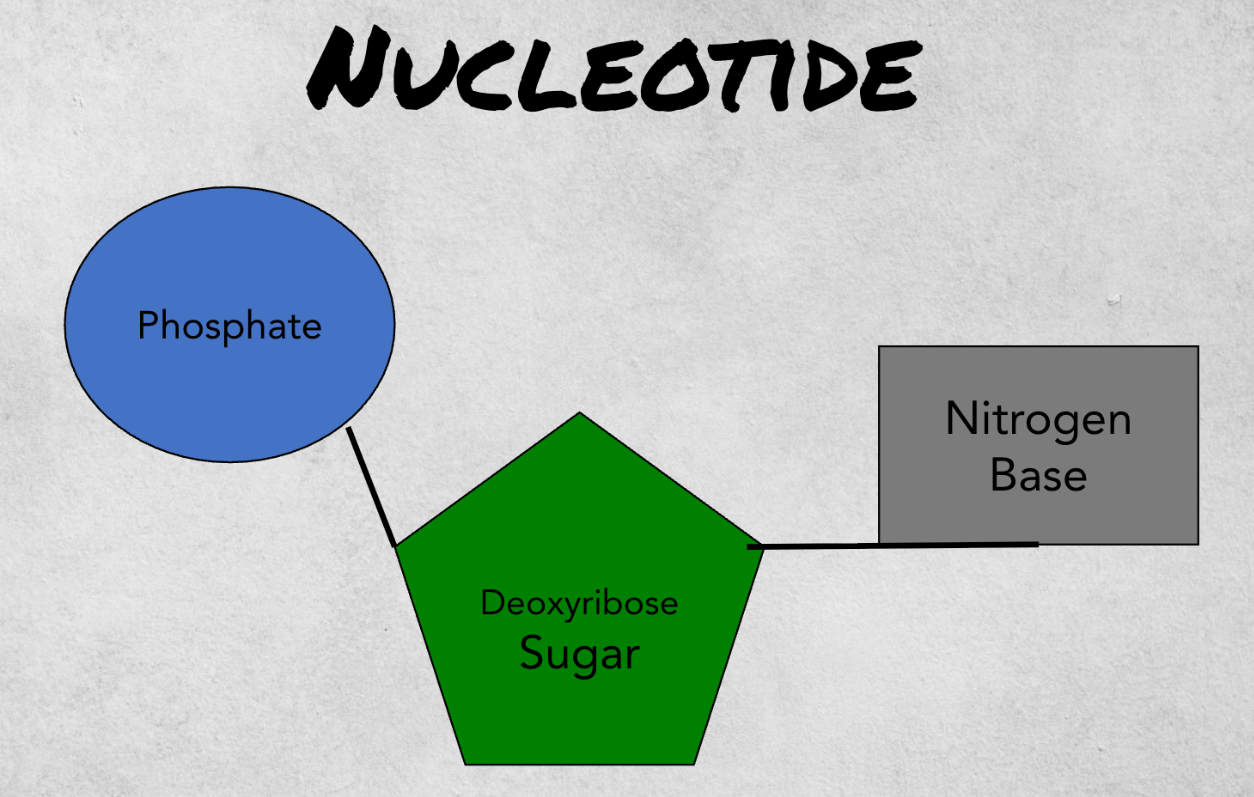 T gets snapped in by DNA Polymerase.
500
Think about the factory analogy: Why is the order of Helicase, Polymerase, Ligase an absolute rule that cannot be rearranged?
You can't build bases on a closed ladder (needs Helicase first), and you can't glue gaps before they are built (needs Polymerase before Ligase).