vents
traps
drains
connection
original
100
Pressure pushing against the outlet of the trap from inside the drainage system.
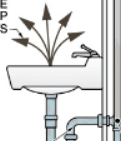
backpressure:
100
A vent that connects to a horizontal drainage branch and vents two traps to a maximum of eight traps or trapped fixtures connected into a battery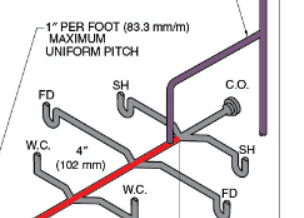
circuit vent:
100
The shortest piece of pipe in a given size that is possible to have an externally disposed pipe thread on each end.
close nipple:
100
A bend specifically designed to make the 90° bend that connects a water closet to a trap arm or fixture drain.
closet bend:
100
1A vent that connects at the junction of two fixture drains and serves as a vent for both fixtures, as defined by the UPC. 2A vent that connects at the junction of two fixture drains or to a fixture branch and serves as a vent for both fixtures, as defined by the IPC.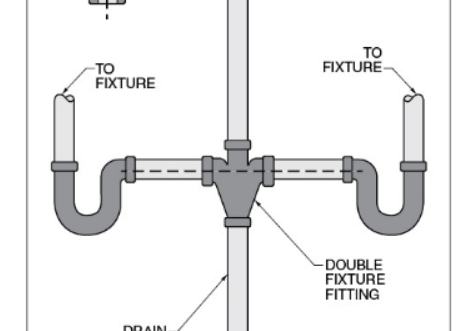
common vent:
200
Any part of the piping system other than a main, riser, or stack
hint: The Giving Tree was my favorite book
branch
200
Supports that are completely concealed in the wall, and support the load of the fixture by means of a suitable face plate and base support firmly anchored to the floor.
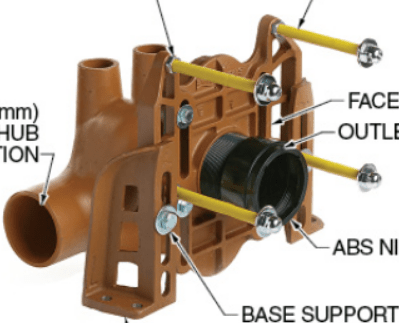
carriers
200
A system of waste piping embodying the horizontal wet venting of one or more sinks, lavatories, drinking fountains, or floor drains by means of a common waste and vent pipe, adequately sized to provide free movement of air above the flow line of the drain.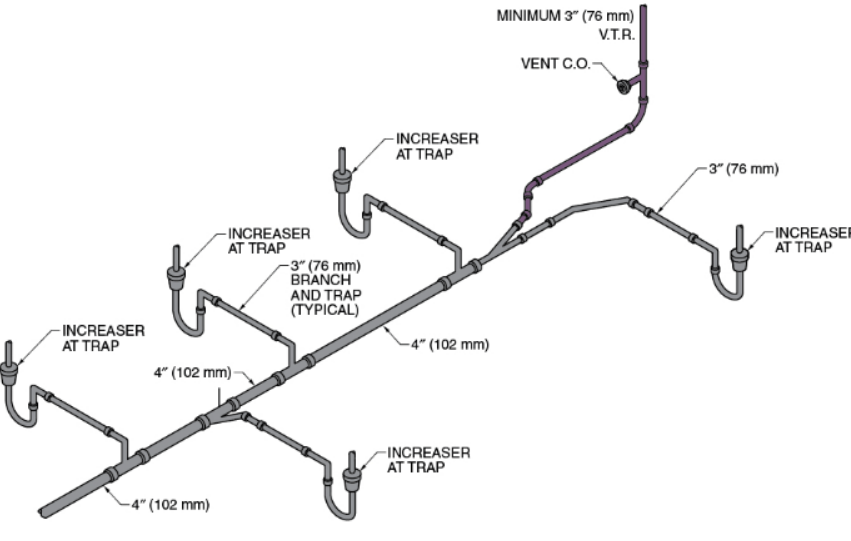
combination waste and vent system:
200
A pipe inside the building that conveys rainwater from the roof to a storm drain, combined building sewer, or other approved point of disposal.
conductor:
200
A vent that does not carry water or waterborne wastes.
dry vent:
300
The lowest horizontal piping of the building drainage system.
building drain
300
The lower part of the 90° radius bend of the P-trap and is also the top of the trap seal. Also known as the weir of the trap.
crown weir:
300
The increase in the water depth in a horizontal drain at the base of a stack caused by the reduced velocity of water flowing in the horizontal pipe when receiving flow from a vertical stack.
hydraulic jump:
300
Discharge to a drainage system or receptacle through an airgap or airbreak as a method to avoid a cross connection.
indirect waste:
300
A pipe installed to vent a fixture trap and that connects with the vent system above the fixture served or terminates in the open air. Previously known as a back vent.
individual vent:
400
A length of soil or waste stack corresponding, in general, to the height of one story, but no less than 8' (2.4 m), within which the horizontal branches from one floor or story of a building are connected to the stack.
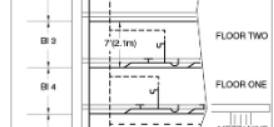
branch interval:
400
The lowest point on the interior of a horizontal pipe.
invert:
400
An exterior vertical drainage pipe for conveying storm water from roof or gutter drains.
leader:
400
A vent whose primary function is to provide circulation of air between drainage and vent systems, or to act as an auxiliary vent on specially designed systems.
relief vent:
400
A set of technical definitions, instructions, rules, guidelines, or characteristics created to provide reliable and similar results to ensure piping materials are manufactured uniformly.
standard:
500
The loss of trap seal due to the momentum of wastewater discharge through the trap and fixture drain.
self-siphonage:
500
The part of the fixture drain between the trap and its vent.
trap arm:
500
A pipe that is installed in a vertical position and makes an angle of not more than 45° (0.79 rad) with the vertical plane.
vertical pipe:
500
A vent that also serves as a drain.
wet vent:
500
A pipe that leads to the vent stack into which several vents connect.
vent header: