EMS System
Seasons
Moon Basics
Moon Phases
Eclipses
100
What is the difference between a rotation and a revolution?
Rotation is the turning or spinning of a planet on its axis, whereas, revolution is a full orbit around another object.
100
How do the seasons differ between the Northern and Southern Hemisphere?
They are always opposite to each other.
100
What is the action called when the size of the lit part of the moon grows?
waxing
100
Which moon phases have a shape sometimes described as a sliver or banana?
Waxing and Waning Crescents
100
What does the word eclipse mean?
The obscuring or blocking of light from one celestial body due to another.
200
What is a satellite?
Any object, natural or man-made, that orbits around another object due to a gravitational attraction.
200
When looking at a diagram about seasons, how do you go about labeling it accurately?
You start with Summer by finding the globe that has its Northern part pointing toward the sun.
200
What is the side of the moon called that we see?
The near side!
200
What do the shaded in areas represent?
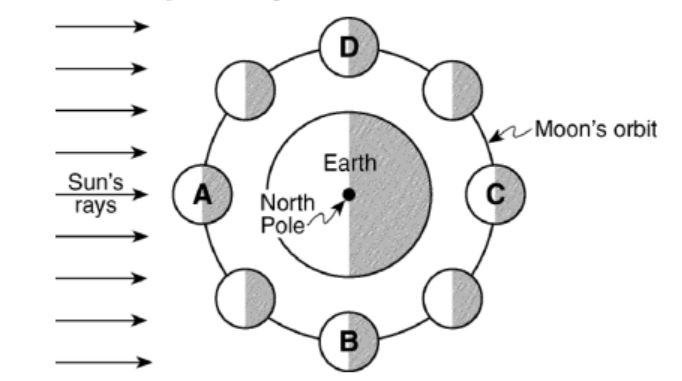
Where the sunlight is not being reflected.
200
Solar? is the pneumonic for a solar eclipse.
Solar SME
300
What is the length of time for Earth's rotation and its revolution?
It rotates in 24 hours and revolves in 365 days(a year).
300
What does equinox mean?
When day and night are equal.
300
From which direction do we "read" the moon to determine its phase?
From right to left.
300
What causes the moon phases?
It is the relative positions of the Earth Sun and Moon along with how much light is being reflected off of which portion of the moon.
300
Another way to determine the type of eclipse being talked about aside from a Pneumonic strategy is _____________?
Determining what is being eclipsed! (Ex. in a lunar eclipse, it is the moon being eclipsed.)
400
What is the degree of tilt for Earth's axis?
23.5 degrees
400
What does solstice mean?
These are the longest and shortest days of the year.
400
What is the highest percentage of the moon that you will ever see lit?
50%
400
Which side is illuminated for a 1st and 3rd quarter respectively?
Right side for the 1st and left side for the 3rd.
400
Lunar? is the pneumonic for a lunar eclipse.
Lunar SEM
500
Approximately how long does it take to get through a complete lunar cycle?
28 days
500
If our hemisphere is experiencing the Vernal Equinox, what would be occurring "down under" in Australia?
The Fall or Autumnal Equinox.
500
What is waning and how do we see it?
It is the darkening of the fully lit moon as we see the darkness growing from right to left on the face of the moon.
500
What is similar about these two phases and what is different?
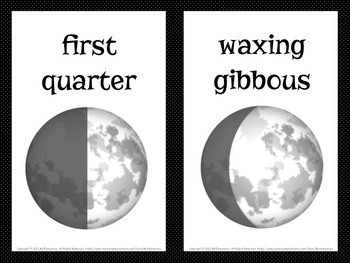
They both are waxing and they differ based on their orbital position or how much like is being reflected.
500
What is this image showing?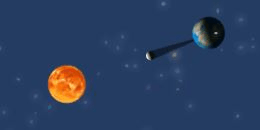
Solar Eclipse
600
Approximately, what angle does our moon's orbit have?
5 degrees
600
Which season is occurring in the Northern Hemisphere at position D?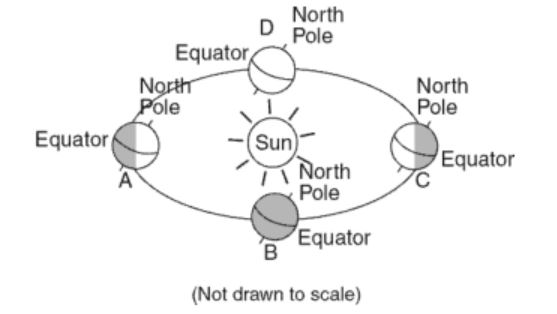
Spring
600
Out of the following, which would NOT be a way that we think of when dividing up the moon into parts? (1/2, 1/4, 1/8, or 1/16) And why?
1/16-because 1/2 would be the near side vs. far side, 1/4 would be the 1st and 3rd quarters, and 1/8 would be the crescents.
600
Name the two moon phases that are opposite to each other starting with position A.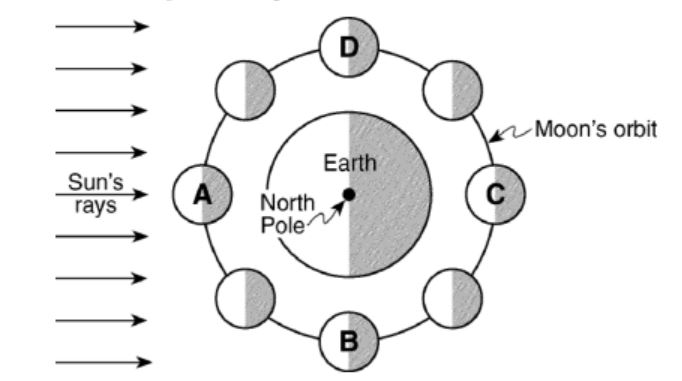
New Moon and Full Moon
600
What is this image showing?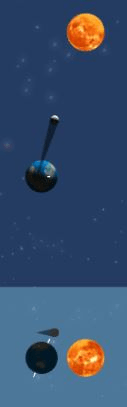
No Eclipse
700
Seasons and moon phases have something in common, that is the direction of the orbits involved-what is that direction?
Counterclockwise
700
Which season is occurring in the Southern Hemisphere at position C?
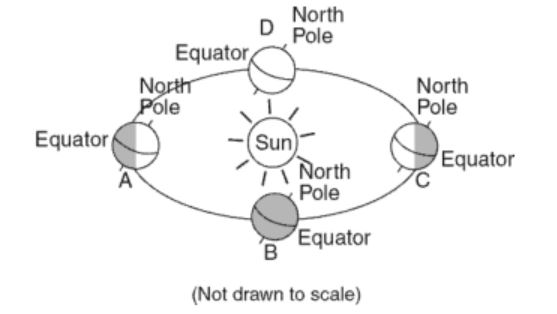
Summer
700
What would happen each month if the moon orbited on a flat plane?
We would experience an eclipse each month during the new and full moon phases.
700
Name the moon phase just after position A.
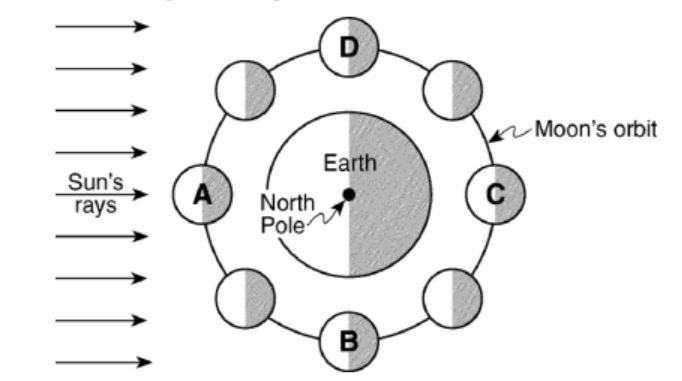
Waxing Crescent
700
In which order would you illustrate a lunar eclipse?
Sun, Earth, and then the moon.
800
What makes a solar eclipse so rare?
The umbra or shadow cast by the moon is very small, traveling on a narrow path of totality, and only sticks around for a brief period of time.
800
During which position would you expect the least direct light being received in our Northern Hemisphere?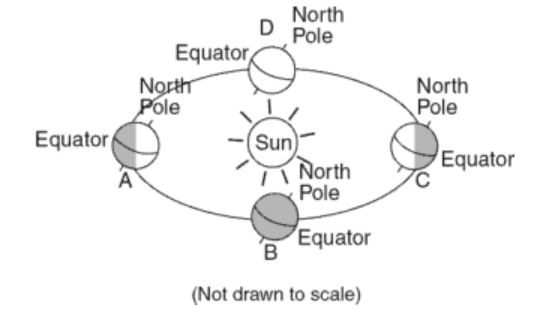
Position C (Winter)
800
Describe where you would find the crescents and the gibbous moons respectively?
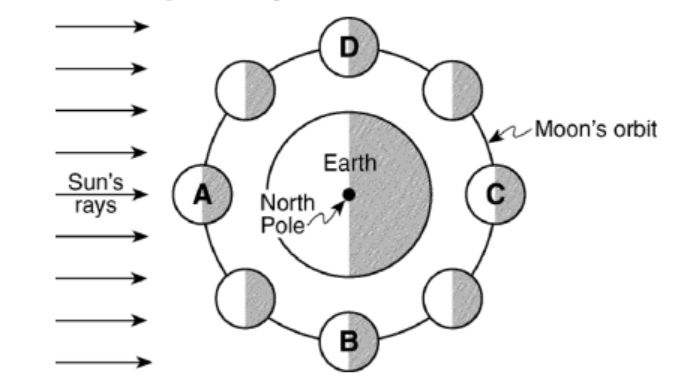
Crescents on the left closer to the New Moon and Gibbous Moons on the right side closer to the Full Moon.
800
Name the moon phase just before position D.
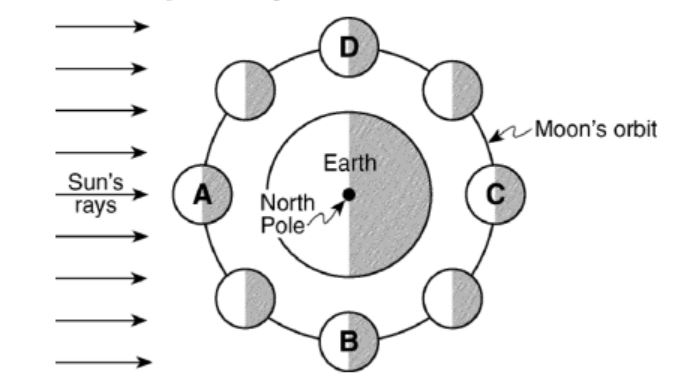
Waning Gibbous
800
What would make an eclipse be only a partial solar eclipse?
When the moon comes between the sun and the Earth, but the moon on partially covers the Sun's disk.