Earth's History
Planets/Gravity
Earth, Sun, Moon
Weather
Random
100
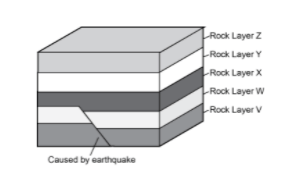 What is the oldest rock layer?
Rock Layer V
100
What are the inner planets?
Mercury, Venus, Earth, Mars
100
How many days does it take for the moon to orbit around Earth?
About a month (29.5) days
100
What is the vocabulary word for liquid water turning into water vapor?
Evaporation
100
List 3 renewable resources.
Answers may vary.
200
What is the name of this supercontinent?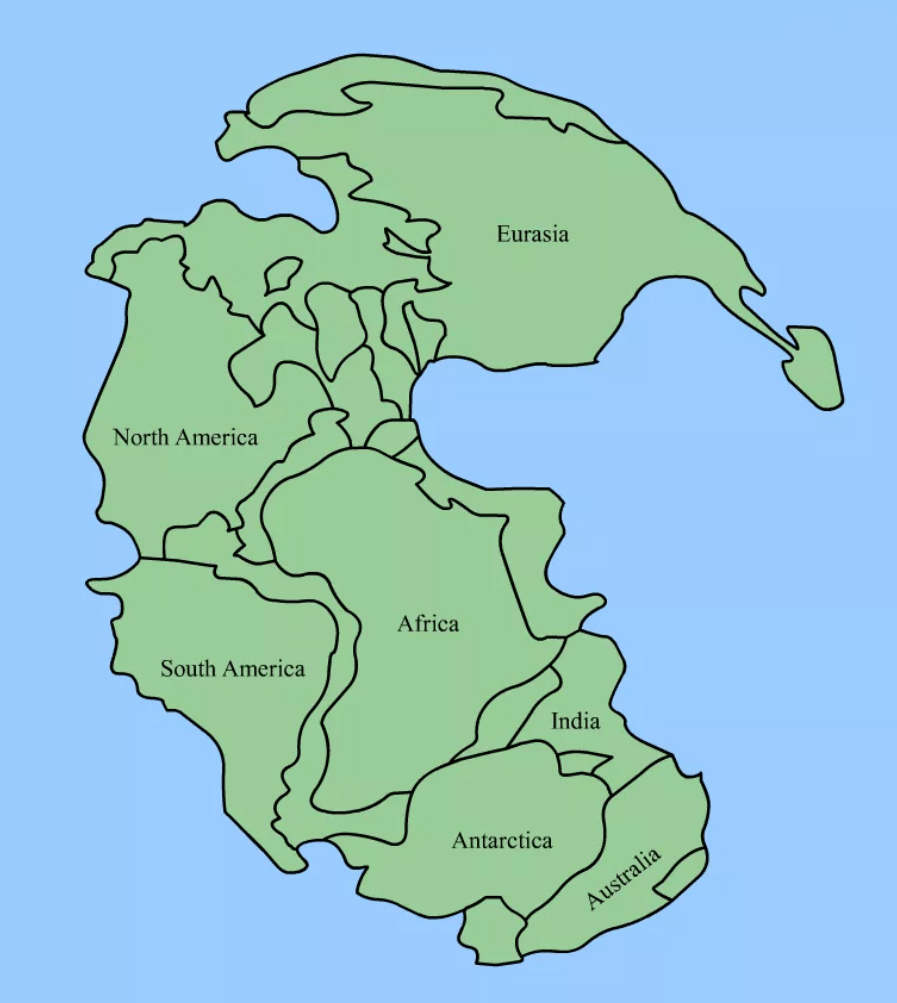
Pangea
200
What are the outer planets?
Jupiter, Saturn, Uranus, Neptune
200
What direction does the Moon orbit the Earth and the Earth orbit the sun?
Counterclockwise
200
What is the vocabulary word for water vapor turning into liquid water?
Condensation
200
What is precipitation?
Rain/Snow/Sleet
300
Name a mountain we focused on in our first unit.
Mt. Everest
Mt. Cook
Mt. Mitchell
300
What are the inner planets made of?
Rocky Material
300
What causes seasons?
Earth's tilt
300
What kind of weather is associated with a high pressure system?
Sunny, calm, nice weather
300
Explain how the sun hits MN in the summer vs winter.
Direct=summer
Indirect=winter
400
Which Natural Hazard has a large wave?
Tsunami
400
What are the outer planets made of?
Gas/Ice
400
Explain a solar eclipse.
When the moon blocks sunlight from hitting the earth.
400
What does transpiration mean?
Water evaporation from plants
400
What are the three kinds of rocks?
Igneous, Metamorphic, Sedimentary
500
This type of plate boundary forms mountains.
Convergent Plate Boundary
500
What are two things that impact how much gravitational force is felt between two objects?
Mass and Distance
500
Explain a lunar eclipse.
When the earth's shadow blocks sunlight from hitting the moon.
500
What kind of weather is associated with a low pressure system?
Rainy, windy weather
500
What would you expect when the updraft is stronger than gravity?
Clouds but no precipitation