Solar System
Weather
Energy
Earth
Water
Landscape
Moon & Sun
Soil
The Ocean
100
Which planet is the largest?
Jupiter
100
A low pressure system creates ...
clouds and storms.
100
Which energy source has the lowest environmental impact?
Wind
100
Which layer of the Earth is the hottest?
Inner Core
100
The continuous movement of water on Earth is known as ....
the water cycle
100
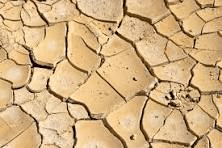 The cracking of the soil is caused by...
water evaporating from the soil.
100
Which moon phase occurs after the full moon?
Waning Gibbous
100
Which layer of soil is known as "C" Horizon?
Bedrock
100
What is the flat, deep ocean floor called?
abyssal plain
200
Which planet is the hottest?
Venus
200
In an area of low pressure, what kind of weather could you expect?
rain and thunderstorms
200
Why are fossil fuels considered nonrenewable resources?
They take millions of years to replace.
200
Which of Earth's spheres consists of soil, rocks, and minerals?
Geosphere
200
Where is most of Earth's fresh water stored?
Glaciers
200
Which type of boundary is most likely to create mountains and volcanoes?
Convergent
200
What causes ocean tides?
the gravitational pull of the moon
200
Which layer of soil is known as "A" Horizon?
Topsoil
200
What are the underwater mountain ranges in the ocean called?
mid-oceanic ridge
300
This planet rotates on its side.
Uranus
300
Which type of cloud is full of rain and looks like this?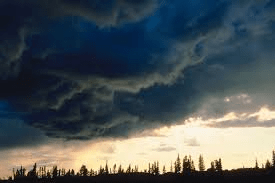
Nimbus
300
Solar and wind energy are examples of ....
renewable resources.
300
Which of Earth's spheres contains the total amount of water on Earth?
Hydrosphere
300
Transpiration occurs when water is evaporated from ...
plants.
300
What evidence supports the theory of continental drift?
finding similar fossils on widely separated continents
300
What is the moon made of?
Rock and Dust
300
Which layer of soil is known as "B" Horizon?
Subsoil
300
An underwater volcano with a flat top is called a _______.
Guyot
400
Name the outer planets.
Jupiter, Saturn, Uranus, Neptune
400
A high pressure system causes...
cool, dry, clear skies.
400
Coal and oil are examples of ...
nonrenewable resources.
400
Chemicals in the air impact the weathering of rocks. Which 2 spheres are interacting?
Atmo and Geo
400
What is the process called when water changes from a liquid to a gas?
evaporation
400
Where do earthquakes and volcanic eruptions most often occur?
along plate boundaries
400
As the moon revolves around Earth, it also does what?
rotates on its axis
400
What are layers of soil called?
Soil Horizons
400
The ocean floor that extends off the continent is known as _______.
continental shelf
500
The asteroid belt is found between which 2 planets?
Mars and Jupiter
500
Where two air masses meet is known as a ...
front.
500
non-renewable energy sources formed over millions of years from the decomposed remains of ancient plants and animals
Fossil Fuels
500
How many layers of the atmosphere are there?
Five
500
What happens to the amount of water on earth during the water cycle?
It stays the same.
500
A student finds marine fossils on a
mountain. What is the best explanation?
The area was once underwater.
500
The moon is Earth's _______.
satellite
500
What are the four types of soil?
Sand, Clay, Silt, Loam
500
A powerful ocean current that begins in the Gulf of Mexico and runs to Europe is called.....
Gulf Stream
600
Name the inner planets.
Mercury, Venus, Earth, Mars
600
Maritime, Continental, Tropical, and Polar are types of ...
air masses.
600
How many years' worth of natural gas and oil do we have left?
about 50 years
600
In which layer of the atmosphere would you find the ozone layer?
Stratosphere
600
The measure of saltiness in water is known as ...
Salinity
600
Which type of boundary is most likely to cause earthquakes?
Transform
600
Earth is heated by the Sun mainly through....
radiation.
600
How fast soil drains is known as....
permeability
600
What is the ocean's most important decomposer?
Bacteria