Fronts/Breezes
Water Cycle
Weather
Currents/Coasts
100
Which prediction is most accurate for areas just ahead of the cold front?
A gradually warming temperatures with decreasing clouds
B extended period of light drizzle with minimal temperature change
C possible thunderstorms followed by cooler and drier air
D steady temperatures with no major changes in conditions
C possible thunderstorms followed by cooler and drier air
100
Which is caused by heating: evaporation or condensation?
evaporation
100
Students are playing outside during recess and are trying to decide what the weather will be like after school. Which observation will most likely make them predict a rainy afternoon?
A a steady breeze
B low temperatures
C bright sunlight
D increasing cloud cover
D increasing cloud cover
100
Does the Gulf Stream carry warm or cold water along the Eastern seaboard?
warm
200
As a cold front arrives, how is the weather most likely to change:
A Warmer temperatures, decreasing winds, and clear skies
B Cooler temperatures, stronger winds, and more clouds
C Warmer temperatures, stronger winds, and no clouds
D No significant change in temperature or wind
B Cooler temperatures, stronger winds, and more clouds
200
What are synonyms for accumulation?
runoff, collection
200
A weather balloon slowly rises straight into the sky, then strong winds blow it east.
Which statement best explains how the balloon’s motion changed?
A The direction stayed the same, but speed changed.
B The motion stayed vertical, but slowed down.
C The direction changed from upward to horizontal.
D The position has not changed since it is floating.
C The direction changed from upward to horizontal.
200
Which statement correctly explains the effects of ocean currents on climate?
A The ocean currents move clouds around the world, which causes a cold climate.
B The ocean currents move clouds around the world, which causes a warm climate.
C The ocean currents warm or cool air near them, which causes the same climate in all locations.
D The ocean currents warm or cool the air near them, which causes different climates in different locations.
D The ocean currents warm or cool the air near them, which causes different climates in different locations.
300
After a cold front passes, what type of weather can be predicted?
A Clear skies and calm, cooler weather
B Hot and humid weather with calm winds
C Increased temperatures and high humidity
D Thunderstorms that will last for several weeks
A Clear skies and calm, cooler weather
300
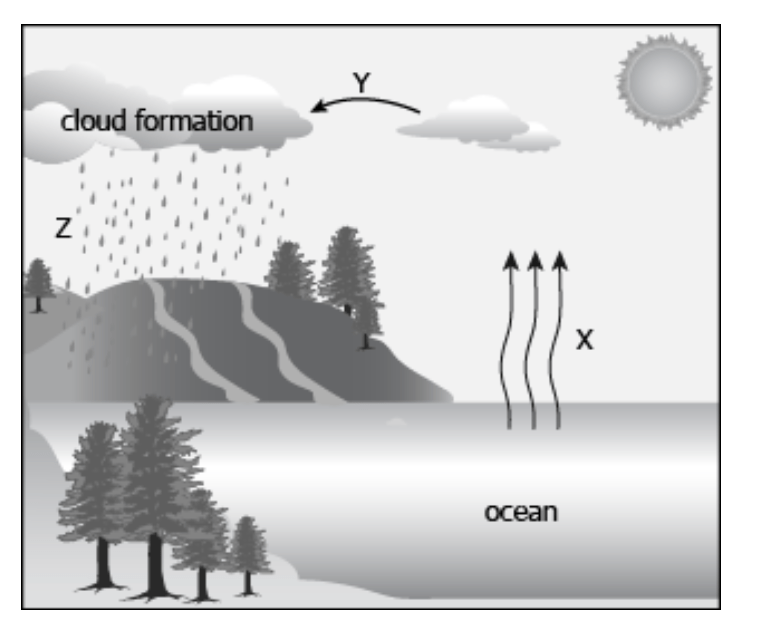
Which statement correctly explains the changes in water during the complete cycle?
A Water evaporates during process X and condenses during process Z.
B Water evaporates during process X and precipitates during process Y .
C Water vapor condenses during process Y and evaporates during process Z.
D Water vapor condenses during process Y and precipitates during process Z.
D Water vapor condenses during process Y and precipitates during process Z.
300
An area in the Atlantic Ocean is experiencing the following: thunderstorms, warm ocean waters, wind warm moist, and air rising into the atmosphere
What is MOST LIKEL Y to occur in the area?
A a flood
B a drought
C. a snowstorm
D a tropical storm
D a tropical storm
300
Which region is MOST LIKELY to experience milder winter climates?
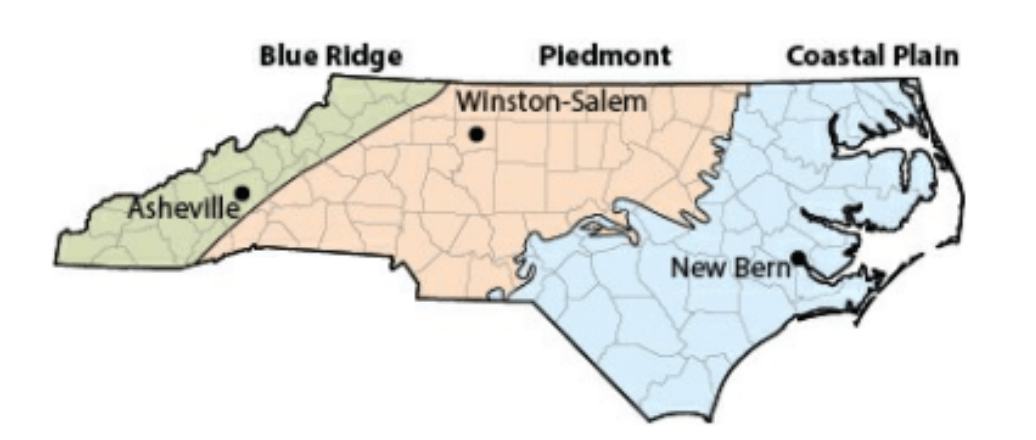
A The coastal plain, because it is closest to the ocean
B The piedmont, because it receives the most sunlight
C The piedmont, because it is between the mountains and coast
D The coastal plain, because the mountains help prevent cold weather from reaching it
A The coastal plain, because it is closest to the ocean
400
What evidence would support that rain or storms may occur because of a cold front?
A The air pressure is rising and the wind is calm.
B The cloud cover is decreasing, and temperatures are rising.
C The cloud cover is high (90%), the wind is strong, and pressure is low (998 mb).
D The temperature is warming quickly, and skies are clear.
C The cloud cover is high (90%), the wind is strong, and pressure is low (998 mb).
400
Where in the box is condensation occurring?
A in the water under the heat lamp
B in the water sliding down the rock
C in the tiny droplets of water attached to the lid under the ice cubes
D in the water soaking into the sand around the rock
C in the tiny droplets of water attached to the lid under the ice cubes
400
Based on what you know, which statement is BEST supported?
A Higher temperatures in the summer months cause more water to evaporate from the ocean, increasing the amount of precipitation.
B Higher temperatures in the summer months cause less water to evaporate from the ocean, decreasing the amount of precipitation.
C Lower temperatures in the summer months cause more water to evaporate from the ocean, increasing the amount of precipitation.
D Lower temperatures in the summer months cause less water to evaporate from the ocean, decreasing the amount of precipitation.
A Higher temperatures in the summer months cause more water to evaporate from the ocean, increasing the amount of precipitation.
400
During cooler months, warm air moves off water from the Gulf Stream onto land. This helps makes temperatures on the coast: hotter, colder, or moderate.
moderate
500
Which image correctly classifies breezes caused by temperature differences?
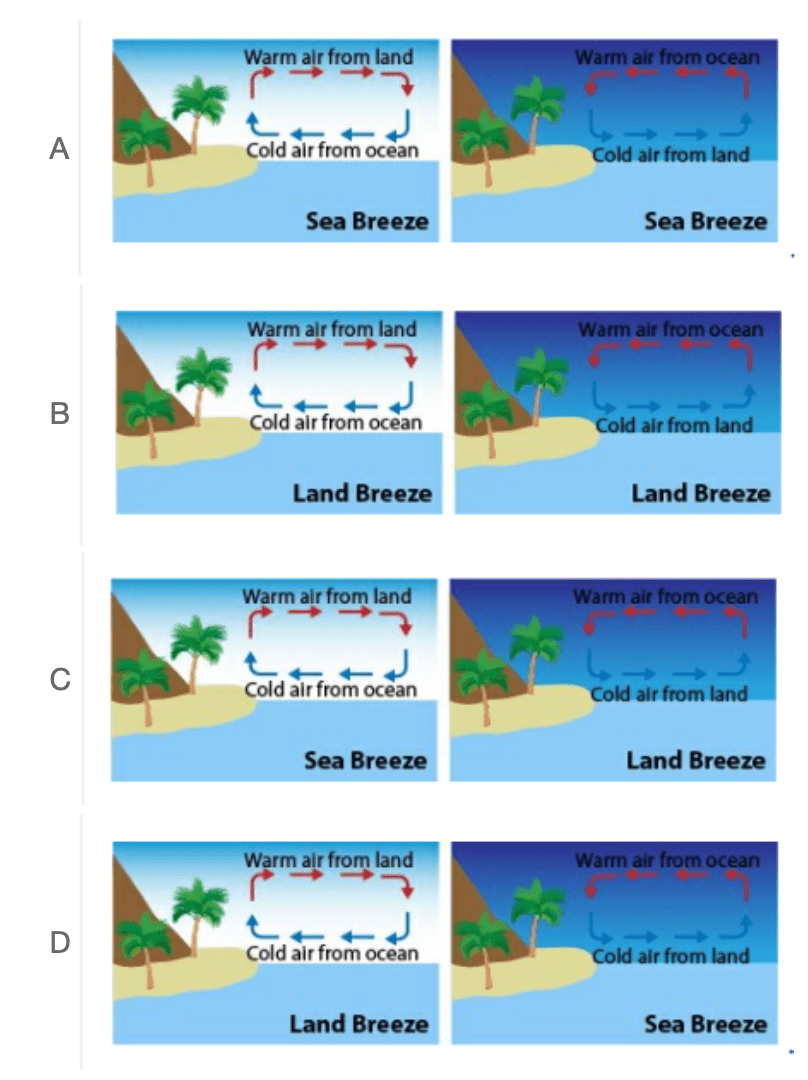
C
500
After a period of time, the student observes the formation of water droplets on the inside of the plastic film and the walls of the container. Which statement is correct about the student’s observation?
A The ice causes water droplets to precipitate on the walls and the plastic film.
B The heat from the Sun causes water to transpire on the walls and the plastic film.
C The water condenses due to the heat and precipitates on the plastic film and the walls of the container.
D The water evaporates due to the heat and condenses on the plastic film and the walls of the container.
D The water evaporates due to the heat and condenses on the plastic film and the walls of the container.
500
Select all the true statements about a hurricane:
A Hurricanes use warm ocean water to fuel the storm.
B The barometer is likely to show air pressure increasing as this storm approaches.
C The barometer is likely to show air pressure decreasing as this storm approaches.
D Hurricanes impacting the South East coast of the United States tend to form in the Southern Pacific Ocean.
E Hurricanes impacting the South East Coast of the United States tend to form in the Southern Atlantic Ocean.
A, C, E
500
A research team is studying why inland areas of North Carolina have bigger changes in temperature throughout the year than coastal areas. Which explanation best explains this difference?
A Coastal areas get more rain because of weather systems from the ocean.
B Inland areas are at higher elevations, which can cause more temperature changes.
C The ocean takes longer to heat up and cool down than land and keeps temperatures steady.
D Air pollution in inland urban areas traps heat and keeps temperatures warmer.
C The ocean takes longer to heat up and cool down than land and keeps temperatures steady.