Weathering & Soil
Soil Texture & Processes
Plate Tectonics
Plate Boundaries
Atmosphere Layers
Wind & Energy Movement
100
Soil forms from rock primarily through this process.
What is weathering?
100
A soil made of equal parts sand, silt, and clay.
Loam
100
The large pieces of Earth’s crust that move over time.
Tectonic plates
100
This plate boundary is MOST associated with the formation of new crust.
Divergent boundary
100
The envelope of gases surrounding Earth.
The atmosphere
100
The curving of wind and storms caused by Earth’s rotation.
Coriolis Effect
200
This soil particle feels gritty and drains water quickly.
Sand
200
This soil particle feels sticky when wet and holds the most water.
Clay
200
The semi-molten layer of Earth that tectonic plates float on.
The asthenosphere
200
These landforms can form when plates collide at a convergent boundary.
Mountains
200
The gas that makes up about 78% of Earth’s atmosphere.
Nitrogen
200
Circular wind patterns created by heating at the equator.
Hadley Cells
300
Weathering breaks rock down, while this process moves it.
Erosion
300
This type of weathering occurs when water freezes in cracks and expands.
Physical weathering
300
The movement of tectonic plates is driven by these currents in the mantle.
Convection currents
300
Plate tectonic movement helps explain the global distribution of these two features.
Earthquakes and volcanoes
300
Carbon dioxide, methane, and water vapor are examples of these heat-trapping gases.
Greenhouse gases
300
In the Northern Hemisphere, storms rotate in this direction.
Counterclockwise
400
This process binds sediment together using minerals dissolved in water.
Cementation
400
The smallest soil particle size is...
Clay
400
A boundary where two plates move toward each other.
A convergent boundary
400
A boundary where two plates slide past each other.
A transform boundary
400
The layer where meteors burn up due to friction.
The mesosphere
400
The part of Earth that receives the most direct sunlight year-round.
The equator
500
This organism produces acids and enzymes that help break down rock over time.
Lichen
500
On the soil texture triangle, sand percentages move in this direction.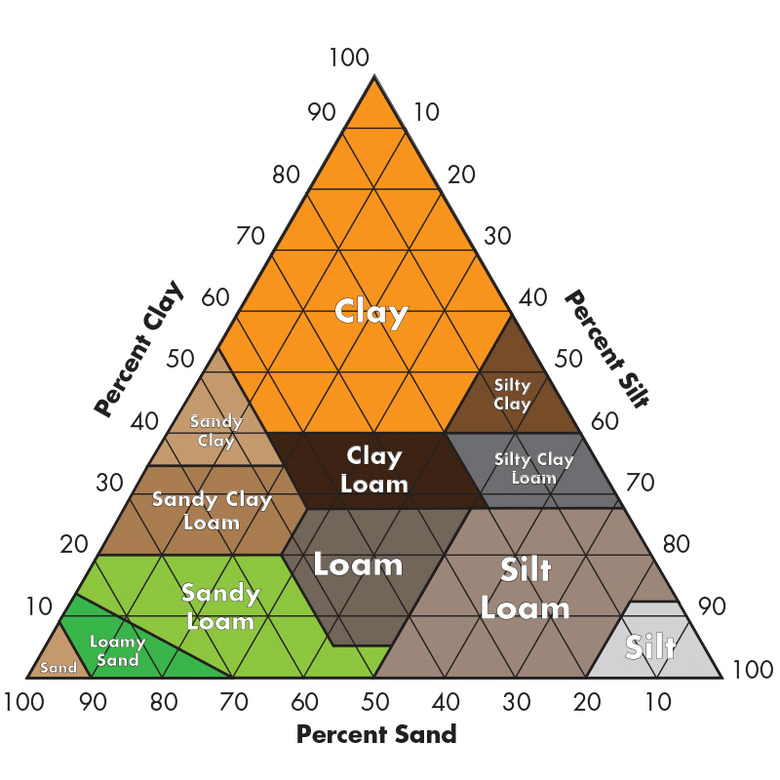
Up and to the left
500
This process occurs when one tectonic plate is forced beneath another.
Subduction
500
Convection currents are caused by differences in __________.
Temperature
500
Air that is sinking is usually __________ and __________.
Cold and dense
500
Wind is the movement of air from areas of __________ pressure to __________ pressure.
High pressure to Low pressure