Relationships
Biotic Components of an Ecosystem
Food Webs and Food Chains
Models
As Seen in Nature
100
There are three types of interactions in an ecosystem, they are... (3 answers)
Competition, Predator-Prey, and Symbiosis
100
There are _________ who make their own food and __________ who have to eat to survive.
Autotrophs/Producers and Heterotrophs/Consumers
100
What is the definition of a food chain?
A simple representation of who eats whom in an ecosystem, showing the flow of energy and nutrients from one organism to another.
100
What's wrong with this food chain? What's the importance? 
The arrows are pointing in the wrong direction which shows the opposite flow of energy.
100
The Greater Honeyguide bird leads humans (and sometimes honey badgers) to wild beehives. The humans harvest the honey and leave behind the beeswax and larvae for the bird to eat.
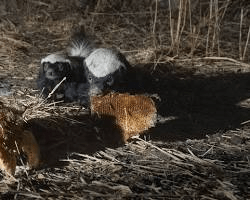
Mutualism :)
200
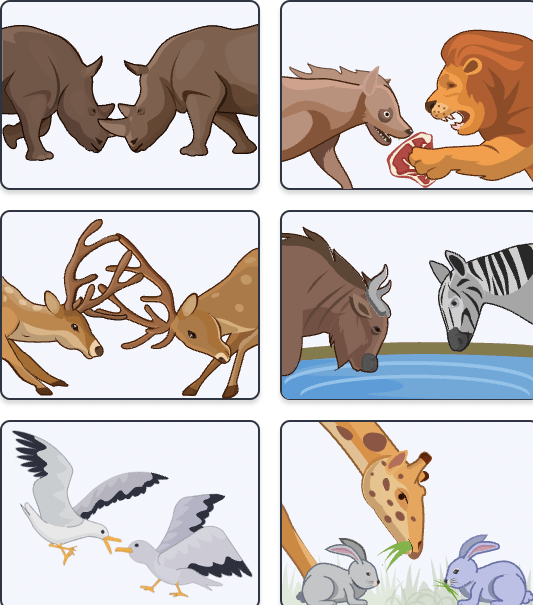 This is an example of... (give name and definition)
Competition, where organisms fight over limited resources.
200
What are the 4 types of consumers? Explain what they eat (4 answers)
Herbivores - eats only plants
Omnivores - eats plants and animals
Carnivores - eats only meat
Decomposers - eats dead things
200
What is the definition of a food web?
A visual representation, or "who eats whom" diagram, showing the complex feeding relationships (or food chains) within a specific ecosystem.
200
What are the levels of organization starting after organ system?
Organism (Individual), Population, Community, Ecosystem, Biomes (Biospheres)
200
Cattle egrets follow large herbivores like water buffalo or cows. As the large animals walk through the grass, they stir up insects, which the birds then catch and eat. The buffalo is generally unaffected by the bird's presence. This is an example of...
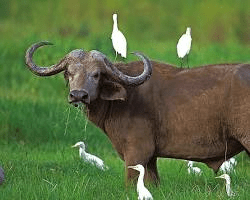
Commensalism
300
There are 3 types of symbiotic relationships, they are....
Commensalism, Mutualism, and Parasitism
300
These are nature's clean-up crew members in an ecosystem... give the name of the kingdom that helps the most in this area. (2 answers)
Decomposers clean up the mess and Fungi are known to have this role
300
Who is missing in this food chain? 
A tertiary consumer / an omnivore / a penguin / a seagull / a carnivore
300
What is this model explaining? Who receives the most energy? Who receives the least? 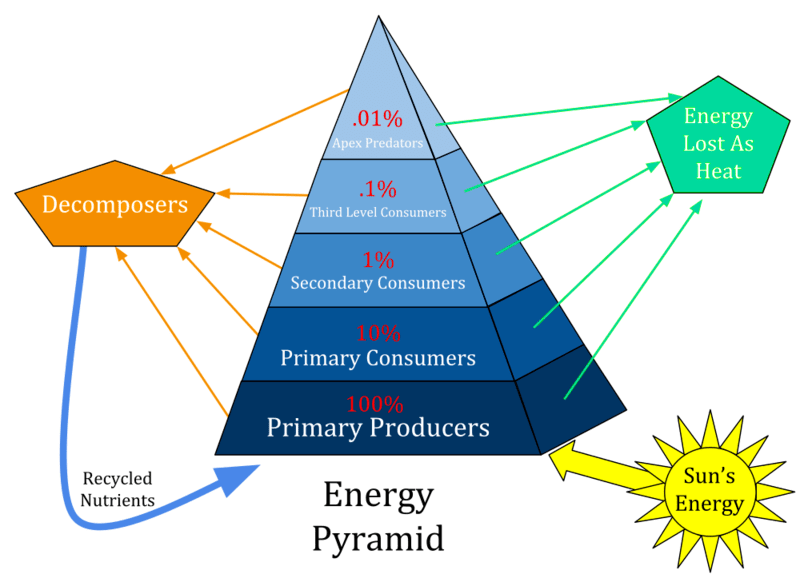
This model shows how energy is lost as you go up the pyramid. Producers receive all the energy from the sun while apex predators receive the least amount of energy from the sun.
300
Unlike most plants, Dodder has very little to no chlorophyll, meaning it cannot photosynthesize to make its own food.
How it works: After a dodder seed germinates, it "sniffs out" a host plant by sensing chemical cues. Once it finds a plant, it wraps its leafless, spaghetti-like stems around the host.
The "Theft": It develops specialized structures called haustoria that pierce the host plant's stem and tap directly into its vascular system. It then sucks out water, minerals, and carbohydrates.
The Impact: The host plant becomes weakened, its growth is stunted, and it may eventually die or become unable to produce seeds, while the dodder flourishes and spreads to neighboring plants.
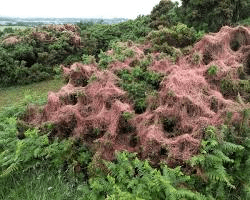
This is an example of...
Parasitism
400
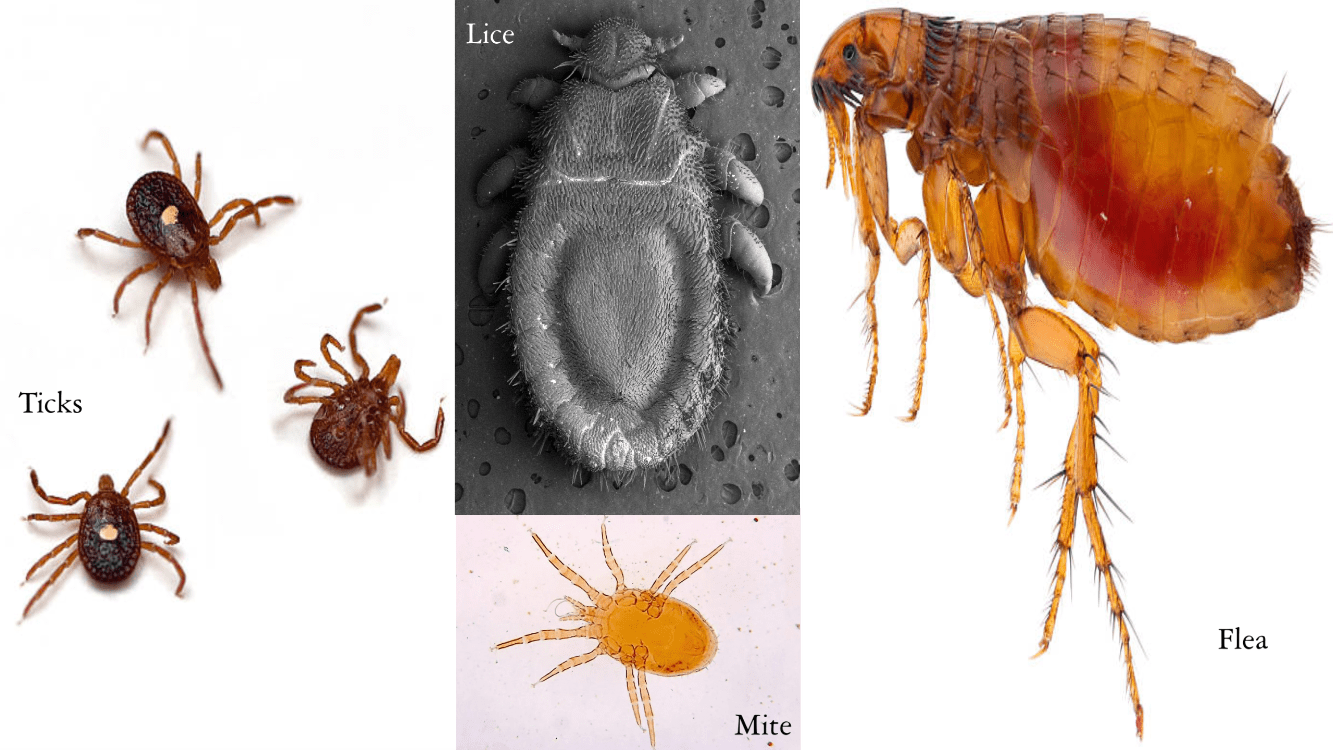 Tapeworms, Fleas, and Lice provide what kind of relationship? Give the definition
Parasitism, when one organisms benefits (the parasite) while the other is harmed (the host).
400
What are the names of the different levels of consumers (the hierarchy/order)? (3 answers)
Primary Consumers, Secondary Consumers, Tertiary Consumers
400
What would happen if there was a disease that impacted the carrots? Who would that harm the most? What would be the reaction? Explain in at least 2 sentences. 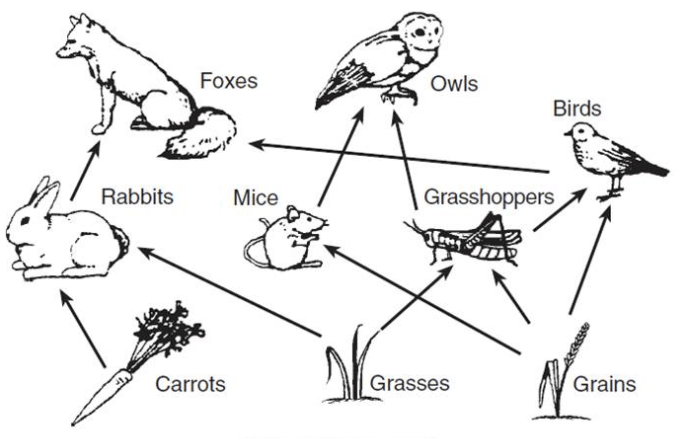
The rabbits' would be directly affected, which would lower their population, which would then lower the foxes' population.
400
What is this model explaining? Explain what the lines mean and what they're saying. 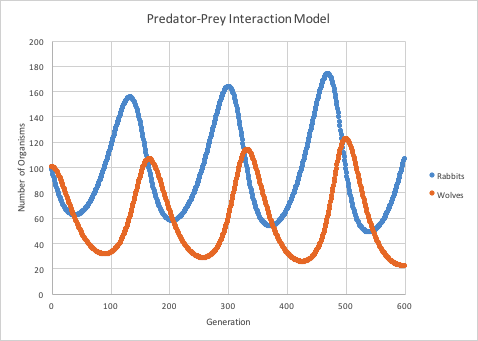
Predators and prey rely on each other for balance within the ecosystem. When there is an increase in the prey population, the predator population will increase soon after. When the predator population increases, then the prey population decreases.
400
The flower has evolved a deep, curved shape that hides its nectar. This prevents "nectar robbers" (insects that take nectar without pollinating) from reaching the prize. It also places its pollen-bearing parts in a specific spot that will brush against the bird's head.
Certain hummingbirds, like the Sicklebill, have evolved long, decurved (downward-curving) beaks that match the exact curve of these flowers. This allows them to reach nectar that no other bird or insect can access, reducing competition for food.
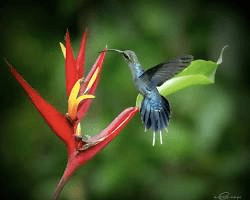
This is an example of...
Coevolution
500
_________ have developed adaptations to help them hunt, while __________ have developed adaptations to help them evade (get away). This is called ________.
1.Predators
2.Prey
3. Coevolution
500
Describe the differences between a decomposer and a scavenger.
Decomposers break matter down to the molecular level while Scavengers consume the meat of dead animals which leaves bones behind.
500
What would happen if there was a surplus (large amount) of grasshoppers in this food web? Explain! 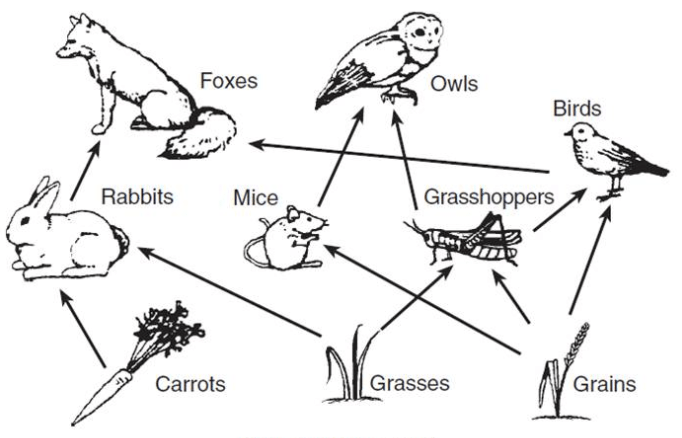
The grasshoppers population would increase, but the grass and grains' population would decline because they are getting consumed quickly. Bird and owl population then increase because they have more food to eat.
500
How does matter flow through an ecosystem? Who helps the most with this system?
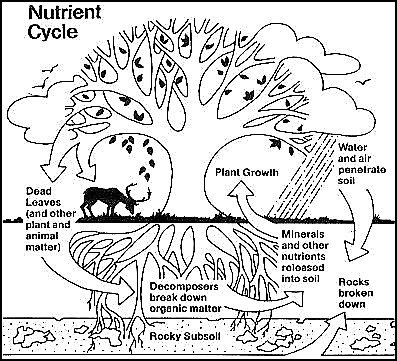
Matter is neither created or destroyed, it is transformed and rearranged. Matter flows through the abiotic and biotic parts of the ecosystem. Decomposers help return the matter back to the soil.
500
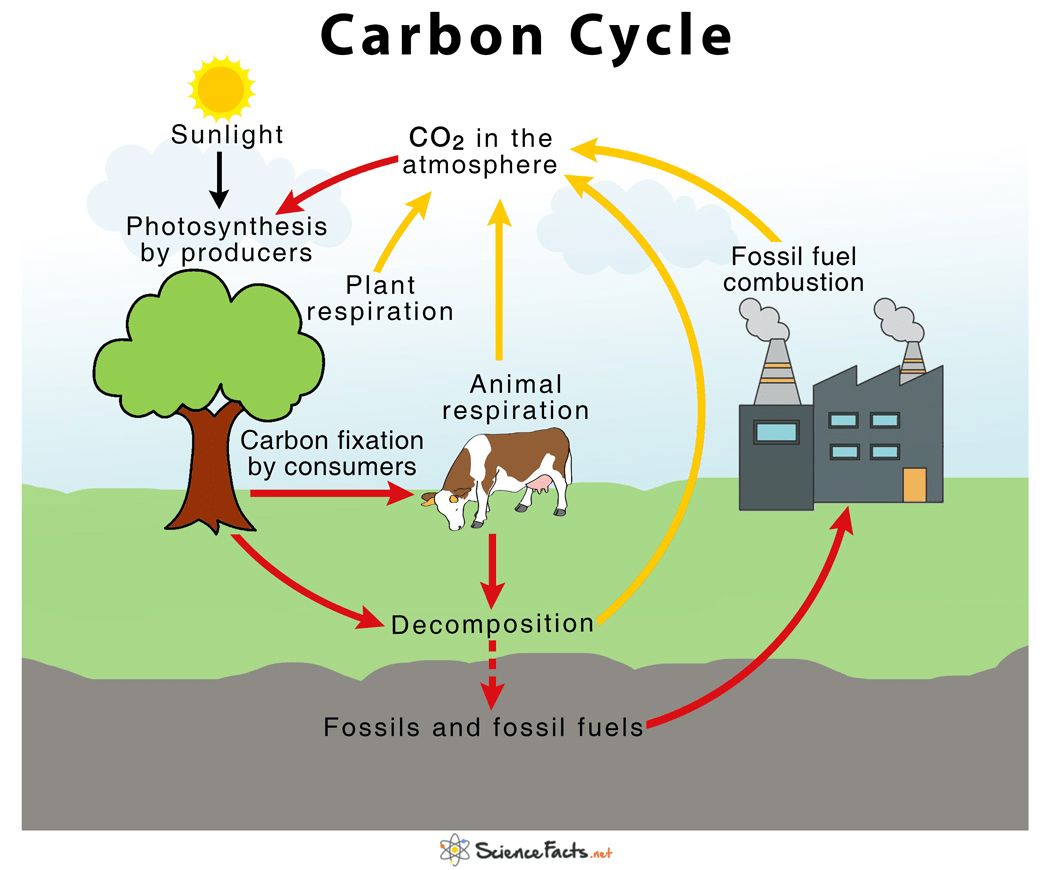
Draw and Label a complete matter cycle! Include what is moving throughout the system and the roles of the organisms in that system. Drawings are not necessary, names are!