Carrying Capacity
Limiting Factors
Predators/Prey
Survivorship Curves
Organization/Carrying Capacity
Energy Flow
100
What do we call the dotted line labeled "D"
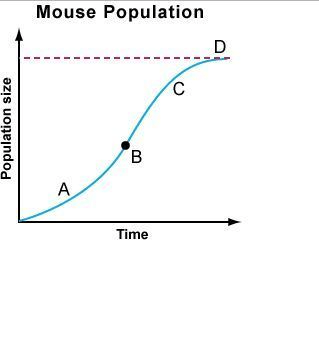
Carrying Capacity
100
Which limiting factors are always biotic? (density dependent or independent)
density dependent
100
Which species increases first?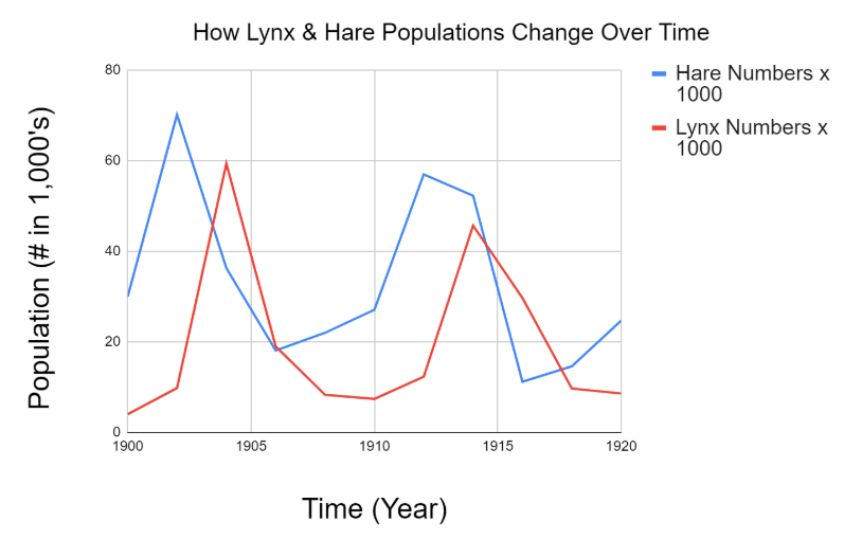
The hare
100
Type of reproductive strategist that has few offspring and cares for them for a period of time.
What is type K or I?
100
A group of individuals of the same species.
What is in a population?
100
Which line shows a population with plentiful resources and limited competition?
What is the red line or exponential growth?
200
Define "Carrying Capacity"
the maximum number of individuals of a population that the environment can support is the...
200
Disease (like parvovirus in wolves) is which type of limiting factor? (density dependent or independent)
density dependent
200
True or False: there are more lynx than hares.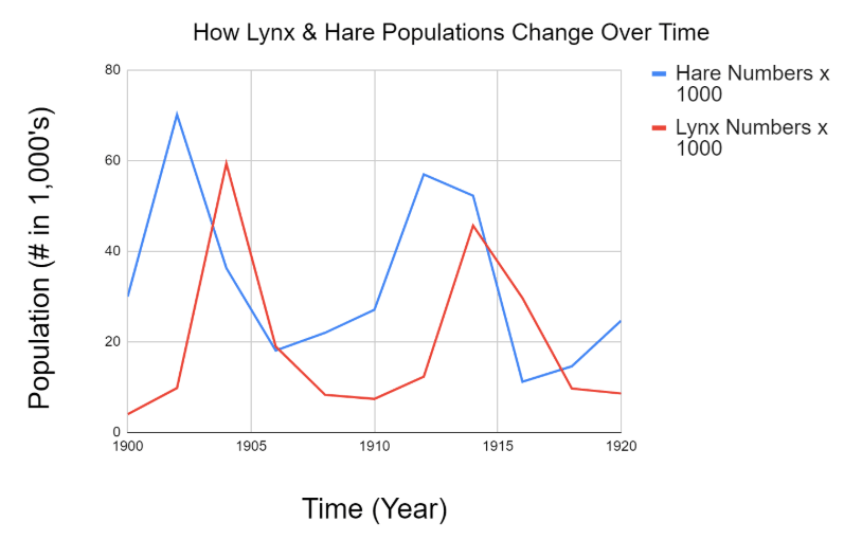
False - there are more hares in the ecosystem
200
Example of an "r" strategist or type III.
What is an oyster, small insect, sea turtle, etc?
200
Give one example of a biotic and one example of an abiotic factor in an ecosystem.
biotic - any living thing
abiotic - any non-living thing
200
Which line shows the trend in human population growth?
Which is the red line or exponential growth?
300
What causes a population to level off and have logistic growth like in the graph shown below? (i.e. why can't a population just keep growing and growing?) 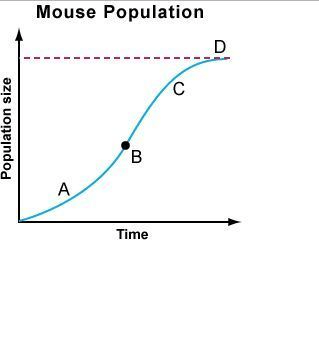
Limiting Factors
300
Harsh winters killing wolves and moose on Isle Royale would be an example of which type of limiting factor? (density dependent or independent)
density independent
300
Why does the predator population lag behind the prey population? (i.e. predators increase AFTER the prey increase)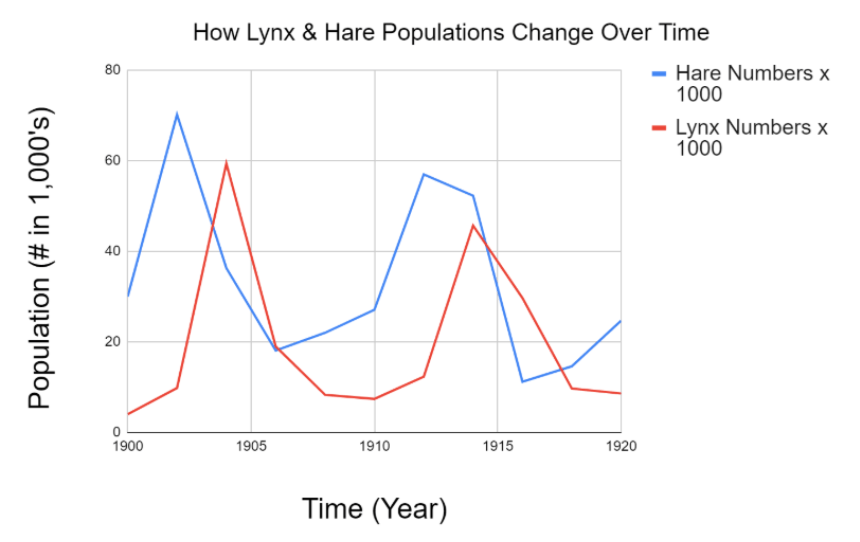
The prey is the food for the predator, so the increase in the prey means an increase in food for the predator. So, the predator population can grow.
300
Organisms such as many fish and birds that have a constant rate of survival throughout their lifespan.
What are type II strategists?
300
An individual in an ecosystem.
What is an organism?
300
Which line is showing that the birth rate and the death rate are equalizing?
What is the blue line or logistic growth?
400
What is the carrying capacity? 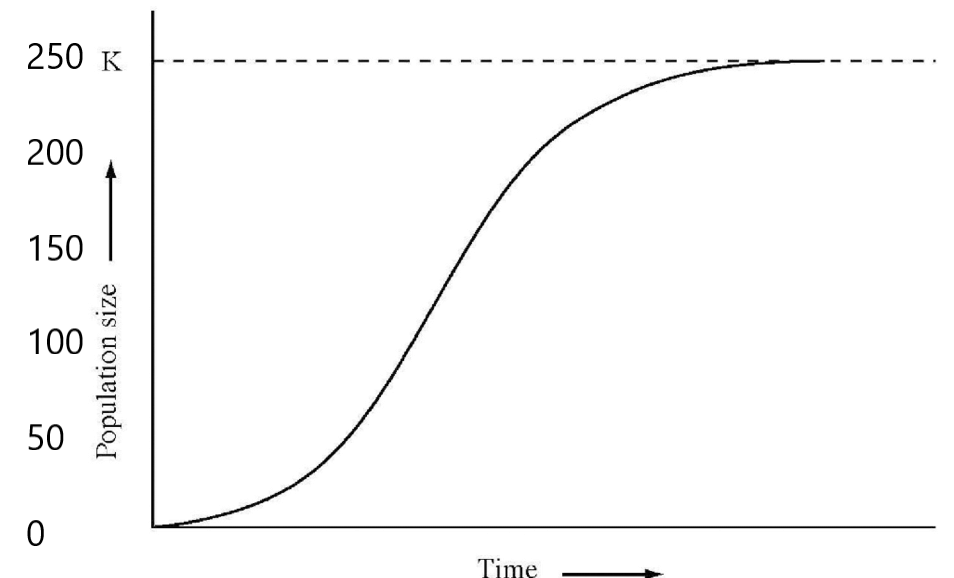
about 250
400
In a forest ecosystem, which of the following is the best example of a limiting factor for a rabbit population?
a. the robin (bird) population
b. amount of grass/flowers available
c. the amount of sunlight
d. rabbits have no limiting factors
b. amount of grass/flowers available
400
Why does the hare population decrease?
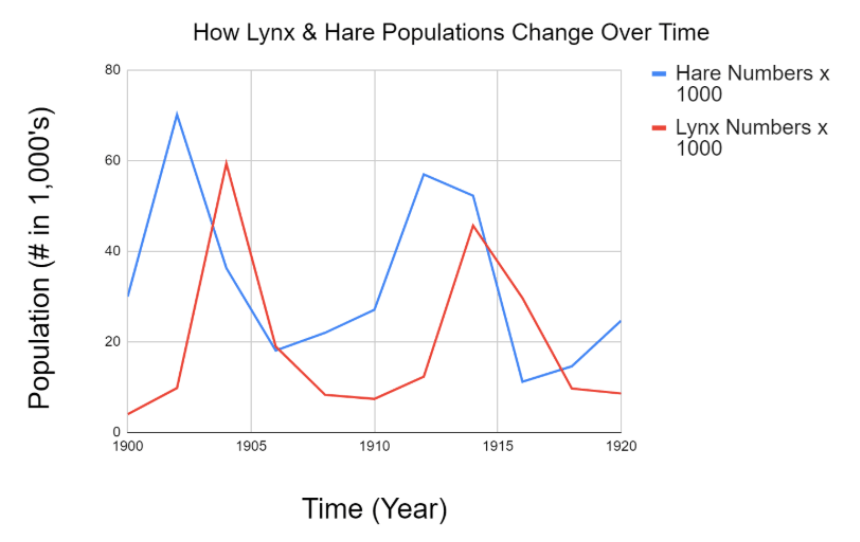
There are more predators at that time, so they are getting eaten more
400
What sets the carrying capacity? (hint - the hands in this picture)
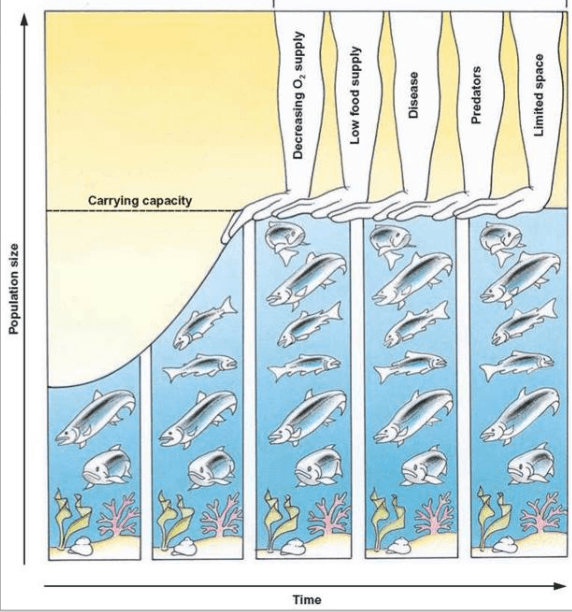
Limiting Factors
400
Type of dispersion best for protection from predators?

What is clumped?
400
Which line is showing a trend that will be impossible to maintain because of resources?
What is the red line or exponential growth?
500
Which of the following might cause the carrying capacity of this rabbit population to DECREASE?
a. increase in food for a few years
b. fewer predators
c. harsh winters for a few years
d. more resources available in the ecosystem
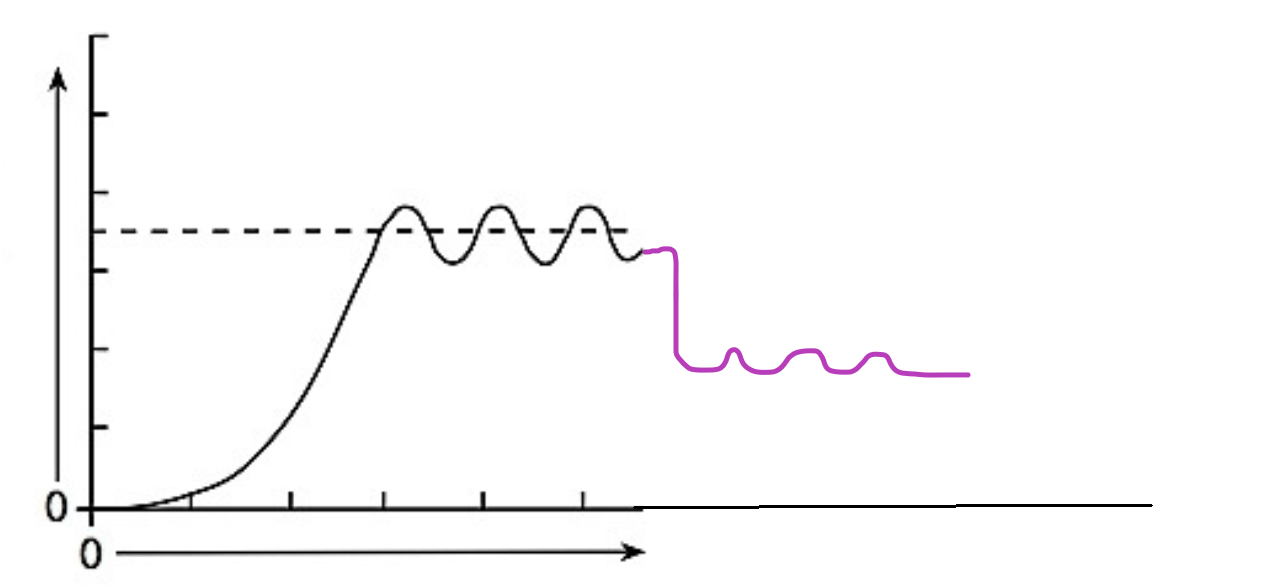
c. harsh winters for a few years
500
Based on this graph, what is the limiting factor for the hare population? 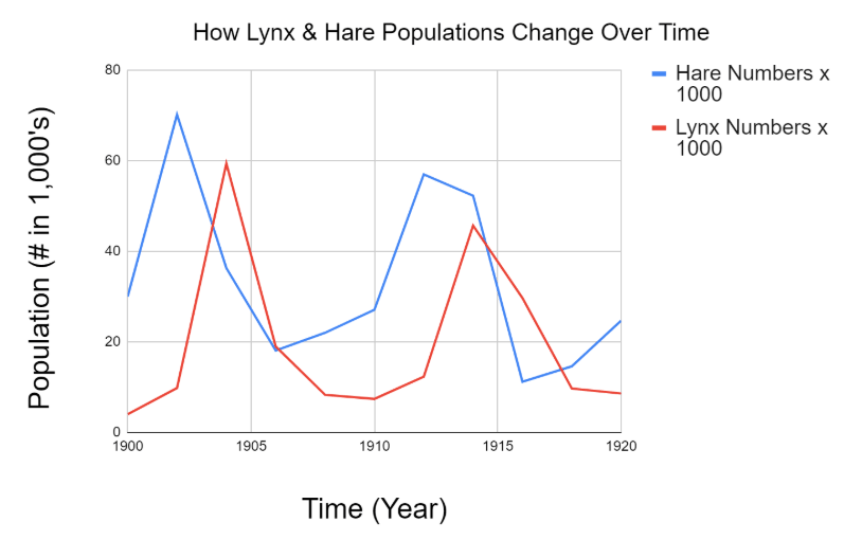
the lynx population
(just like what we saw with the ecological pyramids, there are more primary consumers like the hare than there are top predators like the lynx)
500
What is the limiting factor for the lynx? 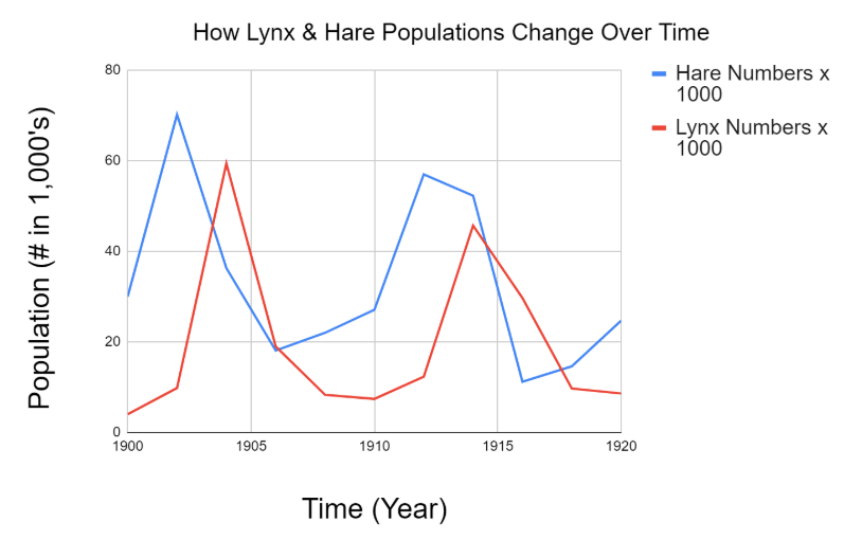
The hare
500
True or False: If two species compete for the same resources (eat the same food, live in the same area, etc.), then they will each have lower carrying capacities compared to if they lived alone.
True!
500
Type of dispersion most common in nature?
What is random?
500
What is the carrying capacity of the organism in the graph?

What is 1.5 million?