Taxes
Subsidies
Labor
Wage Differences
100
Which of the following is False:
Taxes create revenues for the government and subsidies create expenses.
Taxes and subsidies do not change the equilibrium level of output
Taxes and subsidies both result in deadweight loss
False: Taxes and subsidies do not change the equilibrium level of output
Since taxes and subsidies shift the supply and demand curve, they will change the equilibrium quantity and price. Since this will be different from the efficient price and quantity, which is the equilibrium before the tax or subsidy, there will be deadweight loss.
100
Which of the following is False:
Who gets the subsidy does not depend on who receives the check from the government.
Who pays the tax does not depend on who writes the check to government.
The relative elasticities of demand and supply do not determine who pays the tax or gets the subsidy
False: The relative elasticities of demand and supply do not determine who pays the tax or gets the subsidy
(The relative elasticities do determine who pays/gets it)
This is why the legal incidence does not determine the economic incidence in a tax or subsidy
100
Firms hire when the wage ___ (<,>, or =) the value of the labor
This increase in revenue by hiring each additional unit of labor is known as _____.
Firms hire when the wage is < the value of the labor.
This increase in revenue by hiring each additional unit of labor is known as the Marginal Product of Labor.
100
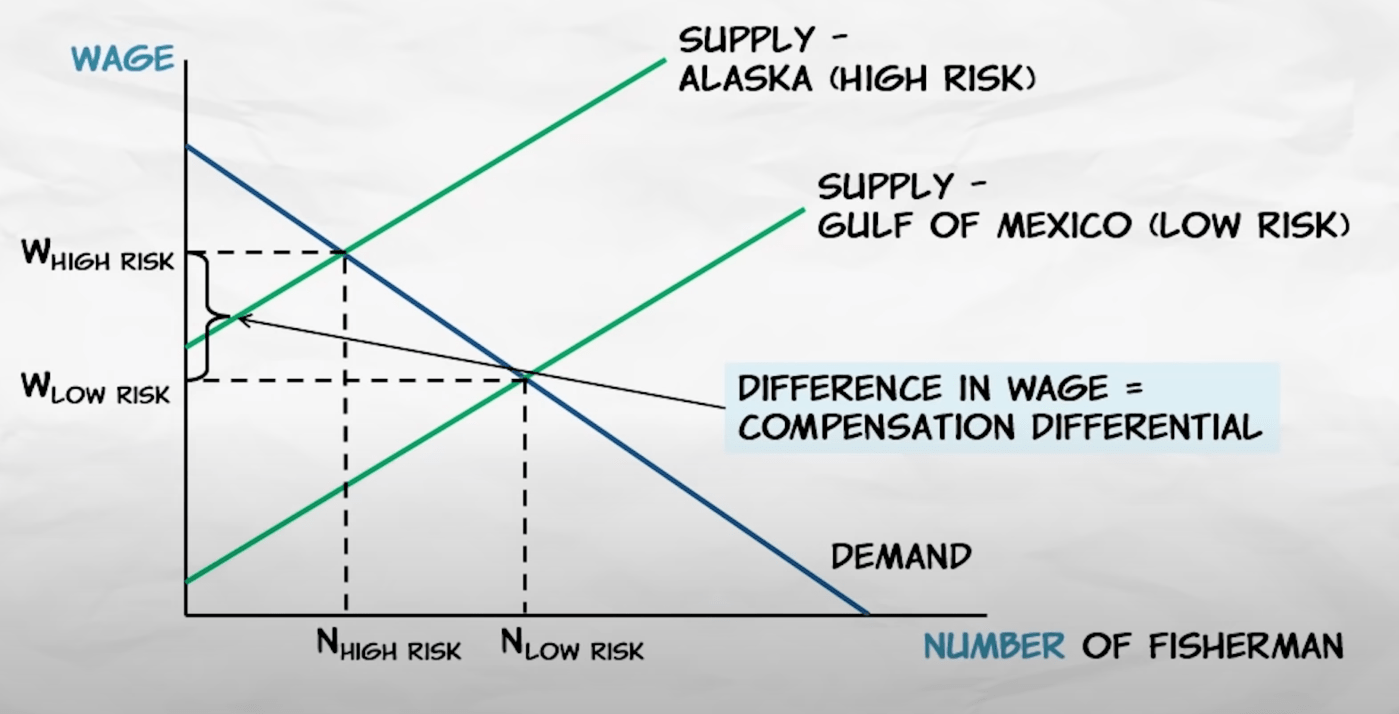
This is defined as an increase in wages to compensate workers for particular hazards or unpleasant features associated with the job.
Compensation Differential
This basically just means the differences in wages between jobs. In other words, you get paid more for dangerous, unpleasant jobs and you get paid less for safe, fun jobs.
200
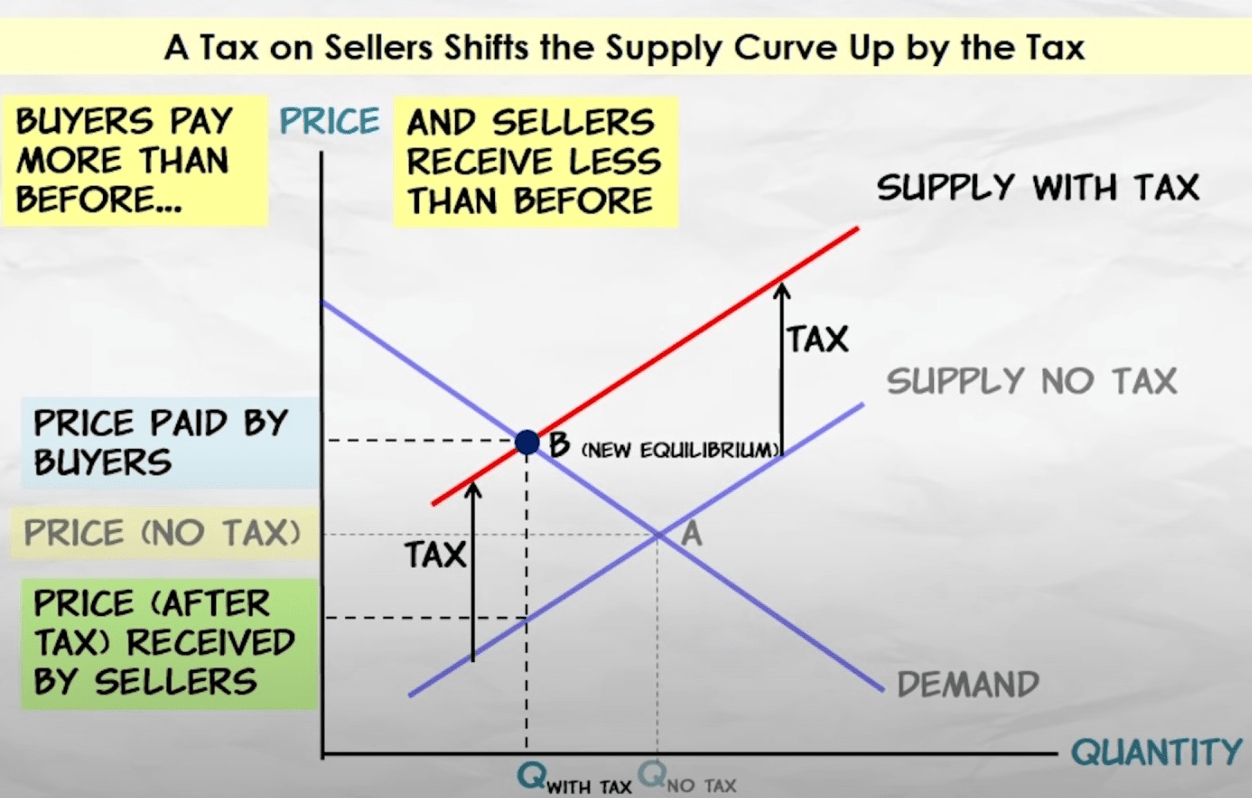
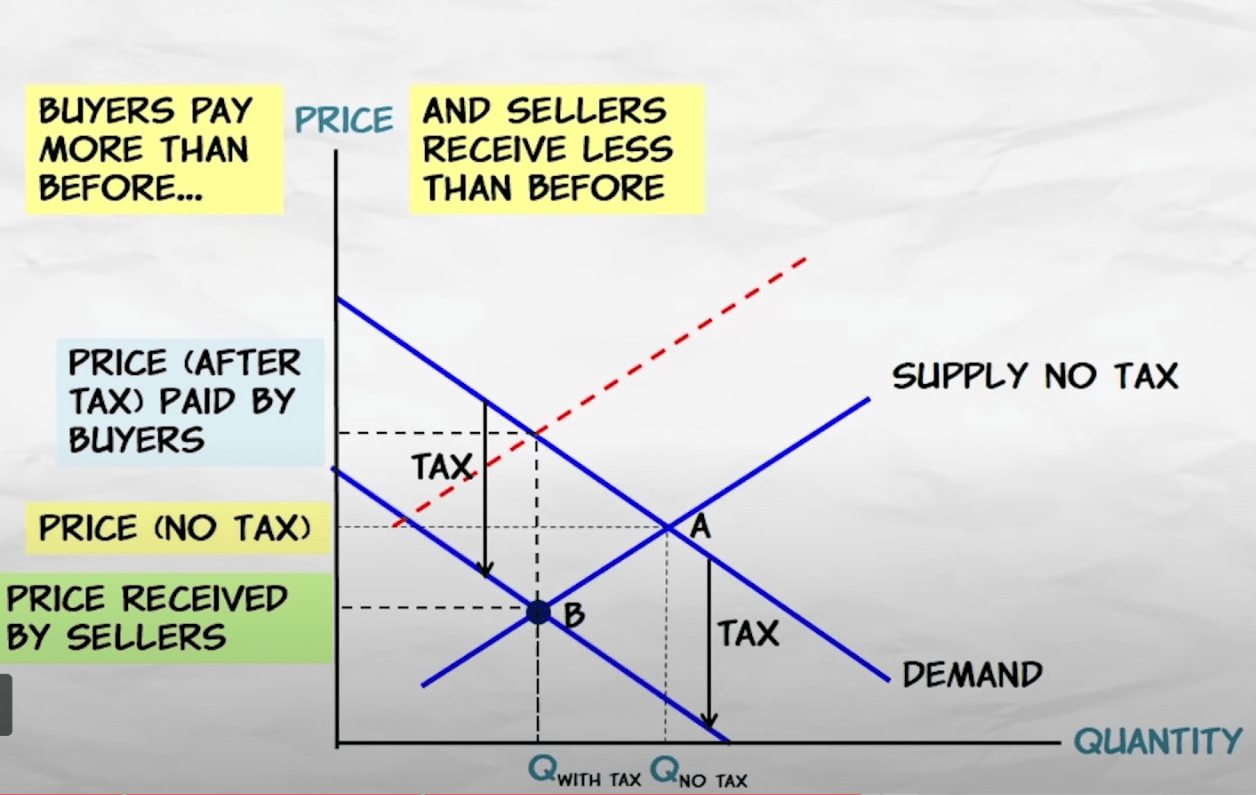
What effects would a tax on sellers have on the supply curve? What effects would a tax and buyers have on the demand curve?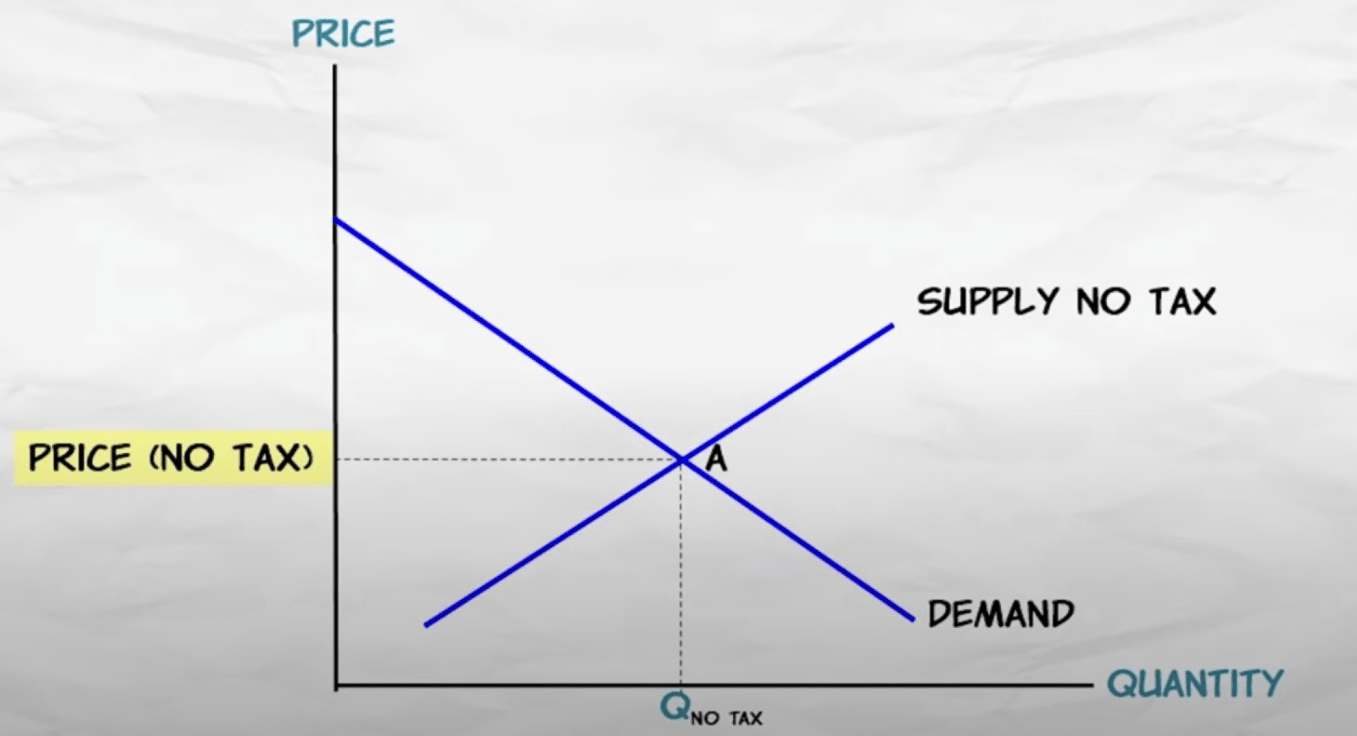
A tax on suppliers shifts the supply curve up (or to the left) by the tax and a tax on demanders shifts demand curve down (or to the left) by value of the tax. The result is the same; the price received by sellers and paid by buyers is identical.
200
True or False:
A tax or subsidy is represented as a wedge because the result of a tax or subsidy is the same, regardless if it's imposed on suppliers or demanders.
True
In-depth explanation using a tax as an example:
- If the tax is legally imposed on demanders, the economic burden or incidence of the tax is shared between buyers and sellers. Producers receive a lower price than they did before the tax, and consumers pay a higher price than they did before the tax.
- If the tax is legally imposed on suppliers, the economic burden or incidence of the tax is shared between buyers and sellers. Consumers pay a higher price than they did before the tax, and producers receive a lower price than they did before the tax.
200
Demand (and wages) for labor is higher in the U.S. compared to India because of higher productivity in the U.S. Which of the following is not factor that would cause janitors in the U.S. to be paid more than janitors in India, even if their skill level is the same?
American and Indian offices produce equally valuable products, and are equally valuable to keep clean
- In terms of supply, employers may not be able to pay for skills in weaker economy
American offices produce more valuable products and are more valuable to keep clean
Basically, wages are higher in a more productive economy, which would be the U.S. in this case.
200
A _____ is an organization of workers that negotiates with employers over wages and working conditions.
These organizations seek to change the balance of power between employers and workers by requiring employers to deal with workers collectively, rather than as individuals. Thus, negotiations between unions and firms are sometimes called _____.
Labor Unions
Collective Bargaining
300
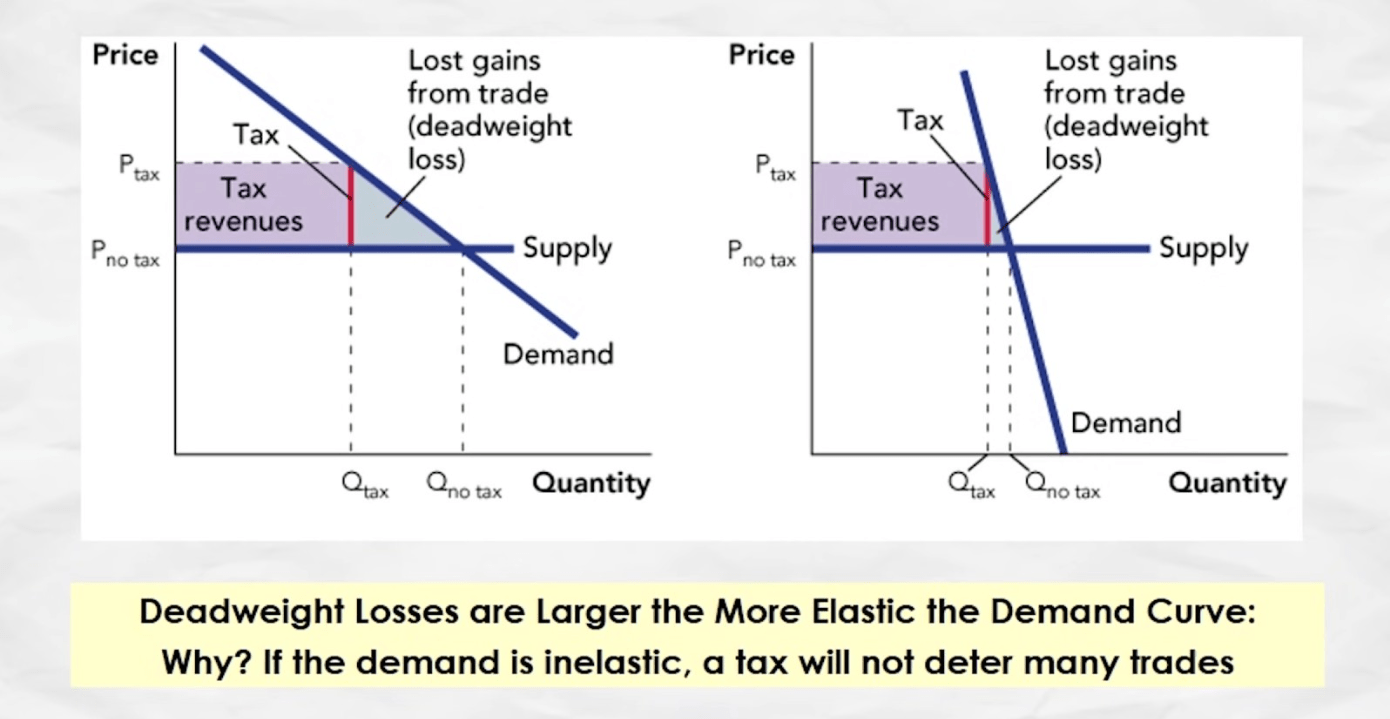
Which graph of a tax results in more deadweight loss?
This is because the graph with the larger DWL is more ____ (elastic or inelastic), so a tax will deter a ____ (smaller or larger) number of trades.
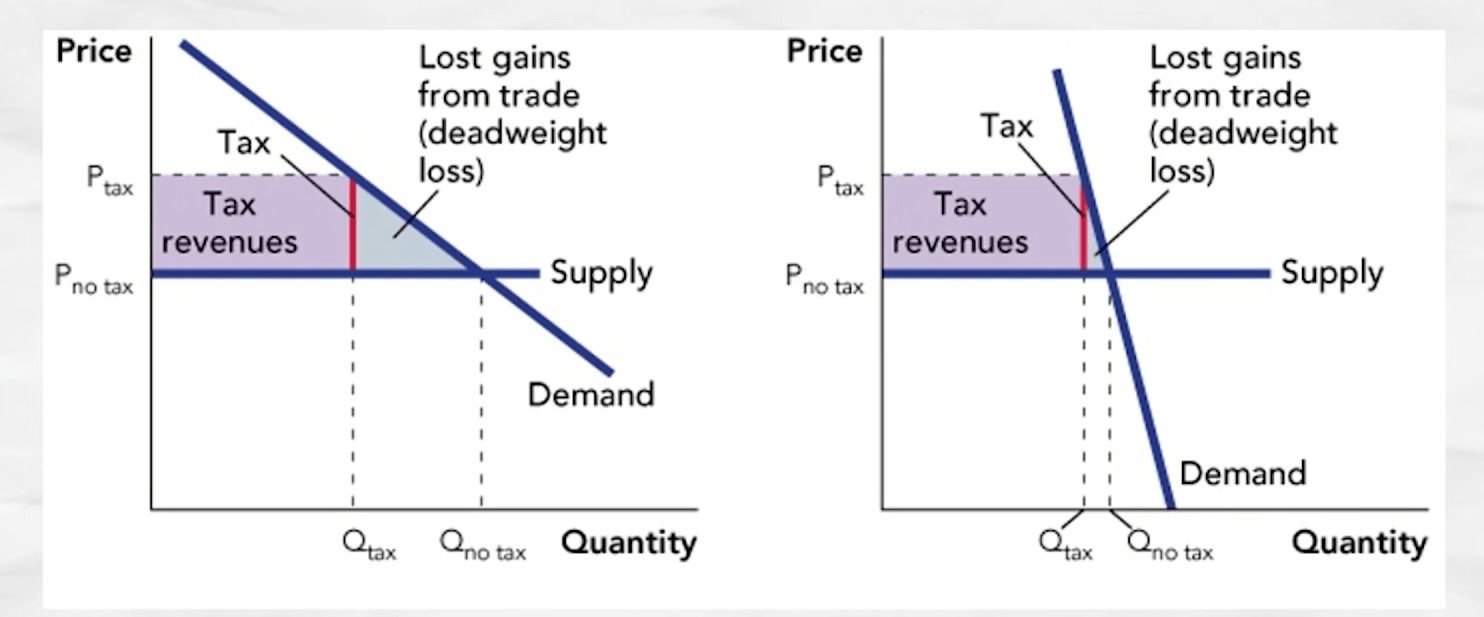
The left graph has the larger DWL because it is more elastic, so a tax will deter a larger number of trades.
300
Which of the following is False:
- The more inelastic a supply or demand curve, the more benefit they gain from a subsidy.
- The more inelastic a supply or demand curve, the less tax burden they incur
In a subsidy or tax, why would a more inelastic curve result in more of a benefit or more of a cost respectively?
False: The more inelastic a supply or demand curve, the less tax burden they incur
- The more inelastic, the more benefit from a subsidy. Inelastic = no entry from other firms. so no one can come in to take the subsidy. When supply is inelastic, it is difficult for firms to take resources from elsewhere in the economy toward production for the subsidized good.
- If a tax is imposed and demand is relatively elastic, they can simply purchase substitutes and decrease demand, so they can evade the tax.
300
Which of the Following are False:
- The market wage of a worker is determined by an upward sloping supply curve and a downward sloping demand curve
- The market wage of a worker is determined only by the marginal product of labor and the demand curve for labor
- Technology and labor are always substitutes for each other. Technology never leads to the hiring of more labor.
False: The market wage of a worker is determined only by the marginal product of labor and the demand curve for labor
The supply and demand curve are still essential for determining the market price; even in labor markets
False: Technology and labor are always substitutes for each other. Technology never leads to the hiring of more labor.
Technology can lead to the hiring of more labor if it increases the marginal product of a worker's labor
300
This is defined as the knowledge or skills that make workers productive, tools of the mind.
Human Capital
Example: Education, technical skills, experience. It's anything that's inherently useful for the job you're getting hired to do
For instance, a Computer Science major could increase their human capital by learning a programming language. If this skill is inherently useful for the job they're employed to do, like an IT internship for example, then it's categorized as human capital.
400
In this graph of a tax on labor, do the suppliers or demanders incur more of the tax burden?
This is because the ____(Suppliers or Demanders) have a more ____ (Elastic or Inelastic) curve in this specific case.
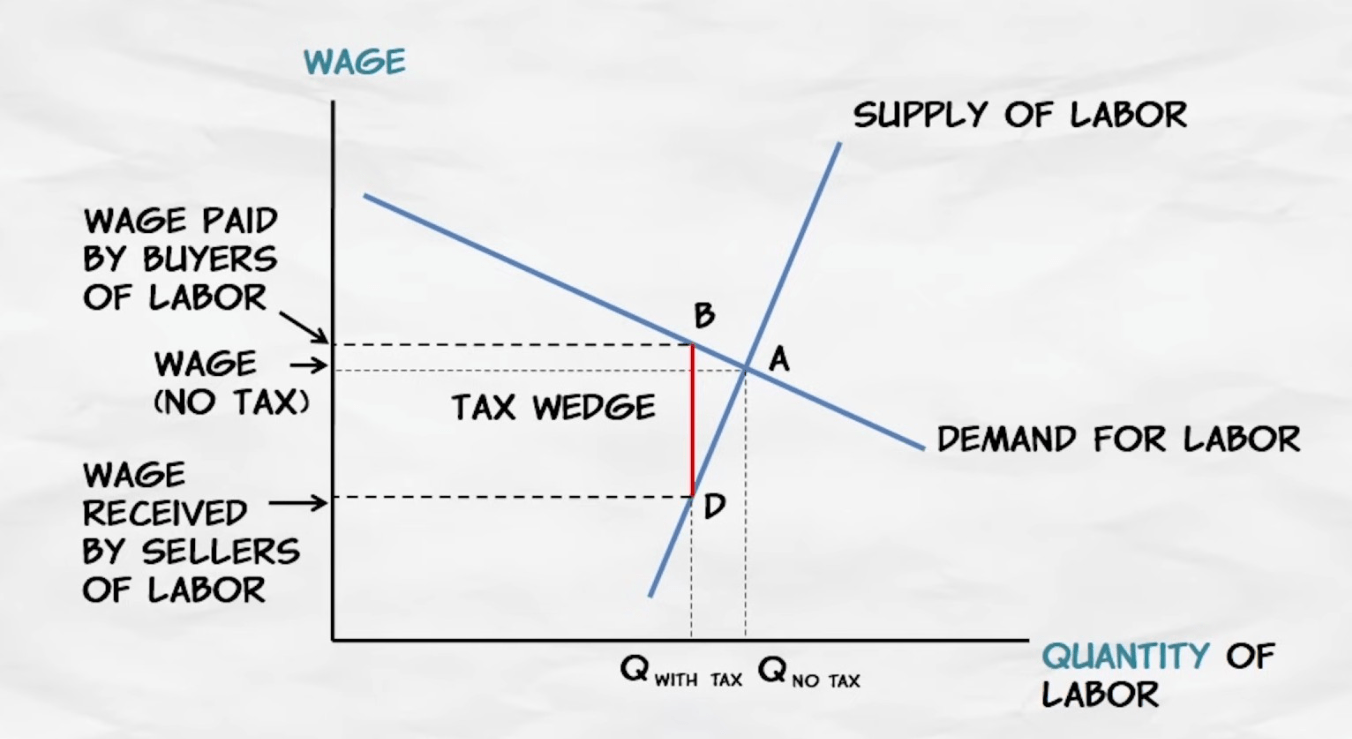
The suppliers of labor incur more of the tax burden in this case.
This is because the suppliers have a more inelastic curve.
The relative elasticities of demand and supply determine who pays the tax. The more elastic side of market pays a smaller share of tax burden, more inelastic pays a larger share.
400
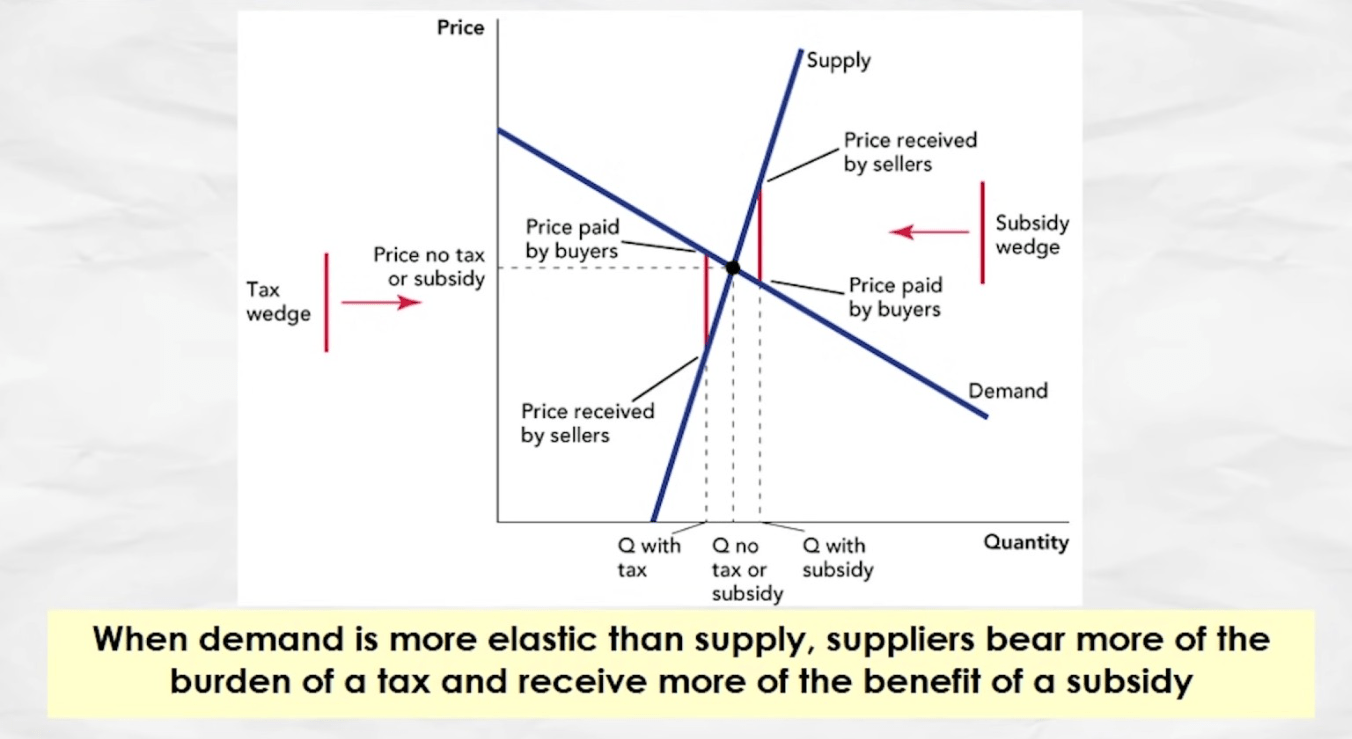
In this graph, would the suppliers of demanders receive most of the benefit from the subsidy?
This is because the ____(Suppliers or Demanders) are more ____ (Elastic or Inelastic) than the other group.
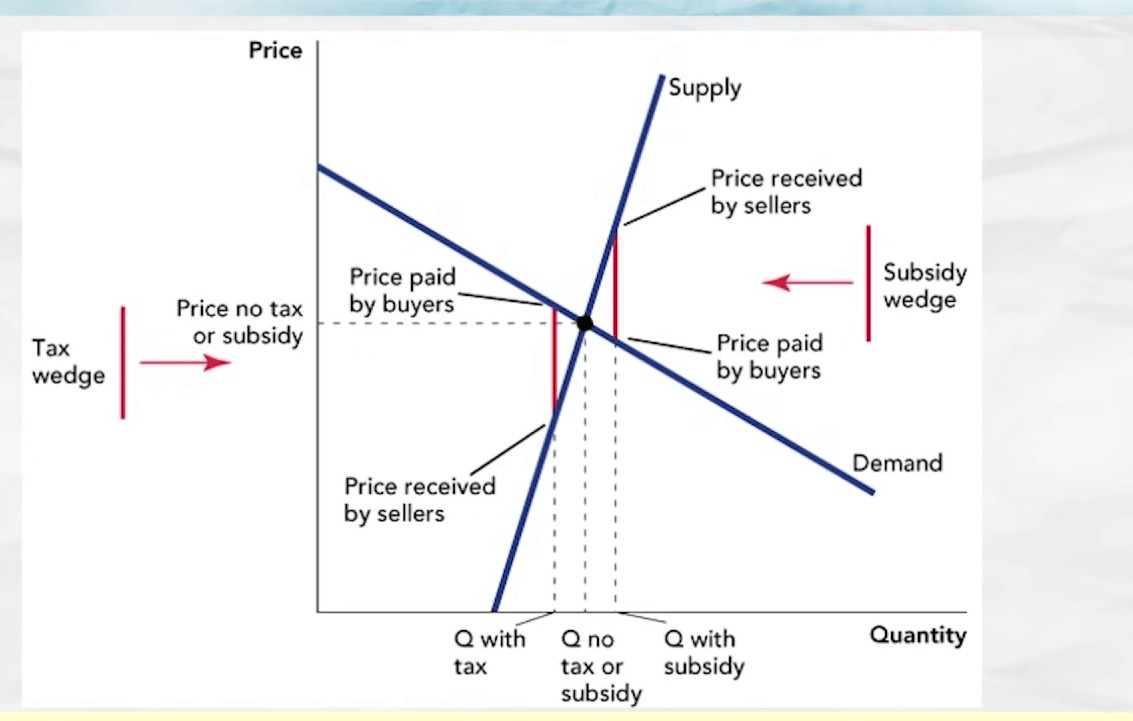
In this graph, the Suppliers would receive more of the benefit from the subsidy. This is because the more inelastic curve receives the greater portion of the benefit than the other group.
400
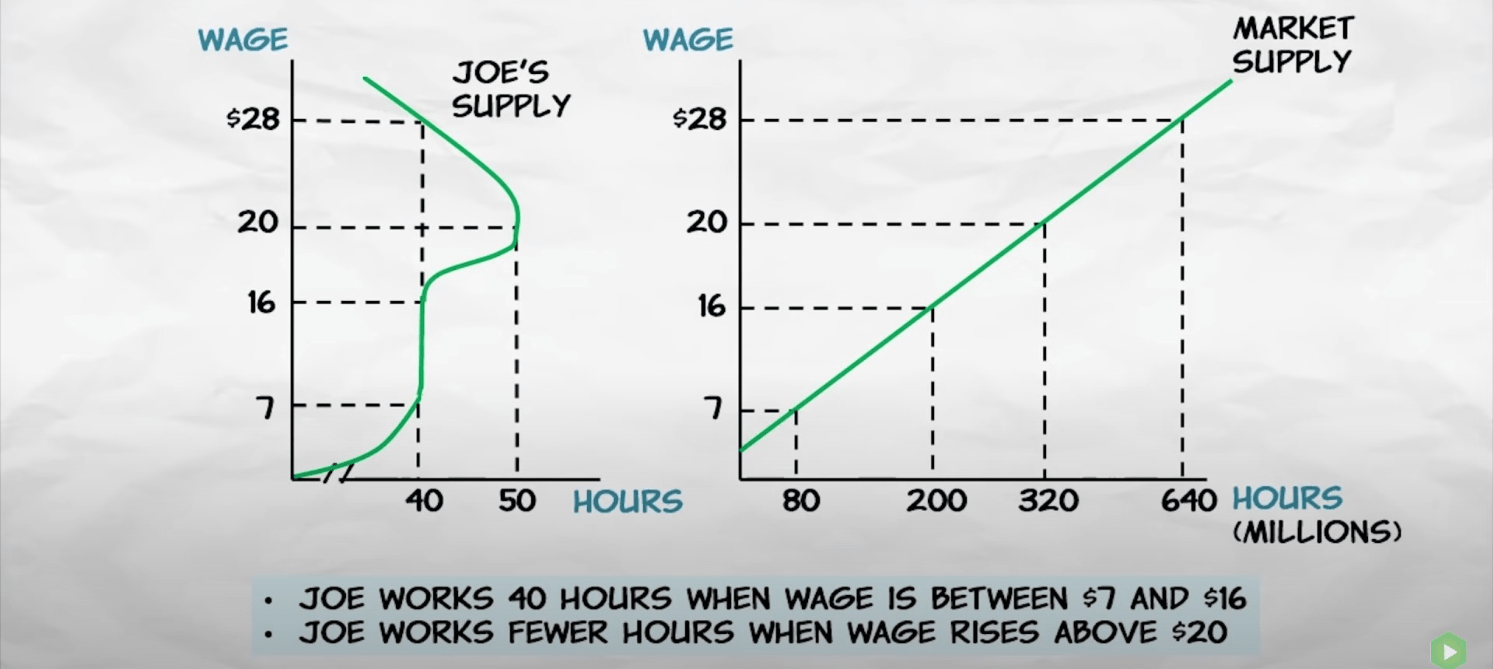
Which graph represents an individual's supply curve and which represents the entire market's supply curve?
Why?
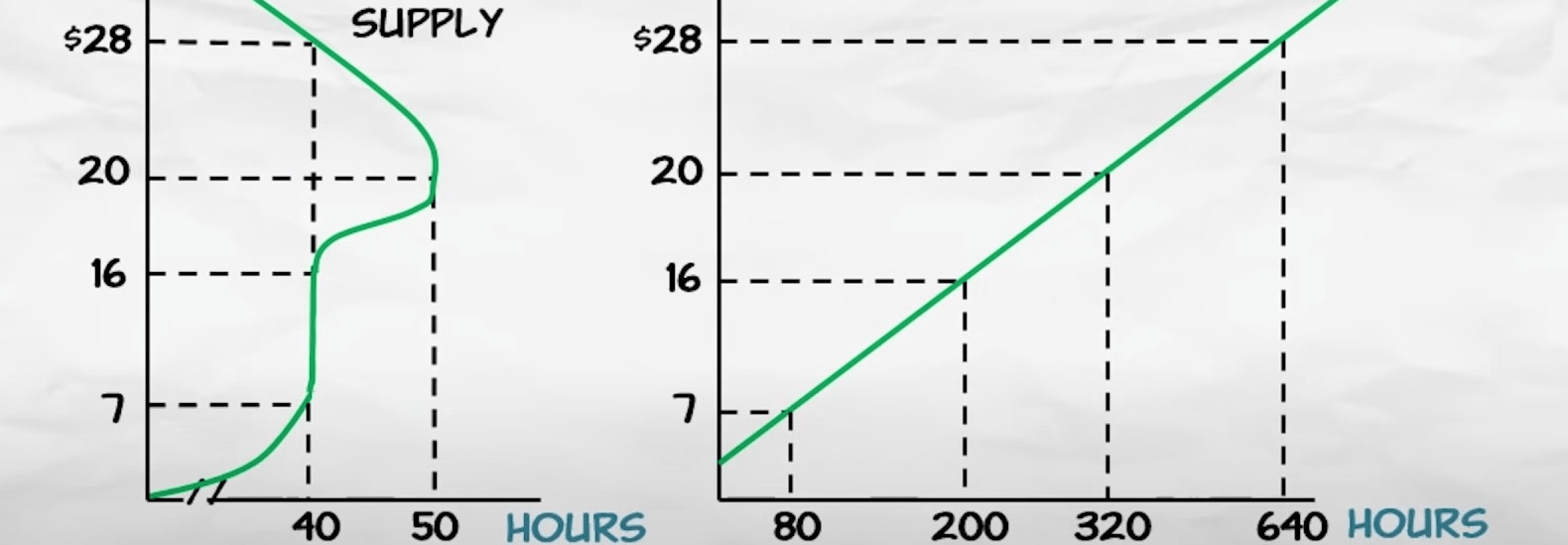
The 1st represents an individual whereas the other is the entire market.
An individual's supply curve may bend backward due to an eventual decrease in labor supply from an increase in wages. (For example, someone increasing their vacation time or days off as their wages increase)
The market's supply curve is often linear becaus it represents the sum of individuals able and willing to supply labor at each potential price. (While Joe may be unwilling to work beyond 40 hours at $28, there are many other individuals who would gladly supply additional labor for that price)
400
This is defined as an indicator for other traits an employer may find favorable (IQ, teamwork skills, determination). An example is a diploma, which is a valuable indicator for useful skills and traits.
Signaling
Basically, signaling is a return you get from something that isn't solely related to human capital.
Example: A college degree might signal several beneficial traits to an employer. It signals that you may posses a good work-ethic, a high IQ, effective teamwork skills, or some other useful attribute. The diploma by itself doesn't have any value and it doesn't add to your human capital, it's only valuable because it signals valuable traits.
500
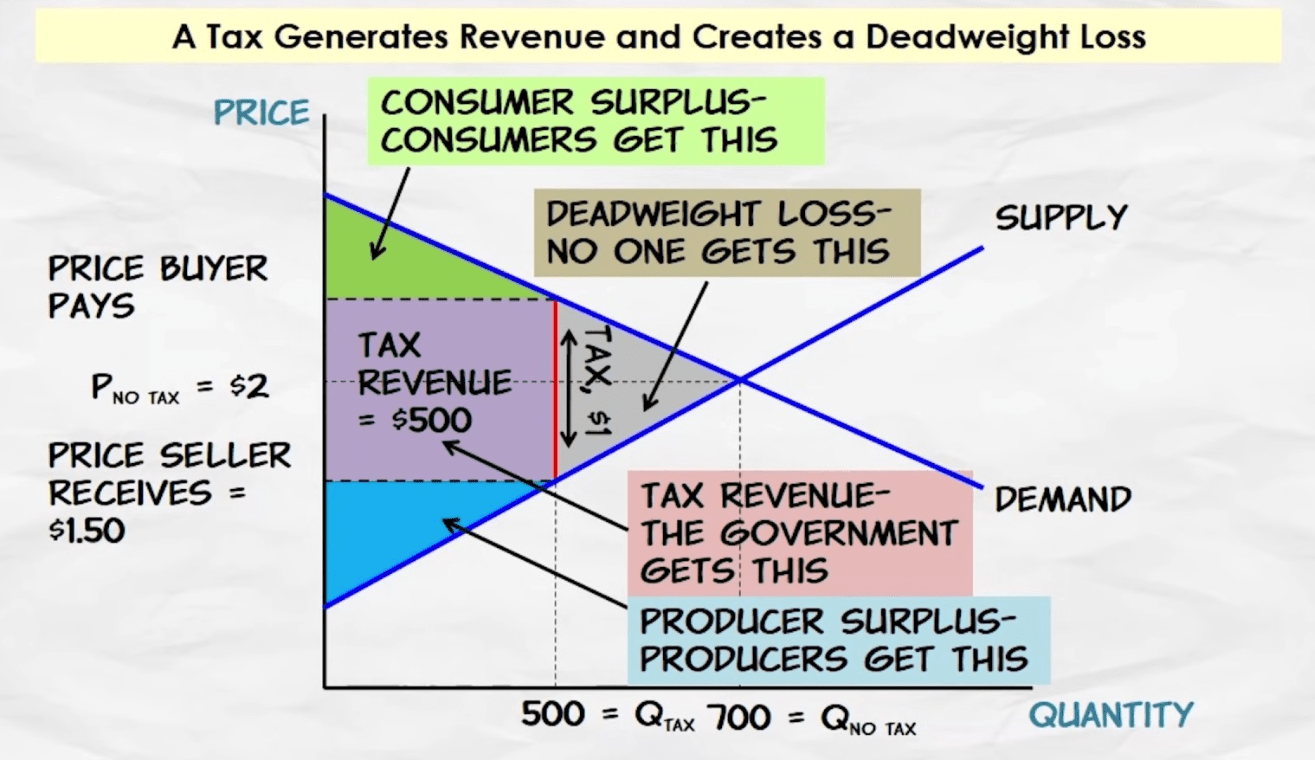
Given the $1 per unit tax, find the consumer surplus, producer surplus, deadweight loss and total revenue on this graph. If the quantity sold is 500, calculate the value of the revenue generated from the tax.
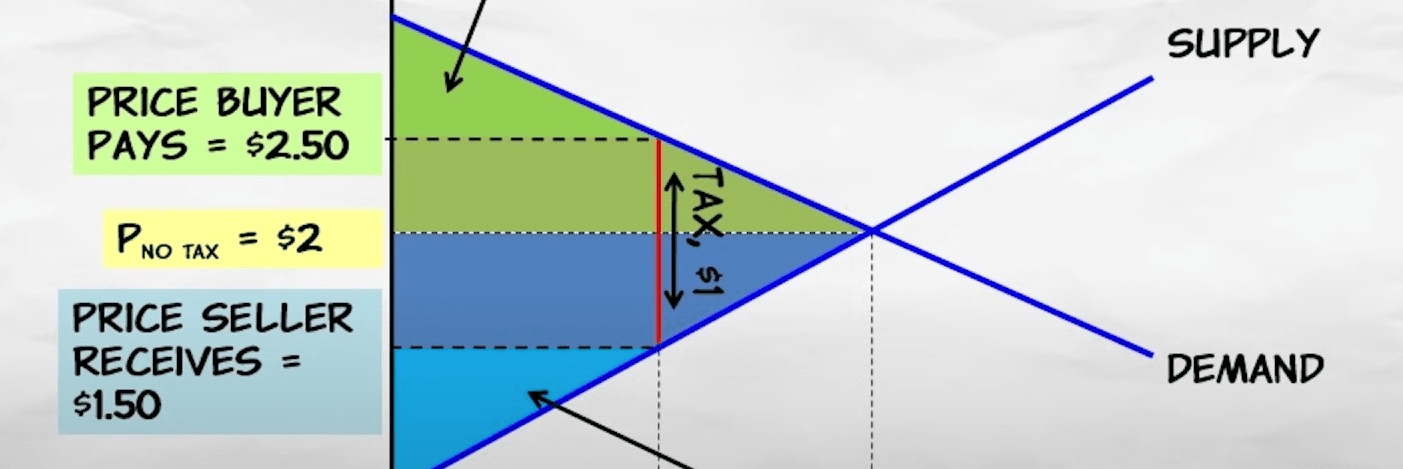
The revenue generated by the tax is calculated by multiplying the height of the tax wedge ($1) by the width of the Quantity sold (500)
The DWL is the value of the trades that don't occur. It is located to the right of the tax wedge because it represents the demanders and suppliers that don't participate given the disruption in the equilibrium Price ($2) and Quantity.
500
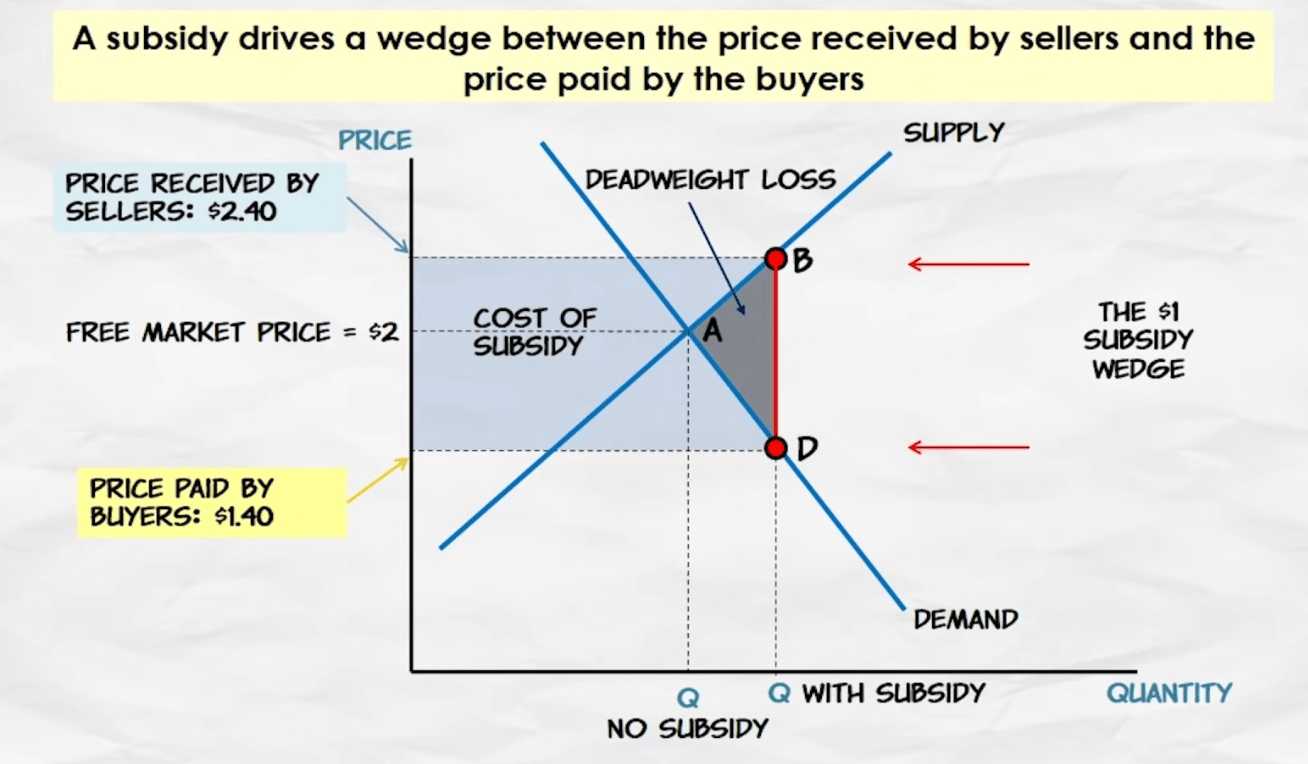
Locate the deadweight loss caused by the subsidy and the total cost of the subsidy to the government.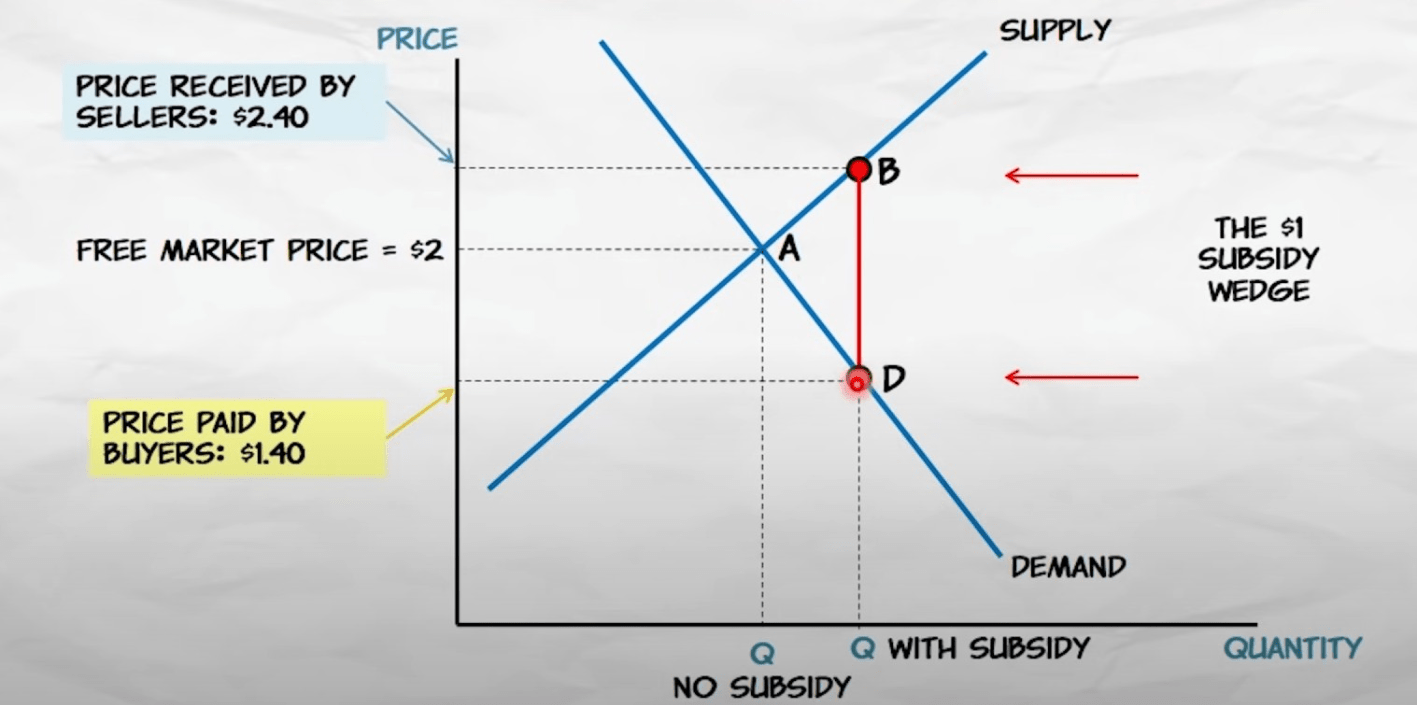
DWL occurs when the cost to suppliers exceeds the value to the demanders. The subsidy then increases the number of wasteful trades, meaning there's more trade occurring than there would be at equilibrium.
The cost is the height ($1) multiplied by the Quantity sold
500
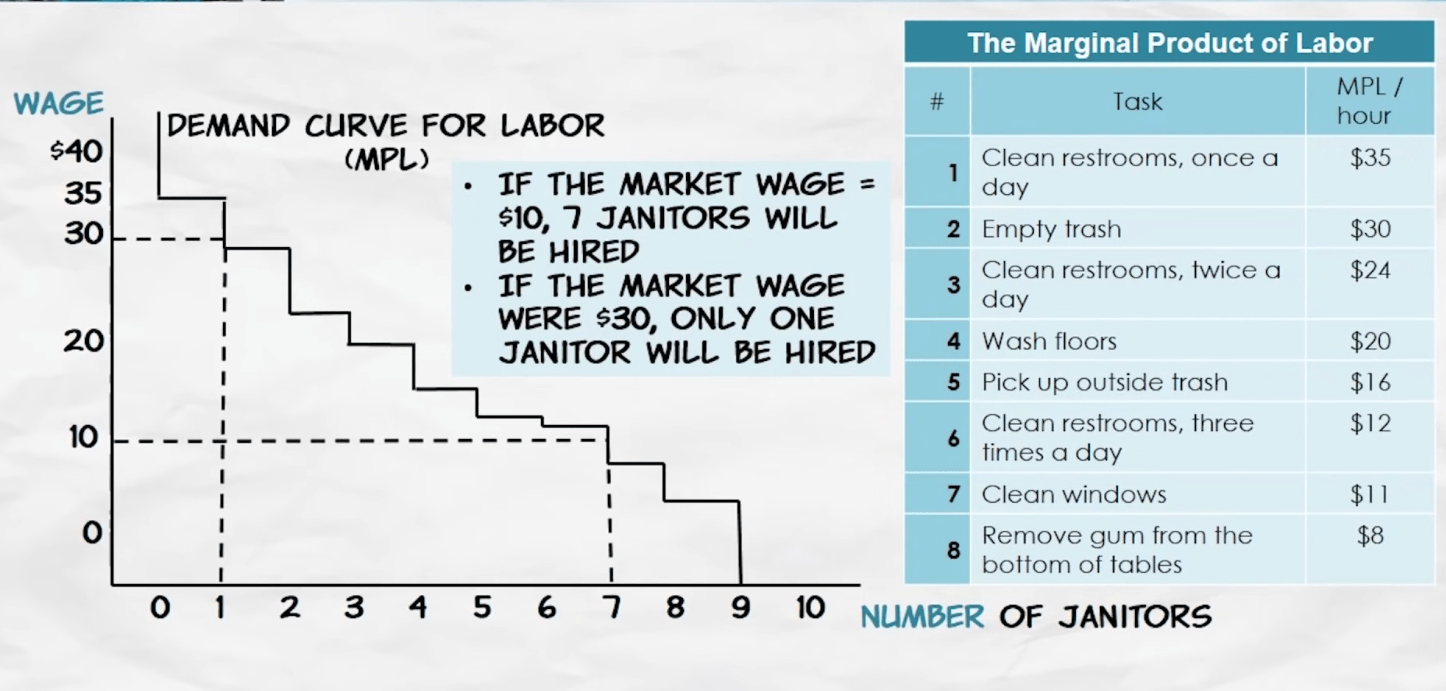
If the market wage = $10, how many janitors will be hired?
When wages decrease, firms will hire more workers who will be assigned to the ____ (most or least) important tasks for each additional worker hired.
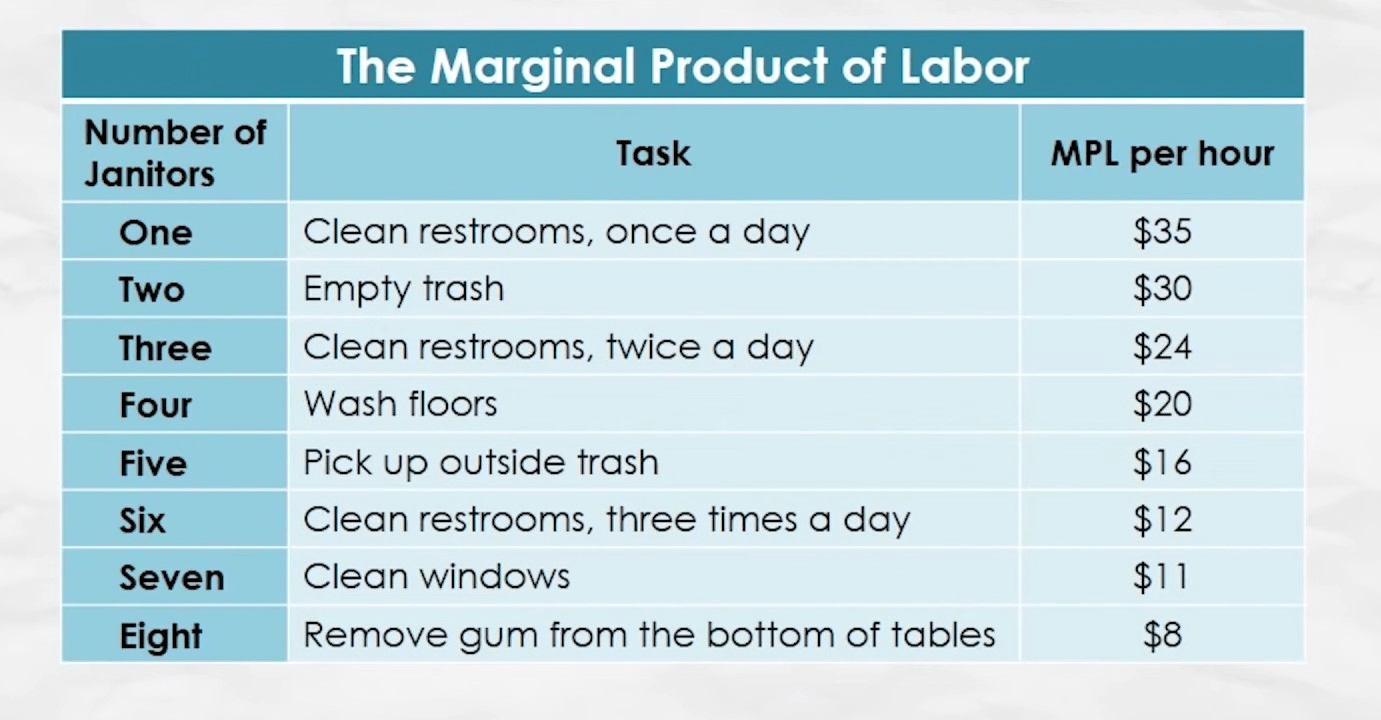
If the market wage = $10, 7 janitors will be hired.
When wages decrease, firms will hire more workers who will be assigned to the least important tasks for each additional worker hired.
(Each worker gets hired for a decreasingly important task. The firm stops hiring when the value of the next worker's labor reaches a value that's lower than the marginal product of their labor).
500
Which of the following is false:
- Firms have no financial incentive to increase the safety of working conditions
- The value of the compensation differential is the difference between the supply curve for the risky job and the supply curve of the safer job
- Risks that are hidden and don’t occur on the job aren’t accounted for that well, so workers may not be properly compensated
False: Firms have no financial incentive to increase the safety of working conditions
Firms do have a financial incentive to increase the safety of working conditions because that would increase the labor supply and decrease the wages the firm has to pay each worker.