Basic Economic Laws
Demand Shifters
Supply Shifters
Market Signals
Shortages & Surpluses
Government Intervention
Price Ceilings & Taxes
Costs & Production
Returns, Markets, & Barriers
100
This law states that consumers buy more of a good when its price decreases.
law of demand
100
This shifter refers to how much money consumers have available to spend.
income of buyers
100
This supply shifter includes new technology that lowers costs.
new technology
100
A high price signals consumers to do this.
wait
100
This occurs when prices are too high and quantity supplied is less than quantity demanded.
shortage
100
This is the minimum price that can legally be charged for a good or service.
price floor
100
An example of a price ceiling.
rent control
100
A cost that does not change much regardless of output.
fixed cost
100
When hiring one additional worker decreases production.
diminishing marginal returns
200
This law explains the tendency of suppliers to offer more of a good at higher prices.
law of supply
200
This demand shifter includes complements and substitutes.
prices of related goods or services
200
This shifter increases supply by lowering expenses.
decrease in production costs
200
A high price signals producers to do this.
make more
200
This occurs when prices are too low and quantity supplied is greater than quantity demanded.
surplus
200
An example of a price floor.
minimum wage
200
One advantage of a price ceiling.
stable prices in the short term
200
A cost that changes based on production level.
variable cost
200
Water, milk, and gasoline are examples of this type of product.
commodity
300
This term describes the point where supply and demand curves intersect.
equilibrium
300
This demand shifter includes fashion trends and consumer preferences.
tastes or preferences of consumers
300
This shifter reduces supply by raising expenses.
increase in production costs
300
A low price signals consumers to do this.
buy
300
What does this graph show? 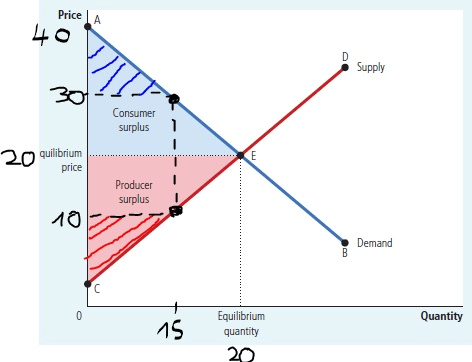
Surplus
300
One advantage of a price floor.
assured income for employees
300
One disadvantage of a price ceiling.
lower quality in the long term
300
Fixed costs plus variable costs equal this.
total cost
300
A product that is the same regardless of who produces it.
commodity
400
This occurs when the quantity demanded does not equal the quantity supplied.
disequilibrium
400
This shifter is based on beliefs about future price changes.
expectations about whether prices will rise or fall
400
This supply shifter occurs when producers expect lower future prices.
expectations of future lower prices
400
A low price signals producers to do this.
make less
400
What is the equilibrium price shown on the graph?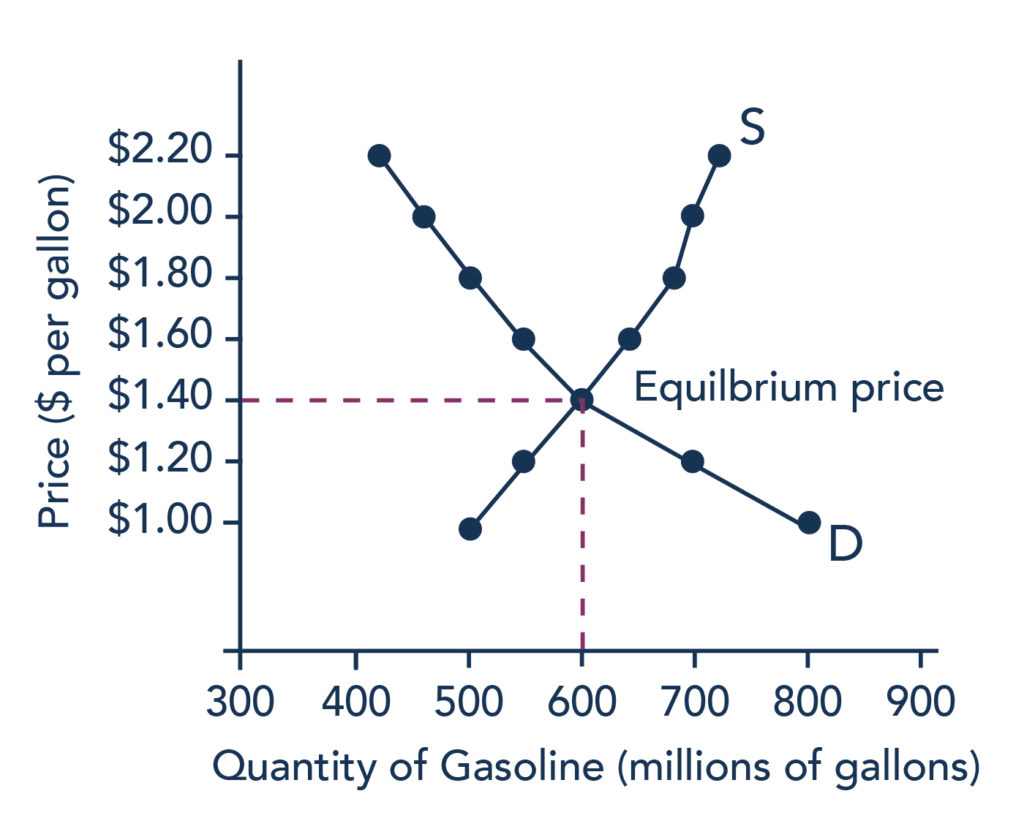
$1.40
400
One disadvantage of a price floor.
higher employer costs and fewer workers hired
400
This tax is imposed on specific goods like cigarettes.
excise tax
400
Labor plus materials equals this.
producer’s costs
400
Name two barriers to entry and explain why each is a barrier.
high start-up costs and customer loyalty, because they prevent new firms from entering the market
500
This measures how consumers react to a change in price.
elasticity
500
Name the five demand shifters.
price of the good, income, prices of related goods, tastes/preferences, and expectations
500
List all four conditions of perfect competition.
many buyers/sellers, identical products, informed participants, free entry and exit
500
This is the maximum price that can legally be charged.
price ceiling
500
One advantage of cigarette excise taxes.
discourages smoking
500
When hiring one additional worker increases production.
increasing marginal returns