Biodiversity
Ecosystem Stability
Ecological Relationships
Population Growth
Energy Flow
Wild Card
100
This term describes the variety of living organisms in an ecosystem, including the variety of species present.
Biodiversity
100
This process describes how the species composition of an ecosystem changes over time.
Ecological Succession
100
A relationship in which two organisms live in close association with each other, and each affects the other's lives.
Symbiosis
100
This term describes the maximum population size an environment can sustainably support with its available resources.
Carrying capacity
100
This represents energy flow in a linear direction.
Food chain
100
What is the name assigned to all members of a species in an area?
Population
If you got this correct: + 300 points
200
This species has a disproportionately large effect on its ecosystem relative to its abundance.
Keystone species
For an additional 200 points, identify two keystone species
200
After a volcanic eruption, organisms begin colonizing bare rock where soil has not yet formed. This type of succession occurs.
Primary succession
200
In this symbiotic relationship, both organisms benefit.
Mutualism
200
Food shortages, disease, and competition are examples of these factors, which often become more influential as population density increases.
Density-dependent limiting factor
200
This model represents interconnected energy flow among organisms.
Food web
200
This definition consists of both the communities of organisms and the abiotic environment they live within
Ecosystem
If you got this correct, perform 10 jumping jacks for an additional 200 points
300
What are the two metrics used to measure biodiversity? Describe each.
Species richness and species evenness
300
A wildfire destroys much of a forest's vegetation, but the soil remains. Explain why recovery usually occurs through secondary rather than primary succession.
Soil, nutrients, seeds, roots, or surviving organisms still remain
300
In this symbiotic relationship one, organism benefits and the other is neither harmed or helped.
Commensalism
300
Estimate the carrying capacity of this population of animals.
Approximately 8,000 animals
300
This is one of the levels in a food chain or food web.
What is a trophic level?
If you got this incorrect, - additional 300 points
300
What is the name of this organism and why is it so cool?
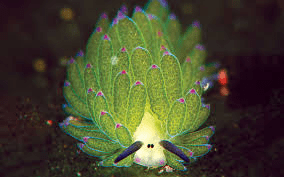
Leaf sheep
THIS ANIMAL CAN PHOTOSYNTHESIZE!!!
If you got this answer correct, describe the process of photosynthesis for an additional 300 points
400
Two forests experience the same disease outbreak. Forest A has many plant species, while Forest B has only one dominant species. Explain why Forest A may be less vulnerable to the outbreak.
Greater biodiversity provides alternative species and potentially reduces the spread or impact of the disease
400
Lichens and mosses colonize bare rock and help break it down, contributing to soil formation. These early colonizers are called this.
Pioneer species
400
The specific role of an organism within its habitat
Niche
400
A bacterial population doubles every hour under ideal conditions. What type of growth is this bacteria experiencing?
Exponential growth
400
Explain the 10% rule
Only about 10% of the energy stored at one trophic level is transferred to the next level up the food chain. The remaining 90% is lost to metabolic processes (heat) and waste (decomposers)
400
Where did Mr. Heyvaert go to college?
University of San Diego
If you got this correct, go again
500
Sea otters eat sea urchins, which eat kelp. If sea otter populations decline, sea urchins increase and kelp forests shrink. This chain of indirect effects is called this.
Trophic Cascades
500
Two ecosystems experience a disturbance. Ecosystem A returns to its previous conditions quickly, while Ecosystem B changes dramatically and recovers slowly. Identify the ecological property demonstrated by Ecosystem A.
Greater resilience
500
Two bird species depend on the same limited nesting sites. As one species uses more sites, fewer remain for the other. This interaction is an example...
Interspecific competition
500
A population has 120 births and 40 deaths in one year. It also has an immigration rate of 20 people per year and an emigration rate of 15 people per year. What is the population after one year?
85 people
500
A food chain has producers containing 500,000 kilocalories of energy. Assuming 10% transfer efficiency at each step, calculate the energy available to quaternary consumers.
50 kilocalories of energy
500
How many stars are in the Milky Way Galaxy?
100 - 400 million stars