Abiotic and Biotic Factors
Relationships
Energy and Building Blocks
Food Webs and Pyramids
Cycle of Matter
100
These are the nonliving parts of an ecosystem, such as sunlight and water.
Abiotic Factors
100
This interaction occurs when one organism hunts and eats another.
Predation
100
Organisms like plants that make their own food using sunlight are called this.
Producers
100
This is the ultimate source of energy for almost all food chains.
The Sun
100
In the water cycle, this process turns liquid water into water vapor.
Evaporation
200
This term describes the maximum sustainable population size an area can support.
Carrying Capacity
200
This is a symbiotic relationship where both organisms benefit from the interaction.
Mutualism
200
These are the three main types of nutrients found in food used for energy and growth.
Lipids, Proteins and Carbohydrates
200
These organisms break down dead material and return nutrients to the soil.
Decomposers
200
Plants take in this specific gas from the atmosphere to perform photosynthesis.
Carbon Dioxide
300
Any biotic or abiotic factor that restricts the number or distribution of organisms.
Limiting Factor
300
This term describes an organism's specific role, including what it eats and how it survives.
Niche
300
This is the process by which both plants and animals break down food to release energy.
Cellular Respiration
300
Only about this percentage of energy is passed from one trophic level to the next.
10%
300
This process in the carbon cycle involves animals releasing CO2 back into the air.
Cellular respiration
400
A sudden drought is an example of a change in this type of factor affecting a population
Abiotic Factor
400
In this relationship, one organism benefits while the other is harmed but usually not killed.
Parasitism
400
What are the reactants of Photosynthesis?
Water and Carbon Dioxide (sun's energy will also be accepted)
400
How will the Grass and Fox populations be affected if the population of Rabbits declined?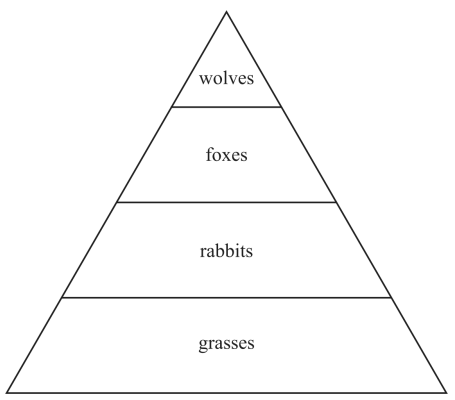
The grass will increase and the fox will decrease
400
This concept states that matter is never created or destroyed, only transformed.
Law of Conservation of Matter (Mass)
500
This happens to a population if it exceeds its carrying capacity for a long period.
It will decrease due to resource depletion
500
When two organisms live in the same ecosystem but do not need the same resources so they don't effect each other.
Coexistence
500
What organelle do plants perform photosynthesis in?
Chloroplast
500
Which organism is considered an herbivore?
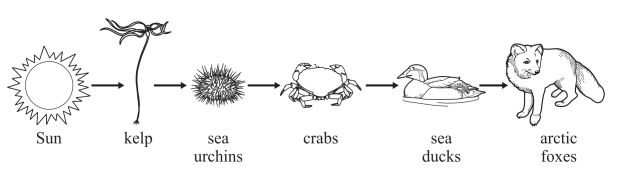
Sea Urchin
500
Identify the specific group of organisms that ensures matter is recycled and explain what would happen to the Carbon Cycle if they were removed.
Decomposers - if removed the carbon and other nutrients would not return to the soil to help continue the cycle of matter in the ecosystem.