Bloody Hell
Sleepyhead
Blame it on the Alcohol
Sweetie Pie
Potpourri
100
48 yo woman PMH HTN, HLD, recent dx of breast CA on chemo and radiation presents to the ED with a cough. On arrival vitals T 38.5C, HR 99, RR 20, SpO2 95%, BP 110/70. She is found to have R-sided infiltrate on CXR with WBC of 700 cells/µL with 60% neutrophils. What is the management of choice?
A. Admit on IV cefepime
B. Discharge home on amoxicillin-clavulanate and azithromycin
C. Admit on IV cefepime and vancomycin
D. Discharge with close follow-up
C. Neutropenic fever (>38C and ANC <500) requires broad-spectrum abx w/ pseudomonal coverage (i.e. cefepime, meropenem, zosyn), Vancomycin indicated for skin or soft tissue infection, pneumonia, catheter-related infection, or hemodynamic instability
100
What does RASS stand for?
A. Really Altered Symptomatic Schizophrenics
B. Rodents Are Super Sized
C. Richmond Agitation Sedation Scale
D. Raymond Agitation Symptomatic Sedation
C.
100
What is the difference between alcoholic hallucinosis and Delirium Tremens?
A. Alcoholic hallucinosis tends to occur within 12-48 hrs after cessation whereas DTs are 48-96hrs
B. AH tends to leave the patient able to recognize the hallucinations whereas DTs do not
C. Mortality is much greater with DTs
D. All of the above
D.
100
62 y/o M PMH alcohol abuse, DM on metformin presenting with abd pain, n/v x1 day. Wife states he has been on a 2 week bender unsure if he's been taking his insulin. HR 110, BP 130/80, afebrile, O2 sat 100%. No abd tenderness or other findings on exam. Labwork shows FS 330, Na 132, K 3.2, bicarb 18, Cr 1.5, anion gap 18, beta hydroxybutyrate 3.4, pH 7.32, pCO2 36, lactate 2.0, lipase, cardiac enzymes and LFTs wnl.
A. Give IVF, dextrose, thiamine, repeat labs
B. PO hydrate, discharge
C. Give IVF, start insulin gtt, call MICU
D. Get CT scan, call surgery
A. This patient most likely has alcoholic ketoacidosis, +/- starvation ketosis. Also has slight elevated lactate contributing to slightly low pH, which is also consistent w/ alcohol related NAD depletion. Not wrong to consider DKA in this patient, but would repeat labs after fluid resus before starting an insulin gtt and calling MICU.
100
Draw an organ that we no longer accept from living donors.
Heart or Lungs. Heart for obvious reasons; lungs because the morbidity/mortality of the donor was worse than the life gain from the recipient.
200

32yo M presents with generalized weakness and dyspnea 48 hours after induction chemotherapy for AML. The patient’s electrocardiogram is shown above. Which of the following is the most likely diagnosis?
A. Blast crisis
B. Hypercalcemia of malignancy
C. ACS
D. Tumor lysis syndrome
D. Electrolyte abnormalities of TLS (hyperkalemia, hyperphosphatemia, hypocalcemia, hyperuricemia)
200
You intubate a patient in status asthmaticus. Which sedative drip may be most helpful for this patient?
A. Propofol
B. Versed
C. Fentanyl
D. Ketamine
D. Ketamine => bronchodilation
200
60M with multiple MICU admissions for alcohol withdrawal presents to the ED with sweating, tachycardia, and tremor. He endorses that he has not had a drink since yesterday. He weighs roughly 70kg. Labwork is otherwise benign. Which of these is not appropriate?
A. Thiamine, electrolyte repletion, Ativan 4mg PRN, CIWA, admission
B. Oral multivitamin, Chlordiazepoxide, discharge
C. Phenobarbital 130mg IV, MICU consult
D. Phenobarbital 260mg IV, admit to medicine
B. Patient is high risk for severe withdrawal which carries a very high morbidity. Should not be discharged.
200
A 40yo F with PMHx of DM and lupus and is a Wall Street Stock Broker comes into the ED with N/V and abdominal pain. She is found to be in DKA. She admits to binge drinking and cocaine use due to the high stress nature of her job. She denies missing taking her medications. Which of these is least likely to contribute to her DKA?
A. Cocaine use
B. Alcohol use
C. Concurrent steroid use for a lupus flare
D. Dapigaflozin
D. SGLT-2 inhibitors may be associated with euglycemic DKA, but they do not increase your risk of DKA itself.
200
Why are Gin and Tonics so popular at raves? (Open Ended Question)
Quinine is fluorescent in blacklight/UV light/Wood's Lamp.
300
57 yo M with PMH alc cirrhosis, DM and CHF presents to the ED w/ melena. Pt is initially pale, tachycardic and hypotensive w/ labwork showing a hemoglobin of 4.7 mg/dL. The patient is given 9 units of packed red blood cells within an hour. While receiving the ninth unit of blood, the patient becomes more dyspneic. At this time T 97 F, BP 174/94, HR 90, RR 22, and O2 sat 90% on room air. Physical exam reveals pulmonary crackles and wheezes that were not present on initial exam. Which of the following is the most likely diagnosis?
A. ABO incompatibility
B. Transfusion-related acute lung injury
C. Transfusion-associated graft vs host disease
D. Transfusion-associated circulatory overload
D. Sequelae of heart failure/volume overload (hypertensive, afebrile, w/ crackles) most likely TACO. Fever and hypotension more frequently found in ABO incompatibility or TRALI.
300
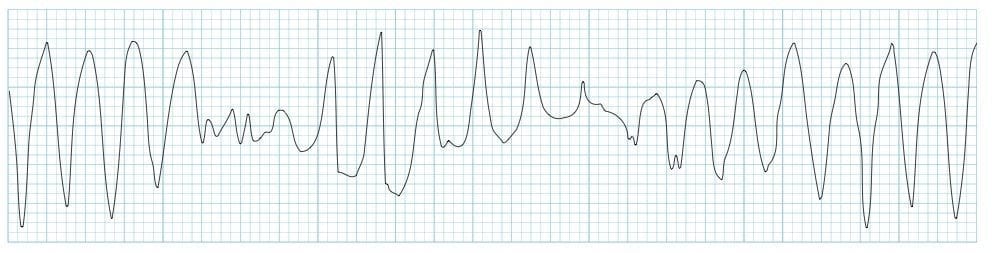
A 35 yo M PMH opioid dependence in methadone program arrives to the ED extremely agitated, attacking staff in amb bay. Patient was restrained and medically sedated prior to being brought back to their room where they are hooked up to a monitor and you see this. Which of the medications that the patient received in amb bay was least likely to contribute to this rhythm?
A. Benadryl 50mg IV
B. Haldol 5mg IV
C. Ativan 2mg IV
D. Zofran 4mg IV
C. Benzos one of few sedative classes that don't prolong QT. Don't be afraid to use your sedatives though, just be vigilant!
300
56M who is a chronic alcoholic with known ascites presenting with abdominal pain. A diagnostic paracentesis was performed which had the following results:
RBC: 20000, WBC: 1500, Lymphocytes: 10%, Neutrophils: 90%, no organisms seen on microscopy. What would be your next step?
A. Start Clindamycin 750mg and admit the patient to the medicine service
B. Start Ceftriaxone 2g and admit the patient to medicine
C. Start albumin infusion and admit the patient
D. Patient does not have SBP. Discharge
B. Patient has greater than 250 PMNs. Ceftriaxone is usually 2g for SBP. Other alternatives include fluroquinolones or carbepenams.
300
62M with no PMHx p/w feeling "lethargic." Glucose is 1150 on arrival. Na 130, K 5.4, Cl 95, HCO3 15, anion gap of 20. After starting IV fluids with LR and insulin the patient states he feels "much better." Repeat labwork after 4 hours shows: Na 140, K 4.0, Cl 105, HCO3 20, anion gap 15, Glucose 600. What is the next step?
A. Add on IV potassium to your fluids and call MICU
B. Start hypotonic fluids and IV potassium to decrease sodium
C. Decrease the rate of insulin administration
D. Discharge the patient
A. Remember to correct for glucose. Na was around 155 on arrival. Repeat is 152.
300
With appropriate treatment; what is the mortality from Delirium Tremens?
A. <5 %
B. 5-10%
C. 10-25%
D. > 25%
A. <5%. It used to be roughly 1/3 in the early 1900s. It has been much better since then.
400
20yo M presenting with Shortness of breath. CBC shows a WBC count > 250K, Hg 6.8, Platelets 60. CXR with mild pulmonary congestion. Patient is not on any supplemental O2. Vitals, including RR are all WNL.
A. Start IV fluids and admit to medicine
B. Start IV fluids and consult Heme/Onc regarding possible leukopharesis
C. Consult Heme/Onc, start fluids and transfuse blood
D. Start IV fluids, transfuse blood and platelets and admit to medicine
B. Patient is likely suffering from leukostasis. Transfusing products will likely worsen his symptoms. Leukopharesis is a very real possibility for this patient as fluids will be a temporizing measure. Heme/Onc will probably say to do hydroxyurea, but whatever.
400
Which of the following is not a side effect of dexmedetomidine (Precedex)?
A. Hypotension
B. Withdrawal with prolonged use
C. Bradycardia
D. Respiratory suppression
D. Can be used for nonintubated patients and to bridge their extubation.
400
In cirrhotic patients who present with bleeding from esophageal varices; which intervention has not been shown to improve mortality?
A. Blood transfusion (in critically ill patients or those with Hg<7)
B. Octreotide infusion
C. Potassium repletion if hypokalemic
D. Prophylactic antibiotics
B. Potassium has a very strong relationship with mortality in cirrhotics. Blood and ceftriaxone have clear mortality benefits.
400
A 12yo M comes into the ED with increased thirst and urination. He is found to be a new diabetic and started on an insulin regimen and fluids. As you prepare to transfer him to the ICU he becomes less responsive. A quick pupillary check shows that his left pupil is now sluggish. What is not an appropriate next step?
A. Mannitol 0.25g/kg
B. Hypertonic saline (3%) 5ml/kg
C. Raise the head of the bed to 45%
D. CT scan
D. Patient is showing signs of brain herniation from cerebral edema. Last thing you want to do is take him to the CT scanner without treatment. Likely will need intubation emergently.
400
Which mammal can develop gout?
A. Mouse
B. Zebra
C. Flamingo
D. Gibbon
D. Great and lesser apes do not form uricase and so cannot break down uric acid.
500
20yo F with AML presenting to the ED in tumor lysis syndrome. She is complaining of feeling weak and feeling tingling in her fingers/toes and periorally. EKG shows QTc of 530. Calcium is 6.0 (corrected), ionized calcium is in the lab, phosphate is 14. What is your next step?
A. 2g of Calcium gluconate IV bolus
B. 2g of CaCl2 IV bolus
C. Increase IV fluids, Give oral calcium carbonate, once phosphate decreases give IV calcium.
D. Place a dialysis catheter and call nephrology
D. Calcium/phosphate product is >70. High risk of precipitation of calcium phosphate crystals and subsequent renal failure. Also symptomatic hypocalcemia due to excess phosphate, dialysis will fix both issues.
500
Which of these sedative drips does not exert an anti-epileptic effect?
A. Propofol
B. Fentanyl
C. Ketamine
D. Versed
B. Fentanyl
500
Which of these has the weakest association on a patient's chance of developing DTs?
A. Age
B. Ethnicity
C. Heavy drinking history
D. Concurrent Illnesses
B. Don't be racist.
500
54 y/o M PMH HTN presents with lethargy, polyuria and polydipsia. Pertinent labwork showing FS >600, pH 7.38, Cr 1.4, bicarb 24, A1c 14.1, otherwise unremarkable labs and vitals. Patient weighs 100kg. You picked up a rural per diem shift in a shop that doesn't have endocrinology or CDU, in addition to giving IVF what dose of long-acting insulin (i.e. lantus, basaglar) would you like to start for him?
A. 5 units
B. 10 units
C. 25 units
D. 50 units
C. 25 units (in general, 0.3-0.5 u/kg TDD insulin, 50% basal / 50% bolus (can divide by three to obtain premeal bolus doses).
500
A 90yo M with PMHx of Moderate Dementia, afib on Eliquis, CAD, HTN, and previous strokes presents to the ED with chest pain. EKG shows that the patient is in ventricular tachycardia with a rate in the 190s. He was brought in from a nursing home and he has a MOLST form in place. He is DNR/DNI (no other information available.) As you move him over to the trauma bay his rhythm devolves in Vfib. What do you do?
A. Place pads and perform a synchronized cardioversion
B. Place pads and perform a desynchronized cardioversion
C. Check for a pulse, place on monitor and push amiodarone 300mg
D. Check for a pulse and if none call time of death
C. Pt is DNR/DNI so A and B are out. V fib can spontaneously revert to a rhythm with a pulse so calling death immediately is inappropriate. DNR does not mean do not treat. If family is available a discussion can be had, but will be difficult in the timeframe available.
600
55yo African American M with a known history of ALL presents with fatigue. He is found to have a WBC count > 100k, K of 5.7, Ca of 7.0, Phos of 5.6 and creatinine of 1.6 (baseline 1.0). Along with consultation with oncology, you start aggressive IV fluid administration (30cc/kg bolus and 1.5x maintenance hydration) and rasburicase. As you prepare to admit the patient, he states he is feeling much worse. You find that his urine output has significantly declined and the urine looks brown. Repeat labwork shows that hemoglobin dropped 2 points. What is the next step?
A. Insert a dialysis catheter and contact nephrology and ICU for emergent hemodialysis
B. Insert a dialysis catheter and contact Heme/Onc for leukopharesis
C. Add bicarbonate to the fluid to alkalanize the urine
D. Increase the rate of fluid administration
A. Likely G6PD and hemolysis from rasburicase. Patient's kidney function is now too poor. Will need hemodialysis soon.
600
Name a sedative medication that you give for a ventilated patient that you should give a loading dose for. (Open Ended Question)
Nearly all medications aside from propofol (outside of intubation and seizures). Particularly opiates and ketamine should have a bolus.
600
56M chronic alcoholic with known ascites presenting with abdominal pain and swelling, you perform a diagnostic paracentesis showing SBP and started abx, but you now notice he has doubled his baseline creatinine. UA is normal and his MAP is roughly 65.
A. Admit to medicine; no changes
B. Add on albumin infusion and octreotide
C. Add on albumin, ocreotide and midodrine
D. Discuss a MOLST form
C. Although D is never wrong. Patient possibly has hepatorenal syndrome. While it is a diagnosis of exclusion, earlier treatment is more likely to result in recovery. Terlipressin is treatment of choice outside of the US.
600
54y/o M PMH DM on insulin presents obtunded, tachypneic with shallow respirations, while intubating the patient the nurse tells you the VBG she just sent came back as pH 7.00, pO2 42, pCO2 25, lactate 1.4, bicarb <7, glucose 594. Patient's ideal body weight is 60kg.
Which of the following would be the most appropriate vent settings?
A. TV 550 RR 14, PEEP 5, FiO2 100%
B. TV 400 RR 14, PEEP 10, FiO2 100%
C. TV 400 RR 24, PEEP 5, FiO2 100%
D. TV 550 RR 24, PEEP 5, FiO2 100%
C. Patient needs increased minute ventilation to decrease pCO2 to compensate for his severe metabolic acidosis. TV 550 is well above 6-8cc/kg, standard RR 14 would not be sufficient to compensate for metabolic acidosis.
600
What is gin distilled from? (Open Ended Question)
Juniper Berries