Equipment
Medica Obscura
ECGs
Operations
Med Math
100
This device is used to deliver a controlled electrical shock to a patient in ventricular fibrillation or pulseless ventricular tachycardia.
What is a defibrillator?
100
This toxidrome is characterized by pinpoint pupils, respiratory depression, and decreased level of consciousness.
What is an opioid toxidrome?
100
This rhythm is characterized by a chaotic, irregular baseline with no identifiable P waves, QRS complexes, or organized ventricular activity.
What is ventricular fibrillation?
100
The first priority when arriving at any EMS scene.
What is scene safety?
100
An order calls for 500 mg of a medication. The vial contains 250 mg/5 mL. How many mL should you administer?
What is 10mL.
200
This piece of airway equipment provides a more secure airway than an OPA or NPA and allows positive pressure ventilation while protecting against aspiration.
What is an endotracheal tube?
200
This term describes the phenomenon in which a patient's pupils appear to be different sizes.
What is anisocoria?
200
DAILY DOUBLE
A regular narrow-complex tachycardia at approximately 180 beats/minute with no clearly visible P waves is most consistent with this rhythm.
What is supraventricular tachycardia (SVT)?
200
This command structure provides a standardized system for managing incidents involving multiple agencies and resources.
What is the Incident Command System (ICS)?
200
A patient weighs 80 kg. A medication is ordered at 0.1 mg/kg. How many milligrams should be administered?
What is 8 mg?
300
DAILY DOUBLE
This device measures the concentration of carbon dioxide in exhaled gas
What is capnography/EtCO2 monitoring?
300
A patient with significant retroperitoneal bleeding develops bruising along the flank. What is this classic sign called?
What is Grey Turner's sign?
300
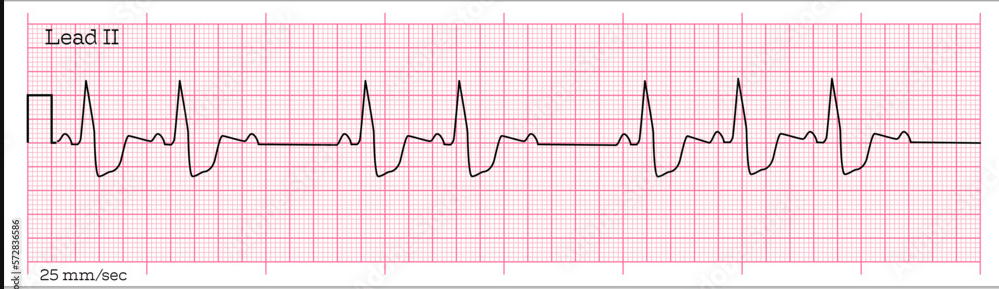 Name that rhythm!
What is a second degree heart block, mobitz type 2?
300
What the triage acronym START stands for.
What is simple triage and rapid transport?
300
You have 1,000 mL of fluid to administer over 8 hours using a pump. What rate should you program?
What is 125 mL/hr?
400
These things make up the acronym DOPE.
What are displacement, obstruction, pneumothorax and equipment failure.
400
A patient says it feels like “ants are crawling all over my skin,” but there are no insects present. What is this bizarrely named sensory phenomenon?
What is formication?
400
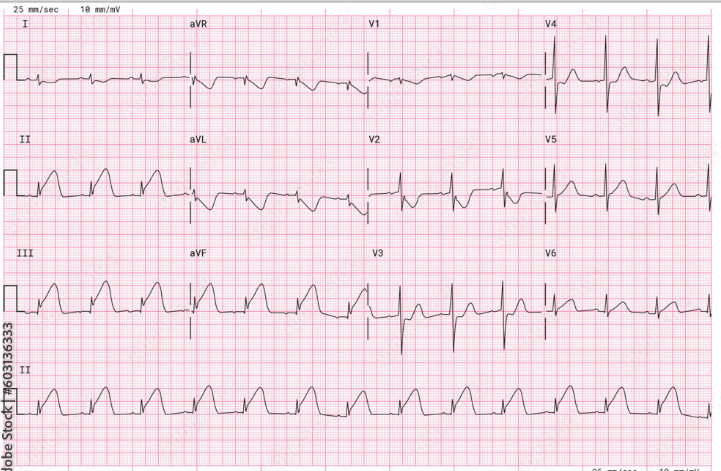 Name that STEMI
What is an inferior MI?
400
You arrive at an MCI with more patients than available resources. Your primary objective is not to provide definitive treatment to the first patient you encounter, but to accomplish this process so limited resources are directed toward those who can benefit most.
What is triage?
400
DAILY DOUBLE
A medication is supplied as 2 mg/mL. The ordered dose is 0.15 mg/kg for a patient weighing 80 kg. How many mL should you administer?
What is 6 mL?
500
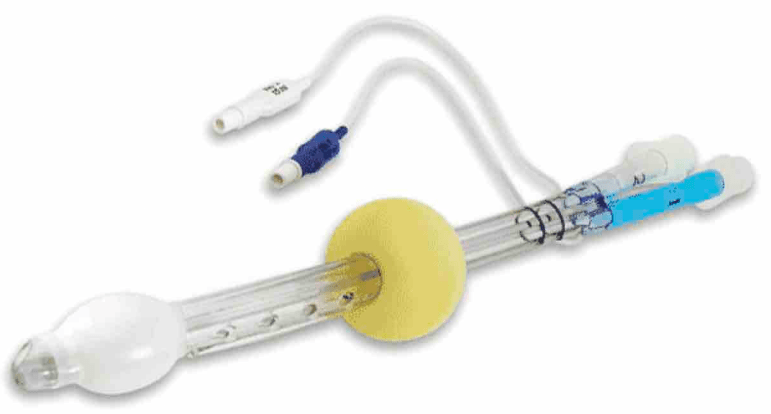 Name that piece of equipment.
What is a combitube?
500
A patient recovering from a traumatic brain injury begins laughing or crying uncontrollably in situations that don't seem appropriate for their emotional state. This phenomenon has a surprisingly specific name.
What is pseudobulbar affect?
500
Concordant ST elevation >= 1 mm in >= 1 lead
Concordant ST depression >= 1 mm in >= 1 lead in V1-V3
Proportionally excessive discordant STE in >= 1 lead anywhere with >= 1 mm STE
What is the Smith-Modified Sgarbossa Criteria?
500
The most appropriate transport option for a non-patient, uninjured minor child of a patient who is being transported.
What is in a different vehicle in a size-appropriate child restraint system?
500
A norepinephrine infusion is ordered at 0.1 mcg/kg/min for a 90-kg patient. The concentration is 8 mg in 250 mL. What pump rate in mL/hr should you use?
What is 16.9 mL/hr?