Scientific Method
Living Things
Macro
molecule
molecule
Properties of Water
Cell Structures
100
Fill in the blank: The independent variable is what you are _____.
The independent variable is what you are TESTING.
100
Place the following items in the correct order from simplest to most complex:
Organ system, Molecule, Cell, Organism, Tissue, Atom, and Organ
Atom, Molecule, Cell, Tissue, Organ, Organ system
100
Which biomolecule is this?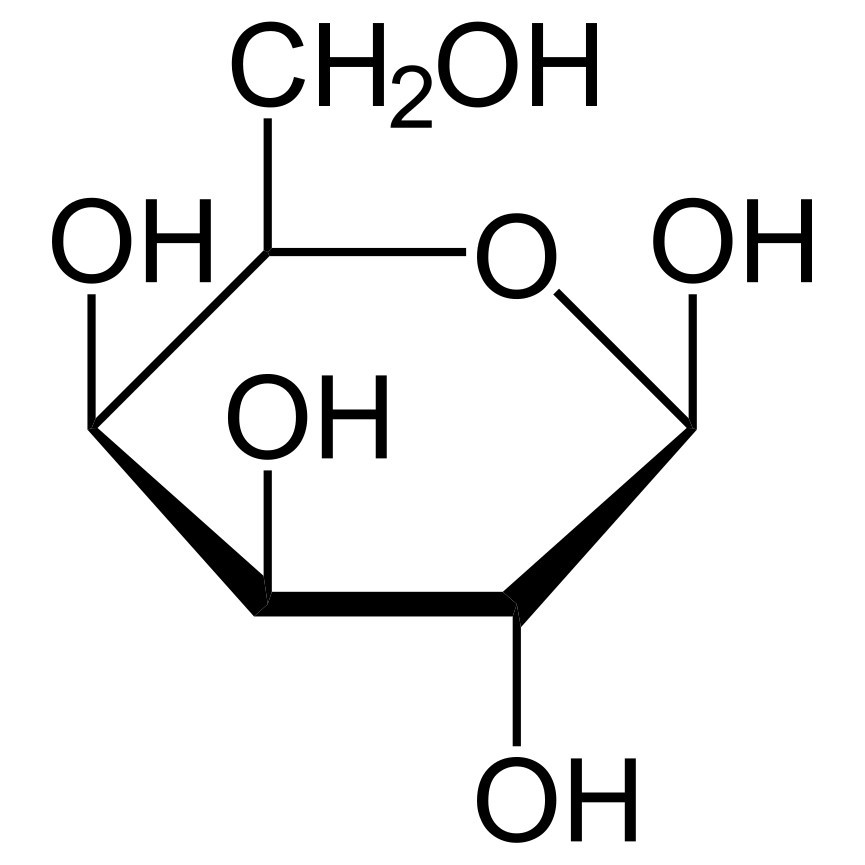
Carbohydrate (carbon ring)
100
The chemical structure of a water molecule is
1 oxygen, 2 hydrogen (H2O)
100
What are two differences in Prokaryotes and Eukaryotes?
Prokaryotes: Smaller, simpler, no nucleus, no membrane bound organelles
Eukaryotes: Bigger, complex, nucleus, membrane bound organelles
200
Using DRY MIX, what is your dependent variable based on the graph?
The score of tests (y-axis)
200
What does the word biotic mean? What does the word, abiotic mean?
Biotic: Living Thing
Abiotic: Nonliving Thing
200
Which four elements are found in every protein? Some proteins contain additional elements.
CHON - Carbohydrate, Hydrogen, Oxygen, Nitrogen
200
Which property of water allows insects to walk on the surface of a pond without breaking the surface?
Surface Tension
200
Mitochondria is known as the powerhouse of the cell. This means it is known for its function which is to...
Break down food molecules into energy through the process of cellular respiration
300
What is the dependent variable?
The experiment is to test the amount of simple sugars using Benedict's Test where the color of the solution turns "red" or "orange" if it is present?
We are measuring the color change, if it turns red or orange.
300
Fill in the blank: All living things must ________ energy among themselves (such as eating food).
All living things must TRANSFER energy among themselves (such as eating food).
300
After food goes into our mouths, what happens during digestion starting from the mouth?
Food gets broken down by enzymes through saliva. Then the small intestine, pancreas, cellular respiration break down, and energy is obtained.
300
Where do we get most of our accessible drinking water from on places of Earth?
Lakes
300
A researcher analyzes the molecular composition of two different cell organelles and notices that one of the organelles has more carbohydrates and lipids present.
What organelle could this be?
Smooth ER because it produces and stores carbohydrates and lipids
400
What is an example of Quantitative Data?
Any numerical data. Such as the length, mass, or count of something.
400
The process of homeostasis is how the body maintains internal balance between systems using stimulus, sensor, and an effector. What is an effector?
An organ or tissue that responds to the signal from the sensor to bring the body back to its normal state
400
Plants store excess glucose as starch. To which group of biomolecules does starch belong?
Carbohydrate (because starch and glucose is a form of sugar).
400
Plankton in the ocean use dissolved carbon dioxide and water to produce glucose and oxygen. This process is known as
Photosynthesis
400
What are three differences between animal and plant cells?
Animal: round, has lysosomes, temporary vacuoles, and vesicles
Plant: rectangle, has cell wall, chloroplast, and one large vacuole
500
What is the purpose of the scientific method?
To provide steps for students to investigate problems/questions through experiment
500
It's a hot day and plants are being affected. The receptors in the plant leaves signals the plant to close its' pores. The plant then closes the pores on its leaves to reduce water loss.
What is the stimulus of the plant?
Stimulus is the hot day (environment that causes the feedback loop).
500
What is cellular respiration?
Metabolic process where living cells convert glucose and oxygen into energy by breaking down food into macromolecules.
500
All properties of water are caused by polarity. What is the polarity of water?
Water is a polar molecule, meaning that there are different charges at the ends of the molecule.
500
What is the cell membrane property, selective permeability?
The membrane allows some substances to pass more easily than others, maintaining the cell's internal environment