Thyroid 1
Thyroid 2
Parathyroid
Adrenal
Tumors
Miscellaneous
100
A 24-year-old woman presents to the emergency department, requesting a review of her medications. She recently had an uncomplicated vaginal delivery at 38 weeks gestation. After the pregnancy, she had a period of feeling anxious, heat intolerance, and weight loss. This resolved but was followed by a period of fatigue, depression, and cold intolerance. Her primary care doctor started her on levothyroxine. She felt better until recently, when she experienced a reemergence of her initial symptoms. She stopped taking the levothyroxine and has felt back to her baseline. She is otherwise healthy and has no other medical problems. Her T is 98°F (36.7°C), BP is 111/61 mm Hg, HR is 92 bpm, RR is 18/min, and oxygen saturation is 98% on room air. Physical exam reveals a well-appearing young woman. Her thyroid gland is not enlarged or tender. Exophthalmos is not noted. Basic laboratory studies, including a thyroid-stimulating hormone and T4 level, are unremarkable. Which of the following is the most likely explanation for this patient’s clinical course?
A- Bacterial infection of the thyroid
B- Exogenous thyroid hormone use
C- Permanent autoimmune destruction of the thyroid
D- Postpartum autoimmune injury
D- Postpartum autoimmune injury
100
An 83-year-old woman is brought to the ED by her husband, who reports a two-day history of increasing lethargy, generalized weakness, and occasional confusion. Her past medical history is significant for coronary artery disease, hypertension, hypothyroidism, and diabetes. Her temperature is 92.3°F (33.5°C), heart rate is 60 beats per minute, blood pressure is 80/55 mm Hg, and respiratory rate is 12 breaths per minute. She is somnolent but arousable and occasionally inaccurate when responding to questions. Physical examination reveals pretibial nonpitting edema with otherwise unremarkable extremities. Her complete blood count and basic metabolic panel are normal. Chest X-ray reveals an increased cardiac silhouette. What is the definitive treatment for this patient?
A- Active and passive rewarming measures
B- Administration of hydrocortisone
C- Administration of intravenous levothyroxine
D- Intravenous bolus of normal saline followed by vasopressor
C- Administration of intravenous levothyroxine
300-500 mcg IV loading dose once, THEN 50-100 mcg qDay until patient is able to tolerate oral administration
100
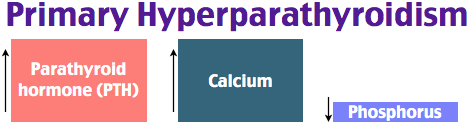
A 68-year-old woman is diagnosed with hyperparathyroidism. Both her serum calcium level and parathyroid hormone level are elevated. Which of the following findings would be most consistent with the diagnosis?
A- Chvostek sign
B- Decreased serum magnesium level
C- Decreased serum phosphate level
D- Hypotension
C- Decreased serum phosphate level
100
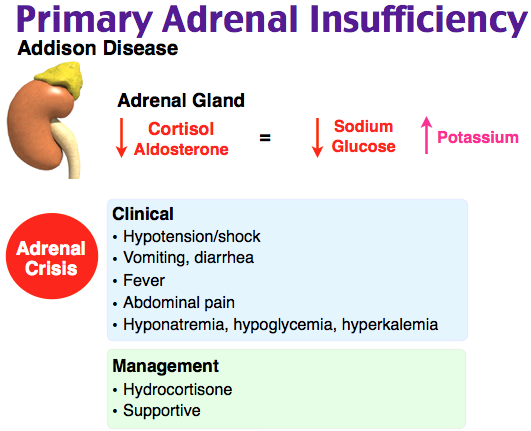
A 40-year-old woman presents with weakness, fatigue, nausea, and diarrhea. Physical exam reveals orthostatic hypotension and axillary fold hyperpigmentation. Which of the following laboratory abnormalities would you expect to find in this patient?
A- Hypercalcemia
B- Hypermagnesemia
C- Hypokalemia
D- Hyponatremia
D- Hyponatremia
100
A 44-year-old man presents to the emergency department with a severe headache and sweating. Although his symptoms are already beginning to improve, he is concerned because similar episodes have occurred in the past several weeks during which he feels anxious, sweaty, and experiences flushing. The patient is a current smoker and drinks alcohol every night. His temperature is 99.5°F (37.5°C), blood pressure is 167/94 mm Hg, pulse is 90/min, and respiratory rate is 15/min. Which of the following is the best initial diagnostic test for this patient?
A- Head CT scan without contrast
B- Plasma fractionated metanephrine levels
C- Renal artery ultrasound with Doppler flow
D- Serum renin and aldosterone levels
B- Plasma fractionated metanephrine levels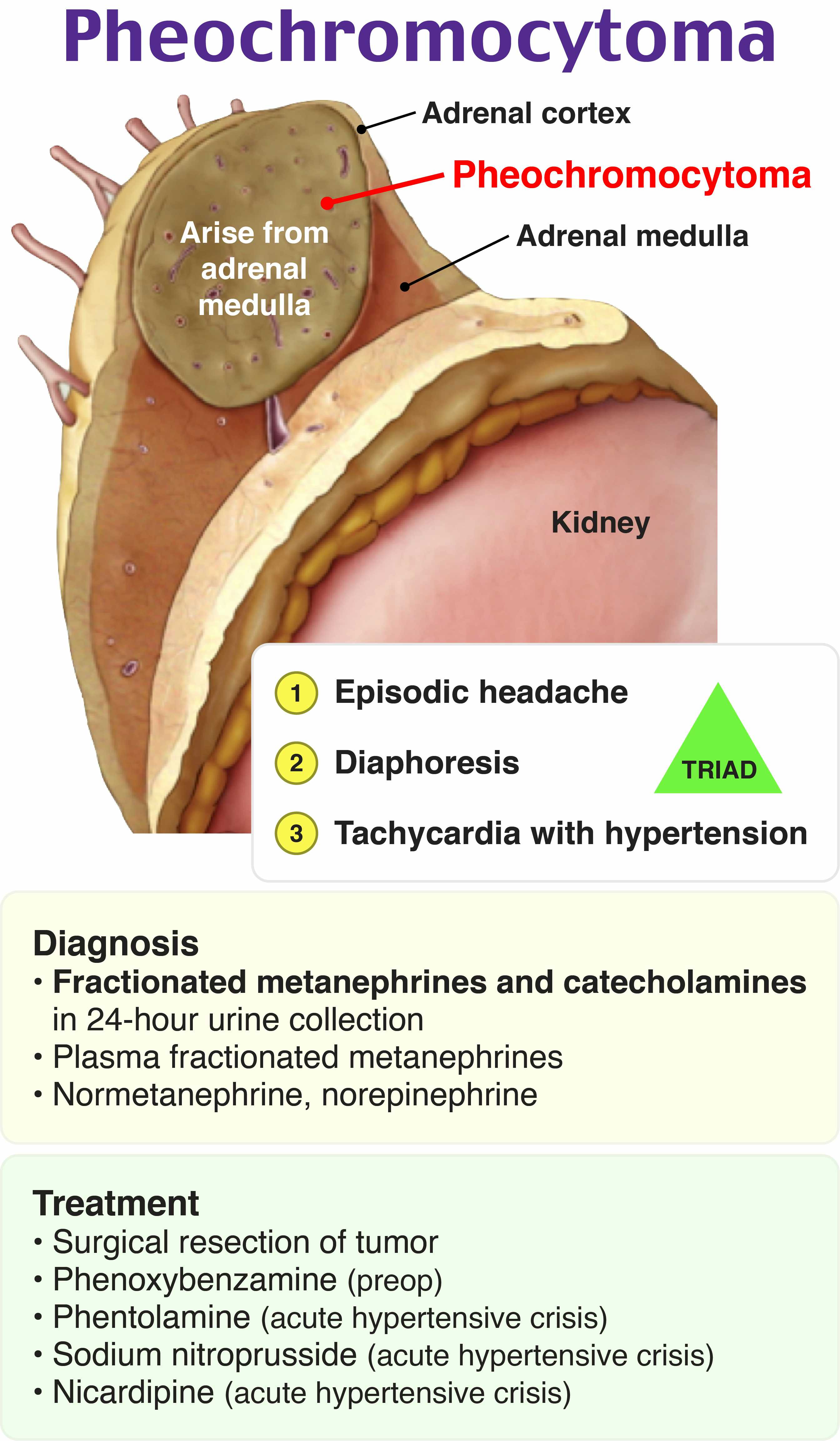
100
A 34-year-old woman presents to the emergency department with tingling in her hands. On physical examination, she has twitching at the corner of her mouth upon tapping the side of her face. What is the most common etiology of this abnormality?
A- Hydrofluoric acid exposure
B- Massive blood transfusion
C- Necrotizing pancreatitis
D- Thyroidectomy
D- Thyroidectomy
200
A 31-year-old woman with a history of postpartum thyroiditis status post thyroidectomy presents to the emergency department with fatigue and a generalized headache. She reports difficulty filling her levothyroxine prescription for several months due to a lack of insurance coverage. Her HR is 51 bpm, and her BP is 93/61 mm Hg. On examination, she has bilateral pretibial nonpitting edema, 4/5 strength in her proximal musculature, and 5/5 strength in her distal upper and lower extremities. What laboratory findings are most consistent with this patient’s presentation?
A- TSH high, T4 low, hypernatremia, hyperglycemia
B- TSH high, T4 low, hyponatremia, hypoglycemia
C- TSH high, T4 normal, hyponatremia, hypoglycemia
D- TSH low, T4 low, hypernatremia, hyperglycemia
E- TSH low, T4 low, hyponatremia, hypoglycemia
B- TSH high, T4 low, hyponatremia, hypoglycemia
Hyponatremia occurs due to inappropriate excess antidiuretic hormone secretion and impaired free water clearance.
Hypoglycemia results from multiple factors, including decreased gluconeogenesis, limited insulin clearance, and possibly concomitant adrenal insufficiency.
200
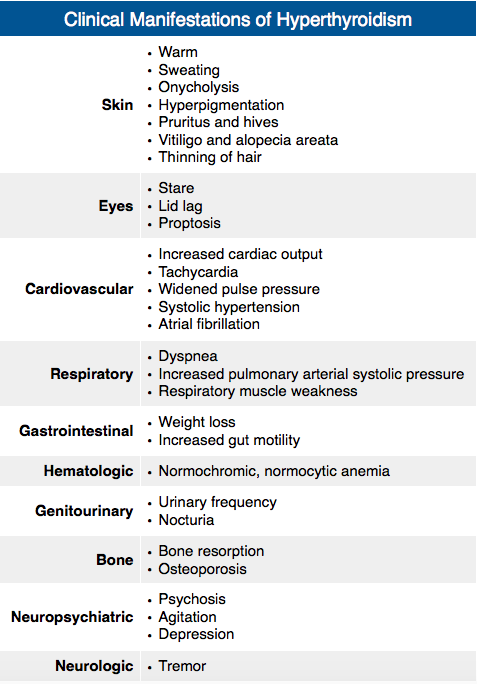
A 78-year-old woman presents to the emergency department for evaluation of generalized weakness. The patient reports recent fatigue, palpitations, weakness, and loss of enjoyment in her normal activities. Physical exam reveals a thin, older woman with clear lung sounds and tachycardia on auscultation. Vital signs are a HR of 130 bpm, BP of 130/75 mm Hg, T of 98.3°F, and SpO2 of 97% on room air. Which of the following tests is most likely to confirm the diagnosis?
A- ECG
B- Hemoglobin and hematocrit
C- Thyroid-stimulating hormone
D- Troponin
C- Thyroid-stimulating hormone
200
A 33-year-old woman presents to the emergency department with fatigue and constipation. She states she has not felt well for several weeks. She is otherwise healthy and does not take any other medications. She has a 10 pack-year smoking history and drinks one to two alcoholic drinks every evening. Her T is 98.4°F (36.9°C), BP is 110/77 mm Hg, HR is 102 bpm, RR is 14/min, and oxygen saturation is 98% on room air. Physical exam reveals a well-appearing woman. Her mucous membranes are dry, and her abdomen is nontender. Laboratory studies are notable for a calcium of 11.0 mg/dL and a phosphate of 1.9 mg/dL. Her parathyroid hormone level is 92 pg/mL (reference range: 10–55 pg/mL). Which of the following is the most likely etiology of this patient’s symptoms?
A- Multiple myeloma
B- Primary hyperparathyroidism
C- Secondary hyperparathyroidism
D- Squamous cell carcinoma of the lung
B- Primary hyperparathyroidism
200
A 33-year-old woman presents to the emergency department with confusion. Her spouse found her at home, unable to answer questions. She has a history of systemic lupus erythematous and takes prednisone daily. Her spouse notes she has been feeling sick the past several days and thus has not been able to fill her prescriptions. Her T is 101°F (38.3°C), BP is 82/41 mm Hg, HR is 142 bpm, RR is 22/min, and oxygen saturation is 100% on room air. Physical exam reveals an obtunded woman who only responds to painful stimuli. She is given 30 mL/kg of normal saline as a bolus and piperacillin-tazobactam and vancomycin. Laboratory values are notable for leukocytosis and a urinalysis with increased white blood cells, red blood cells, bacteria, and nitrates. Her blood pressure is subsequently 90/42 mm Hg. She is given 2 L more of normal saline with minimal change in her blood pressure. Which of the following is the most appropriate next treatment to administer?
A- Hydrocortisone
B- Norepinephrine
C- Normal saline
D- Phenylephrine
A- Hydrocortisone
200
A 41-year-old man with no known medical history has been boarding in the emergency department after falling off his all-terrain vehicle and hitting his head. He was found to have a small subdural hematoma on CT imaging. He initially presented alert and awake with unremarkable lab work and no neurologic deficits or external wounds to his head. The nurse reports having to dump his urinal multiple times. Several hours later, he is found actively seizing, which spontaneously aborts prior to the administration of benzodiazepines. His vital signs are unremarkable except for a BP of 174/94 mm Hg. Which of the following agents is the most appropriate therapy to treat this patient’s underlying condition?
A- Desmopressin
B- Levetiracetam
C- Nimodipine
D- Vasopressin
A- Desmopressin

200
A 38-year-old woman presents to the emergency department with numbness and tingling in her hands and around her lips. She also reports uncontrolled contractions and spasms in her hands. She is postoperative day 7 from a thyroidectomy. Her blood pressure is 175/99 mm Hg and heart rate is 96 bpm. Inflation of the blood pressure cuff results in carpopedal spasm. What are the most likely laboratory findings for this diagnosis?
A- Decreased calcium, elevated phosphorus, decreased serum parathyroid hormone
B- Decreased calcium, elevated phosphorus, elevated serum parathyroid hormone
C- Elevated calcium, decreased phosphorus, elevated serum parathyroid hormone
D- Hypoalbuminemia, normal phosphorus, normal serum parathyroid hormone
A- Decreased calcium, elevated phosphorus, decreased serum parathyroid hormone
300
Which of the following is associated with myxedema coma?
A- Hyperglycemia
B- Hypernatremia
C- Hypotension
D- Tachycardia
C- Hypotension
Classic presentation of bradycardia, hypothermia, hypotension, and altered mental status.

300
A 22-year-old woman presents to the emergency department with palpitations and anxiety. She states her symptoms have gone on for the past several days, but she only noticed the palpitations today. She was recently seen by her primary care physician and an endocrinologist who diagnosed her with Hashimoto thyroiditis and had planned for follow-up in 2 days. She is otherwise healthy and takes no medications. Her T is 101°F (38.3°C), BP is 122/82 mm Hg, HR is 142 bpm, RR is 20/min, and oxygen saturation is 100% on room air. Physical exam reveals an anxious-appearing woman. Her ECG is shown above. Which of the following is the most appropriate treatment for this patient?
A- Diltiazem
B- Levothyroxine
C- Propylthiouracil
D- Temporary course of propranolol
D- Temporary course of propranolol
300
A 48-year-old woman presents to the emergency department for evaluation of weakness, muscle cramps, and tingling in her hands bilaterally. She reports she recently had neck surgery for a mass in her anterior neck. She has not had any new swelling in her neck, fevers, or headache. Her medications are amlodipine, fluoxetine, and levothyroxine. Her BP is 125/65 mm Hg, HR is 90 bpm, and T is 98.2°F. Physical exam reveals a normal neurologic exam, including normal sensation in all extremities and the face. On exam of the face, the patient has twitching of the facial muscles when the cheek area is tapped lightly. Which of the following would you expect to see on ECG?
A- Prolonged QRS interval
B- Prolonged QT interval
C- Shortened PR interval
D- Shortened QT interval
B- Prolonged QT interval

300
A 32-year-old woman is brought to the emergency department by ambulance for generalized weakness, lightheadedness, and lethargy. According to EMS, the patient’s significant other called 911 after noticing the patient becoming increasingly lethargic over the last 24 hours, eventually becoming only intermittently responsive to questions. The significant other, now at the bedside, states that the patient had a spontaneous vaginal delivery 5 days prior, complicated by postpartum hemorrhage requiring several transfusions. She was feeling well after discharge but began experiencing generalized weakness and lightheadedness starting yesterday. The patient reports no past medical problems, fever, chest pain, shortness of breath, abdominal or pelvic pain, foul-smelling lochia, vaginal bleeding, or dysuria. Vital signs obtained on the patient’s arrival include a T of 97.5°F, HR of 98 bpm, BP of 76/53 mm Hg, RR of 20/min, and oxygen saturation of 98% on room air. On physical examination, the patient has a Glasgow Coma Scale score of 15 but is lethargic with cool extremities, sluggish capillary refill, and weak pulses in all extremities. No additional abnormalities are identified, including abdominal tenderness, vaginal bleeding, or vaginal discharge. IVs are placed, and appropriate treatment is started. Significant lab abnormalities include serum sodium of 122 mmol/L, serum potassium of 5.7 mmol/L, and white blood cell count of 11.8 × 10⁹/L. Which of the following, when depressed, is the cause of the disease process affecting this patient?
A- Adrenocorticotropic hormone
B- Aldosterone
C- Corticotropin-releasing hormone
D- Cortisol
A- Adrenocorticotropic hormone
300
A 30-year-old woman with a medical history of anemia, oligomenorrhea, and infertility presents to the ED with a headache. She reports a diffuse headache most days for the past 4 months, but today she started experiencing vision changes. She does not take any daily medications. Her eye exam reveals bitemporal hemianopsia. What is the best way to diagnose this condition?
A- Lumbar puncture
B- Magnetic resonance venogram
C- MRI of the brain with contrast
D- MRI of the brain without contrast
C- MRI of the brain with contrast
300
A 32-year-old woman with a history of asthma, systemic lupus erythematosus, and chronic prednisone use presents to the emergency department with concerns for several wounds over her upper extremities that have not healed for weeks, despite local wound care. She cannot recall any recent trauma or falls. Her BP is 150/93 mm Hg. Physical examination reveals a dorsocervical fat pad and scattered ecchymoses and abrasions in varying stages of healing over the bilateral upper and lower extremities. Her skin appears diffusely atrophic, and her mucous membranes appear pink and moist. What is the most likely etiology of her physical examination findings?
A- Adrenal adenoma
B- Chronic corticosteroid use
C- Ectopic adrenocorticotropic hormone secretion
D- Pituitary adenoma
B- Chronic corticosteroid use
400
A 26-year-old G2P1001 woman at 10 weeks gestation presents to the emergency department with altered mental status and fever. Physical exam reveals a young woman who is oriented only to person, with a fast, irregular heart beat, and skin that is hot to the touch. She has a small mass without erythema over the anterior neck. Her ECG is shown above. Her BP is 130/65 mm Hg, HR is 140 bpm, and T is 101.3°F. Which of the following is the most appropriate medication regimen and order of administration for this patient?
A- Esmolol, methimazole, iodine, hydrocortisone
B- Esmolol, propylthiouracil, lithium, dexamethasone
C- Propranolol, iodine, propylthiouracil, hydrocortisone
D- Propranolol, propylthiouracil, iodine, dexamethasone
D- Propranolol, propylthiouracil, iodine, dexamethasone

400
A 9-year-old child with a history of HIV infection acquired at birth who is on antiretroviral therapy presents to the ED with 1 week of odynophagia and anterior neck pain. This morning, the child’s parent noted an enlargement of the patient’s midline anterior neck. Exam reveals the enlargement of the anterior neck with overlying erythema, warmth, and induration without fluctuance. The patient has exquisite pain on neck extension and is noted to be febrile. Laboratory evaluation shows a WBC of 21,400 cells/µL, TSH of 0.04 mIU/L, and free T4 of 15 mcg/dL. What is the most likely etiology underlying this patient’s presentation?
A- Branchial cleft cyst infection
B- Retropharyngeal abscess
C- Thyroiditis secondary to autoimmune infiltration
D- Thyroiditis secondary to bacterial infection
E- Viral pharyngitis
D- Thyroiditis secondary to bacterial infection

400
A 48-year-old man presents to the emergency department with myalgias, fatigue, polyuria, and polydipsia. He was admitted to the hospital 6 weeks ago for pancreatitis. He has a history of bipolar disorder, diabetes mellitus, hypertension, hyperlipidemia, and gastroesophageal reflux. He takes lithium, dapagliflozin, hydrochlorothiazide, lisinopril, atorvastatin, and a calcium carbonate antacid. On review of his medical records from the recent admission, his serum parathyroid hormone was reported as 85 pg/mL. His ECG for today’s visit is shown above. Which of the following is most likely worsening his condition?
A- Atorvastatin, calcium carbonate, dapagliflozin, hydrochlorothiazide, lisinopril, and lithium
B- Calcium carbonate, dapagliflozin, hydrochlorothiazide, lisinopril, and lithium
C- Calcium carbonate, hydrochlorothiazide, and lithium
D- Calcium carbonate, hydrochlorothiazide, lisinopril, and lithium
E- Dapagliflozin only
C- Calcium carbonate, hydrochlorothiazide, and lithium
Lithium may induce increased calcium reabsorbtion within the loop of Henle.
Lithium makes the parathyroid cell less sensitive to calcium
400
A 52-year-old man presents to the ED with back pain. His vital signs are 190/105 mm Hg, HR is 82 bpm, RR is 12 breaths/minute, T is 98.5°F, and oxygen saturation is 100% on room air. On physical examination, he has centripetal obesity, facial plethora, purple abdominal striae, and an upper thoracic fat pad. He is not currently taking steroid medications and is a nonsmoker. His condition is most likely a disease of which of the following structures?
A- Adrenal cortex
B- Adrenal medulla
C- Pancreatic alpha cells
D- Pituitary gland
D- Pituitary gland
Tumors of the adrenal cortex (A) account for approximately 5–10% of Cushing syndrome cases.
400
A 4-year-old boy with a history of constipation presents to the emergency department with intermittent fevers and strange movements. He has also been having daytime and nighttime enuresis after being potty trained for a year. His vital signs are within normal limits for his age. You notice that he has brief involuntary movements of all of his extremities along with spontaneous fast conjugate eye movements in all directions consistent with opsoclonus-myoclonus syndrome. Which of the following tests is most likely to reveal the source of his symptoms?
A- Antistreptolysin titers
B- Electroencephalogram
C- MRI of the chest, abdomen, and pelvis
D- Urine drug screen
C- MRI of the chest, abdomen, and pelvis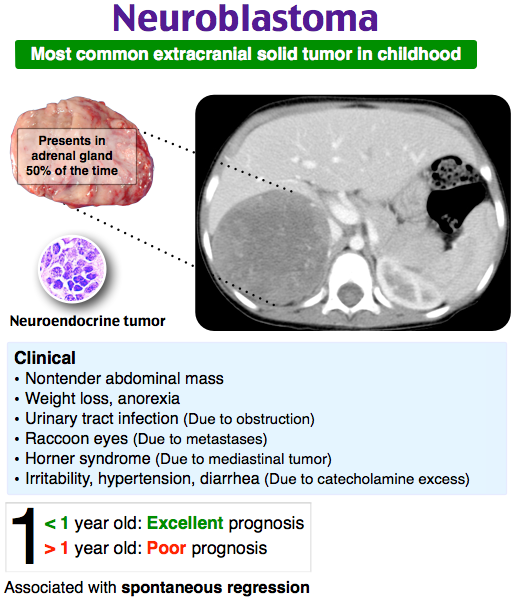
400
A 27-year-old woman presents to the emergency department with fatigue, malaise, and weakness. She states she has felt exhausted since the birth of her son. She does not enjoy the things she previously enjoyed and has no energy to care for herself or her son. She states she has been unable to breastfeed successfully and has had to feed her son formula as a result. Prior to her pregnancy, she had regular menses but has not yet resumed her menstrual cycles. She has no previous known medical conditions. Her T is 96°F (35.6°C), BP is 92/61 mm Hg, HR is 120 bpm, RR is 16/min, and oxygen saturation is 100% on room air. Physical exam reveals a fatigued woman with a depressed affect. Laboratory studies are notable for a sodium of 120 mEq/L. Which of the following is the most likely etiology of this patient’s symptoms?
A- Autoimmune adrenal injury
B- Hemorrhage during delivery
C- Increased antidiuretic hormone release
D- Postpartum depression
B- Hemorrhage during delivery
500
A 33-year-old woman presents to the emergency department with 2 weeks of worsening diaphoresis, dyspnea, and palpitations. She reports several months of heat intolerance, weight loss, abdominal pain, diarrhea, and difficulty sleeping. Her initial vital signs include a HR of 128 bpm, a BP of 156/95 mm Hg, an oxygen saturation of 98% on room air, and a T of 38.5°C. Her physical exam is notable for irregularly irregular heart sounds, bilateral lower lung field crackles, a hepatojugular reflux, and bilateral pitting edema to the thighs. During the initial phase of her care, which medication should be avoided?
A- Esmolol
B- Hydrocortisone
C- Methimazole
D- Nitroglycerin
E- Propranolol
D- Nitroglycerin
Agents that rapidly decrease preload (i.e., nitrates) should be avoided, as the hypermetabolic state in thyroid storm generates a need for sufficient stroke volume to maintain cardiac output and thus end-organ perfusion.
500
An 18-year-old woman presents with fever, confusion, weight loss, and palpitations. Her vital signs are T 100.7°F, HR 140 bpm, BP 143/93 mm Hg, RR 20/min, oxygen saturation 95%, and finger stick glucose of 118 mg/dL. Physical examination reveals a thin woman who is alert and oriented x 3 with a regular, fast heart rate and brisk reflexes. Her roommate tells you the patient has been taking a friend’s levothyroxine in an attempt to lose weight. What management should be initiated in addition to discontinuing the medication?
A- Beta-blocker
B- Beta-blocker, dexamethasone
C- Beta-blocker, dexamethasone, propylthiouracil, and potassium iodide
D- Calcium channel blocker, dexamethasone
A- Beta-blocker
Symptomatic treatment only.
500
A 65-year-old woman presents to the emergency department with fatigue, malaise, and confusion. She has a medical history of breast cancer and is currently receiving palliative care. She also has diabetes and end-stage kidney disease and receives dialysis. Her partner noticed she has been more confused lately and has been experiencing abdominal pain. Her T is 97.6°F (36.4°C), BP is 102/51 mm Hg, HR is 131 bpm, RR is 17/min, and SpO2 is 98% on room air. Physical exam reveals a woman who appears confused. She has dry mucous membranes and grimaces when her abdomen is palpated. Laboratory studies are notable for a calcium of 12.0 mg/dL and a phosphorus of 1.0 mg/dL. Her parathyroid hormone level is 120 pg/mL, and her parathyroid-related hormone peptide level is undetectable. She is given 2 L of Ringer lactate, and her mental status improves. Which of the following is the most appropriate long-term treatment of this patient’s hypercalcemia?
A- Bisphosphonates
B- Calcitonin
C- Hormone replacement therapy
D- Loop diuretics
A- Bisphosphonates

500
A 33-year-old woman presents to the emergency department with a cough and runny nose. Her son had these symptoms initially, but he recovered at home within 48 hours. She has no other symptoms currently and has not had a fever during this time. She has a history of systemic lupus erythematosus and takes prednisone 10 mg daily. Her T is 98.0°F (36.7°C), BP is 120/81 mm Hg, HR is 72 bpm, RR is 12/min, and oxygen saturation is 98% on room air. Physical exam reveals a well-appearing woman. She has clear breath sounds with good air movement. There is some minor erythema in the posterior oropharynx but no exudates. The rest of her exam is unremarkable. Which of the following is the most appropriate management?
A- Administer hydrocortisone 100 mg IV now
B- Recommend the patient take her current steroid prescription as prescribed
C- Recommend the patient take prednisone 20 mg daily for 2 weeks
D- Recommend the patient take prednisone 30 mg daily for 3 days
D- Recommend the patient take prednisone 30 mg daily for 3 days

Stress dose steroids with hemodynamic instability: hydrocortisone 100 mg IV
500
A 34-year-old woman presents to the emergency department with abdominal pain. The discomfort started yesterday and is localized to the lower abdomen with minimal radiation. She has associated nausea without emesis. She has no medical history, and her only medication or supplementation is prenatal vitamins. Her vital signs are a T of 37.4°C, HR of 78 bpm, BP of 142/76 mm Hg, RR of 16/min, SpO2 of 98%, and BMI of 27.8 kg/m2. On exam, she has notable tenderness on the right lower quadrant. On bedside ultrasound, the appendix is visualized with an outer appendiceal diameter of 10 mm. After the exam, she begins to vomit, stating she is terrified of surgery. She continues to vomit and report abdominal pain despite ketorolac and ondansetron administration. She is then administered metoclopramide for her nausea and hydromorphone for her pain. Shortly after, her nurse tells you the patient is having an adverse drug reaction. At the bedside, the patient reports a sense of panic, worsened abdominal pain, palpitations, and headache. The patient appears notably diaphoretic, and the cardiac monitor reports a heart rate of 124 bpm and a most recent blood pressure reading of 190/126 mm Hg. Which of the following is the most likely explanation for her sudden change in presentation?
A- Catecholamine-secreting neuroendocrine tumor provocation
B- Medication dosing error
C- Panic attack induced by fear of surgery
D- Spontaneous appendiceal rupture
A- Catecholamine-secreting neuroendocrine tumor provocation
500
A 68-year-old man who is currently receiving chemotherapy presents to the emergency department with fatigue and depression. He states he feels so tired he cannot care for himself anymore. He is always cold, has no appetite, and feels his hair has been thinning and falling out. He has received frequent CT scans with contrast for his ongoing cancer treatment. His T is 95.0°F (35.0°C), BP is 132/81 mm Hg, HR is 62 bpm, RR is 12/min, and oxygen saturation is 98% on room air. A physical exam reveals the patient has cool skin. His hair appears to be thinning, and he has a depressed affect. Laboratory studies are notable for a sodium of 120 mEq/L. Which of the following is the most likely etiology of this patient’s symptoms?
A- Cisplatin
B- Imatinib
C- Iodinated contrast
D- Vinblastine
B- Imatinib