🌿 Leaf It to Me
🔋 Mighty Mito
🦎 Who's Eating Whom?
🔄 Going in Circles
🧩 Connect the Dots
100
A plant pulls this gas out of the air and uses its carbon atoms to build sugar.
carbon dioxide
100
Glucose and oxygen are the ingredients of cellular respiration. Scientists call the ingredients of a reaction by this name.
reactants
100
These organisms, also called autotrophs, make their own food instead of eating someone else.
Producers (plants, algae, some bacteria) sit at the bottom of every food chain.
100
You pour a cold drink on a hot day, and water droplets appear on the outside of the glass. This water-cycle step just happened.

condensation
(Water vapor in the air cooled on the cold glass and turned back into liquid, the same way clouds form.)
100
Plants have chloroplasts for photosynthesis, but they also have these organelles, because plants need to do cellular respiration too.

mitochondria
200
A plant sits in a sealed jar with a gas sensor. Every time the lamp turns on, the level of THIS gas starts climbing.
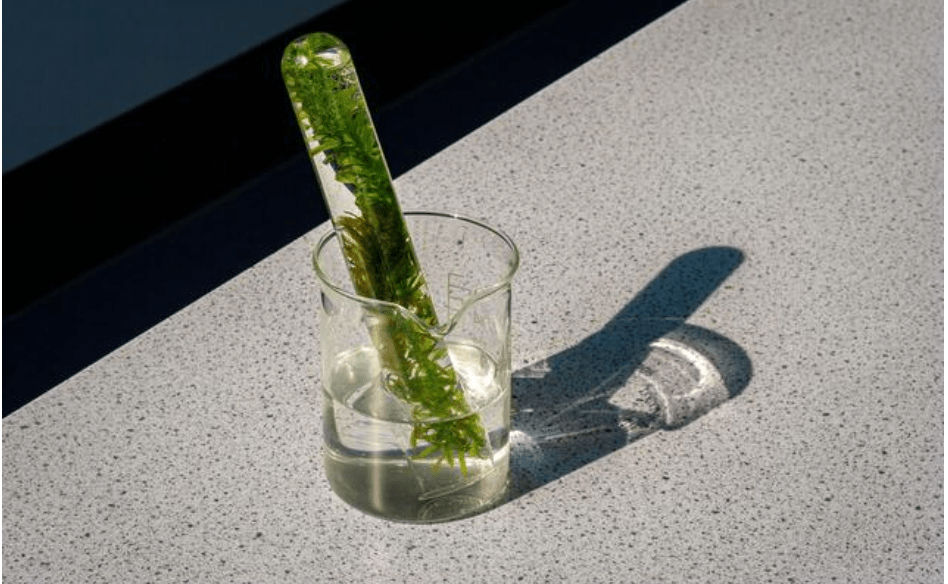
oxygen
(Light powers photosynthesis, and oxygen is released)
200
This first step splits glucose into 2 pyruvate. It happens in the cytoplasm and doesn't care whether oxygen is around.
Glycolysis
(Anaerobic, makes 2 ATP, and happens before the cell 'decides' between aerobic and anaerobic paths.)
200
In the chain grass → grasshopper → frog → snake → hawk, the frog holds this job title.
secondary consumer
(Grass is the producer, grasshopper is primary, frog is secondary, snake is tertiary, hawk is the apex predator.)
200
Plants are surrounded by nitrogen gas but can't use it. Bacteria on plant roots fix that problem with this process.
Nitrogen fixation
Nitrogen fixation turns atmospheric N₂ into nitrogen compounds that plants can absorb from the soil.
200
Photosynthesis soaks up energy (endothermic). Cellular respiration releases energy, making it this type of reaction.
exothermic
(Photosynthesis stores energy in glucose; respiration releases it as ATP (and some heat).)
300
Plants in a dim greenhouse grow slowly even with plenty of water. _______ reactions, which happen in the grana, are the first to slow down.
light-dependent
(They need sunlight to charge up ATP and NADPH. Less light means less energy to send to the Calvin cycle.)
300
At the end of a 400-meter sprint your legs burn. Your muscle cells ran low on oxygen and switched to this process.
lactic acid fermentation
(Without enough O₂, muscle cells turn pyruvate into lactic acid to keep making a small amount of ATP)
300
The grass in
____→ grasshopper→ frog → snake
captures 10,000 kcal of energy. Using the 10% rule, the snake ends up with how much?
10,000 → 1,000 (grasshopper) → 100 (frog) → 10 (snake)
300
Rainforests get all the credit, but these tiny ocean producers release more than half of the oxygen in Earth's atmosphere.
phytoplankton
(Phytoplankton are microscopic photosynthesizers floating in oceans and lakes.)
300
A carbon atom goes from the air, into a blade of grass, into a grasshopper, and back into the air.
The grasshopper sent it back using _____ ____.
cellular respiration
(Respiration breaks down glucose and releases CO₂ as a waste product, which you exhale. Photosynthesis and respiration are the carbon cycle's engine.)
400
The Calvin cycle synthesizes glucose in this fluid-filled space, using ATP supplied by the grana.
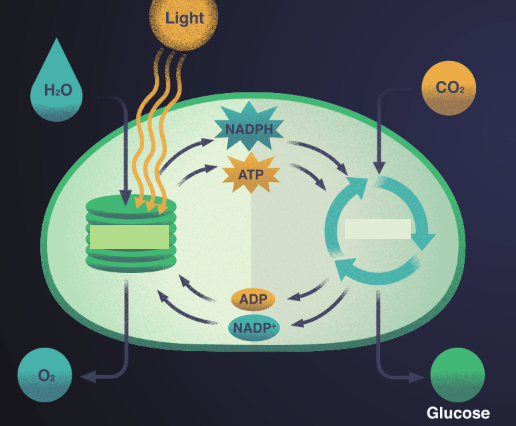
Stroma
(Grana = light-dependent stage. Stroma = light-independent stage (Calvin cycle).)
400
With oxygen, a cell makes about 36–38 ATP per glucose. Without it, only 2–4.
The _____ ____ _____ makes up the most ATP.
electron transport chain
(The ETC makes about 34 ATP, but it needs oxygen at the end to grab the hydrogen and form water.)
400
If every fungus, bacterium, and earthworm vanished, dead leaves would pile up and plants would eventually run out of nutrients. These organisms are called?
Decomposers
(Decomposers break down dead material and return nutrients to the soil so producers can use them again.)
400
Coal is made of plants that died millions of years ago. When a power plant burns it, this process sends that ancient carbon back into the air.
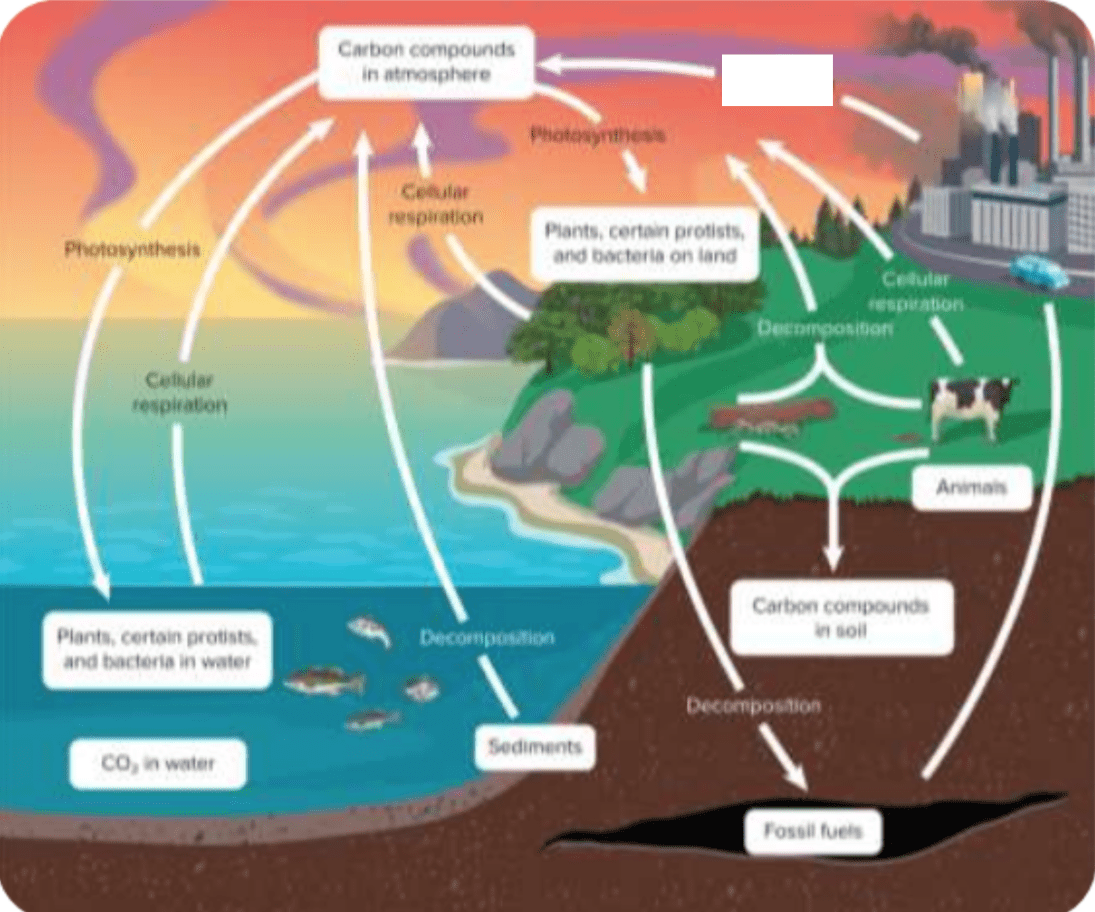
Combustion
(Combustion releases carbon stored in fossil fuels as CO₂, adding it back to the atmosphere.)
400
The hawk at the top of the food chain gets only 1 kcal out of the grass's 10,000.
Most of the missing energy was used in metabolism and lost as _____.
heat
(Every organism uses cellular respiration to power its life, and a lot of that energy escapes as heat, so it can't be passed up the chain.)
500
In the light-dependent reactions, something is split into hydrogen and oxygen.
The hydrogen goes on to make sugar; the oxygen is released as waste.
water
500
Bakers mix yeast into dough and wait.
The bread puffs up because yeast is doing what type of fermentation?
alcohol fermentation
(Yeast break down pyruvate into alcohol and carbon dioxide. The CO₂ bubbles get trapped and make the dough rise.)
500
All energy comes from the sun, but bacteria at deep-sea vents live in total darkness and make food from sulfur chemicals using what process?
chemosynthesis
(Chemosynthesis uses chemical energy instead of light. It's the exception that makes the 'sun' rule 'almost all energy.')
500
Big idea is that energy FLOWS (one direction, lost as heat), while matter is _____ (the same atoms get reused over and over).
recycled
500
If every phytoplankton in the ocean suddenly died, oxygen levels would drop AND what would start building up in the atmosphere?
carbon dioxide (CO₂)
(Fewer producers means less CO₂ being taken in by photosynthesis, while consumers keep releasing it through respiration.)