Grammar 1
APA Format
Literature
Poetry
Grammar 2
The Adventures of Don Quixote
Allegory of the Cave
100
Correct the sentence.
The soliders are tired however they are not giving up
The soldiers are tired; however, they are not giving up.
100
APA Outline Heading
Main headings use what to identify them?
Roman numerals
100
Answer: Printed matter of any kind; esp. leaflets, brochures, etc., used to advertise products or provide information and advice.
What is literature with lowercase l.
100
The French poet Paul Valéry said that prose was walking, poetry is...
dancing
100
Blank, like present participates, always ends in ing. The difference is that (what) act like nouns.
Gerunds
100
Who wrote Don Quixote?
In general, when was it written?
Miguel de Cervantes Saavedra
1547-1616
100
Who are "The Great Greek Philosophers"?
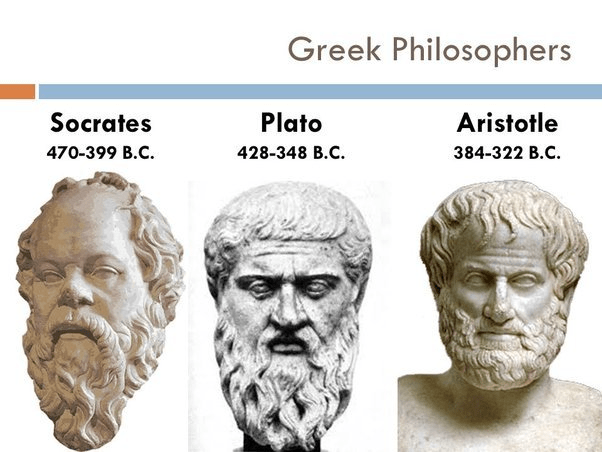
200
Identify the italicized words. Multiple Choice.
My boyfriend bought the necklace.
A) Object
B) Subject
C) Indirect Object
D) Predicate
200
Answer: Help scholars adhere to specific formatting and citation styles, ensuring the paper meets the standards of academic integrity and professionalism.
What is the purpose of APA Format?
200
Where is Chinua Achebe from?
Nigeria
200
Peter Piper picked a pair of pickled peppers.
Is an example of what?
Alliteration
200
In (blank) voice, the subject of the sentence performs the action.
Active Voice
200
What is an Epitaph?
An Epitaph is a phrase or form of words written in memory of a person who has died, especially as an inscription on a tombstone.
“Here lies the noble fearless knight,
Whose valour rose to such a height;
When death at last had struck him down,
His was the victory and renown.
He reck'd the world of little prize,
And was a bugbear in men's eyes;
But had the fortune in his age
To live a fool and die a sage."
200
Which Great Greek Philosopher never wrote anything down?
Which Great Greek Philosopher wrote down that person's teachings?
1) Socrates - •Known for teaching through discussion of ideas, using questions to challenge students’ assumptions about the world
2) Plato - •Prolific writer – approximately 24 books; wrote in dialogues so it’s easy to read. Started the Academy -still going today
300
Who refers to the subject or object?
Whom refers to the subject or object?
Who refers to the subject.
Whom refers to the object.
300
The citations on a reference page have what kind of indentation?
Hanging
300
A work that falls into this designation is called, what?
A work that falls into this designation is called canonical.
300
What did the Raven say in Edger Poe's Poem?
Nevermore
300
Infinitives usually have what word in front of them?
The most basic form of a verb is called an infinitive.
Infinitives can behave like nouns, adjectives, or adverbs. They typically they have the word to in front of them.
•To sleep for ten hours every night is my dream. noun infinitive
•Grammar is an important subject to study. adjective infinitive
We came to eat chimichangas. adverb infinitive
300
What's the difference between Sancho and The Don?
The Don is a romantic where as Sancho is a realist.
(Author) ridicules knightly behavior via the Don’s indifference to wounds, food, and sleep, and how Sancho functions as his foil.
Fully appreciate the Don’s mania when we watch him interact with his sensible and realistic squire.
300
What did (The Great Greek Philosopher) think the prisoners would do when the guy who escaped came back and told them about the real world?

400
Should the TV series Gossip Girls be italicized or put in quotation marks?
Italicize the titles of long-form works - periodicals books, features movies, TV series, full-length plays, long musical compositions.
400
The running header goes on every page but ....
However page number go on what pages?
Title page
Page numbers go on every page, INCLUDING the title page
400
These are examples of what?
•Metaphors
•Hyperbole
•Allusions
literary device
400
Who wrote:
“And I do love thee. Therefore go with me.
I’ll give thee fairies to attend on thee,
And they shall fetch thee jewels from the deep
And sing while thou on pressed flowers dost sleep.”
Shakespeare's A Midsummer Night's Dream
400
Participles always end in what?
A participle acts like an adjective. There are two kinds: present participles and past participles.
Present participles always end in ing.
•the boiling water
•the laughing girl
•the coloring book
400
What's the difference between a satire and a parody?
Which one is Don Quixote?
Satire is writing that ridicules flaws in institutions or individuals in order to reform them often by using humor. Satire can be bitter, angry, or humorous as it points out the foibles of mankind.
Parody is an imitation of a serious literary work or a set of conventions, usually exaggerated, in order to make fun of the serious work or conventions.
A satirist often uses parody.
Cervantes’s work is predominantly satire; many details in Cervantes’s book convey the discrepancy between the world of knights and the real world.
•His lady: The Don seeks a lady to inspire him, an ordinary farm girl in fact but in his vivid imagination a fine lady whom he names Dulcinea del Toboso.
•His name: He dubs himself Don Quixote de la Mancha
•His squire: As his squire, the Don enlists the services of a dull-witted laborer and names him Sancho Panza. The rustic agrees to venture out into the Spanish countryside beside this demented old gentleman with the dubious promise of an entire island that he will be given to govern.
• Convoluted language: Cervantes ridicules the romances’ convoluted language, which becomes obvious when Cervantes quotes from the prose of a contemporary Spanish writer of romances, Feliciano de Silva.
• The Don: The Don himself is a parody of a knight. He is no handsome Lancelot. He is old and skinny. Honoré Daumier’s famous painting that depicts Don Quixote sallying forth on Rocinante. It emphasizes the Don’s unknightly appearance.
400
1) How do the prisoners react when they first see sunlight? Why?
2). What do these prisoners trapped in the cavern believe is real?
Hurts their eyes. Hurts their soul. Pain of reality they know isn't real.
Shadows
500
The (what) most commonly signals a list, summary, specific example, or a long quotation.
The colon (:)
500
What year did Kesha put out TikTok?
2010
500
Name four of the 8 expectations in the field of literature.
(Even though literature is subjective.)
1)Quality of Invention
2)The unique vision of the author
3)Other- ness. Pushes the reader to see the world around them in another way
4) Connects the reader at the level of style and structure rather than substance
5) Defamiliarization – the text asks or forces the reader to see the world differently
6)Jouissance or Pleasure? Jouissance makes more demands on the reader and raises feelings of strangeness, and wonder that surpass the everyday and even border on painful or disorientating
7)Neither entirely in the eye of the beholder nor repeatable purely intrinsic characteristics
8)Test of time. What mechanisms that determine longevity aren’t neutral. What will stay in print and become broadly culturally relevant? Will this be talked about, studied or culturally relevant 100 years from date of publication.
500
There’s typically a blank, or a turn, at the beginning of the sestet, indicating the change in the poem’s focus. The way the poem’s stanzas are laid out can have a significant impact on the way the poem is read.
volta
500
You can often strengthen a sentence by replacing modifiers (adjective and adverbs) with a, What?
You can often strengthen a sentence by replacing modifiers (adjective and adverbs) with a dynamic verb.
You can often spruce up a sentence by replacing a be verb with something more dynamic.
•The day was gray.
•The day dawned gray.
The day oozed grayness.
500
What type of literary device is "tilting windmils" and what is the meaning of that literary device?
The Metaphor: The act of tilting at windmills, as Don Quixote does, represents the human tendency to fight against things that don't exist or that are beyond our control. It can also refer to pursuing idealistic goals or causes that may be impractical or unrealistic in the real world.
500
What Does The Allegory of the Cave Mean?
The allegory delves into the philosophical thought of truth, and how those with different experiences or backgrounds may perceive it. The shadows on the wall of the cave are constantly changing, so there is no stability or consistency offered for those who bear witness to them—only a false reality. They have no knowledge that the real world exists outside of their dark cave, or even that there is a real world other than their own. Meanwhile, the person who has left the cave will not be able to exist as they once did. In fact, they may even come to pity or feel superior to those who remain in the cave. The allegory essentially demonstrates the conflicts between knowledge and belief and what happens to a person once they’ve been enlightened. It is an examination on the nature of humanity, and fear of the unknown.