Rhinology
Head and Neck
Laryngology
Facial Plastics
wildcard
100
A 40-year-old woman presents to the clinic with decreased sense of smell. She notes this has been occurring for approximately 1 year. She takes a University of Pennsylvania Smell Identificaiton test and scores a 7 on the test. What does this indicate?
Malingering- 40 questions total. By chance, someone should have at least 10 of 40 answers correct
100
Chemoradiation is recommended for a 70-year-old man with oropharyngeal cancer. The tumor is staged as T3, and significant dysphagia is expected as a result of treatment. What intervention is the best strategy for management of this patient’s dysphagia?
G tube prior to therapy with taking PO as long as safely possible throughout treatment
100
A 42-year-old female presents with 2 months of globus. Laryngoscopy demonstrates diffuse edema of her epiglottis rim with thickened vocal folds. Pathology consistent with non-caseating granulomas. what is the likely diagnosis?
what is Sarcoidosis
100
You are asked to evaluate this patient with an orbital injury in the emergency room. What test would be most useful in determining the need for surgical repair?
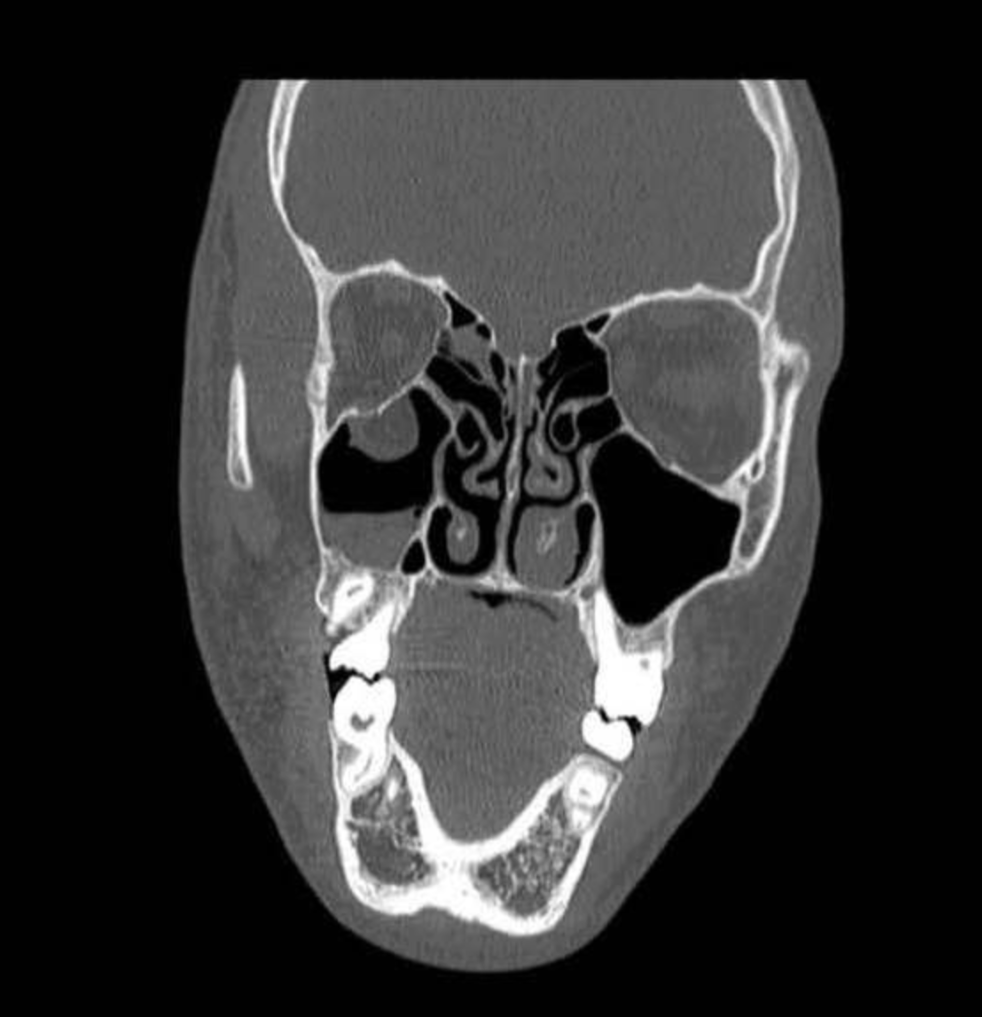
forced duction test to evaluate for muscle entrapment
100
This sinonasal lesion is most commonly associated with a “convoluted cerebriform pattern” on MRI
what is inverted papilloma?
200
what is the recurrence rate of inverted papilloma when one drills the attachment site versus when this is not drilled/catuerized?
5% versus 50%
200
A 70-year-old man presents with a right tongue lesion that has been present and slowly growing for several years, with occasional bleeding. MRI is shown below. what is this lesion and what is recommended treatment?
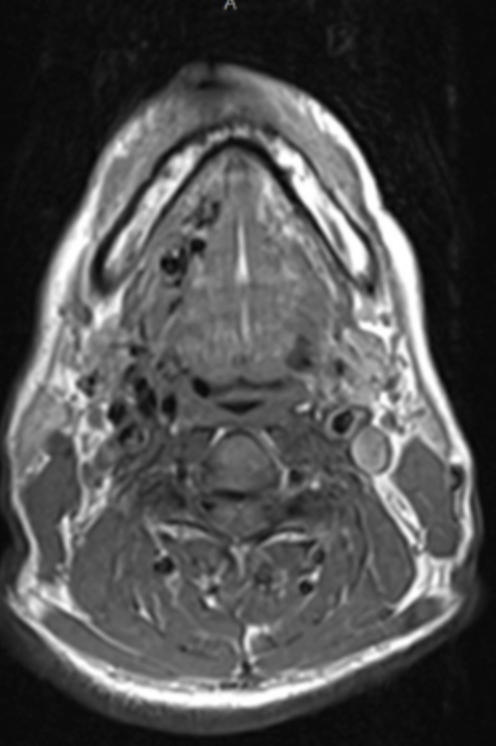
Arteriovenous malformation
surgery- partial glossectomy and reconstruction
200
A 40-year-old woman with pulmonary fibrosis presents with dysphonia. She denies any discomfort or pain. Perceptually, her voice sounds rough. Flexible laryngoscopy reveals the following. what is this called and what is the likely underlying diagnosis?
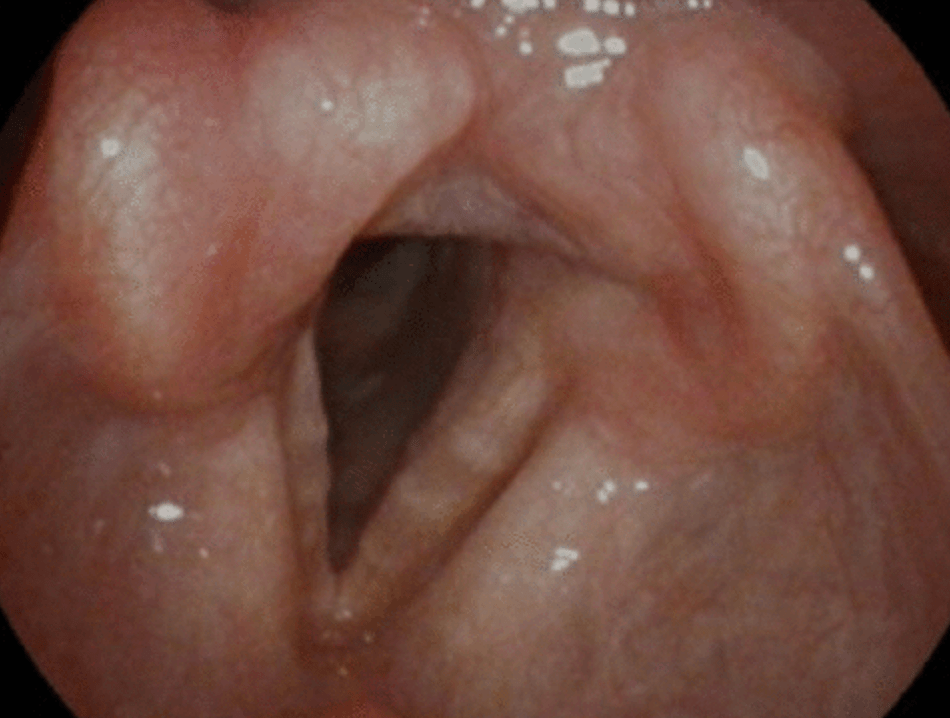
"Bamboo nodules"
classically associated with rheumatoid arthritis but have been associated with other rheumatologic conditions as well (e.g. lupus)
200
When diced cartilage is used for dorsal nasal augmentation, the cartilage should be cut into pieces of what size?
0.5 mm to reduce palpability of diced cartilage
200
This bacteria commonly colonizes the lungs in post-transplant patients with Cystic fibrosis
what is pseudomonas aeruginosa?
300
This is the percentage of co-existing allergic rhinitis in AERD patients
what is 90%
300
A nodule classified as class 3 by the Thyroid Imaging, Reporting, and Data System (TI-RADS) is recommended to be biopsied by FNA if it larger than what size?
2.5 cm
A TR3 level nodule is recommended to be biopsied if >2.5cm. TR4 is biopsied if >1.5cm, and TR5 is biopsied if >1.0cm. With TR1 and TR2 nodules, no biopsy is recommended.
300
What is the effect of testosterone on the larynx and voice?
lengthening of the vocal folds as the thyroid cartilage angle decreases.
increases resonance and decreases fundamental frequency
300
What graft can be used to increase an inadequate nasofrontal angle
radix graft
300
A 45-year-old male with a diagnosis of OSA (AHI = 16.2, BMI 30, tonsils 3+, modified Mallampati grade 1), is given a treatment recommendation of a tonsillectomy. what is the definition of surgical success and what is the percentage of success in this patient?
reduction of AHI by 50%.
success rate is about 78%
400
A 56-year-old female undergoes endoscopic resection of a sinonasal squamous cell carcinoma with skull base erosion. Reconstruction of the skull base defect is required. What is the anterior limit of a nasoseptal flap reconstruction?
posterior wall of frontal sinus
400
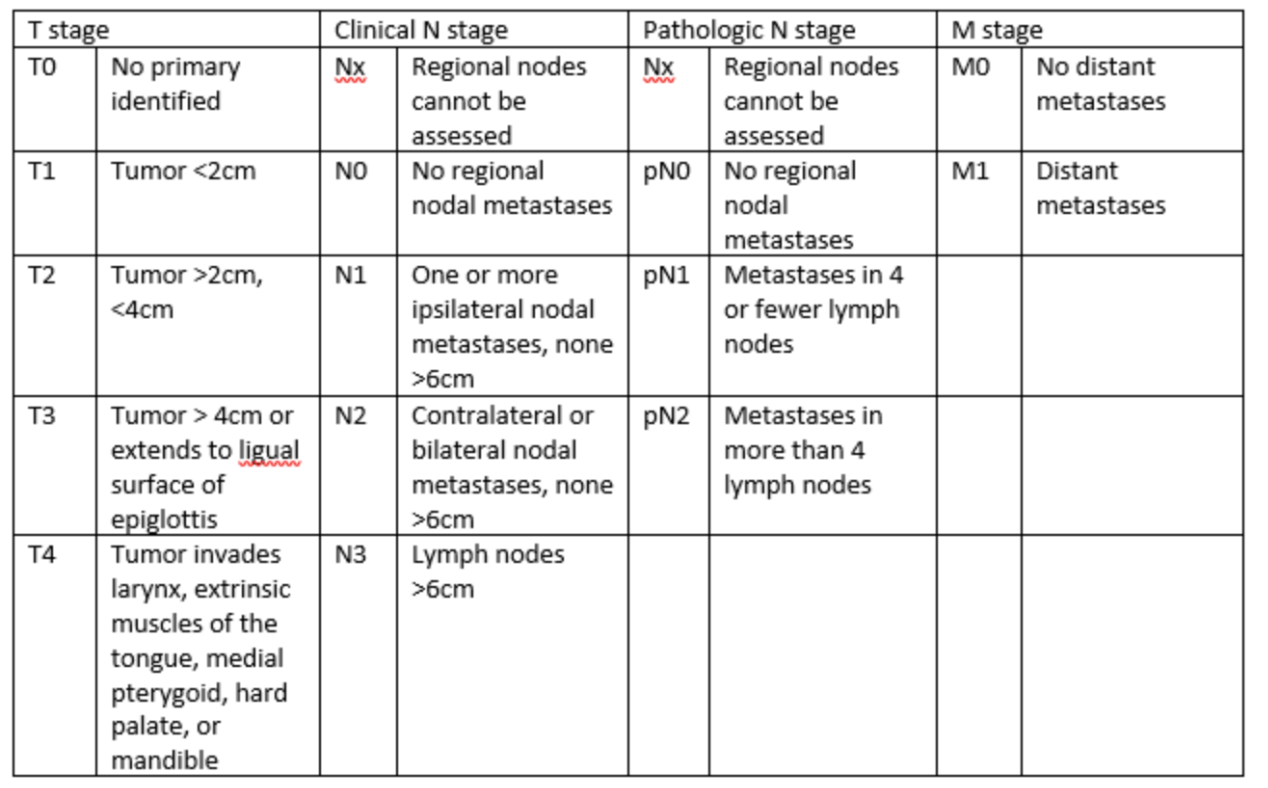
A 60-year-old male presents to your clinic with hoarseness and throat pain for the past 3 months. On flexible laryngoscopy, there is a friable, ulcerated lesion of the right arytenoid and false vocal fold, and the right true vocal fold is immobile. The left vocal fold demonstrates normal mobility. Examination of the neck reveals a 4cm mass in right level III that is firm and fixed to the sternocleidomastoid muscle. A neck CT demonstrates an enhancing mass in the right supraglottis extending into the paraglottic space, and a single enlarged lymph node in right level III with no clear border between it and the sternocleidomastoid muscle. Chest CT shows no evidence of any nodules. Fine needle aspiration of the neck mass reveals squamous cell carcinoma. What is the appropriate clinical staging of this patient with referring to the new AJCC 8th edition?
T3 N3b M0
The new AJCC 8th edition staging now accounts for extranodal extension – clinically overt extranodal extension, as demonstrated in this patient through fixation of the neck mass to the sternocleidomastoid muscle, upstages the N stage to 3b.
400
A dysphagic patient with telangiectasias and painful whitish subdermal lesions is noted to have esophageal dysmotility on a barium swallow and subsequently undergoes esophageal manometry. The manometric study shows total lack of peristalsis in the distal esophagus, incompetent and patulous lower esophageal sphincter, and normal proximal esophageal contractions. This study is most suggestive of which disorder?
Scleroderma
connective tissue disease that can affect the smooth muscle of the esophagus. The hand lesions represent calcinosis in the CREST syndrome. The esophageal pathology usually manifests by lack of peristalsis in the distal esophagus and incompetence of the lower esophageal sphincter, with no effect on the proximal striated muscle of the esophagus.
400
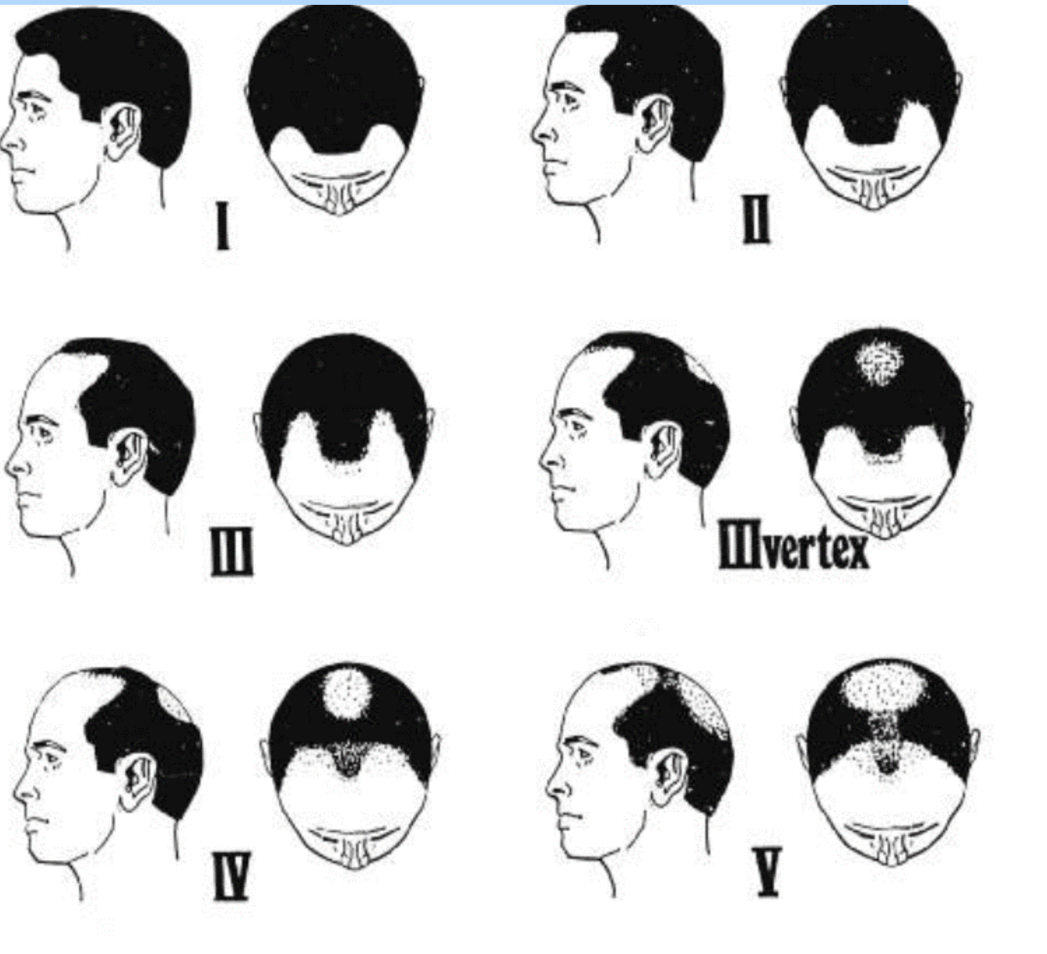
A 52 year old male presents with a chief complaint of hair loss. He has a family history of male pattern baldness. On physical examination, the vertex of his scalp has lost its hair and is separated by a thin strip of hair from the frontotemporal hairline, which itself has receded significantly. What most closely describes this pattern of hair loss
Norwood Type 5
400
A 43 old male undergoes routine tonsillectomy for chronic tonsillitis. How long does intraoperative liposomal bupivacaine(ILB) injection in the wound bed improve pain compared to standard oral pain medication alone in regard to postoperative pain score outcomes?
24 hours post-op
500
This is the most common presenting feature of silent sinus syndrome
what is enophthalmos?
500
A 55-year-old male presents with a tonsillar mass and ipsilateral lymphadenopathy. After PET-CT demonstrates that there are no distant metastases and a fine needle aspiration of a cervical lymph node shows a p16+ squamous cell carcinoma, the patient undergoes transoral robotic surgery for radical tonsillectomy and ipsilateral neck dissection of levels II-IV. Final pathology demonstrates a 2.5cm primary tumor in the right tonsil with negative margins, and 2 lymph nodes in level IIa that are positive for carcinoma. The largest lymph node is 3.5 cm in diameter, and no extracapsular extension is seen. What is this patient’s staging based on the AJCC 8th edition criteria?
T2 N1 M0
500
A 78 year old female presented to the laryngology clinic with complaints of chest pain, dysphagia to solid foods, and globus sensation. Cardiac workup was unremarkable. A barium esophagram was obtained below: what is the likely diagnosis
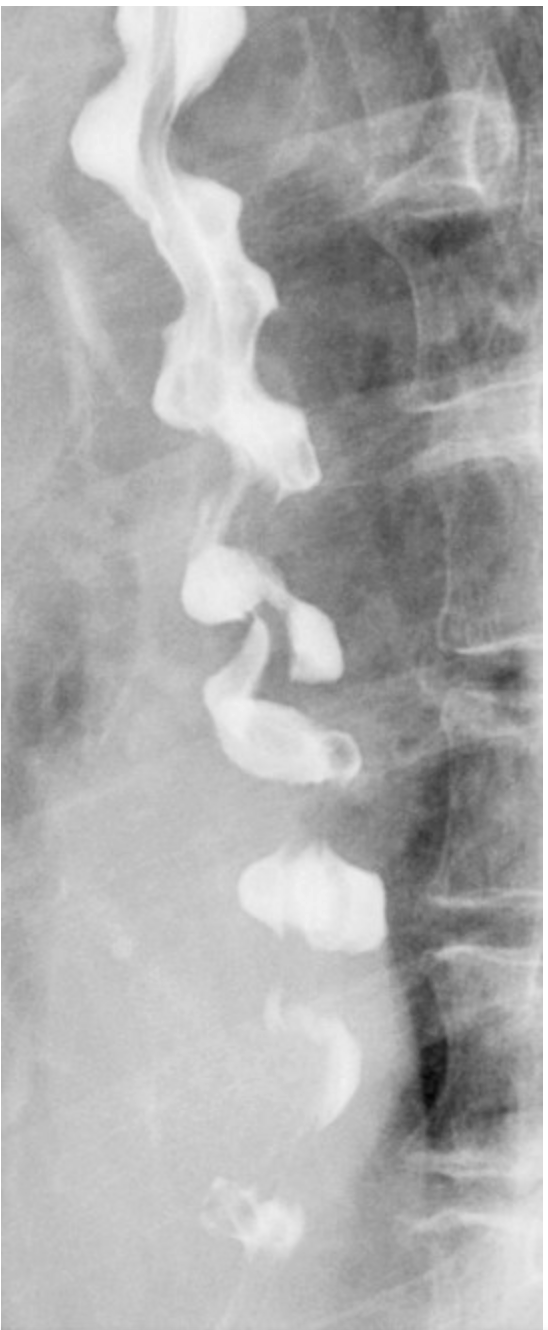
Diffuse esophageal spasm
DES is a disease that impacts older individuals. Patients can be asymptomatic or can present with chest pain, dysphagia, or both. DES classically is diagnosed using a combination of diagnostic modalities including barium esophagram studies. On barium esophagram you will see intermittently absent esophageal peristalsis with lumen-obliterating constrictions that compartmentalize the esophagus, producing a classic “corkscrew” appearance.
500
What is the type of local flap shown below?
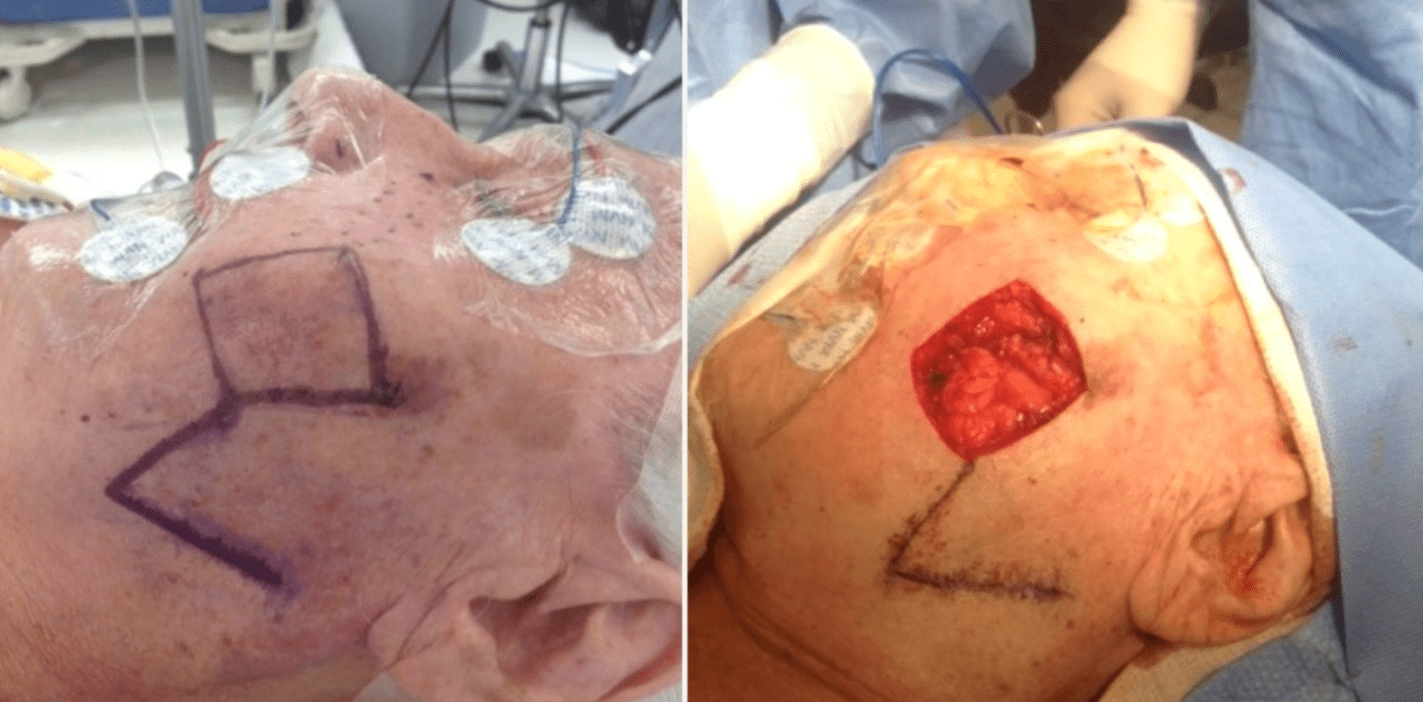
Transposition flap
The flap shown is a rhombic flap which is type of transposition flap. Flap is rotated over an intervening area of normal skin to be placed in its recipient site. Borders of flap may be adjacent to defect or removed from defect. Base of the flap is contiguous with defect.
500
In meta-analyses of cohort studies, what is the attributable risk of any-site fracture (percent increased risk) in patients taking daily proton pump inhibitors?
25-35% risk of any-site fracture