MC1
MC2
VOCAB1
VOCAB2
100
Which biome would have the highest net primary production?
a. desert
b. savanna
c. boreal forest
d. coral reefs
d. coral reefs
100
Over a given unit of time, the rate at which plants and algae convert solar or chemical energy into energy stored in the bonds of organic sugars is called
a. salinity.
b. natural selection.
c. gross primary production.
d. estivation.
c. gross primary production
100
A number of ecosystems in a large geographical region
Biome
100
It is used to represent annual precipitation and temperature for a biome or region.
Climatograph
200
Which biome would have the lowest net primary production?
a. tropical rain forest
b. desert
c. coral reef
d. temperate grassland
b. desert
200
Ecologists use similarities between ecosystems to classify them into broad categories called
a. biomes.
b. estuaries.
c. benthic zones.
d. littoral zones.
a. biomes.
200
The current meteorological conditions at a location.
Weather
200
It is the rate at which producers convert solar energy into chemical energy.
Gross Primary Production (GPP)
300
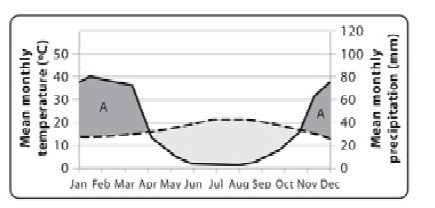 In the graph, the solid line represents precipitation and the dashed line represents temperature. What type of conditions are indicated by the areas of the graph labeled A?
a. hot
b. dry
c. freezing
d. moist
d. moist
300
Day-to-day conditions in Earth’s atmosphere, such as “sunny and humid,” describe
a. climatograph.
b. biome.
c. climate.
d. weather.
d. weather.
300
The conditions in a region have been observed for at least 30 years.
Climate
300
It is the rate at which producers convert solar energy into chemical energy, excluding the energy used for cellular respiration.
Net Primary Production (NPP)