Traits & Environments
Natural Selection
Species
Tree Diagrams
Evidence for Evolution
100
An observable characteristic of a living thing.
What is a trait?
100
This is the process where helpful traits become more common over time.
Natural Selection
100
What is a species? (answers may vary)
Something like:
A population of roughly similar organisms that can reproduce with one another to create successful offspring.
100

In this tree diagram, which organisms have retractable claws?
Leopard and House Cat
100
Preserved remains or traces of organisms from the past are called this.
Fossils
200
This is what determines whether a trait is helpful, harmful, or neutral for an organism.
The environment
200
If a trait helps an organism survive and reproduce, what happens to that trait over generations?
It becomes more common in the population.
200
Two populations of fish are separated by a mountain range and cannot interact.
This is an example of this type of reproductive barrier.
Geographic Barrier
200
In this tree diagram, which traits do the horse and wolf have in common?
Hair
200
This type of evidence compares the genetic material of organisms to determine how closely related they are.
DNA Evidence
300
Harmful, Helpful or neutral...
Having light colored wings in a dark forest with predators.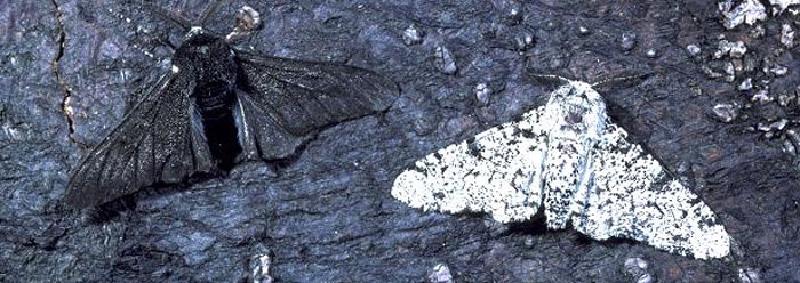
Harmful
300
A population of insects has two traits: some are brightly colored and some are dull-colored. In one environment, the bright insects are poisonous and predators learn to avoid them. Over time, the population becomes mostly brightly colored.
Explain why this happened using natural selection.
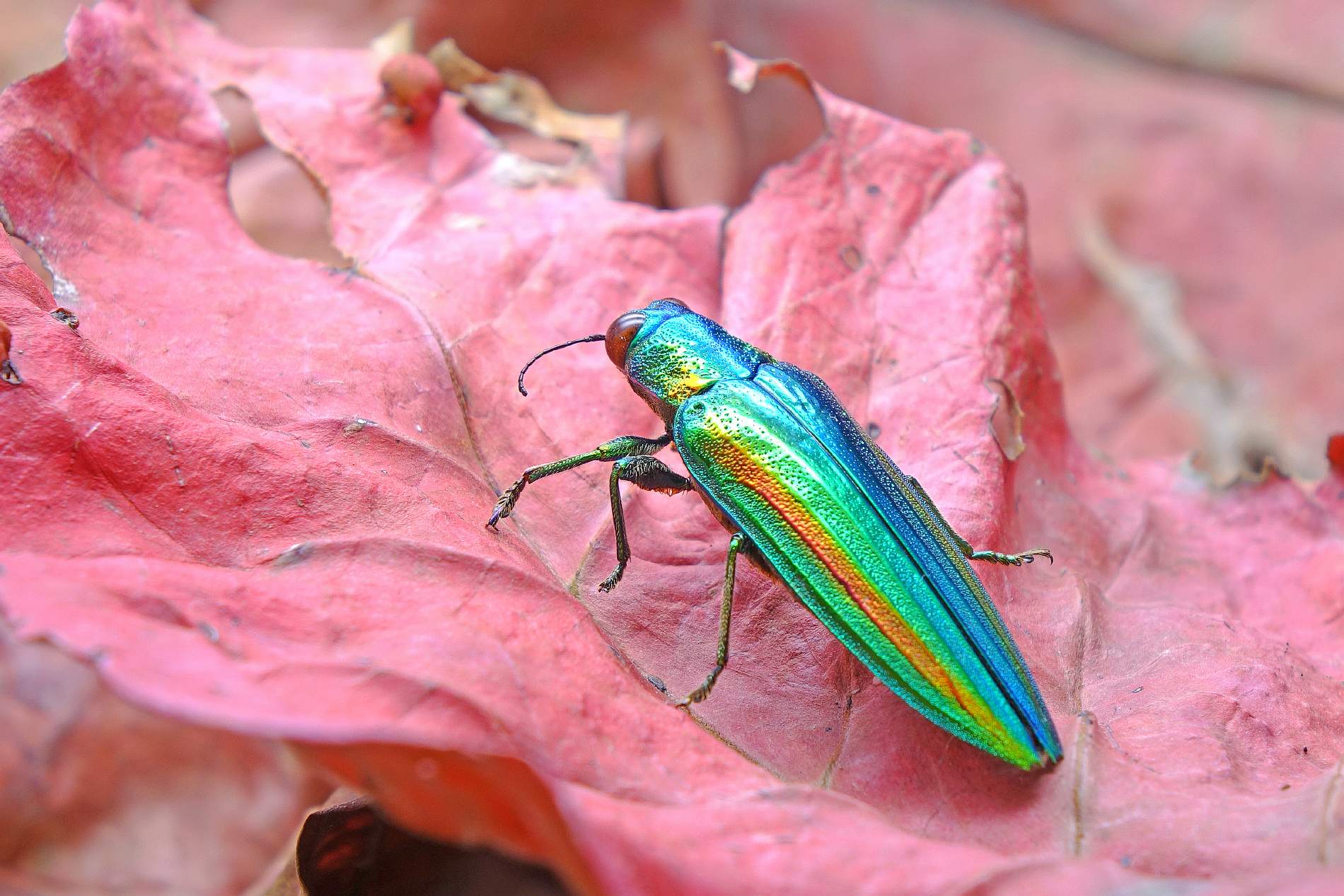
Bright coloration is selected for because predators avoid them, so they survive and reproduce more, causing the trait to become more common.
300
Two populations of birds live in the same area but sing different songs. They are only attracted to the song that they also sing.
This is an example of this type of reproductive barrier.
Behavioral Barrier
300
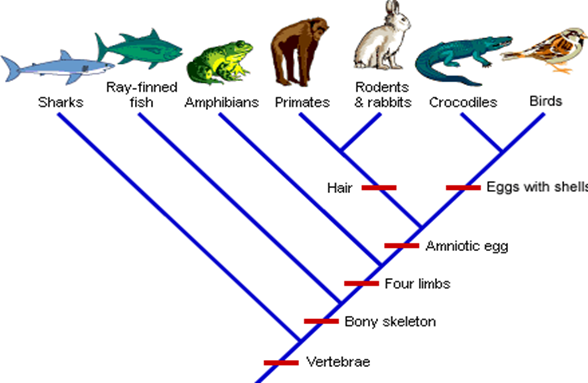
In this tree diagram, what organism has the most recent common ancestor with birds?
Crocodiles
300
Scientists discover that two different species have very similar DNA sequences, even though they look different.
What does this suggest about how the species are related?
They are more closely related. Generally, things closely related have more genes in common.
400
Explain how a trait can be helpful in one situation but harmful in another.
It depends on the environment of the organism.
400
Why does natural selection require variation in a population to happen?
Because there needs to be some traits that more helpful than others in order for a population to change over time.
400
Two organisms mate and produce offspring, but the offspring cannot survive or reproduce.
What type of reproductive barrier is this?
Genetic Incompatibility
400
A scientist discovers a new organism that has vertebrae, a bony skeleton, four limbs, and an amniotic egg, but does NOT have hair or feathers.
Where would this organism belong on the tree?
On the same branch as amphibians (they have all the same traits this tree is looking at).
400
Fossils show that ancient whales had legs and lived on land.
What does this suggest about whale evolution?
That whales evolved from land-dwelling ancestors and are more closely related to them than organisms like fish.
500
A population of lizards has light and dark coloration. The environment changes from light-colored sand to dark volcanic rock. Over time, the population becomes mostly dark-colored.
Explain how this change happened. Be specific!
The dark colored lizards were able to survive and reproduce more often due to their camoflague with the environment. They would pass down the dark colored trait to their offspring.
Those offspring would also survive and reproduce more often than the light colored lizards.
500
Why does natural selection act on populations rather than individuals?
Because populations change over time as individuals reproduce and pass on traits. Individuals don't change their traits at all.
500
Why is defining a species sometimes difficult? Give TWO reasons.
Examples:
- Some organisms can look very similar but not reproduce
- Some organisms can reproduce but produce weak or infertile offspring
- Scientists may disagree on what counts as a species
500
What traits would the most recent common ancestor of amphibians and ray-finned fish have based on this tree diagram?
Bony skeleton and vertebrae.
500
Scientists use fossils, embryos, and DNA to study evolution.
Why is it important that all of these types of evidence support the same conclusion?
Because multiple types of evidence make the conclusion stronger and more reliable