Introduction & Chemistry of the Cell
Proteins & Polyssacarides
Lipids & Nucleic Acids
DNA Structure & Chromatin/Chromosome
DNA replication
100
True or False. Macromolecules are larger than viruses.
False
100
What are the repeated subunits (monomers) called to build proteins?
Amino acids
100
True or False.
Lipid is NOT a polymer.
True
100
How many bonds bind adenosine (A) and thymine (T)? How many bonds bind guanine (G) & cytosine (C)?
2 = A & T
3 = G & C

100
True or false.
In a laboratory setting, DNA replication is called Polymerase Chain Reaction (PCR).
True
200
What are the 3 properties of water? Also, provide an explanation for each property.
1) Polar & Cohesive
2) Temperature
3) Solvent
200
What type of bond connect the carboxyl group and amino group of an amino acid?
Peptide bond
200
What main class or category of lipids does Vitamin A belong to?

Terpenes
200
What is the full, proper name of this nucleotide base?

Deoxyadenine monophospate
200
What are the bubbles called in between the DNA strands?

Replicons or replication bubbles
300
Where is this equation is energy released?
2C2H2 + 5O2 ---> 4CO2 + 2H2O
Energy (can be in the form of heat) IS NEEDED to break the reactants in order for them to rearrange into different molecules.
Energy IS RELEASED when forming bonds. Be careful with this statement!
More in-depth explanation: Once the molecules have rearranged and finalized their products, the difference of energy from the products is released.
300
What is the monomer called for polysaccharides? What is the formula for polysaccharides?
* Monosaccharides
* Cn(H2O)n
300
What is the difference between saturated and unsaturated fats?
Saturated fats are linear because all the hydrocarbon bonds in the chain are single bonds and each carbon has two hydrogens. Therefore at room temp, they stack easier and form a solid. Unsaturated fats have at least one double bond in the chain, causing a bend or kink. Therefore unsaturated fats won’t stack as easily and remain liquid at room temp.
300
What is the bond called when a C3 hydroxyl group binds with a C5 phosphate group?

Phosphodiester bond/bridge
300
What direction does DNA polymerase III make the leading strand?
1) 5' to 3' direction
2) 3' to 5' direction

1) 5' to 3' direction
400
What are the five molecular principles of life?
1) Importance of carbon
2) Importance of water
3) Importance of selectively permeable membranes
4) Importance of synthesis by polymerization
5) Importance of self-assembly
400
Which glucose molecule is alpha? What is the name of the bond that binds these two glucose molecules?

* The first molecule is alpha
* Alpha glycosidic bond
400
Glycolipids are lipids that are associated with a(n) ____ group.
(a) Carbohydrate
(b) Steroid
(c) Phospahte
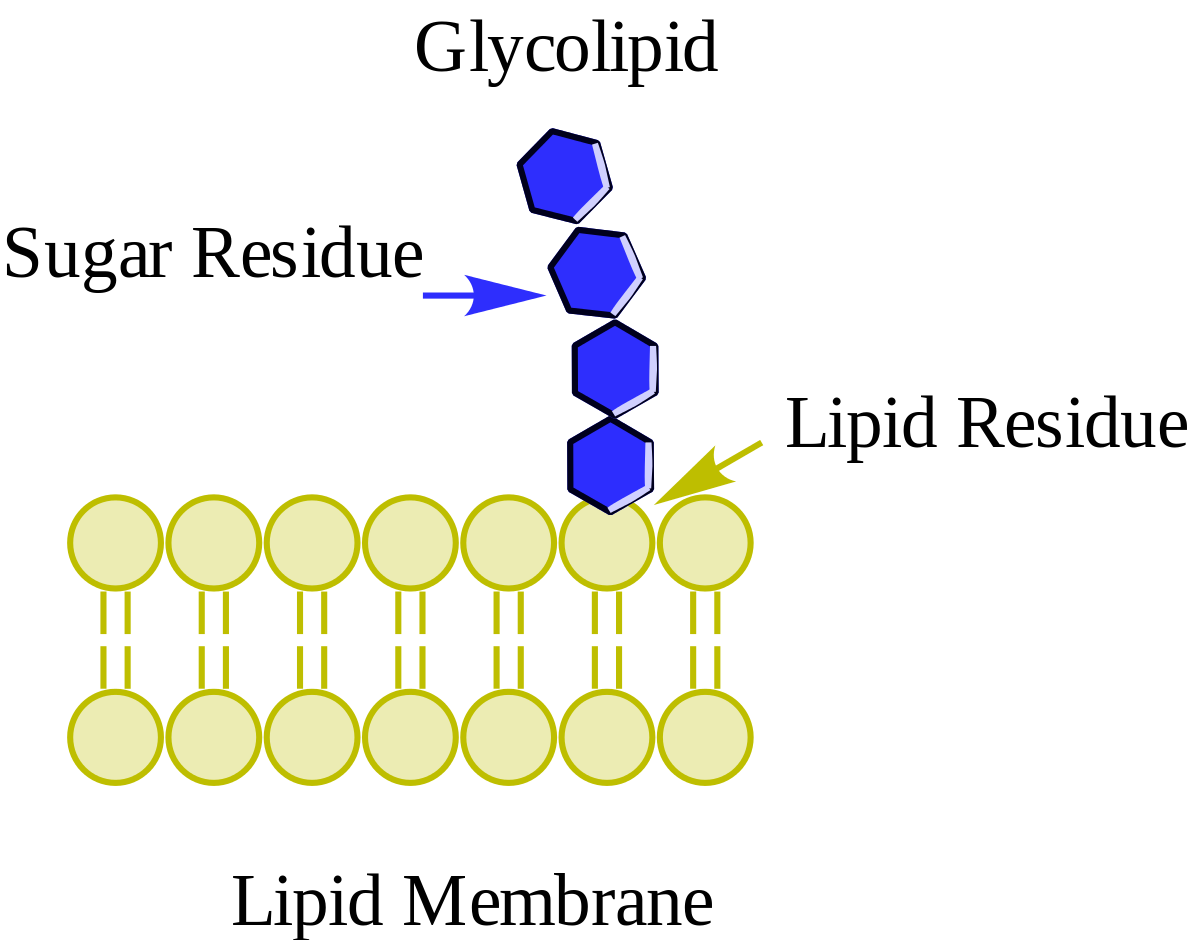
Carbohydrate
400
What are the 2 important functions of chromatin?
1) Packaged by many associated proteins to fit the whole genome in the cell
2) Regulating gene expression
400
What proteins are involved in making the lagging strand?
Primase
DNA polymerase III
DNA polymerase I
DNA ligase

500
Please explain how the process of polymer folding.

The diagram above shows a protein that is composed of repeated subunits of amino acids. Amino acids have non-covalent bonds that allow them to interact with one another via polymer folding. As the protein is being folded, it gives a three-dimensional structure. The protein is in a three-dimensional shape; therefore, it has a specific function within the human body or cell.
500
In the process of stepwise polymerization, what is the definition of condensation & hydrolysis?

* Condensation: releases H2O to form bonds
* Hydrolysis: adds H2O to break monomeres
500
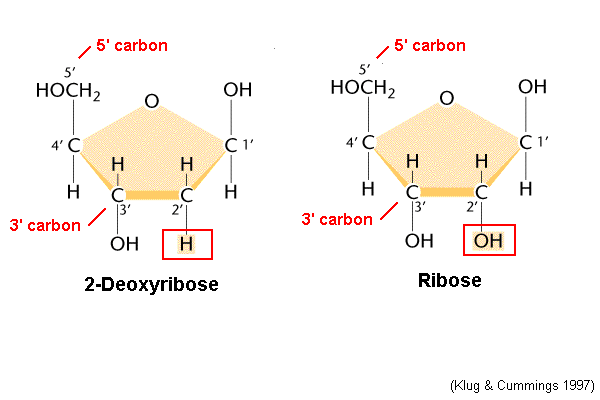
Which sugar carbon position differs between ribose and deoxyribose?
(a) C1
(b) C2
(c) C4
C2
500
What do histones have methyl and acetyl tails?
* HINT: use the terms heterochromatin & euchromatin

Methylation - tightens DNA (Heterochromatin)
Acetylation - loosens DNA (Euchromatin)
500
Through evolution, specific sequences have been the same in all species because it has an important function of recruiting important proteins for gene expression. What are these sequences called?

DNA


Proteins
Consensus sequence