Define it!
Flower Fundamentals
Gym plants?
Seed Buddies
Freaky Fertilization
100
heterosporpous
homosporus
Homosporous plants produce a single type of spore
heterosporous plants produce two distinct types of spores: smaller microspores and larger megaspores
100
The four whorls of flowers, and their components
Calyx, sepals
Corolla, petals
Stamen, filament and anther
Carpel, stigma, style, ovary with ovules
100
Most gymnosperms are
(1). Meaning, sporangia are produced in separate (2).
Most gymnosperms are
dioecious. Meaning, sporangia are produced in separate strobili or cones
100
"There are THREE phases of the life cycle in a seed!" EVERY SEED HAS:
1. _______ (new Sporophyte) (2N)
2. ______________ (N)
3. ___________ (old Sporophyte) (2N)
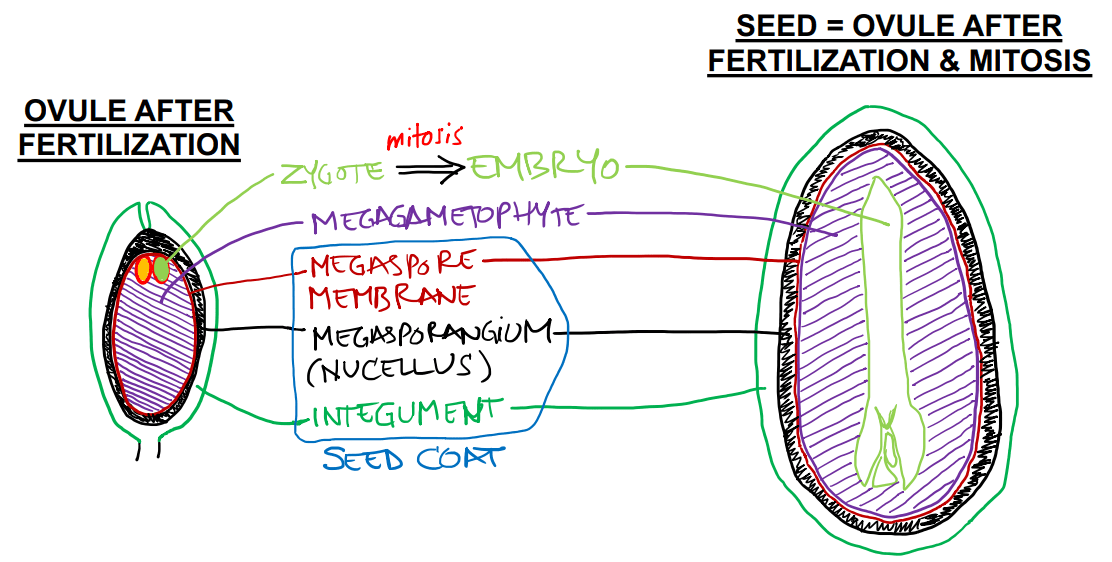
"There are THREE phases of the life cycle in a seed!" EVERY SEED HAS:
1. EMBRYO = new Sporophyte (2N)
2. Megagametophyte (N)
3. SEED COAT= old Sporophyte (2N)
100
What happens to the pollen grain once it enters the ovule?
generative cell divides into two sperm cells
200
monoecious
dioecious
Monoecious organisms have both male and female reproductive organs in the same individual, while dioecious organisms have separate male and female individuals
200
Describing complete and incomplete makes flowers sound silly. What would even make a flower complete?
Briefly define, complete and incomplete
A complete flower has all four whorls while an
incomplete flower is lacking one or more whorls
200
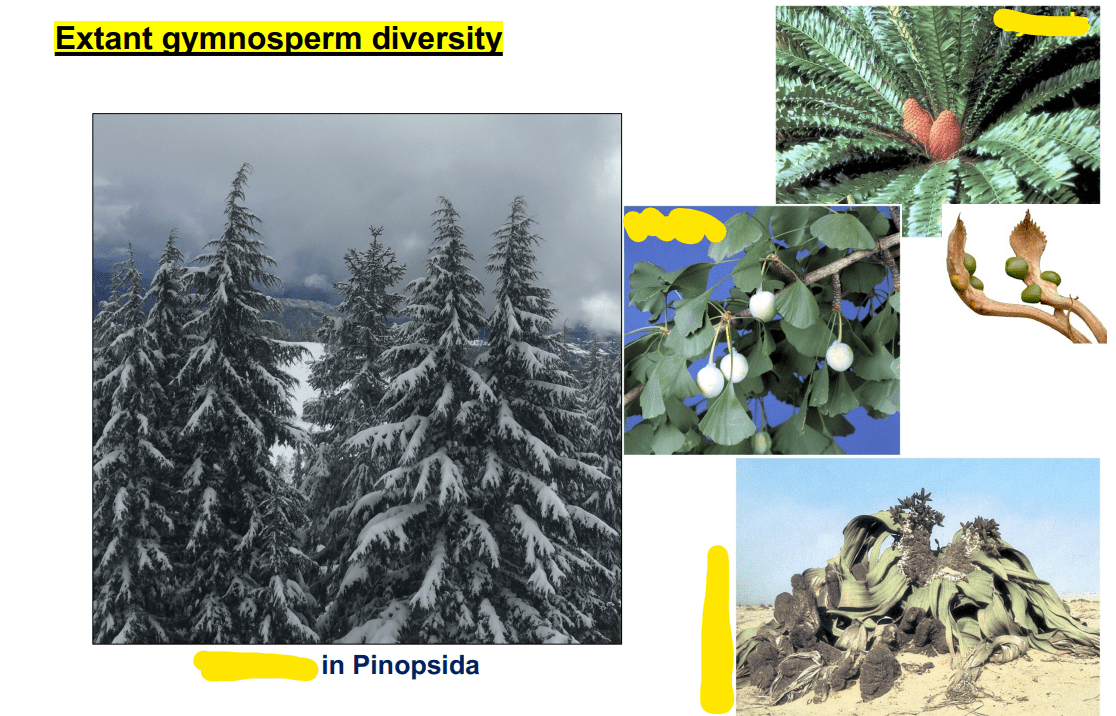
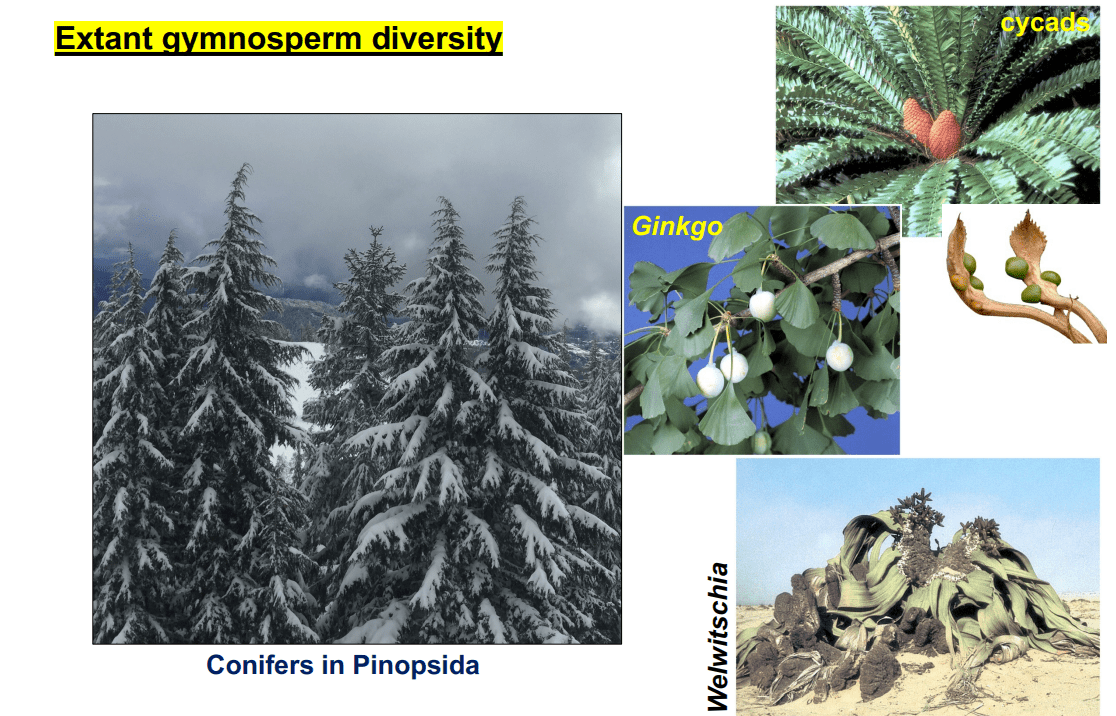
Name the extant gymnosperm groups.
200
*Before fertilization*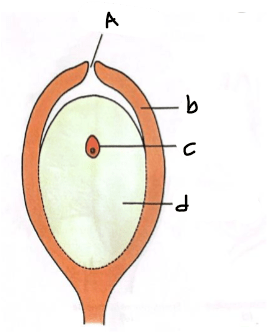
200
Fertilization:
(1) _________ (bringing the sperm to the egg)
(2) ________ (tube cell grows a pollination tube and the generative cell divides to give rise to two sperm).
Fertilization:
(1) pollination (bringing the sperm to the egg)
(2) germination (tube cell grows a pollination tube and the generative cell divides to give rise to two sperm).
300
fruit
the mature, ripened ovary of a flowering plant that contains the seed or seeds. Its primary function is to protect the seed and aid in its dispersal
300
Check out these flowers! Which one is which?
>The syncarpous flower, vs the apocarpous flower.
Apo left, syn right
300
Question 1: this gymnosperm has 1 extant species, stinky seed cones, and dichotomous leaf venation
Question 2: this gymnosperm can be either evergreen or deciduous, some are incredibly tall
Ginkgo!
Coniferophyta!
300
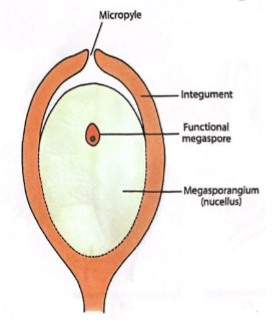
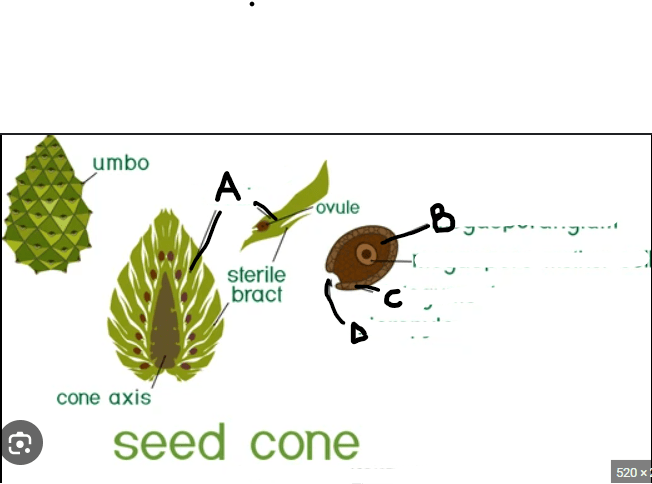
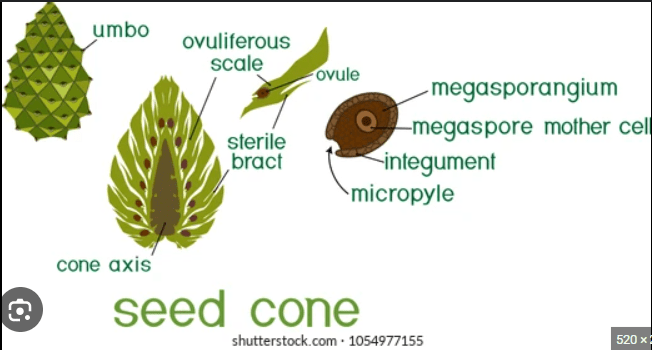
the female gametophyte develops inside and is retained in the (1).
Seeds develop from an ovule. Ovules contain a (2) and a single functional (3).
the female gametophyte develops inside and is retained in the megasporangium.
Seeds develop from an ovule. Ovules contain a megasporangium/nucellus and a single functional megaspore.
300
A pollen grain has a (1)
with (2).
Microgametophyte is (3) (retained within
microspore wall).
A pollen grain has a microspore
with microgametophyte.
Microgametophyte is endosporic (retained within
microspore wall).
400
integument
micropyle
funicle
The integument is the protective outer layer(s) of an ovule that develops into the seed coat
the micropyle is a small opening in the integument that serves as the entry point for the pollen tube during fertilization
the funicle is the stalk that attaches the ovule to the ovary wall in a plant's seed

400
Check this flower out! Describe it's gynoecium.
>Is this flower peri, hypo, or epigynous?
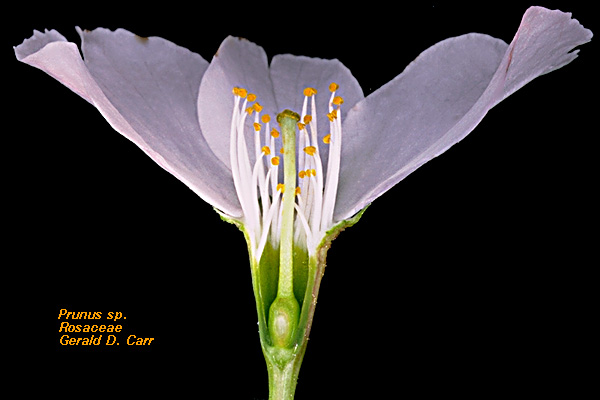
Perigynous
400
Question 1: This gynosperm is dioecious, the leaves are palm like, and has flagellate (swimming) sperm.
Question 2: this qymnosperm, does not have flagellate sperm, includes genera like ephedra and welwitchia, and is dioecious
Cycadophyta
Gnetophyta
400
The (1) is a product of sporic meiosis; the other three meiotic products are (2)
The megaspore develops into the (3).
The megaspore is a product of sporic meiosis; the other three meiotic products are aborted
The megaspore develops into the female gametophyte.
400
The single diploid cell that will undergo meiosis to produce 4 haploid megaspores.
Also called the megaspore mother cell.
The megasporocyte / the megaspore mother cell
500
megaspore
secondary growth
integument
pollen grain
megaspore - haploid spore produced within the megasporangium (ovule); it develops into the female gametophyte
secondary growth - The increase in girth or thickness of a plant's stem and roots, primarily through the activity of lateral meristems
integument - A protective outer layer of tissue that encloses the megasporangium in an ovule. After fertilization, the integument develops into the seed coat
pollen grain - male gametophyte in seed plants, developed from a microspore. It contains the male gametes (sperm cells) and is responsible for transporting
What do these 4 terms have in common?
500
Megagametogenesis is the generation of the mature (1).
Megagametogenesis is complete once megaspore develops into the (2).
Megagametogenesis is the generation of the mature female gametophyte.
Megagametogenesis is complete once megaspore develops into the embryo sac.
500
Megagametogenesis is more complicated than the previous question (yuck).
>Walk me through what happens to the megasporocyte
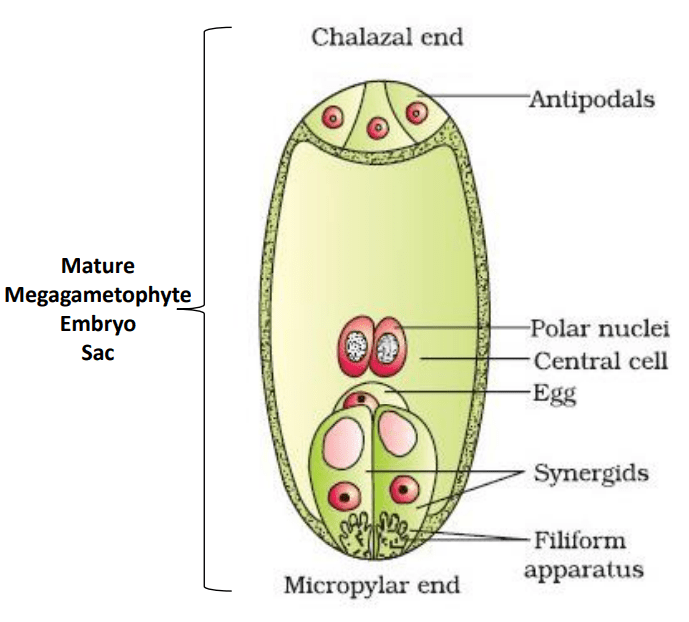
1. diploid megasporocyte under goes meiosis to produce four haploid megaspore
2. Three of the four progeny haploid megaspores disintegrate, leaving one functional megaspore
3. This megaspore mitotically divides, those two cells mitotitically, divide, and those four cells mitotically divide to give eight haploid cells
500
500
Microgametogenesis is the generation of the mature (1).
Microgametogenesis is complete when the (2) mitotically divide to form a tube cell and a generative cell.
Microgametogenesis is the generation of the mature male gametophyte.
Microgametogenesis is complete when the pollen grains mitotically divide to form a tube cell and a generative cell.