Nervous Tissue
The Brain
Spinal Cord
Eye
Ear
100
The nervous system has two principal parts: ______ (brain and spinal cord) + ______ (everything else)
central nervous system and peripheral nervous system
100
What is in the 4 ventricles of the brain? What forms it?
Cerebral spinal fluid, choroid plexus (lined with ependymal cells)
100
Spinal cord starts the ___ (bony marking) and ends at conus medullaris at L1.
foramen magnum
100
What type of receptors are rods and cones? What works best in a dark room and for detecting motion?
photoreceptors, rods.
100
2 main functions of your ears & their associated structures in the inner ear?
sense of equilibrium (balance/semicircular canals) + audition (hearing, cochlea)
200
The motor (output) of the PNS has the somatic division which gives us voluntary control of skeletal muscles and the ______ division which includes the fight-or-flight system (______) and rest-and-digest system (______).
autonomic, sympathetic, parasympathetic
200
List the following from superficial to deep: pia mater, brain, skull bone, skin, arachnoid layer, dura mater.
skin, bone, dura mater, arachnoid layer, pia mater.
200
Posterior grey horn receives _____ information. Anterior grey horn sends _____ information. Posterior white column sends ______ information _____ the brain. Anterior white column sends ____ information ____ the brain.
sensory, motor, sensory, towards, motor, away from
200
Why do we have a blind spot?
optic nerve location (cranial nerve #2)
200
Which part of the ear is fluid-filled? Air-filled?
Fluid: inner ear
Air-filled: outer and middle
300
The neuroglial cells and their locations + functions are:
Schwann cells (PNS) - insulate
Satellite cells (PNS) - filter what go in and out of neurons to the interstitial fluid
Astrocytes (CNS) - maintain blood-brain barrier
Microglia (CNS) - phagocytic functions
Oligodendrocytes (CNS) - insulate
Ependymal Cells (CNS) - secrete CSF
300
Functions of the thalamus, pineal gland, and cerebellum.
THalamus: sensory relay station
Pineal: regulates sleep-wake cycle, secretes melatonin
Cerebellum: helps with balance and coordinated muscle movements (dancing)
300
# of pairs of spinal nerves: cervical, thoracic, lumbar, sacral, coccygeal. total:
8, 12, 5, 5, 1. 31
300
Light is converted to electrochemical signals that travel from the optic nerve (CN 2) to the following brain locations:
thalamus, occipital lobe (primary visual cortex), pineal gland
300
What type of receptors is in the cochlea? How do we hear different frequencies?
mechanoreceptors; high fq near the front, low fq near the back. hair cells mechanically vibrate resulting in action potential
400
Define presynaptic and postsynaptic neurons and what happens at the synaptic cleft.
neurotransmitters are released from the presynaptic neuron and bind to the postsynaptic neuron. this is how neurons communicate and send signals.
400
What's the difference between a concussion and a stroke? Why are both of these dangerous?
concussion: physical impact/damage on the brain tissue leading to swelling and bruising. Nerve damage could be temporary or permanent.
stroke: clot in blood vessel in the brain, no oxygen can reach a part of the brain, tissue becomes damaged or tissue death
NEURONS cannot reproduce/divide!!
400
a patient experiences paralysis of arms and legs following a car accident, but can still breathe. He suffered an injury to the nerves from C5 to T1 which are associated with his paralysis in those specific regions. This is known as _____.
dermatomes
400
What do animals have that humans don't, at the back of the eye that reflects light in the dark?
tapetum lucidum; "second chance" to pick up more photons --> increase light sensitivity in low light
400
What nerve is involved? The three bones in the middle ear are: ___, ___, ___, and collectively known as _____.
vestibulocochlear nerve (CN 8), malleus, incus, stapes (ossicles)
500
List and describe the steps of an action potential.
depolarization (Na channels open, Na ions flow in)
repolarization (Na channels close, K channels open, K ions flow out)
hyperpolarization/refractory period (all channels close, Na/K pump uses energy to send 3 Na out, 2 K in)
500
Damage to the medulla oblongata would result in:
Also, I quiz you on cranial nerves.
loss of control of heart rate, cardiac contraction, blood flow, respiratory rate; basic AUTONOMIC functions in the body.
500
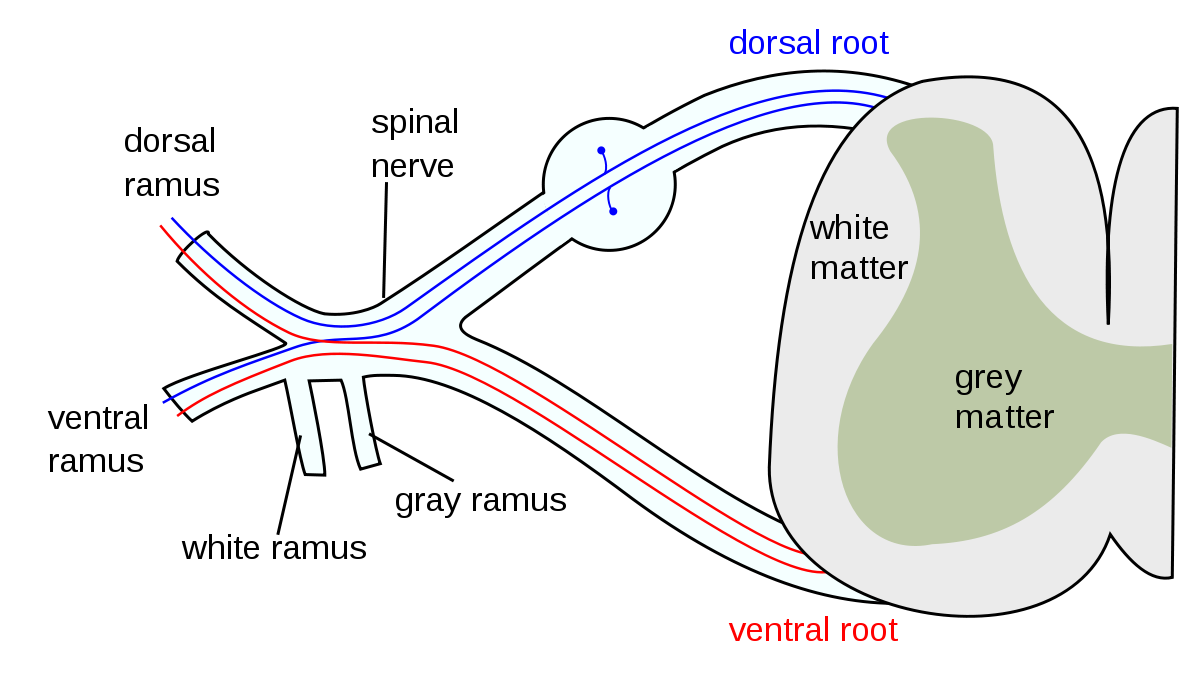
ventral/dorsal roots vs ventral/dorsal ramus
ventral roots: motor signals only to front and back
dorsal roots: sensory signals only from front and back
ventral ramus: sensory + motor signals from/to the front
dorsal ramus: sensory + motor signals from/to the back
500
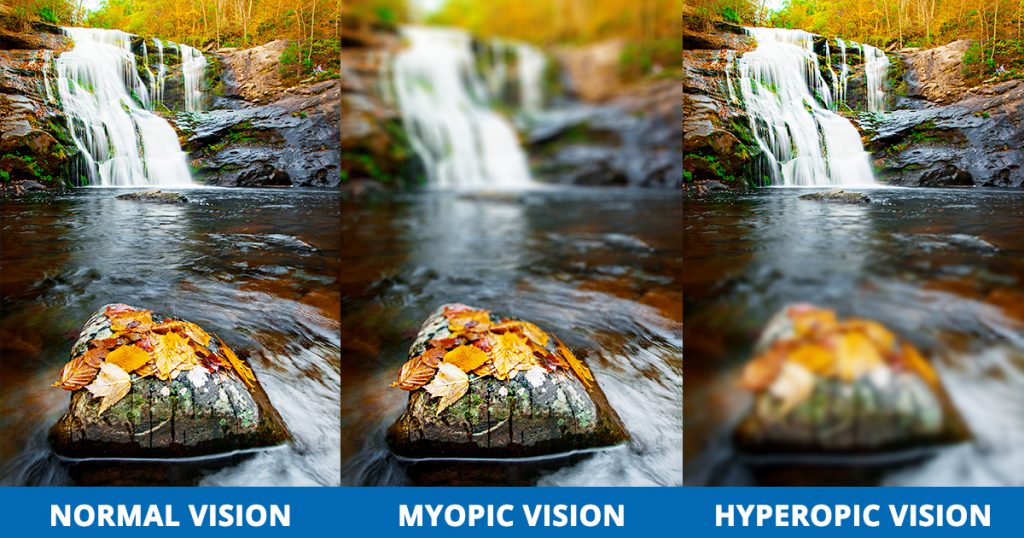
Myopia is ____. Hyperopia is _____. Explain the eye structure difference. Where is the image focused?
nearsightedness, farsightedness.
myopia: image focused in front of retina (long eyeball or lens cannot loosen up)
hyperopia: image focused behind the retina (short eyeball or lens cannot become more spherical)
500
Difference between oval window & round window? What structure gives us the pop when we go to high altitude?
oval window is connected to stapes (beginning of mechanical energy transferred within fluid of Organ of Corti)
round window releases mechanical energy from fluid into eustachian tube. otherwise we get messy overlapping wave cycles.
eustachian tube, equalize pressure in ear with surrounding air pressure.