Chapter 1 and 4
Chapter 4 cont.
Chapter 2
Chapter 3
Chapter 9
100
What does all life have in common?
- Has genetic material (DNA)
- Made of cell(s)
- Uses energy from the environment
- Can reproduce
- Can evolve by changes in genetic info
- All life is similar!
100
How does water pass through a membrane?
- Osmosis! Through protein channels called aquaporins
100
What's a covalent bond and is it stronger than a hydrogen bond?
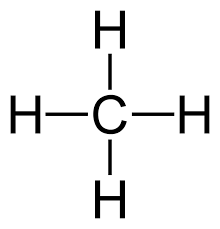
- Atoms that share electrons
- Yes, covalent are stronger
100
What are the four important macromolecules?
- Proteins
- Nucleic acids
- Carbohydrates
- Lipids
100
What is the direction of DNA synthesis?
- 5’ end to the 3’ end
200
What is evolution?
- Change in genetic makeup of a population over time
200
How is active transport different than passive transport?
- Chemicals are moving against their concentration gradients and therefore energy is required
200
What does it mean if a molecule is hydrophobic or hydrophilic?
Phobic:
- It will not dissolve in water
- “water hating”
Philic:
- It will dissolve in water
- “water loving”
200
What are the characteristics of saturated and unsaturated fatty acid?
Saturated:
- No double bond(s) causing bend(s)
- Solid at room temperature
- Tightly packed together
Unsaturated:
- Has double bond(s) causing bend(s)
- Not solid at room temperature
- Less tightly packed
200
What are the two types of bases? And which bases make them up?
- Purines (A and G) and pyrimidines (T and C)
300
Does evolution make organisms perfectly suited to their environment?
- No, environments are constantly changing, and a mutation may be favorable in one sense but also come with negative aspects
- *review other misconceptions
300
What is endocytosis and exocytosis?
Endo (IN):
- When a vesicle brings large particles into the cell
- Ex) phagocytosis and pinocytosis
Exo (EXIT):
- When vesicles release large particles from the cell
300
What are exergonic and endergonic reactions?
exer:
- A reaction that releases or uses energy
ender:
- A reaction that requires energy
300
What are nucleotides made up of?
- Sugar + nitrogenous base + phosphate group
300
What is the function of DNA?
- To store genetic information to be used to make proteins and to be passed from generation to generation
400
What is the cell membrane primarily made up of?
- The phospholipid bilayer, which is made up of two layers that each have a hydrophobic tail and hydrophilic head
400
What do extracellular structures do?
- Hold cells together
- Contribute properties to tissue (like cartilage or skin)
- Help filter what enters and leaves cells
- Help manage cell orientation and movement during development/tissue repair
400
What occurs during anabolic and catabolic reactions?
ana:
- Energy required (endergonic) to form more complex molecules
cata:
- Energy released (exergonic) to break down complex molecules
400
What are amino acids made up of?
- Amino group, alpha carbon, carboxyl group, R group
400
What’s a somatic mutation? What about a gremlin mutation?
Somatic:
- Mutation in body cells
- Not passed to offspring
Germline
- Mutation in gamete cell
- Passed to offspring (heritable)
500
What is simple diffusion?
What about facilitated diffusion, how is it different?
- Simple: When chemicals move from areas of higher concentration to areas of lower concentrations
- Facilitated: When polar or charged molecules move through ligand or voltage-gated protein channels or carrier proteins
- *different bc of protein
500
What are the three types of junctions/connections between animal cells?
- Tight junctions, desmosomes, and gap junctions
500
What are condensation and hydrolysis reactions?
condensation:
- The process where monomers link together to form a polymer because water is removed causing covalent bonds to form between monomers (anabolic)
Hydrolysis:
- The process where polymers breaking apart into monomers because water is added and covalent bonds between monomers are broken (catabolic)
500
What are the four structures of proteins?
Primary:
- Amino acid sequence
Secondary:
- H-bonding between amino acids (helices or sheets)
Tertiary:
- Bending and arrangement of helices or sheets
Quaternary:
- Interacting subunits
500
What are the types of mutations in terms of amino acid structure? What about in terms of gene expression?
Amino acid structure: silent, missense, nonsense, and frame-shift
Gene expression: silent, gain of function, loss of function, and conditional