Chapter 5
Chapter 6
Chapter 9
Chapter 10
Chapter 7
100
Which statement about viruses is true?
A. All viruses have DNA genomes
B. Viruses are cells
C. Viruses are more abundant that bacteria
D. Viruses are usually larger than bacteria
C. Viruses are more abundant than bacteria
100
Bacterial cells in hypotonic solution are likely to:
A. No change
B. Shrink
C. Swell and burst
D. Swell but not burst
D. Swell, but not burst
100
Surfactants target:
A. Cellular synthetic processes (replication, transcription, translation)
B. Cytoplasmic and other membranes
C. Proteins
D. The cell wall
B. Cytoplasmic and other membranes
100
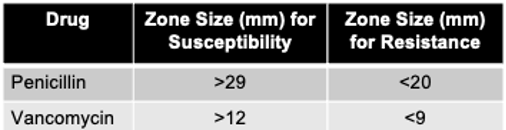
A strain of staphylococcus aureus was tested for antibiotic sensitivity in a Kirby Bauer test. The zone of inhibition with Penicillin was 18mm; while the zone of inhibition with vancomycin was 14 mm. Which is the correct interpretation?
A. The strain is more sensitive to Penicillin than Vancomycin
B. The strain is susceptible to Penicillin
C. The strain is more susceptible to Vancomycin
C. The strain is susceptible to Vancomycin.
100
During aerobic respiration, glucose (C6H12O6) is broken into carbon dioxide (CO2) and oxygen (O2) is converted into water (H2O). Which molecule is electron donor?
A. Carbon Dioxide
B. Glucose
C. Oxygen
D. Water
B. Glucose
200
What kind of protein is included in all viruses?
A. A protein to assemble new viruses
B. A protein to ensure mRNA is translate
C. A protein to mediate attachment to the host cell
D. A protein to replicate the genome
C. A protein to mediate attachment to the host cell
200
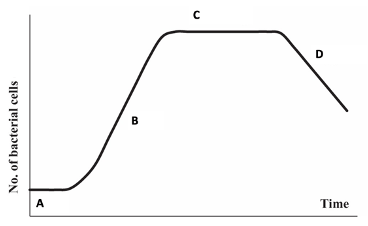
In this image, C indicates:
A. Death phase
B. Interphase
C. Lag phase
D. Log phase
E. Stationary phase
E. Stationary phase
200
Which method of microbial control is typically best for critical care equipment?
A. Autoclaving
B. Desiccation
C. Lyophilizing
D. Pasteurization
A. Autoclaving
200
Which of these factors is likely to increase the therapeutic index of an antimicrobial?
A. High selective toxicity
B. High allergy toxicity
C. High tissue toxicity
D. High levels of drug resistance
A. High selective toxicity
200
What is the definition of metabolism, anabolism and catabolism?
Metabolism: all chemical reactions and physical workings of the cell
Anabolism: synthesis of cells molecule and structure, requires energy input
Catabolism: breaks the bonds of larger molecules, releases energy
300
List the steps of viral replication cycle
1. Attachment and entry
2. Decoding genome information
3. Genome replication
4. Assembly and release
300
What are two protective measures against radiation?
1. Yellow carotenoid pigments that absorb and dismantle toxic oxygen
2. Enzymes to overcome damaging effects of radiation on DNA
300
Difference between -cidal and -static agents
-cidal agent is intended to kill the microbe
-static agents prevent microbes from multiplying but not killed
300
What are resistance factors?
Plasmids that are transferred through horizontal transfer (conjugation, transformation or transduction) that often carry resistance to multiple drugs.
300
What is the concentration gradient of hydrogen called in the electron transport system?
Proton motive force
400
What are the 2 challenges to designing anti-virals?
Viruses mutate very rapidly and there are few unique druggable targets that won't also target the host
400
Explain how a cell differs in isotonic, hypertonic and hypotonic environment
Isotonic: Rates of diffusion are equal, and cell remains the same
Hypertonic: water diffusing out of the cell, which causes it to shrink
Hypotonic: Diffusion of water into the cell and causes it to swell
400
What are the 3 cellular targets of physical and chemical agents?
cell wall
cytoplasmic and other membranes
proteins and nucleic acid synthesis
400
What 3 factors must be known before starting antimicrobial therapy?
1. The identity of microbes
2. The degree of the microbe susceptibility to various drugs
3. Overall medical conditions of the patient
400
What is the importance with glycosis
Glucose is converted to two pyruvic acid, and synthesis of a small amount of ATP
500
What are the two types of cytopathic effects? Provide the definition too!
1. Inclusion bodies: compacted masses of viruses or damaged cell organelles in the nucleus or cytoplasm
2. Syncytia: fusion of multiple host cells into single large cells containing multiple nuclei.
500
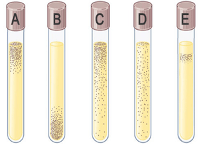 Label the tubes with oxygen vocab
A= obligate aerobe
B= Obligate anaerobe
C= facultative anaerobe
D= aerotolerant anaerobe
E= Microaerophile
500
Explain the difference between critical, semi critical and noncritical medical devices?
Critical- expected to come into contact with sterile tissues
Semi-critical- comes into contact with mucosal membranes
Noncritical- those that don't touch the patient or are only expected to touch intact skin
500
What is the mechanism of action for Fluoroquinolones? (i.e Ciprofloxacin)
Targets DNA or RNA
OR
Inhibits topoisomerase, instead of untangling DNA it breaks
500
What goes into and out of the kreb cycle?
Into: Pyruvic acid which is converted to acetyl CoA
Out of: Reduced NADH and FADH, as well as 2 ATP produced through substrate level phosphorylation.