Levels of Organization
Organelles Working Together
Body Systems and their Functions
Malfunction Junction
Characteristics of Life
100
What is the smallest unit of life?
Cellular Level
100
Cells are constantly breaking down and rebuilding parts. The ______________ are the cell's recycling centers. They contain powerful enzymes that break down waste, old organelles, and foreign invaders. When an old or damaged part, like a tired energy maker, the _________________ , needs to be replaced, the first organelle engulf it and break it down into its basic components. The cell can then reuse these components to build new organelles, making the process very efficient and keeping the cell healthy.
1. Lysosomes
2. Mitochondria
100
The ______ functions to __________ the bones and joints in your body.
1. Muscular System
2. Move
100
What organelle is missing in this picture?
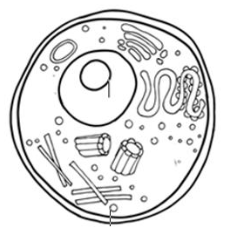
The Mitochondria
100
A caterpillar eats leaves for two weeks, spins a cocoon, and emerges as a butterfly. What characteristic of life is this?
Growth and Development
200
In Animals: Epithelial, Connective, Muscular, and more
In Plants: Dermal, Ground, and Vascular
These are examples of...
Tissue Types!
200
The cell's _______________ is the security guard, controlling what comes in and out. But sometimes, it needs help. A threat, like a virus, might get inside. The cell's security team, including the ____________ and other specialized organelles, work together to neutralize the threat. The 2nd organelle will engulf the invader and destroy it. If the cell is overwhelmed, the ___________ might signal for the cell to undergo a controlled self-destruction process to prevent the virus from spreading. This is a complex but crucial process that shows how the cell's "brain" and its "cleanup crew" work together to protect the entire organism.
1. Cell Membrane
2. Lysosome
3. Nucleus
200
The ____________ breaks down food into __________ for absorption and eliminates waste.
1. Digestive System
2. Nutrients
200
What would happen if there was no vacuole in a plant cell? (2 answers)
The plant would be (1) dehydrated so it will (2) lose it structure
200
Under a microscope, an onion skin looks like a grid of tiny rectangular rooms, while a single paramecium is just one room living on its own. What characteristic of life is this?
Being made of cells
300
In animals: Skin, Thymus, Ovaries
In plants: Leaves, Stems, Roots
These are examples of...
Organs!
300
The _________________ are the kitchen of the plant cell, where photosynthesis happens. They use sunlight, water, and carbon dioxide to create food (glucose). This ___________ is then stored or used for energy. The ____________, which is a large storage sack in plant cells, holds the water that the first organelle needs. It also helps maintain the plant's shape and rigidity, allowing it to stand up straight and get more sunlight for the chloroplasts to use. The ____________ in the plant cell then use the glucose produced by the first organelle to create energy (ATP) for the cell.
1. Chloroplast
2. Glucose
3. Vacuole
4. Mitochondria
300
The __________ plays a crucial role in removing ___________ from the blood and maintaining fluid balance.
1. Excretory System
2. Waste
300
What would happen if the organelle "x" was not functioning properly in the cell:
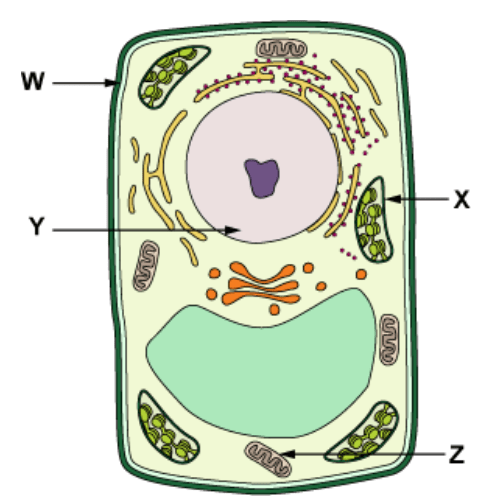
The cell wouldn't be able to photosynthesize (make sugar).
300
A plant absorbs sunlight and water to produce sugar, while a fungi breaks down a dead log to get food.
A plant absorbs sunlight and water to produce sugar, while a fungi breaks down a dead log to get food.
400
Circulatory, Respiratory, Nervous, Immune, Excretory, and Digestive are example of...
Organ Systems!
400
Imagine your body needs energy to run, jump, and even think. That energy comes from a process called _____________, which is like a cell's mini power plant. This process starts in the _____________, the jelly-like substance that fills the cell. Here, a glucose molecule (sugar from the food you eat) is broken down into smaller molecules, releasing a small amount of energy.
However, the real power production happens in the _____________. These are the "powerhouses" of the cell. The smaller molecules from the 1st organelle are transported into the 2nd organelle , where they go through a series of reactions. Think of it like a car's engine: the 2nd organelle takes the broken-down fuel and, with the help of _____________ (which you breathe in!), they efficiently convert it into a huge amount of usable _____________, called ATP. The byproducts are _____________and _____________, which the cell gets rid of.
1. cellular respiration
2. cytoplasm
3. mitochondria
4. oxygen
5. energy
6. water
7. carbon dioxide
400
The ___________ controls and coordinates body functions by __________ ________ (2 words).
1. Nervous System
2. Sending signals
400
The muscle that helps deflate the lungs is cramping really bad. How would that impact you?
I would have a hard time breathing in and out.
400
A dog pants when it gets hot to cool down, and a human shivers when cold to warm up.
Maintaining Homeostasis
500
Animals, Plants, and Bacteria/Fungi are examples of...
Organisms!
500
Imagine a busy factory that makes proteins. The _______ is the CEO's office, holding all the blueprints (DNA) for what to build. A copy of the blueprint, called mRNA, is sent out to the _______, which are the factory workers on the assembly line. They get to work, stringing together amino acids to create the protein. Once the protein is made, it might get sent to the _________, which is like the factory's internal conveyor belt system. This folds and modifies the protein, then packages it up to send to the ___________. This is like the shipping and handling department; it sorts, tags, and ships the finished protein to its final destination, whether inside or outside the cell.
1. Nucleus
2. Ribosomes
3. Endoplasmic Reticulum (ER)
4. Golgi Body
500
The ____________ is made up of organs such as the bone marrow, thymus, spleen, lymph nodes, and mucosal tissues. It defends the body against ___________.
1. Immune System
2. Pathogens/diseases/illnesses
500
Over a period of 10 years you ate salty, fatty foods 4 times a week. The fat hardened in your arteries. How does this impact your circulatory system?
The fat is making it hard for blood to flow which can lead to a heart attack.
500
Over thousands of generations, a species of desert fox develops larger ears to help release heat in its arid environment.
Adapting and Evolution