What phase is it?
Stars
Stars/models of solar syst.
Earth's motions
Solar System
100
What kind of eclipse is pictured?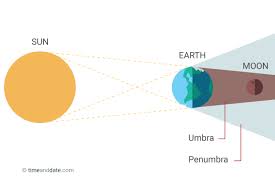
lunar
100
How many stars are in our solar system?
one- the sun
100
What process in a star releases energy and creates new elements?
nuclear fusion
100
What are 2 pieces of evidence that the Earth revolves around the sun?
constellations
seasons change
100
What is the shape of the orbit the planets follow around the sun?
Ellipse
200
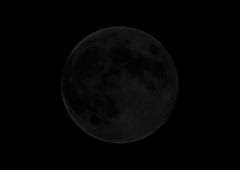
New Moon
200
The life cycle of a star is determined by ________ & __________
mass
size
200
What are the four types of stars?
main sequence, white dwarf, red giant, super giant
200
The Earth has (more/less) gravitational pull when it is closer to the sun.
closer
200
As a planet moves closer to the star in its orbit the planet moves (slower/faster)
faster
300
What phase of the moon is seen at position 5?
Full moon
300
What is the shape of the Milky Way?
spiral
300
What phase does a star spend most of its life in?
main sequence
300
Name the equinoxes and their dates
Autumnal Equinox- September 23
Summer Solstice- June 21
Winter Solstice - December 21
Vernal Equinox- March 21
300
What are the characteristics of Jovian planets?
large
low density
gaseous
400
The time required for one rotation of the Earth is..
24 hours
400
What factor determines the final evolution of a star?
the mass of a star
400
The sun is the center of the solar system in this model.
heliocentric
400
In the winter, the Northern Hemisphere is pointed (towards/away) from the Sun
away
400
As the distance between a planet and the Sun increases, what happens the the time needed for revolution?
it increases
500
The time required for one revolution of the Earth around the sun is...
1 year
500
What is a galaxy made up of?
billions of stars
500
The Earth is the center of the solar system in this model.
geocentric
500
Seasons are due to...
the Earth's tilt on its axis
500
The smallest gravitational between a planet and star occurs when the planet is (closest to, furthest away) from the star.
furthest from