Familiar Forces
Force, Motion & Speed
Miscellaneous
Force, Mass & Motion
Balanced & Unbalanced Forces
100
Latrisha is investigating magnets. She places the north pole (N) of a bar magnet near the north pole (N) of another bar magnet as shown below.
- What will happen when the two north poles are moved closer together?

Ⓐ The two magnets will repel each other.
Ⓑ The two magnets will attract each other.
Ⓒ The two magnets will attract all magnetic materials in the room.
Ⓓ The two magnets will pull toward each other.
Ⓐ The two magnets will repel each other.
100
The two objects shown in the following figure are identical. The arrows indicate unbalanced forces acting on the objects.
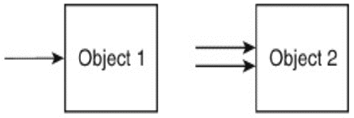
- How would the motion of Object 1 compare to the motion of Object 2?
Ⓐ The objects move in opposite directions, and both objects move at the same speed.
Ⓑ The objects move in the same direction, and both objects move at the same speed.
Ⓒ The objects move in the same direction, and Object 1 moves half as fast as Object 2.
Ⓓ The objects move in the same direction, and Object 1 moves twice as fast as Object 2.
Ⓒ The objects move in the same direction, and Object 1 moves half as fast as Object 2.
100
Mass is how much matter an object has. Weight is a measurement of how much the force of gravity is pulling on an object. Weight increases as mass increases. How does mass affect the force needed to stop an object after it has traveled down an inclined plane?
Ⓐ A more massive object stops at the same rate as a less massive object after traveling down an inclined plane.
Ⓑ A less massive object requires more frictional stopping force after traveling down an inclined plane.
Ⓒ A more massive object requires less frictional stopping force after traveling down an inclined plane.
Ⓓ A more massive object requires more frictional stopping force after traveling down an inclined plane.
Ⓓ A more massive object requires more frictional stopping force after traveling down an inclined plane.
100
Petra is helping her parents to unpack some boxes. She lifts a full box with a mass of 15 kilograms. She empties out about half of the items from the box and lifts it again. Which is true regarding the force she applies after unloading the box?
Ⓐ She has to apply a different type of force after changing the mass.
Ⓑ She has to apply more force to lift the box because the mass is greater.
Ⓒ She has to apply less force to lift the box because the mass has decreased.
Ⓓ She has to apply the same amount of force to the box to overcome gravity.
Ⓒ She has to apply less force to lift the box because the mass has decreased.
100
Jack is pulling a rope to the left. Singh is pulling the rope to the right. The rope stays in the same position. Which of these best explains why the rope does not move?
Ⓐ The two forces are acting in the same direction.
Ⓑ The two forces are equal and balance each other out.
Ⓒ Two forces cannot act on one object at the same time.
Ⓓ The force to the left is greater than the force to the right.
Ⓑ The two forces are equal and balance each other out.
200
A group of students measured the amount of force needed to move a bucket across a dry plastic tabletop. Then they poured some water on the table and repeated the experiment on the wet surface. The students found that less force was needed to make the bucket start moving on the wet surface than the dry surface. What caused the difference in the results?
Ⓐ change in the amount of gravitational force on the bucket
Ⓑ change in the mass of the bucket used in the experiment
Ⓒ change in the friction between the bucket and the surface
Ⓓ change in the friction between the bucket and the scale used to measure force
Ⓒ change in the friction between the bucket and the surface
200
Mia has a toy car. She uses two boards to make ramps. She makes one of the ramps higher than the other. She wants to find out if the height of the ramp affects how far the car rolls. She rolls the car down both ramps. How can Mia collect data to answer her question?
Ⓐ measure the length of the car.
Ⓑ weigh the car
Ⓒ measure how far the car rolls
Ⓓ buy new toy cars
Ⓒ measure how far the car rolls
200
Stefan loads three books onto a cart. Then he pushes the cart on a track so it just reaches the track’s end. Next he puts six books onto the cart. What must he do when pushing the cart so it will reach the end of the track?
Ⓐ use less force
Ⓑ use more force
Ⓒ use the same amount of force
Ⓓ use the same amount of force but add three more books.
Ⓑ use more force
200
Kaneesha pushes a toy truck and lets it roll across a flat surface. She measures the distance it travels. Kaneesha repeats this for several trials using the same amount of force each time, but she adds different numbers of wooden blocks with identical masses to her truck. Kaneesha’s results are shown in the following table.
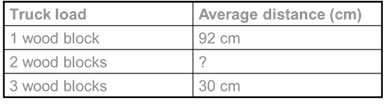
- Which measurement is most likely to be closest to the result for Kaneesha’s trial with 2 wood blocks?
Ⓐ 12 cm
Ⓑ 30 cm
Ⓒ 57 cm
Ⓓ 98 cm
Ⓒ 57 cm
200
Gravity is pulling downward on a ball with a force of 7.5 Newtons. In order to make it move upward, what kind of force will be needed?
Ⓐ The same amount of force moving upward.
Ⓑ A force moving upward that is greater than 7.5N.
Ⓒ A force moving upward that is less than 7.5N.
Ⓓ A force moving downward that is greater than 7.5N.
Ⓑ A force moving upward that is greater than 7.5N.
300
A computer sits on a desk.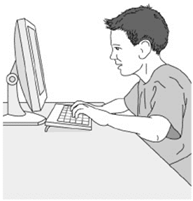
What is helping overcome the force of gravity on the computer?
Ⓐ the desk
Ⓑ the shape of the computer
Ⓒ the direction the user faces
Ⓓ the position of the keyboard
Ⓐ the desk
300
Steve, Ashton, Elias, and Carlos were racing each other at recess. Diane and Margie recorded their times. The table below shows the data recorded by the girls.
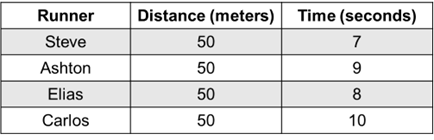
Which boy had the slowest average speed?
Ⓐ Steve
Ⓑ Ashton
Ⓒ Elias
Ⓓ Carlos
Ⓓ Carlos
300
Tori is testing how far three identical toy cars with different amounts of attached masses will travel. The diagram to the below shows the conditions before each car is released.
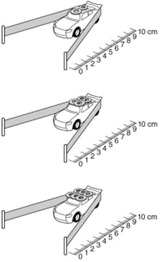
- How is Tori controlling variables in her experiment?
Ⓐ The mass and force will change for each trial.
Ⓑ Neither the mass nor force will change for each trial.
Ⓒ The mass will change for each trial, but the force will not change.
Ⓓ The force will change for each trial, but the mass will not change.
Ⓒ The mass will change for each trial, but the force will not change.
300
Katie sits on the ground and rests her hands on a bowling ball in front of her. She uses all her force to push the bowling ball away from her body. Next, Katie rests her hands on a soccer ball situated in front of her at the same location. She uses all her force to push the soccer ball away from her body. How do the movements of the two balls contrast?
Ⓐ The soccer ball accelerates faster and moves a greater distance because more force is acting on it.
Ⓑ The soccer ball accelerates faster and moves a greater distance because it has less mass.
Ⓒ The bowling ball accelerates faster and moves a greater distance because it has more mass.
Ⓓ The bowling ball accelerates slower and moves a shorter distance because less force is acting on it.
Ⓑ The soccer ball accelerates faster and moves a greater distance because it has less mass.
300
Philip is playing tug of war with Nancy. They both understand that to win the game of tug of war, one player must pull the flag over their opponent's line, but during this particular game, the flag tied to the center of the rope is not moving. What is happening to the rope in this example?
Ⓐ Philip is applying more force in one direction.
Ⓑ Nancy is applying more force in one direction.
Ⓒ Philip and Nancy are applying equal forces in the same direction.
Ⓓ Philip and Nancy are applying equal forces in opposite directions.
Ⓓ Philip and Nancy are applying equal forces in opposite directions.
400
Cora observes some items in her science kit. When she moves a stone, a paper clip in the kit moves toward the stone. Which type of force causes the paper clip to move toward the stone?
Ⓐ a magnetic force attracting iron
Ⓑ the sun lighting items near Earth
Ⓒ friction acting on objects that are moving
Ⓓ a magnetic force causing like poles to repel
Ⓐ a magnetic force attracting iron
400
At the track meet, Tibor threw the javelin four times. The table below shows the distance the javelin traveled each time.
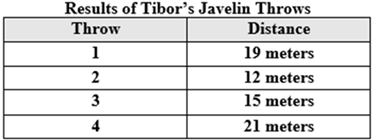
- According to the data, which javelin throw did Tibor throw with the most force?
Ⓐ Throw 1
Ⓑ Throw 2
Ⓒ Throw 3
Ⓓ Throw 4
Ⓓ Throw 4
400
Kenya and Briseida were boating with their families on the Saint Lucie River. Kenya entered the river at the north fork while Briseida entered the river at the south fork. The girls identified a place in the middle of their two locations to meet for lunch. The lunch spot was exactly the same distance of 7 miles from each of the girls. What else is needed to find their average speeds while traveling to the lunch spot?
Ⓐ the speed of the wind
Ⓑ the weight of each boat
Ⓒ which girl got to the lunch spot first
Ⓓ how long it took each boat to get to the lunch spot
Ⓓ how long it took each boat to get to the lunch spot
400
Dana investigated the relationship between force, mass, and motion. She had a little motor and several toy cars. The motor fit inside the toy cars and supplied a constant steady force. Dana kept track of how fast the cars went on a flat surface. The graph below shows her measurements.
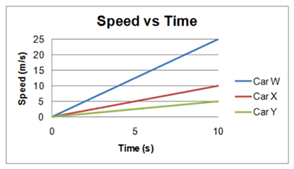
- Based on the data in the graph, which toy car was most likely the least massive?
Ⓐ Car W
Ⓑ Car X
Ⓒ Car Y
Ⓓ All three cars were most likely the same mass
Ⓐ Car W
400
Beth and Kelly were practicing hitting a target with marshmallows launched from a catapult. Beth launched her marshmallow with a force of 10 Newtons. At exactly the same moment, a gust of wind blew in the opposite direction of the launch push with a force of 10 Newtons. What most likely happened to the marshmallow?
Ⓐ It moved in the direction of the launch.
Ⓑ It moved in the direction that the wind was blowing.
Ⓒ It began to move with a speed of 80 meters per second
Ⓓ It did not move.
Ⓓ It did not move.
500
On two different days, two students measured the force required to hold a pair of scissors using a spring scale. How should the results of the two measurements compare?
Ⓐ The results should be the same because the mass of the scissors and the force of gravity are the same.
Ⓑ The results should be the same because friction does not change between the two experiments.
Ⓒ The results should be different because two people never perform an experiment exactly the same way.
Ⓓ The results should be different because changes in conditions between different days will cause the results to change.
Ⓐ The results should be the same because the mass of the scissors and the force of gravity are the same.
500
A car moved at a constant speed for 5 seconds. The distance it traveled for the 5 seconds is shown on the graph below.
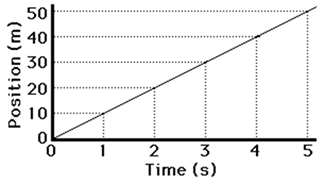
- How far did the car travel per second?
Ⓐ 50 meters
Ⓑ 5 meters
Ⓒ 10 meters
Ⓓ The car was not moving.
Ⓒ 10 meters
500
Kelan is swinging on a tire swing in a tree. What force keeps the tire swing from falling to the ground?
Ⓐ The push of air resistance keeps the tire swing from falling to the ground.
Ⓑ The pull of the tree limb keeps the tire swing from falling to the ground.
Ⓒ The pull of gravity keeps the tire swing from falling to the ground.
Ⓓ The push of friction keeps the tire swing from falling to the ground.
Ⓑ The pull of the tree limb keeps the tire swing from falling to the ground.
500
Richard is conducting an experiment to see how far two different balls with different masses will roll when he releases them at the top of an inclined plane. Why does the ball with the most mass go the furthest distance?
Ⓐ The more massive ball goes the furthest because it has less magnetic attraction to the inclined plane as it travels.
Ⓑ The more massive ball goes the furthest because it takes more oppositional friction to stop it.
Ⓒ The more massive ball goes the furthest because it takes less oppositional friction to stop it.
Ⓓ The more massive ball goes the furthest because it has less gravitational force acting on it.
Ⓑ The more massive ball goes the furthest because it takes more oppositional friction to stop it.
500
When two forces act on an object, the movement of the object depends on both forces. The pictures below show forces acting on a box. Which picture shows a situation where the box would remain still?
a. 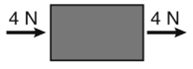
b.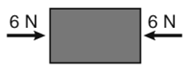
c.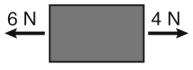
d.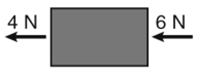
b. 