1
2
3
100
A student strikes a triangle with a metal beater in music class. Which statement best explains why the instrument makes a sound?
A. The triangle vibrates and causes surrounding air particles to vibrate.
B. The metal produces electrical charges that move through the air.
C. The metal beater creates friction against the air.
D. The instrument absorbs heat energy from the room.
A. The triangle vibrates and causes surrounding air particles to vibrate.
100
A student places a piece of black construction paper and a piece of white printer paper in direct sunlight on a warm afternoon. After 20 minutes, the black paper feels much warmer than the white paper. Why does this happen?
A. The black paper reflected the light energy from the Sun.
B. The black paper absorbed more light energy than the white paper.
C. The black paper bent the light energy as it entered the paper.
D. The black paper created its own mechanical energy.
B. The black paper absorbed more light energy than the white paper.
100
A student tests four rubber bands stretched across a box by plucking each one. She counts the vibrations per second to determine pitch, as shown in the table below:
Rubber Band: Vibrations per Second
Rubber Band W: 120
Rubber Band X: 210
Rubber Band Y: 95
Rubber Band Z: 340
Based on the data, which rubber band produces the highest pitch sound, and why?
A. Rubber Band Y, because the highest pitch is produced by the slowest vibrations.
B. Rubber Band W, because the highest pitch is produced by moderate vibrations.
C. Rubber Band Z, because the highest pitch is produced by the fastest vibrations.
D. Rubber Band X, because the highest pitch is produced when vibrations stop.
C. Rubber Band Z, because the highest pitch is produced by the fastest vibrations.
200
A student looks at a pencil standing in a clear glass filled with water. Looking from the side, the pencil appears broken or bent at the water line. What light behavior causes this appearance?
A. Light energy is absorbed completely by the pencil wood.
B. Light energy bends (refracts) as it travels from air into water.
C. Light energy reflects directly back into the light source.
D. Light energy changes into sound energy when passing through water.
B. Light energy bends (refracts) as it travels from air into water.
200
A student rubs her hands together quickly on a cold winter morning and notices her palms feel warm. Which statement best describes why her hands warmed up?
A. Friction between her hands converted motion into heat energy.
B. Air blowing across her skin created additional thermal energy.
C. The light energy in the room absorbed into her skin.
D. Stored electrical energy was released from her fingertips.
A. Friction between her hands converted motion into heat energy.
200
Gasoline stored in a lawnmower tank and energy stored inside a D-cell battery are both examples of stored energy. Which term best classifies this form of energy?
A. Light energy
B. Mechanical energy
C. Chemical energy
D. Sound energy
C. Chemical energy
300
Which of the following scenarios provides the best example of mechanical energy?
A. A bicycle wheel turning rapidly as a rider pedals down the road.
B. A flashlight battery storing power inside a plastic case.
C. A camp bell ringing loudly across an open field.
D. Solar panels absorbing sunlight on a house roof
A. A bicycle wheel turning rapidly as a rider pedals down the road.
300
A student turns on an interactive whiteboard display screen in the classroom. Which two forms of energy are actively produced by the operating screen?
A. Sound and chemical energy
B. Light and sound energy
C. Mechanical and solar energy
D. Electrical and magnetic energy
B. Light and sound energy
300
A teacher asks her class to give an example of electrical energy in motion. Which of the following is the best example?
A. Energy stored inside an unused battery on a shelf.
B. An electric current flowing through a copper wire in a circuit.
C. Sound waves moving outward from a plucking guitar string.
D. Heat produced when two blocks of wood rub together.
B. An electric current flowing through a copper wire in a circuit.
400
A student shines a flashlight toward a flat mirror as shown in the diagram below.
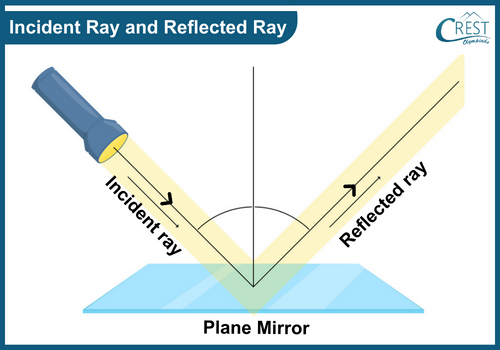
A. Light travels in a straight line and is absorbed by the mirror.
B. Light travels in a straight line and reflects off the shiny surface.
C. Light bends as it enters a liquid inside the mirror.
D. Light creates heat energy that pushes the beam upward.
B. Light travels in a straight line and reflects off the shiny surface.
400
A student blows across the top of four identical glass bottles filled with different amounts of water. Which bottle will produce the sound with the LOWEST pitch?
A. The bottle that is completely full of water (smallest air space).
B. The bottle with half water and half air.
C. All bottles will produce the exact same pitch regardless of water height.
D. The bottle that has the least amount of water (largest air space).
D. The bottle that has the least amount of water (largest air space).
400
A metal spoon and a wooden spoon are placed into a pot of hot soup. After 5 minutes, the metal handle feels very hot, while the wooden handle feels warm. Why does the metal handle get hotter?
A. Metal is a good conductor that easily transfers thermal (heat) energy.
B. Wood absorbs light energy and turns it into electrical current.
C. Metal creates its own internal heat energy when placed in liquids.
D. Wood reflects heat energy away into the surrounding room air.
A. Metal is a good conductor that easily transfers thermal (heat) energy.
500
An electric toaster is plugged into a wall outlet and turned on to toast bread. Which energy transformation occurs?
A. Light energy converts into chemical energy stored in the bread.
B. Sound energy converts into mechanical energy to push the toaster down.
C. Electrical energy transforms primarily into thermal (heat) energy.
D. Thermal energy transforms into solar energy.
C. Electrical energy transforms primarily into thermal (heat) energy.
500
Why are silver or chrome mirrors placed behind the bulbs in car headlights?
A. To absorb excess light so the beam is not too bright for drivers.
B. To reflect light forward, making a stronger and brighter beam.
C. To bend light waves so they turn into sound warnings.
D. To trap heat inside the light fixture to protect the battery
B. To reflect light forward, making a stronger and brighter beam.
500
A wind turbine spins on top of a hill when wind blows across its large blades. What form of energy in the moving wind turns the turbine?
A. Chemical energy
B. Mechanical energy
C. Electrical energy
D. Sound energy
B. Mechanical energy