Fossils
Fossils Vocabulary
Open Response
How are Fossils formed?
100
What animals can be fossilized?
a. dinosaurs
b. fish
c. birds
d. all animals
d. all animals
100
A ____________________ is the remains of a plant or animal or trace of a living thing that has been hardened and conserved.
a. fossil
b. paleontologist
c. preserved
d. extinct
e. imprint
a. fossil
100
What are two things Paleontologists can learn from fossils?
Answers may vary
100
How are fossils formed? Step 1
a. paleontologists discover fossils
b. animal or plant dies
c. over many years, bones become fossilized
d. animal is buried
b. animal or plant dies
200
How are the plants and animals preserved?
a. All of the remains from the plants and animals are turned into fossils
b. Only the outside skin of the plants and animals are turned into fossils
c. Mostly the hard parts of the plants and animals are turned into fossils
d. Mostly the soft parts of the plants and animals are turned into fossils.
c. Mostly the hard parts of the plants and animals are turned into fossils
200
________________________ are scientists who study the leftover parts of plants and animals that lived long ago.
a. Fossil
b. Paleontologist
c. Preserved
d. Extinct
e. Imprint
b. Paleontologist
200
What can fossilized animal droppings tell us about these animals?
Their diet and environment
200
How are fossils formed? Step 2
a. paleontologists discover fossils
b. animal or plant dies
c. over many years, bones become fossilized
d. animal is buried
d. animal is buried
300
Fossils are evidence of organisms that lived in the past. Fossils often form from the hard parts of organisms such as shells or bones. Which of the organisms would be most likely to form a fossil?
a. sea slug 
b. turtle 
c. jellyfish 
d. caterpillar 
b. turtle
300
Animals can be _____________________ in many different ways such as being frozen, buried in tar pits, or found in amber.
a. fossil
b. paleontologist
c. preserved
d. extinct
e. imprint
c. preserved
300
How can it be explained that fossils of shells and ocean animals are found in the desert?
Those areas were once covered by oceans millions of years ago.
300
How are fossils formed? Step 3
a. paleontologists discover fossils
b. animal or plant dies
c. over many years, bones become fossilized
d. animal is buried
c. over many years, bones become fossilized
400
In which case would a paleontologist most likely find the animal perfectly preserved with its fur, skin, and organs like the mammoth?
a. Buried in rock
b. Covered with volcanic ash
c. Trapped in amber
d. Frozen in the Tundra
d. Frozen in the Tundra
400
Fossils do not always have to be the actual remains of a plant or animal. Sometimes an ______________________ is left behind pressed into the soft mud.
a. fossil
b. paleontologist
c. preserved
d. extinct
e. imprint
e. imprint
400
Plants lived on Earth during prehistoric times. How do we know this?
Fossils of plants have been found
400
How are fossils formed? Step 4
a. paleontologists discover fossils
b. animal or plant dies
c. over many years, bones become fossilized
d. animal is buried
a. paleontologists discover fossils
500
The picture shows a copy of a skeleton. The skeleton came from an extinct animal called the pygmy mammoth. What would be the best way to describe the pygmy mammoth?
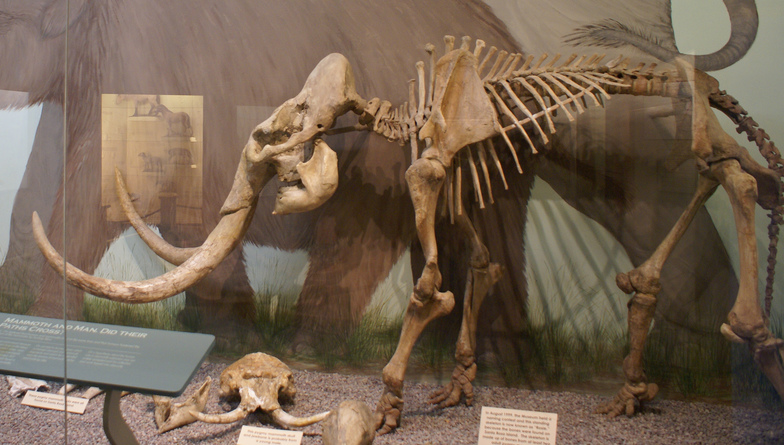
a. The pygmy mammoth was similar to birds and lived in trees.
b. The pygmy was similar to elephants and lived on land.
c. The pygmy mammoth was similar to alligators and lived in rivers.
d. The pygmy mammoth was similar to sharks and lived in the ocean.
b. The pygmy was similar to elephants and lived on land.
500
What are fossils made of?
a. minerals
b. bones
c. skin
d. plants
a. minerals
500
How can scientists determine if an animal was a plant eater, meat eater, or both?
By looking at their teeth (Flat teeth - plant eater Sharp teeth - meat eater)
500
How long does the fossil process take?
a. just a few years
b. many years
c. 6 weeks
d. 1 year
b. many years