Scientific method&diversity
chemistry
water
carbon/functional groups
macromolecules
100
What are the levels of organization? (list from biggest to smallest)
Biosphere, ecosystem, communities, populations, organisms, organs & organ systems, tissues, cells, organelles, molecules
100
If an element has a mass number of 100 and it has 30 protons, how many neutrons does it have?
70 neutrons
mass number= protons + neutrons
100
Two bonds that make up the water molecule. 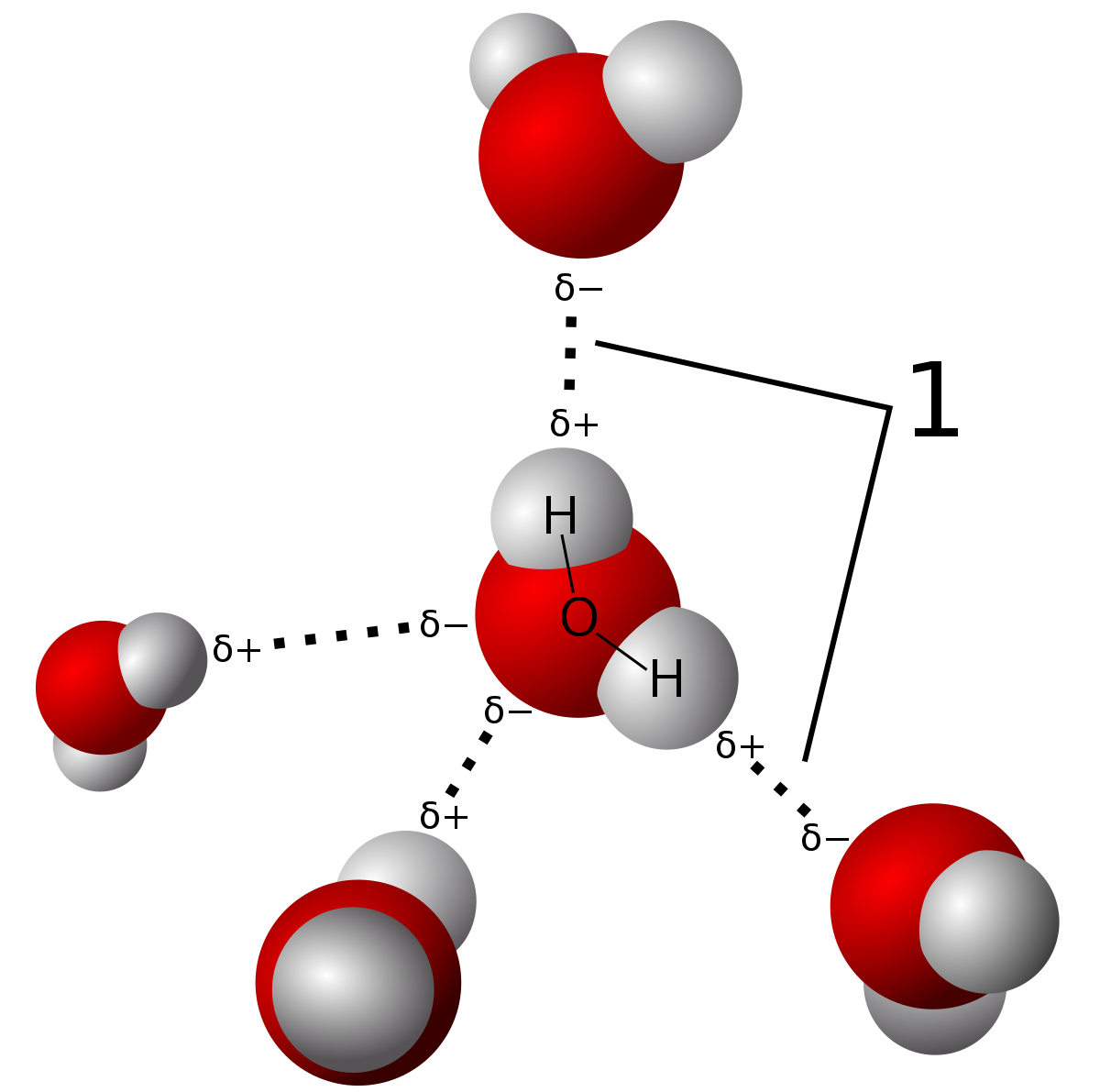
-Hydrogen Bond
-Covalent Bonds
100
List the four variations of carbon chains.
-Length
-Branched/Unbranched
-Varied location of double bonds
-Rings
100
Definition of macromolecule
a molecule containing a very large number of atoms, such as a protein, nucleic acid, or synthetic polymer
200
Archaea, bacteria, and eukarya are classified under which diversity of life?
also what are the 8 categories in which we classify diversity?
Domain
domain, kingdom, phylum, class, order, family, genus, species
200
What are the 4 essential elements.
Describe the difference between trace and essential elements.
Carbon, Hydrogen, oxygen, and nitrogen
trace elements: needed only in minute amounts
essential elements: natural elements needed in higher amounts
200
The solvent is...…
The solute is.....
Water
NaCl (salt)
200
Definition of isomer.
Molecules that have the same molecular formula but different arrangements in space.
200
List the molecules of life
-Carbohydrates
-Lipids
-Proteins
-Nucleic acids
300
Describe this image. What is it showing?

Natural selection
Light colored bugs stand out more in a dark environment, so they are eaten. Darker bugs blend in and are able to reproduce, increasing their traits that enhance survival in their offspring.
300
Isotopes are different forms of the same element, but what causes them the be different from the original element?
the number of neutrons
300
Define hydrophobic vs hydrophilic.
Hydrophobic: tending to repel or failure to mix with water.
Hydrophilic: Having a tendency to mix with or dissolve in water.
300
Name this specific type of carbon molecule and the reasoning behind its name. 
Hydrocarbon: Carbon that is bonding only to hydrogens.
300
What are the storage polysaccharides vs the structural polysaccharides...
-List types within both categories!
Storage: Starch, glycogen, and cellulose
Structural: Chitin
400
Explain what evolution is...
gradual change in development overtime, it's a natural process, happens in plants and animals,
400
-What type of bond is being described?
1. The sharing of valence electrons between atoms.
2. one atoms has a greater electronegativity, so electrons are not shared equally which causes polarity.
3. equal electronegativity, therefore no net charge.
1. covalent
2. polar covalent
3. non-polar covalent
400
The difference between thermal energy and temperature.
Temperature: measure of energy representing the average kinetic energy... NOT influenced by matter's volume.
Thermal energy: Association of the random movement of atoms or molecules
400
Variations of an isomer
Structural, geometric, and enantiomers
400
Difference between hydrolysis vs dehydration
Hydrolysis: the chemical breakdown of a compound due to reaction with water.
Dehydration: Loss or removal of water
500
Explain the difference between a hypothesis, theory, and a law
hypothesis: tentative answer to a well framed question, the "because", can ONLY reject or fail to reject, requires rigorous and repeated testing
theory: explains an outcome, one or more hypotheses continuously supported by repeated experimentation and testing
Law: predicts an outcome, based on repeated experimental observation
500
1. what bond involves ions, and what are the two types of ions?
2. What is weak individually and only occurs very close to one another?
3. what is the bond called where there is an attraction between hydrogen and another electronegative atom?
1. ionic: cation/anion
2. Van der Waal interactions
3. Hydrogen bonds
500
The five properties of water
-Heat Capacity
-Heat of vaporization
-Universal solvent
-Cohesion and adhesion
-Ice floats
500
Draw the structure and list the properties of 3 the following functional groups:
Amino, Phosphate, carboxyl, carbonyl, methyl, hydroxyl, and sulfhydryl

500
Define enzyme and relate it to this graph.
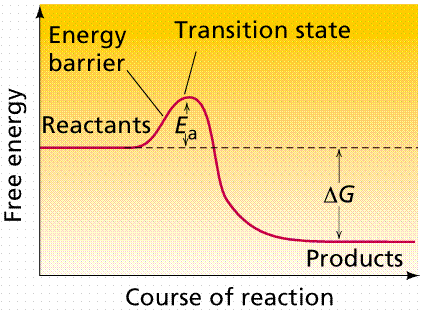
A substance produced by a living organism which acts as a catalyst to bring about a specific biochemical reaction.
Increases the rate of reaction by reducing the energy barrier.