G
C
A
T
U
100
The diagram below summarizes some of the steps in the development of humans.
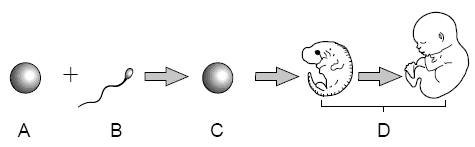
All the genetic information needed for the organism to develop is first present at:
- A
- B
- C
- D
3. C
100
Traits are passed from parents to offspring. These traits are determined by:
- chromosomes, located on genes, found in the nucleus
- genes, located on chromosomes, found in the nucleus
- chromosomes, located on genes, found in the ribosomes
- genes, located on chromosomes, found in the ribosomes
2. genes, located on chromosomes, found in the nucleus
100
Protein synthesis is accomplished primarily by the interaction of which two cell structures?
- vacuoles and mitochondria
- ribosomes and vacuoles
- nuclei and ribosomes
- nuclei and mitochondria
3. nuclei and ribosomes
100
A human skin cell contains 46 chromosomes. A frog sperm cell contains 12 chromosomes. Which pair of numbers shows the chromosome number of a normal gamete from each of these species?
- human 46; frog 12
- human 46; frog 24
- human 23; frog 24
- human 23; frog 12
4. human 23; frog 12
100
A change in the base sequence of DNA is known as
1. a gene mutation
2. a karyotype
3. nondisjunction
4. polyploidy
- a gene mutation
200
The development of organs and tissues from a zygote includes:
1. mitosis and differentiation
2. mitosis and gamete production
3. meiosis and gamete production
4. meiosis and fertilization
- mitosis and differentiation
200
Sexually reproducing organisms pass on genetic information as a:
- long chain of amino acids
- complex series of inorganic proteins
- sequence of complex sugars
- sequence of the bases A, T, C, and G
4. sequence of the bases A, T, C, and G
200
The expression of a trait is directly dependent on the.
1. arrangement of amino acids in the protein synthesized
2. shape of the subunits in the DNA molecule
3. number of chromosomes present in the nucleus
4. sequence of bases coded for by the ribosome
- arrangement of amino acids in the protein synthesized
200
Base your answer to the questions on the diagram below and on your knowledge of biology.
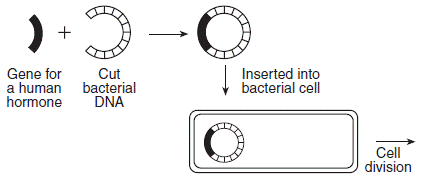
The original gene for the production of a human hormone was most likely removed from a
1. chromosome
2. ribosome
3. mitochondrion
4. cell membrane
- chromosome
200
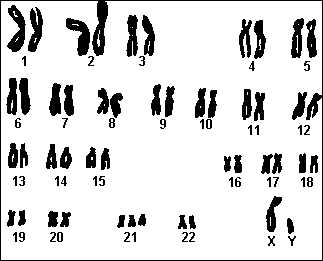
This chromosomal arrangement indicates that the individual has
1. phenylketonuria
2. Down’s syndrome
3. sickle-cell anemia
4. Tay-Sachs disease
2. Down’s syndrome
300
Which statement best explains why different body cells of the same individual look and function differently?
- Each cell contains different genes.
- Different genes are activated in different kinds of cells.
- Cells are able to change to adapt to their surroundings.
- Half of the genes in the cells came from the mother and half from the father.
2. Different genes are activated in different kinds of cells.
300
Five different living organisms are represented below.
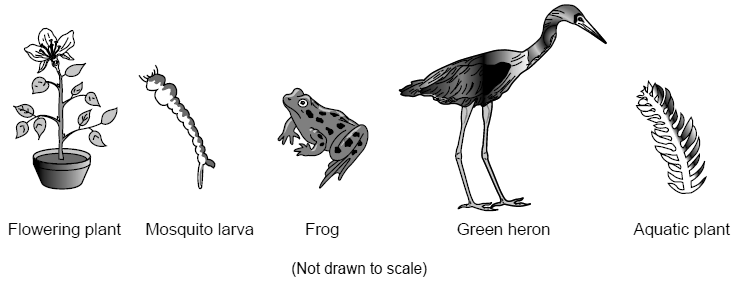
Which statement about the organisms represented above is correct?
- All of the organisms are autotrophs.
- Only the flowering plant, green heron, and aquatic plant carry out photosynthesis.
- Only the frog and green heron can maintain homeostasis.
- All of the organisms pass on traits through reproduction.
4. All of the organisms pass on traits through reproduction.
300
The diagram below represents a process taking place in a cell.
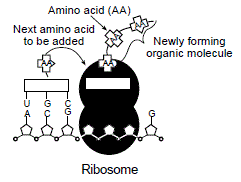
The type of organic molecule that is being synthesized is.
- DNA
- starch
- protein
- fat
3. protein
300
Base your answer to the questions on the diagram below and on your knowledge of biology.
The process represented in the diagram is
- DNA replication
- natural selection
- gel electrophoresis
- genetic engineering
4. genetic engineering
300
The diagram below represents an important biological technique scientists rely on to produce replacement hormones.
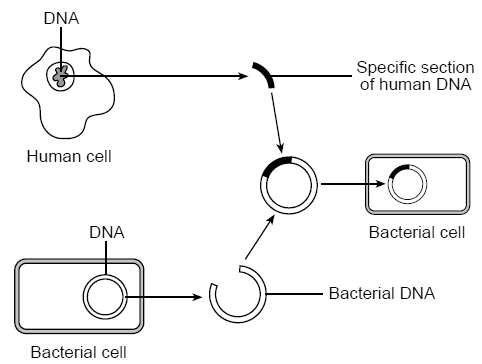
Which two processes are required for the technique to successfully produce hormones?
- replication of DNA in bacterial cells and cell division
- replication of DNA in bacterial cells and gamete formation
- meiosis and development
- mitosis and fertilization
1. replication of DNA in bacterial cells and cell division
400
The diagram shows four different cells from the same animal.
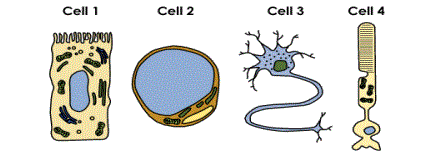
Which statement about the cells is accurate?
1. The four cells have identical DNA sequences.
2. Cell 3 and Cell 4 have the longest DNA sequences because they have longer shapes.
3. The four cells are different shapes because they comes from different parent organisms.
4. Cell 1 and Cell 2 have all of the same active genes even though they are from different body systems.
- The four cells have identical DNA sequences.
400
Animals and green plants are similar in that they
- both carry out heterotrophic nutrition
- all produce offspring by asexual reproduction
- both use DNA to transmit hereditary information to offspring
- all require oxygen to carry out photosynthesis
3. both use DNA to transmit hereditary information to offspring
400
Mutations are most directly caused by changes in the
- cell organelles of tissues
- genes of chromosomes
- ribosomes in gametes
- receptors on membranes
2. genes of chromosomes
400
A human cell that contains all of the information necessary for the growth and development of a complete organism is
- a sperm cell
- a gamete
- a zygote
- an egg cell
3. a zygote
400
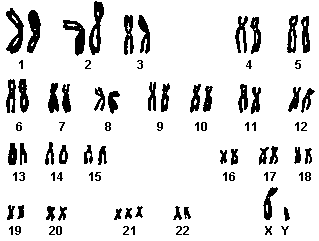
The genetic disorder shown in the diagram most likely resulted from
- crossing-over
- nondisjunction
- polyploidy
- segregation
2. nondisjunction
500
A lion cub resembles its parents because it inherits genes that produce
- DNA identical to all of the DNA found in both parents
- proteins identical to all of the proteins found in both parents
- ATP identical to some of the ATP found in each paren
- enzymes identical to some of the enzymes found in each parent
4. enzymes identical to some of the enzymes found in each parent
500
In a DNA molecule, if 38% of the molecular bases are C (cytosine), what percent of the bases are T (thymine)?
1. 12
2. 24
3. 38
4. 62
- 12
500
The diagram below represents some processes in the early development of a multicellular organism.
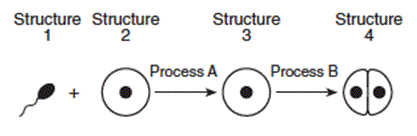
Which statement describing this diagram is correct?
- The cell represented by structure 3 has the same genetic content as structure 2.
- Process A represents the process of meiosis.
- Each cell in structure 4 has the same genetic content as that in structure 3.
- Processes A and B both occur in the placenta.
3. Each cell in structure 4 has the same genetic content as that in structure 3.
500
In the diagram below, strands I and II represent portions of a DNA molecule.
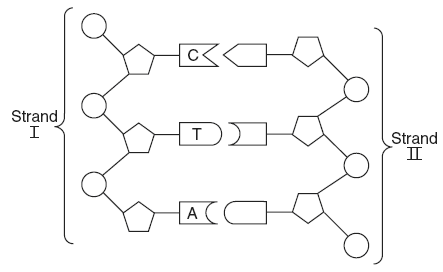
Strand II would normally include
- AGC
- TCG
- TAC
- GAT
4. GAT
500
Who is the Father of Genetics?
1. Tesla
2. Morgan
3. Punnett
4. Mendel
4. Mendel