Evolution
Reproduction
Artificial and Natural Selection
Punnett Squares
Bonus (double the point value for each question)
100
Changes in a species over time is called _________
evolution
100
What are the two types of reproduction?
Sexual and Asexual
100
What type of bird did Charles Darwin study in the Galapagos Islands?
finches
100
Which are examples of homozygous pairs?
(There are 3)
Aa, AA, aa, BB Bb, Cc
AA, aa, BB
100
Where are your genes found inside of the cell?
Nucleus
200
Small changes in a single species that can be seen in a human's lifetime is known as _____________.
microevolution
macroevolution
microevolution
200
Name two facts about sexual reproduction.
* It involves two parents
* Offspring are genetically unique
* It allows for genetic variation in a population
200
What idea does this definition describe?
In nature, the organisms that have the traits that are best suited to the environment are more likely to survive and reproduce
natural selection
200
Choose the heterozygous pairs.
(There are 3)
Aa, BB, CC, Dd, ee, Ff, GG
Aa, Dd, Ff
200
Mutations can be: _______________, _______________, or ____________________
harmful, helpful, or neutral
300
Large changes that take millions of years, such as changing from one species to another, is known as _____________.
microevolution
macroevolution
macroevolution
300
Name 2 facts about asexual reproduction.
- It involves only 1 parent
- The offspring are genetically identical
- Allows organisms to reproduce very quickly
300
What idea does this definition describe?
When humans decide which traits to select based on their preferences
artificial selection
300
In a certain plant type, the tall (T) trait is dominant.
On your paper, cross a homozygous tall plant (TT) and a homozygous short plant (tt). What percentage of the offspring are tall?
100 %
300
This type of reproduction creates offspring that are genetically diverse.
Sexual reproduction
400
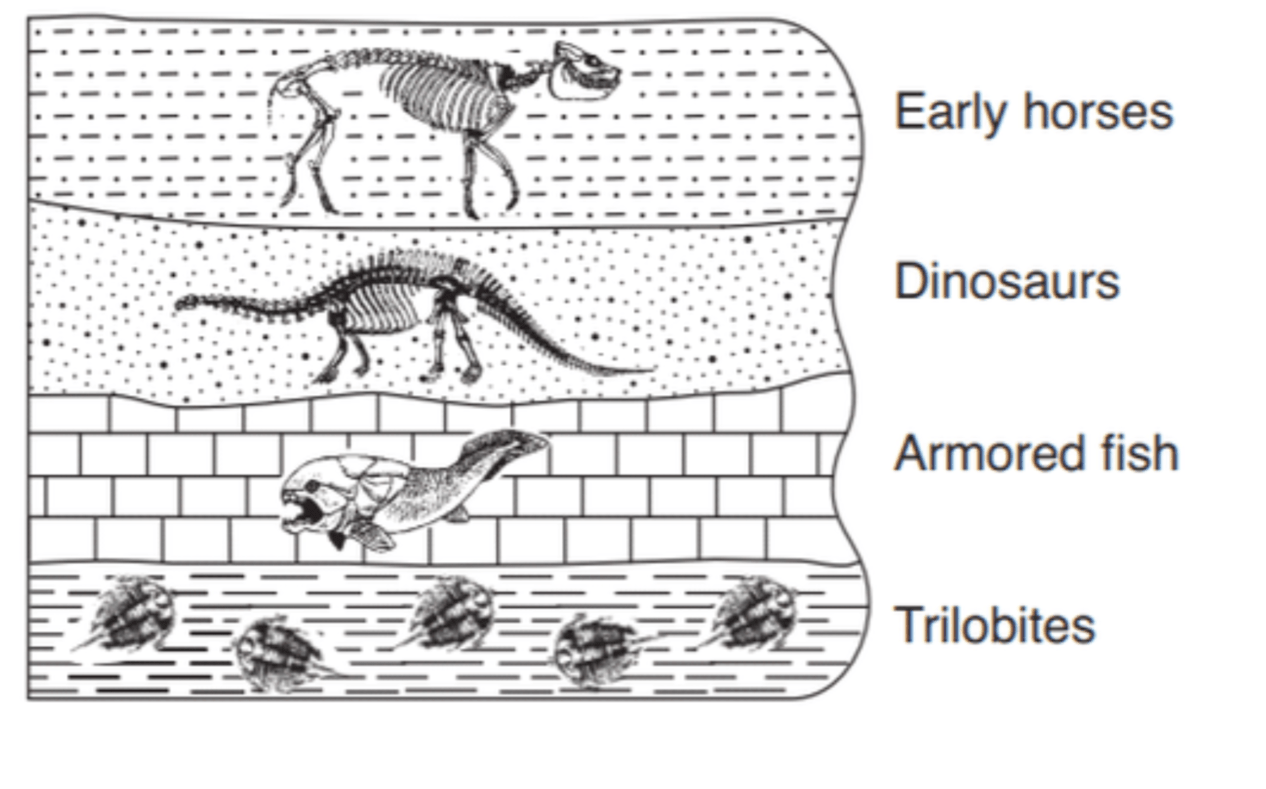
Based on this sample of fossil layers, arrange these organisms from youngest to oldest.
early horses, dinosaurs, armored fish, trilobites
400
Gregor Mendel knew that pea plants reproduce sexually. Because of that, what did he figure out about traits in plants?
He discovered that traits are passed from one generation to the next.
400
How are dogs and corn examples of artificial selection?
Because humans have bred/cultivated them for the traits they wanted, not for what would have happened naturally.
400
In a certain type of plant, tall (T) is the dominant trait
On your paper, cross two heterozygous tall plants (Tt). What is the percentage of having a tall plant in the offspring?
75 %
400
Why is the basilosaurus considered an example of a transitional fossil?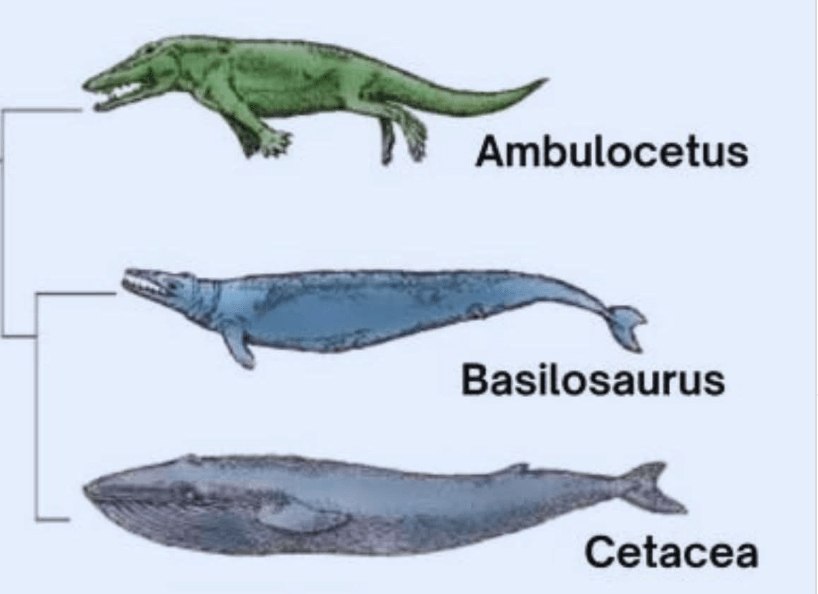
Because it has characteristics of both the ambilocetus (ancient whale) and the cetacea (modern whale)
500
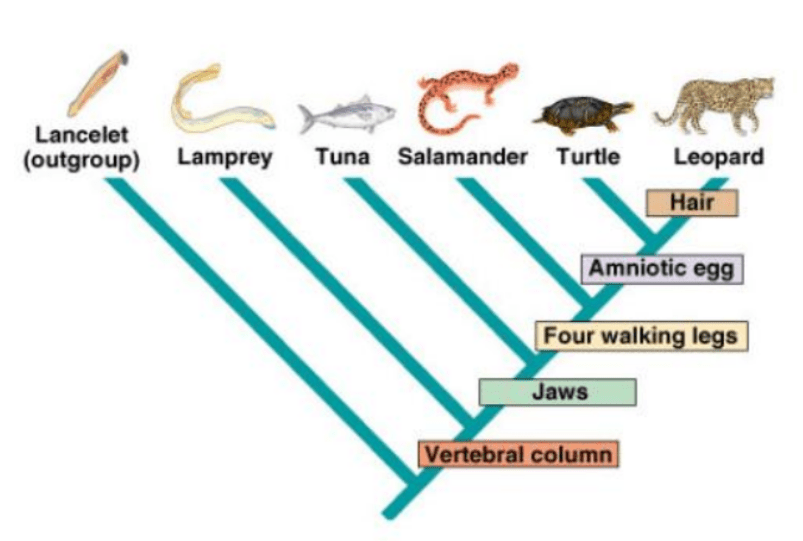 According to this phylogenetic tree, which animals have an amniotic egg?
turtle and leopard
500
Based on these descriptions, which is describing an organism that reproduces asexually?
A. Pollen from one flower pollinates an egg of another flower to produce seeds.
A female fish lays unfertilized eggs in a river, and the male arrives later to fertilize the eggs.
C. Spores are formed from two cells, each from a different and genetically unique fungal organism.
D. An amoeba splits during binary fission into two genetically identical cells.
D. An amoeba splits during binary fission into two genetically identical cells.
500
How are the finch's beaks an example of natural selection?
Because the birds with beaks best adapted to the available food were the ones to survive and reproduce.
500
Having dimples is a dominant trait. What genotypes would two parents with dimples have to have in order for them to have a child who does NOT have dimples? Use D for the allele.
Both parents would need to be Dd (heterozygous)
500
How many chromosomes do we receive from each one of our parents?
23