The Earth's Interior
The Rock Cycle
Landform Regions
Geologic History
Volcanoes, Earthquakes, Tsunamis & Glaciers
100
Name of the person who came up with a theory of why the continents move.
Alfred Wegener
100
Type of rock that has large deposits of skeletal remains compress into it.
limestone
100
'Canada's Breadbasket' is found in this landform region.
Interior Plains
100
Modern human development took place during this era.
Cenozoic Era
100
Name given to area around the Pacific Ocean where a lot of volcanic activity occurs.
Ring of Fire
200
The earth's plates move within the mantle because of these.
Convection Currents
200
A steep slope or cliff that is created as a result of faulting.
escarpment
200
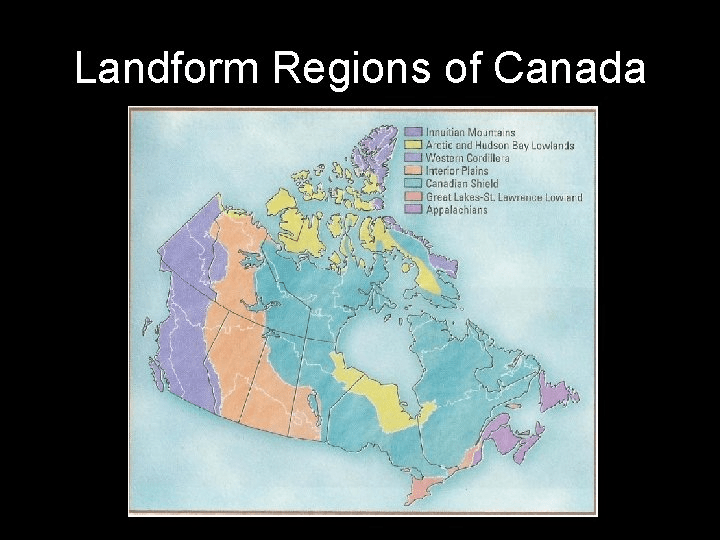 Landform region in Canada where Sudbury, Ontario would be found.
Canadian Shield
200
Pangea began to split apart during this Era.
Mesozoic Era
200
The name of the last sheet that covered all of Canada.
Laurentide
300
Name of theory used to explain why continents may have been together at one time, but are now separate.
Theory of Continental Drift
300
Process where sediments are carried away to new locations.
deposition
300
This landform region is older than the Rocky Mountains but younger than the Appalachians.
Innuitian Mountains
300
Africa collided with North America creating the Appalachian Mountains during this era.
Paleozoic Era
300
When tectonic plates move roughly in parallel but opposite directions.
transform
400
The most abundant rock in the continental crust.
igneous rock
400
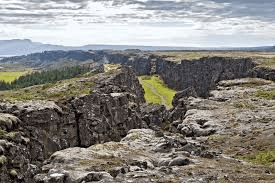 This landform is created when two faults move away from each other and the centre block begins to fall downward.
Rift Valley
400
Landform region that is home to many habitats and wildlife.
Hudson Bay/Arctic Lowlands
400
During the Pleistocene Era, this many ice advances gouged out the landscape from Great Bear Lake to the Great Lakes.
four
400
Fragments of lava that are blasted into the air during a violent eruption are known as this.
tephra
500
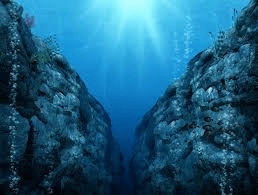
Name of place where the earth's crust is the thinnest.
Mariana Trench
500
Igneous rocks that cool BELOW the earth's surface are known as this.
Intrusive
500
This landform region is ideal for agriculture because of fertile soil and warm climate; flat land ideal for transportation routes led to development of cities.
Great Lakes/St. Lawrence Lowlands
500
This is created when soil and gravel accumulates in the front and along the sides of a glacier.
moraine
500
The type of plate movement that occurs when a heavier oceanic plate slides beneath a lighter continental plate.
subduction