Coordinate Plane & Vocabulary
Angles
Missing Sides of Triangles
Polygons
3D Figures
100
Define Supplementary.
What is angles that add to 180 degrees.
100
What is the complement of 46°?
What is 44°
100
Solve for both missing sides.
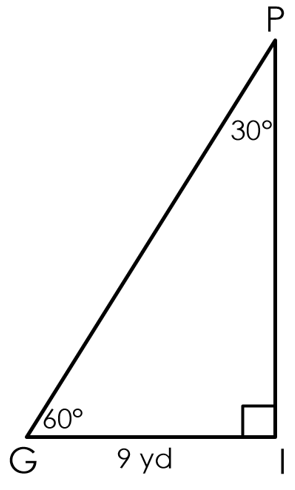
What is PG = 18 and PI = 9
sqrt3
100
What are the properties of a trapezoid?
What is parallel bases.
100
How to do you calculate volume of a prism?
What is V = BH
What is Multiply the area of the bases by the height of the prism.
200
Find the midpoint of (3,2) and (8, -10)
What is (5.5, -4)?
200
Solve for x.
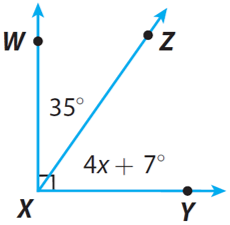
What is x=12?
200
Solve for the "?"
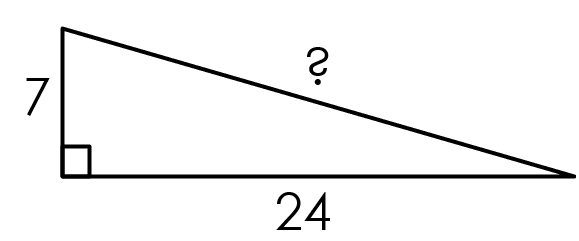
What is ? = 25.
200
Find the area of the figure below:
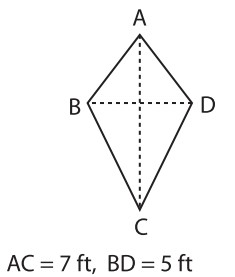
What is A = 17.5 ft2
200
Name the prism.
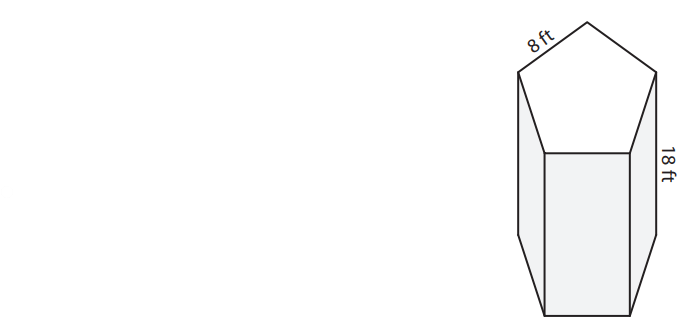
What is pentagonal prism?
300
What is the distance between (3,4) and (-1,-1)? Round to the nearest tenth.
What is 6.4?
300
Solve for t.
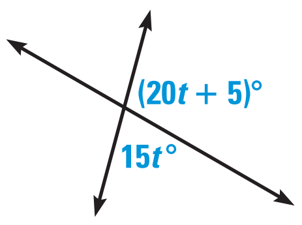
What is t=5
300
Solve for the length of side ET. Round to the nearest tenth.
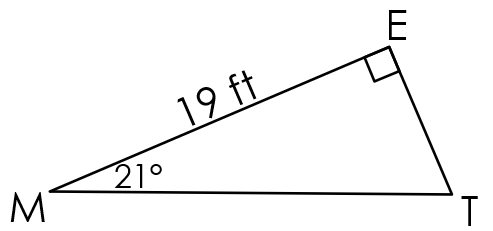
What is 7.3 ft.
300
What is the interior angle sum of a pentagon?
What is 540°
300
Find the volume. Round the the nearest tenth.
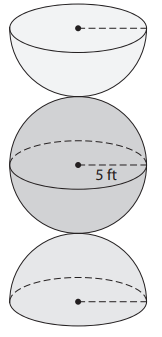
What is 1047.2 ft3
400
Define perpendicular and write the symbol for perpendicular.
What is Intersecting lines or segments that form a right angle.
400
Solve for x.
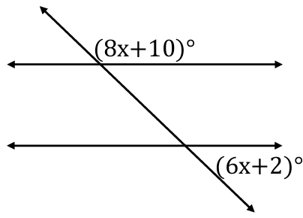
What is x = 12
400
The following triangles are similar. What is the length of DE?
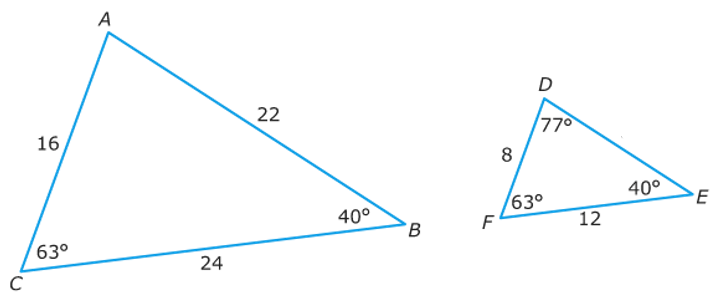
What is DE = 11
400
What is the degree and order of the rotation symmetry of the rectangle:

What is order 2, 180°.
400
The diameter of a watermelon is about 10.8 inches. The diameter of an orange is about 3.6 inches.
About how many times greater is the volume of the watermelon than the volume of the orange?
What is 27 times greater.
500
What is the point (-5, 3) under the transformation S3 ∘ T2,-1 ∘ R180∘
What is (21, -12)?
500
Angles 1 and 2 are cut by an angle bisector.
m∠1=(5x+4)° and m∠2=(2x+10)°
What is the measure of angle 2?
What is m∠2=14°
500
What is the length of the legs?
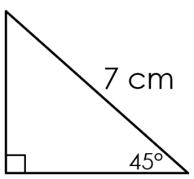
What is
7/sqrt2
500
Solve for x in the kite below:
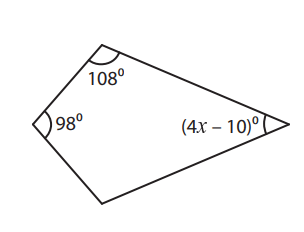
What is x = 14
500
Find the volume. Round to the nearest tenth.
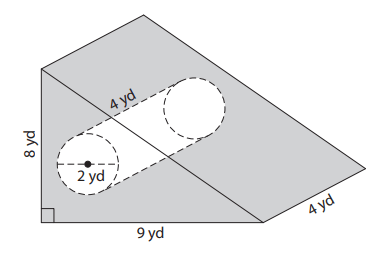
What is 131.4 yd3