Supplementary & Complementary
Vertical & Adjacent
midpoint and distance
Vocabulary
segment addition & angle addition postulates
100
Two angles with a sum of 90 degrees.
What are complementary angles?
100
_________ angles are the opposite pairs of congruent angles made when two straight lines cross. They share a center point, called the vertex, and but they do not share a side.
Vertical angles
100
Use the midpoint formula to calculate the midpoint of a line with the end points of (4,4) and (8,8).
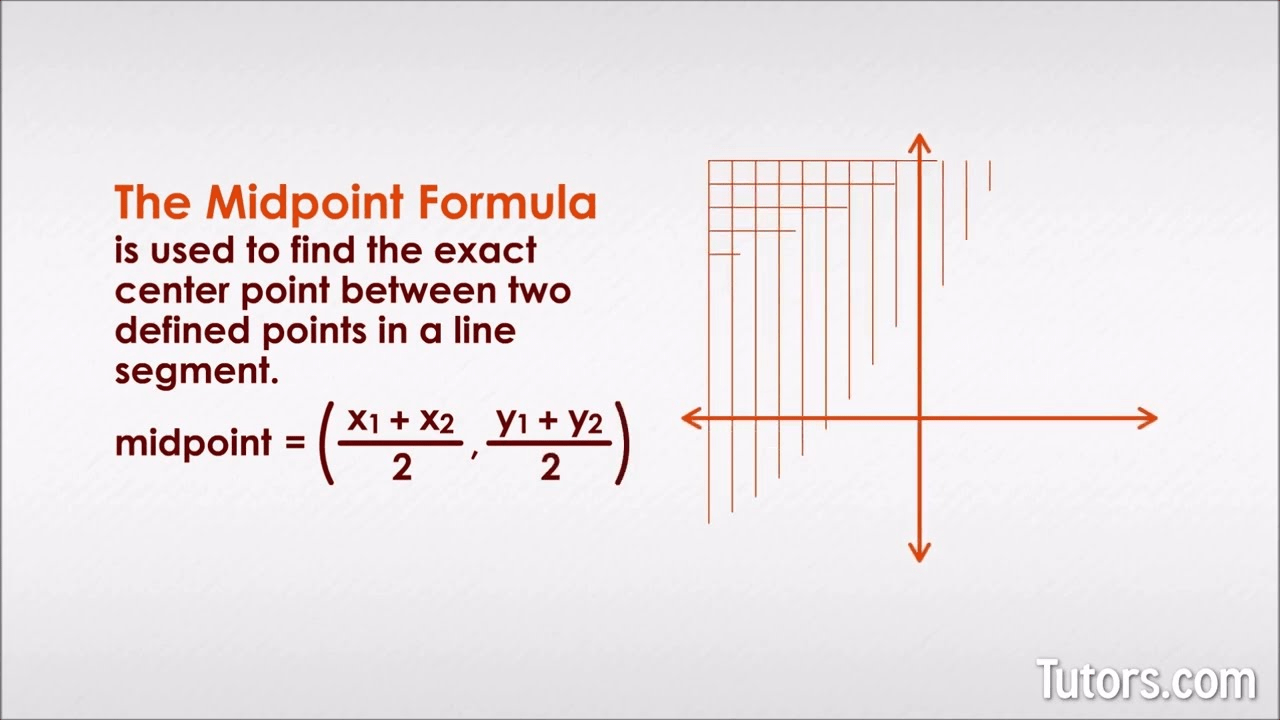
(6,6)
100
Define Congruent
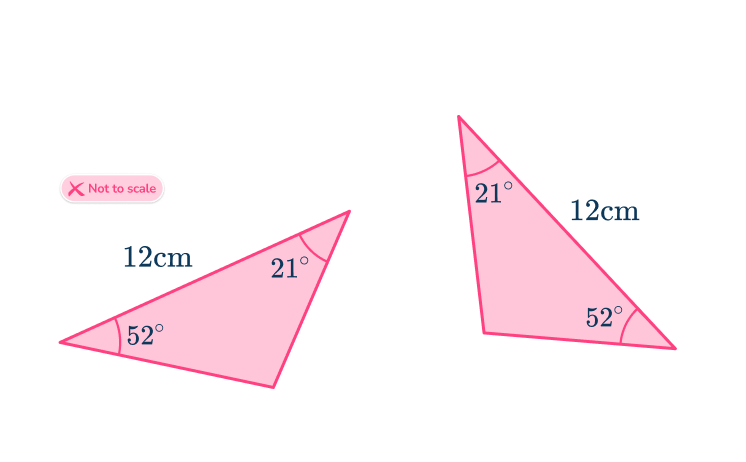
The same size and shape
100
Based on the angle addition postulate, if angle ABO is 90 degrees, and angle OBC is 45 degrees, what is the measure of angle ABC? 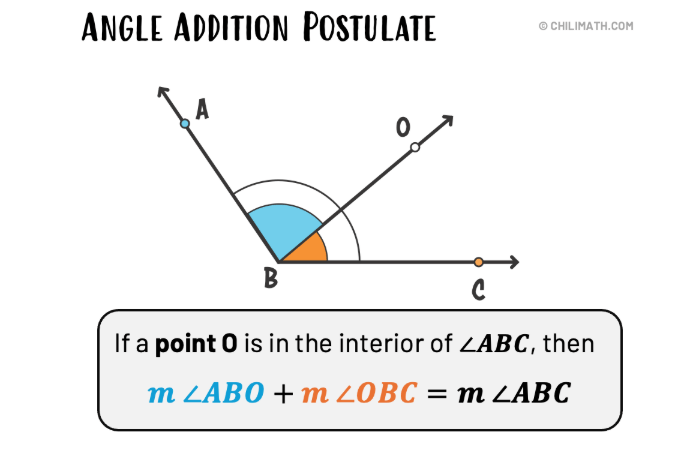
Part + part = whole
90 + 45 = 135
200
Two angles with a sum of 180 degrees.
What are supplementary angles?
200
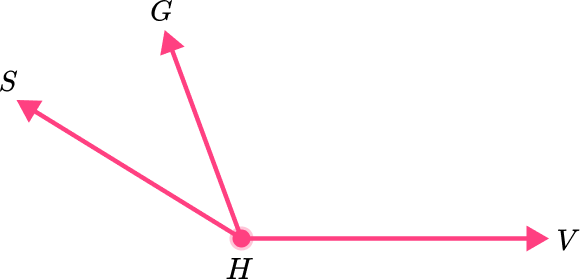 _________ angles share a common side and a common vertex (corner point), but their interior parts do not overlap.
Adjacent angles
200
Use the midpoint formula to calculate the midpoint of a line segment with end points at (9,3) and (-7,5).
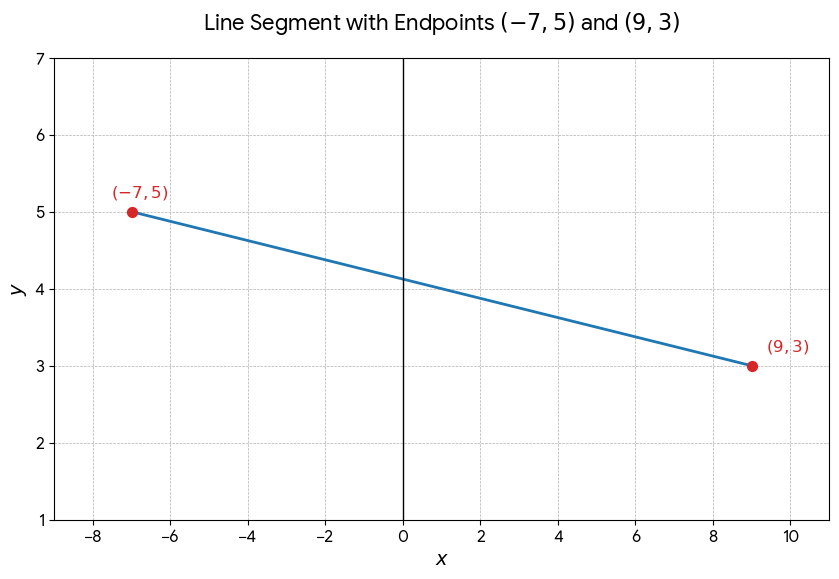
(1,4)
200
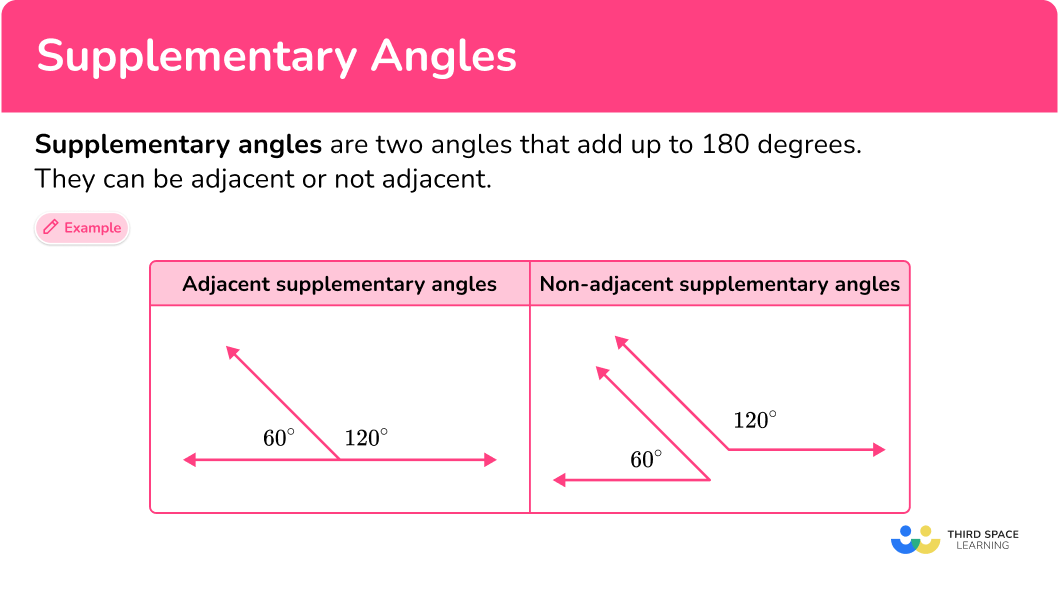
Define supplementary angles
Two angles with measures that add together to equal 180.
200
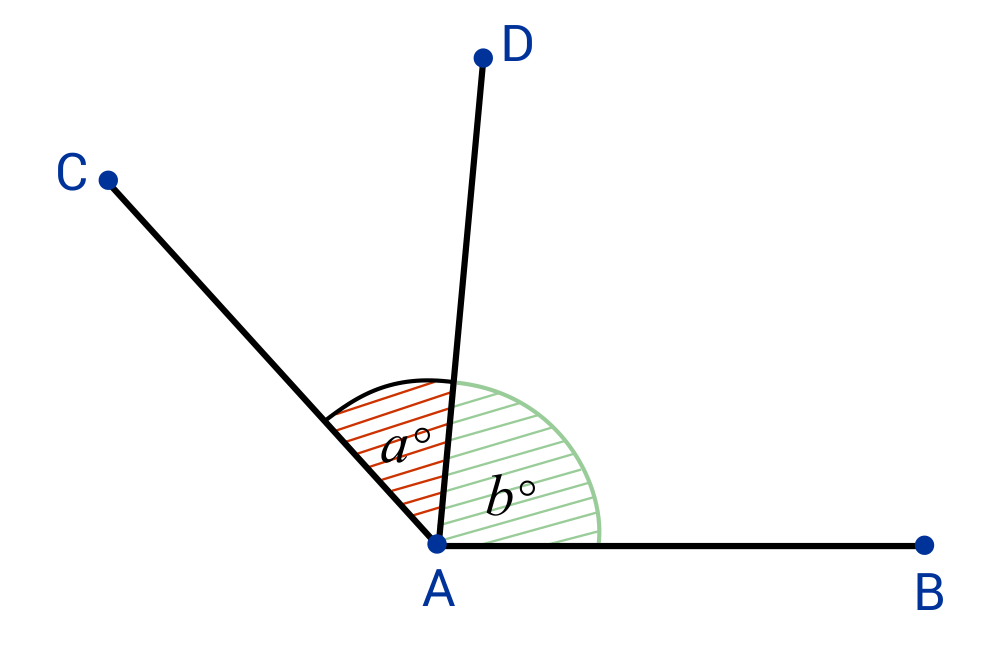
If anvle BAD is 88 degrees and angle DAC is 32 degrees, what is the measure of angle CAB?
Angle CAB is 120 degrees because
88 + 32 = 120.
300
Angle A and Angle B are supplementary angles. If angle A is 120 degrees. What is the measure of angle B?
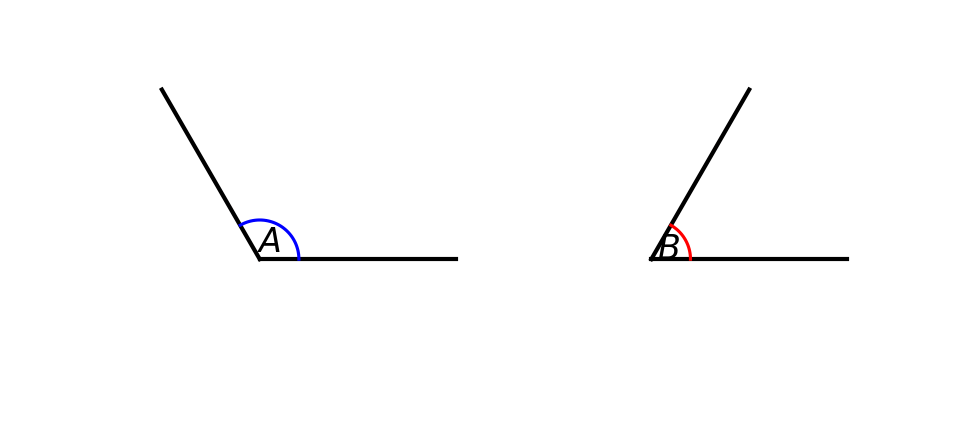
60 degrees
300
Name the adjacent angles shown in the image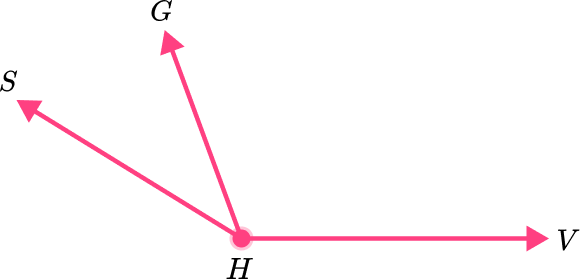
Angle SHG is adjacent to angle GHV or
Angle VHG is adjacent to angle GHS
300
Use the distance formula to calculate the length of a line segment with the end points of (4,4) and (7,8).
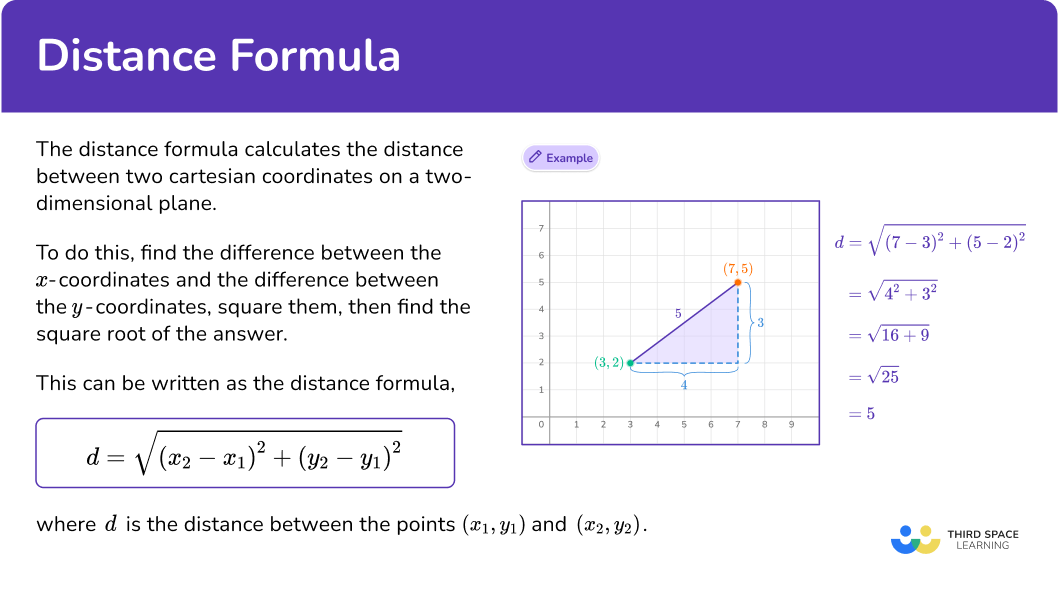
The distance between (4,4) and (7,8) is 5 units.
300
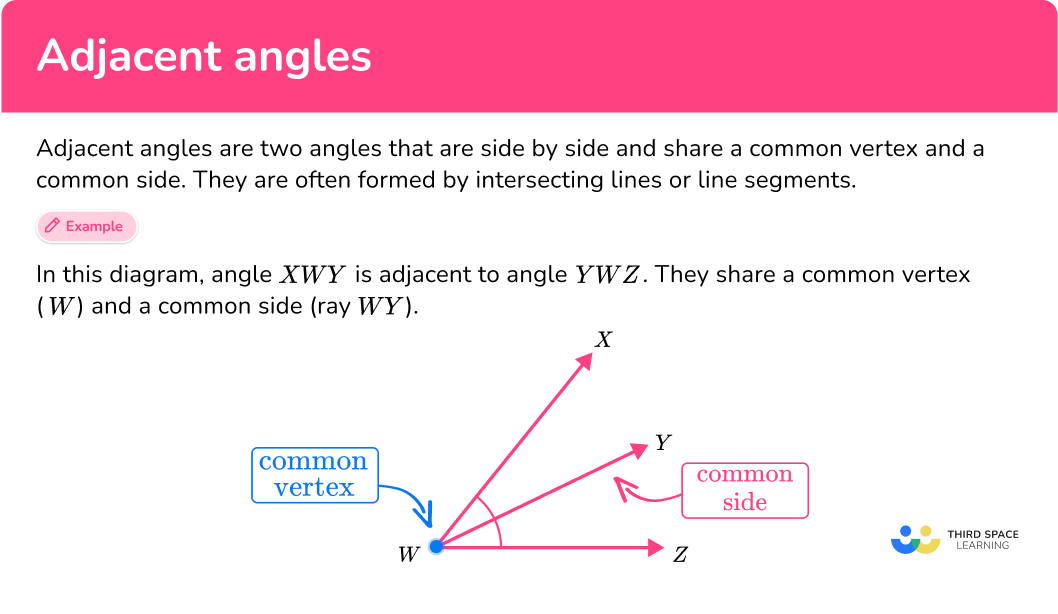
Define adjacent angles
Two angles that are next to eachother, sharing a common side and a common vertex.
300
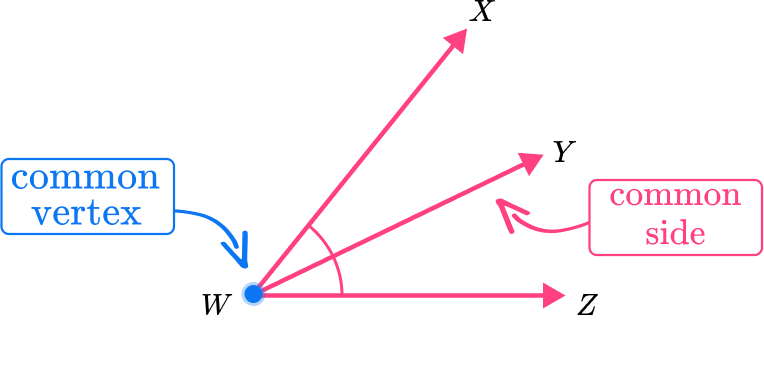 If angle XWY is 34 degrees, and angle XWZ is 72 degrees, what is the measure of angle YWZ?
The measure of angle YWZ is 38 degrees because
72 - 34 = 38 degrees.
400
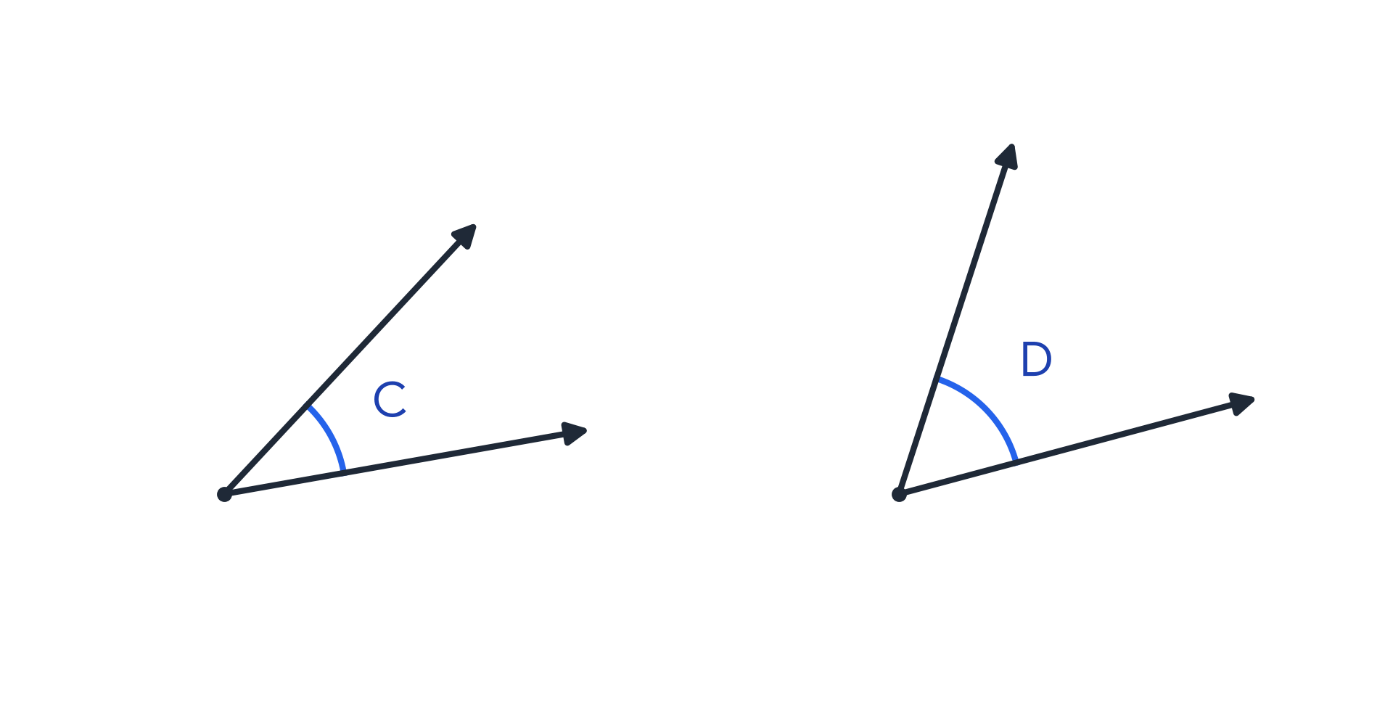 Angle C and angle D are complementary angles.
If the measure of angle C is 37 degrees, what is the measure of angle D?
53 degrees
400
Name the angle that is adjacent to QPE
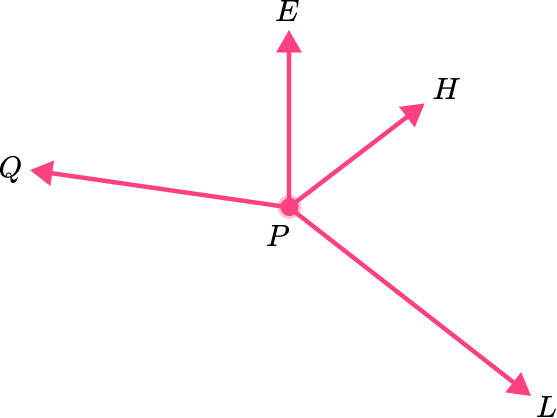
EPH
400
Use the distance formula to calculate the length of a segment with the end points at (9,3) and (-7,5).
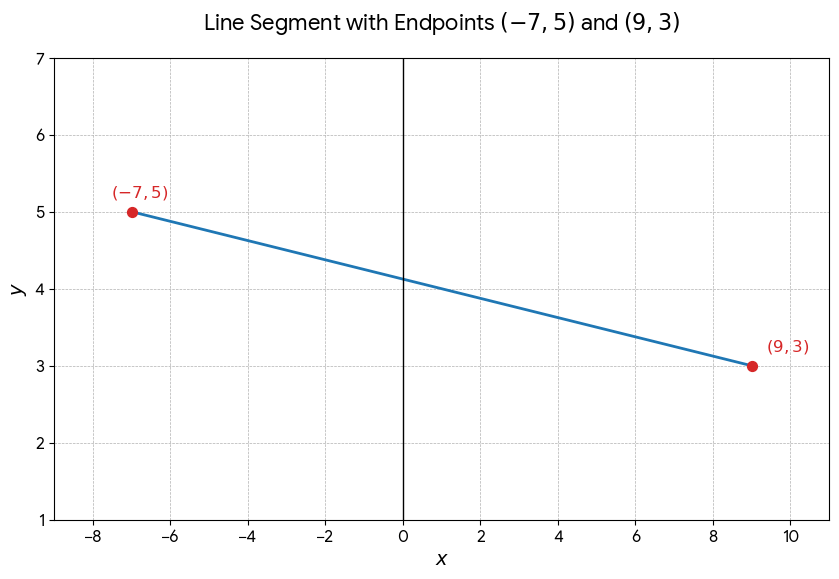
The distance between (9,3) and (-7,5) is 16.12 units.
400
Define Linear Pair
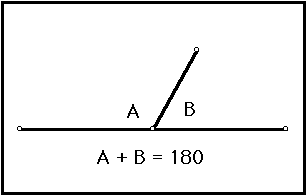
A pair of adjacent supplementary angles
400
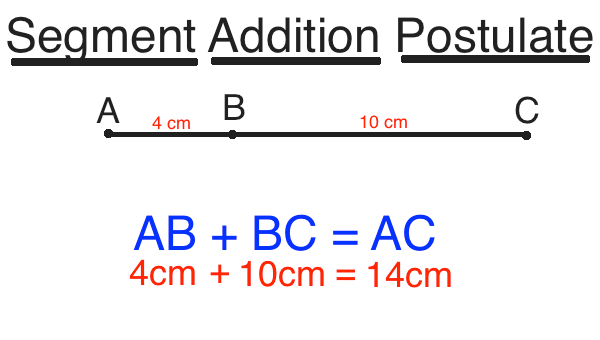
Using the segment addition postulate, calculate the length of AC if segment AB measured 3 cm and segment BC measured 9 cm.
Segment AC would be 12 cm
because
Part = part = whole
AB + BC = AC
3 + 9 = 12.
500
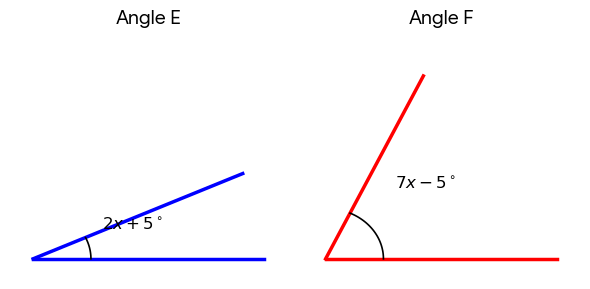 Angle E and angle F are complementary angles. Angle E measures 2X+5 degrees, angle F measures 7x-5 degrees. Solve for X and the measure of both angles.
X= 10, angle E= 25, angle F=65
500
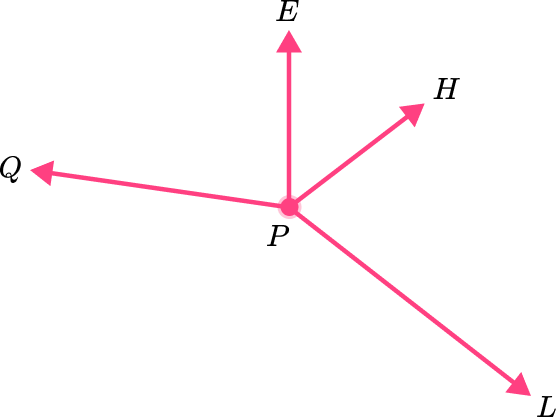 Name two pairs of adjacent angles and one pair of non-adjacent angles in the image above.
adjacent pairs: QPE and EPH
EPH and HPL
NON-adjacent pair: QPE and HPL
500
Use the distance formula to calculate the length of a line segment with the end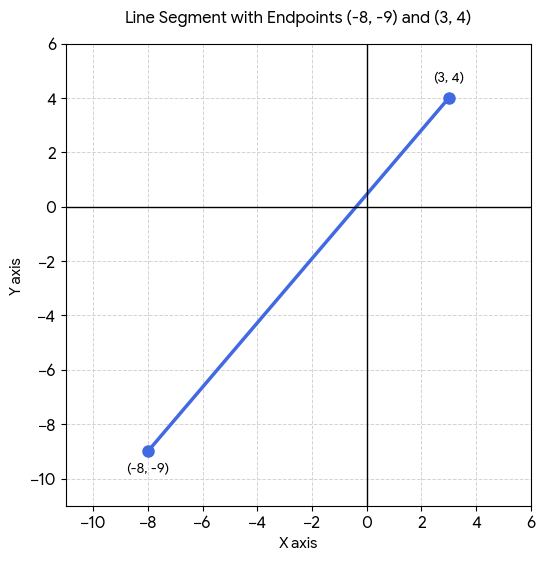 points of (-8,-9) and (3,4).
The distance between (-8,-9) and (3,4) is 17.03 units.
500
What kind of angle is greater than 90 degrees?
(acute, obtuse, or right)
obtuse
500
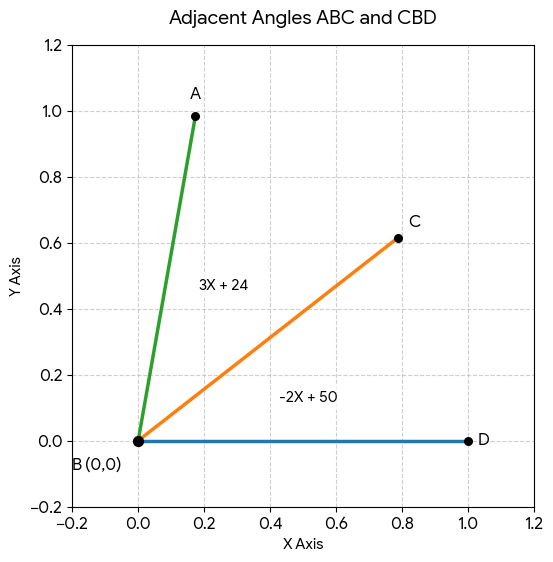 Calculate the measure of angles ABC and CBD if angle ABD is 80 degrees.
3x + 24 + -2X + 50 = 80
X + 74 = 80
-74 -74
X = 6
ABC = 3(6) + 24 = 42 degrees
CBD = -2(6) + 50 = 38 degrees
check the answer: 38 + 42 = 80
1000
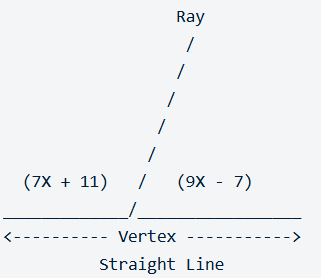
The two angles shown are supplementary. Solve for the measure of both angles
The two angle measures are 88 and 92.
1000
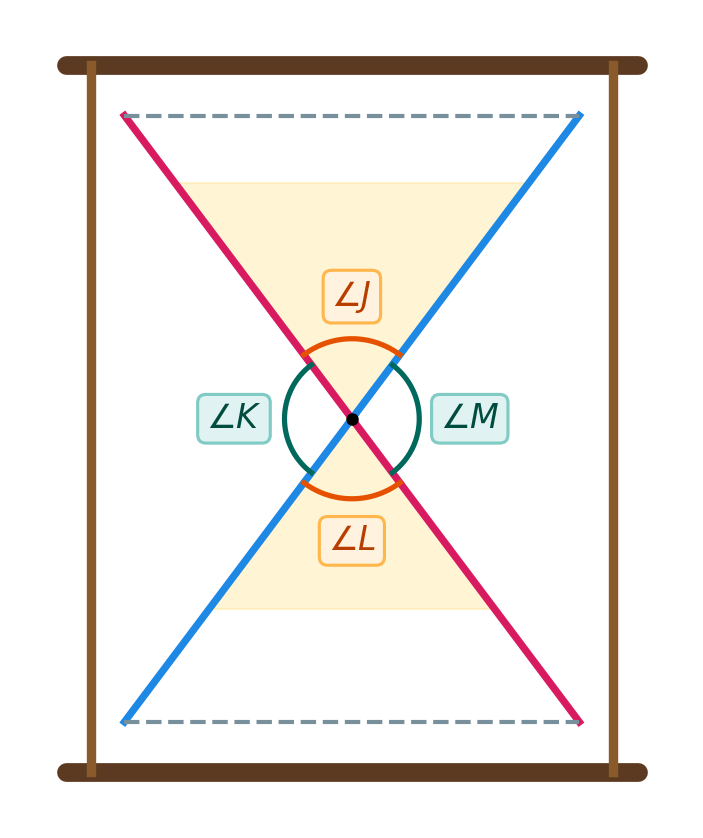
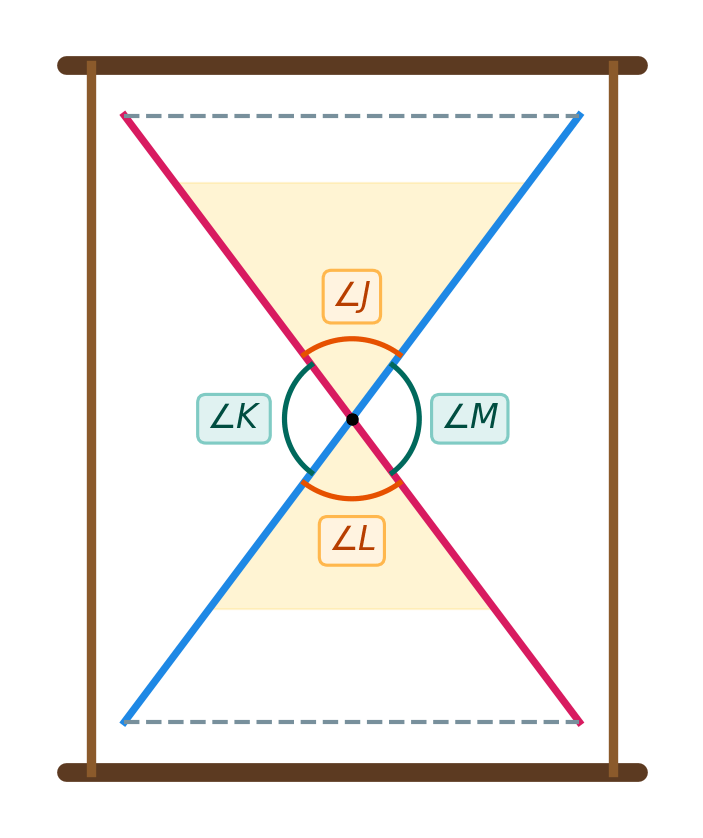 In the image, if angle J is 78 degrees. What are the measures of angles K, L, and M?
Angle L is 78 degrees, Angles K and M are both 102 degrees.
1000
Find the midpoint of a line segment with the end points of (7,8) and (-5,-6).
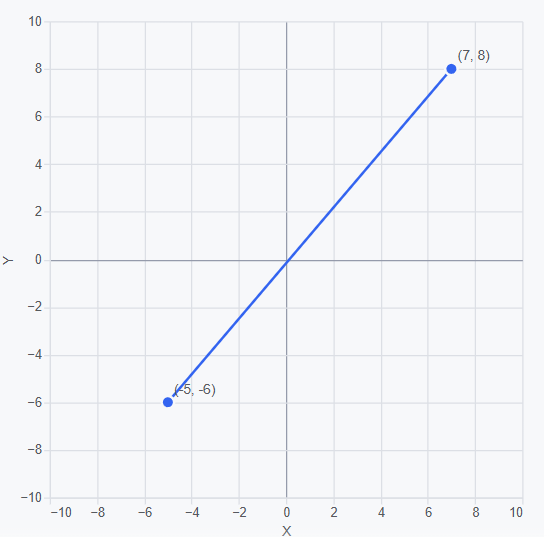
The midpoint of a line segment with the end points of (7,8) and (-5,-6) is
(1,1)
1000
Challenge question about coordinate planes:
Name the two axes on a coordinate plane, and the point where they cross each other in the center.
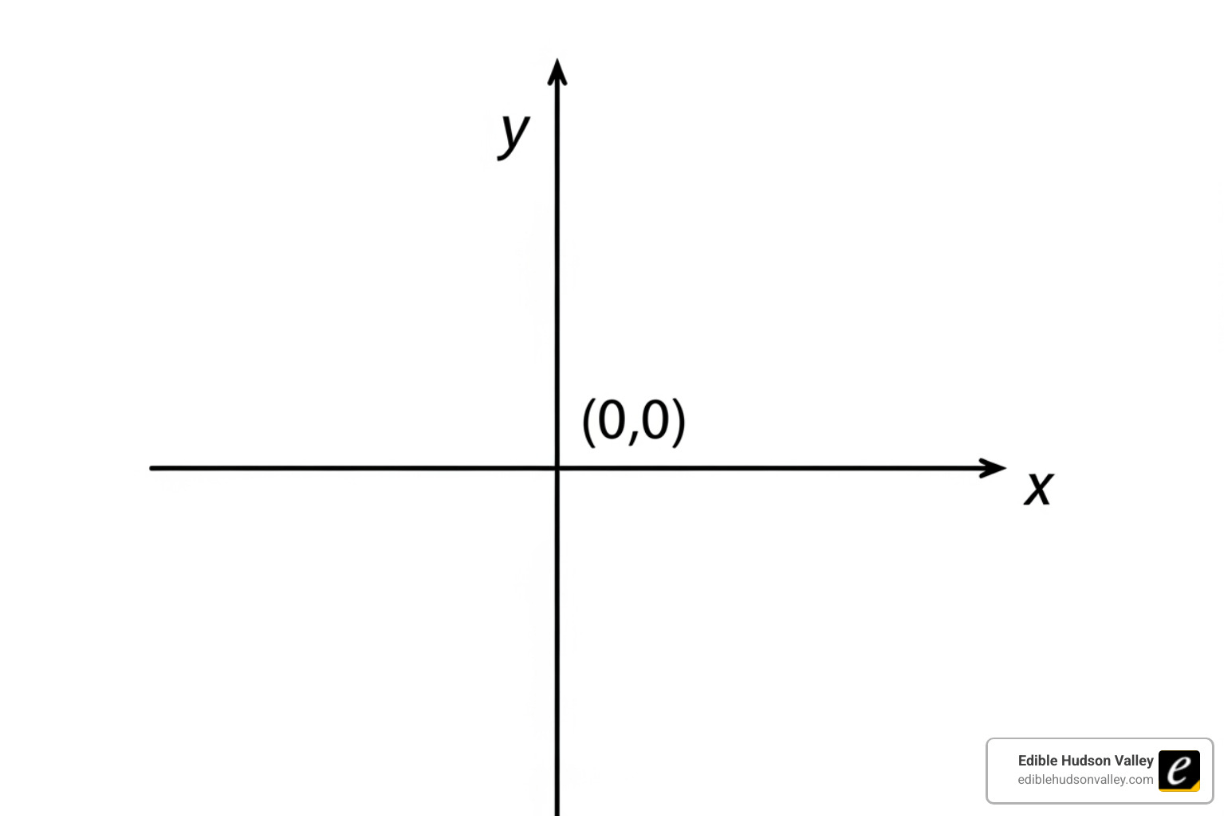 Horizontal axis is the X axis, vertical axis is the Y axis, point where they cross in the center at (0,0) is the point of origin.
1000
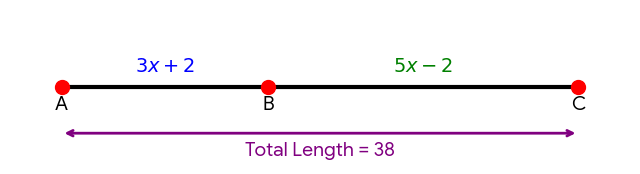 Solve for X and for the lengths of AB, and BC.
3x + 2 + 5x - 2 = 38
8x +2 -2 = 38
8x = 38
divide both sides by 8
x = 4.75
AB= 3(4.75) +2 = 16.25
BC= 5(4.75) - 2 = 21.75
CHECK ANSWER: 16.25 + 21.75 = 38