Industrial Revolution
African Imperialism
Asian Imperialism
WW1 + Russian Revolution
100
What is Capitalism?
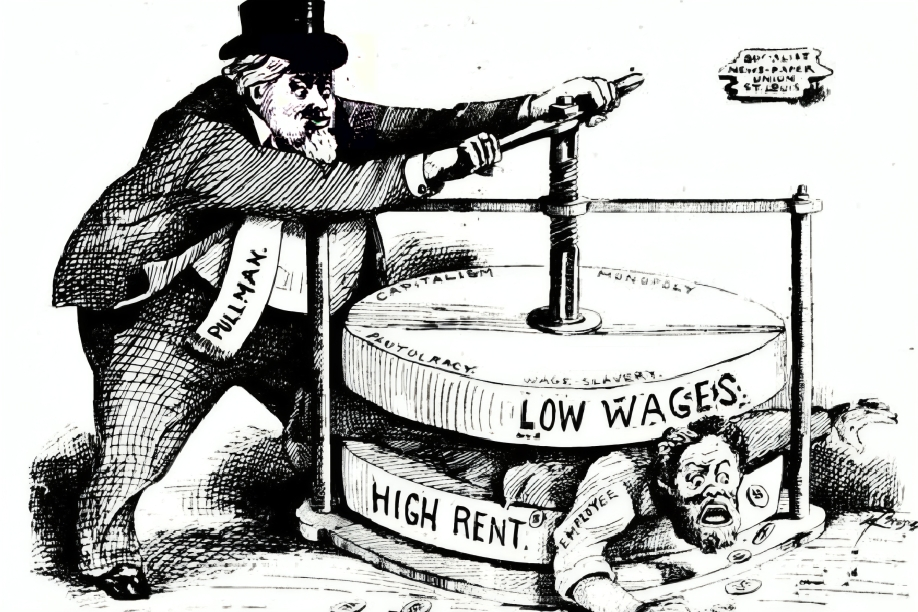
Capitalism
Economic system running through the quest for economic reward
3 natural laws
Law of self interest
Law competition
Law of supply and demand
Land is owned privately
Individually
Partnership
Corporation
Adam smith
Scottish Economist and philosopher
3 natural laws of economics
100
Who was King Leopold II and what did he do?

King Leopold II was the King of the Belgians from 1865 to 1909 and the ruler of the Congo Free State (now the Democratic Republic of the Congo) from 1885 to 1908. He is known for his brutal exploitation of the Congo, a regime that led to the death of an estimated ten million Congolese people.
100
What was the Opium War?
Used for medicine
Then used for addiction
British smuggled opium into china after trade is established
Corrupts families and helps gov crumble from the inside
12 million become addicted
Becomes illegal
Brit doesn't care
China fights back
Loses badly and is hard to recover from
100
What were the Alliances before WW1?
Triple Entente: A 3 way alliance between France Russia and Britain
Triple Alliance: A 3 way alliance between Austria-Hungary, Germany and Italy
200
What was the new class structure?
Upper Class
Rich business families
Upper middle class
Business people and lawyers
Lower middle class
Police, shop owners
Working class
Factory workers, miners, bad work conditions
200
What did Africa look like before European Domination?
Before European Domination:
Very divided by language, area, religion, ethnicity, and tribe.
Africa was intriguing by missionaries and explores
200
What was the difference between the Qing and Ming dynasties?
Ming Dynasty:
Agriculture got encouraged
Defeated the mongols
China became self sufficient
China goes into isolation
No foreign trade
Qing dynasty:
Government began to crumble
High taxes, bad harvest
Manchus took Beijing
The west are trying to get in
rule came from god
200
Who started WW1?
Blank Check: Germany's promise to support Austria-Hungary in the war
Central Powers: Germany, Ottoman empire, Austria-Hungary
Allied Powers: France, Britain, Russia, Italy, United states and Japan
Schlieffen's plan: Germany's plan to defeat France then any country that follows
Battle of the Marnes: fierce close combat of trench warfare
Trench Warfare: Dug out pits strategically to protect from the enemy
Gallipoli campaign: Disastrous allie attack to the Ottoman empire
Unrestricted submarine warfare: Germany's act of shooting civilian boats and ships
Sinking of Lusitania: A british and american civilian ship shot down by germans
Zimmerman telegram: Germany's last ditch effort to make mexico join the war and fight USA
300
What were the positives and negatives involved in the Industrial Revolution?
Positives
More resources
Modernized
Cheaper more accessible products
Improvement in transportation
Created jobs for workers
Eventually higher wages, longer hours''
Negatives:
Child labor
Bad working conditions
Bad living conditions
Injuries
Towns were not clean and had little to no green space
300
What was the Berlin Conference?
1884-1885
14 European Nations Present
Meant to lay down the divisions of Africa
Agreed on:
Any nation could claim parts of Africa as long as other nations were notified and they could show control of the area.
Did not consider African tribal/linguistic areas
No African leaders in attendance
By 1914 only Liberia and Ethiopia are free from European control.
300
What is the difference between Hinduism and Buddhism?
Atman-soul
karma-cause and affect moral law
Samsara-cycle of life
Moksha- goal in life
Dharma-duties in life
Vedas- many scriptures
The four many’s:
Many scriptures: Vedas
Many lives: Samsara
Many paths: three prime Maras
Many gods: polytheism
300
What was the Balkan Crisis?
Otto von Bismarck- Former chancellor of Germany held values over violence, valued treaties and alliances over domination and intimidation however his replacement in 1980 was quite the opposite, he valued power and control over friendly alliances. This is Kaiser Wilhelm.
Assassination of Archduke Franz- April 28, 1914 The heir to the Australian Hungarian throne was assassinated (Archduke Franz) sparking outrage in Austria Hungary.
400
How does Capitalism relate with Industrial Revolution?
Capitalism
Economic system running through the quest for economic reward
3 natural laws
Law of self interest
Law competition
Law of supply and demand
Land is owned privately
Individually
Partnership
Corporation
Adam smith
Scottish Economist and philosopher
3 natural laws of economics
400
What were the Acts and Polices during the South African Apartid period?
Acts/Policies
1922: Native (Urban Areas) Act
Called for the clearance of the slums and relocated Africans, generally to the outskirts of town.
1924: Civilized Labor Policy
Poor unskilled whites were protected and paid much higher.
1925: Wages Act
Minimum wage for whites only
1926: The Mines and Works Amendment Act
Excused Africans and Indians from skilled work.
Poll tax: A tax of one pound for every adult male African who wants to vote.
Land Act: Forced Africans to live in reserves and made it illegal for them to work as sharecroppers.
400
What resulted from the Treaty of Kanagawa?
USA wanted trade
Japan liked being isolated
Commodore Perry went to establish trade
Got Japan up to date on militarism
400
Who ran the Provisional Government?
Alexander Kerensky was the leader.
500
What was the Agricultural Revolution?
Enclosure Movement
Fencing off land
Larger farms had more resources
Factors of production
Land
Rivers, Natural Resources
Labor
Enclosure movement, experimentation
Increased work force from rising population
Capital
Colonies, Slavery
Expanding economy with highly developed banking system
Availability of bank loans
Political Stability
Parliament passed laws to help encourage big business
Selective Breeding
Crop Rotation
Practice of rotating crops on the same field for better soil Nutrients
Changing in farming methods
Mechanization
Seed drill
Crop rotation
500
What did the book: (King Leopold's Ghost: A story of Greed, Terror, and Heroism in Colonial Africa) say about King Leopold in our notes?
"Perhaps nowhere does Leopold’s breathtaking arrogance show so cleverly as in the curious document where he blithely bequeaths one of his countries to the other”
500
What was the British East India Company and what was their impact?
was a powerful joint-stock trading company, chartered in 1600, that evolved from a trade monopoly into a government ruling large parts of India, essentially establishing the British Empire there before being dissolved in 1874.
500
What new country was made from Germany and Russia?
Poland.